Switzerland

The noble work of chairlift diplomacy

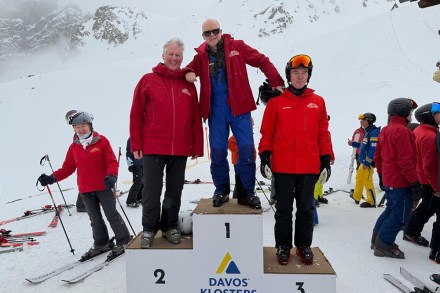
In 1956, three British MPs encountered a group of Swiss politicians in the bar of the Hotel Fluela in Davos and after a few drinks challenged them to a ski race. A timed slalom contest took place the following day, with the three-person Swiss team beating the Brits by a combined four seconds. Not willing to take this lying down, the MPs insisted on a rematch the following year and thus was born the Anglo-Swiss Parliamentary Ski Week, which celebrated its 70th anniversary last week. I heard about it from my friend Dan Hannan shortly after I became a peer, and immediately put my name down, imagining it to be a massive freebie. Not so. The Graubunden canton provides you with a free lift pass, and the local ski school, which organises the races, throws in some complimentary guides.

Will Trump face a domestic backlash over his Greenland caper?

It began, as most things do under Donald Trump, with an idea that struck outside observers as a lark. An interested party – in this case, billionaire Ron Lauder – suggested to the President during his first term that the United States should acquire Greenland, a move that would represent the largest expansion of US territory since the purchase of Alaska from the Russians more than 150 years ago. The notion was reportedly considered and then left on the shelf, like so many ideas in Trump’s first term. Yet time away from the presidency gave it more resonance. Now the President is back on the case – and he seems very committed to the move, to the shock and horror of European observers who never took his Arctic ambitions seriously.

greenland

The contingent talent of Emily Sargent

When your brother is one of the most successful artists of his time, you might feel reluctant to pick up a paintbrush. Yet, the works of Emily Sargent, in the Metropolitan Museum of Art’s Portrait of a Family, prove that she was an artist in her own right. Sargent (1857-1936) was not in her brother’s shadow, although she was undoubtedly in his debt. John, Emily and their sister Violet were the children of FitzWilliam Sargent, a successful Philadelphia physician, and the artist Mary Newbold Sargent. By the 1850s, the Sargent family were living a nomadic existence in Europe – John and Emily were both born in Florence. Encouraged by their spirited mother, the Sargent children were instructed that no matter how many sketches were begun in a day, at least one must be finished.

Could a secretive Swiss clinic cure my bad habits?

From our UK edition

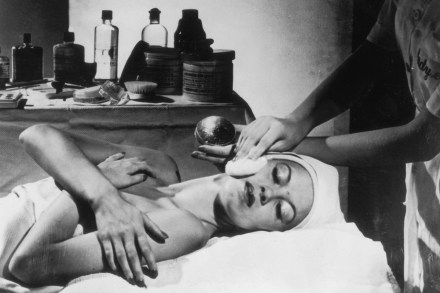
Having just turned 65, I enjoyed a week of firsts. My first ever facial and my first ever yoga class progressed to my first ever impedancemetry session, my first ever photobiomodulation session, my first ever hyberbaric chamber session, my first ever cryotherapy session, my first ever sensory deprivation session, my first ever neurofeedback session and my first ever revitalising wave session. I was at the Nescens Clinic Centre for Aesthetic and Regenerative Medicine near Geneva, marking my milestone birthday by attempting to defy age. It was Mrs Ray’s idea. Concerned that I was beginning to look and act like the old soak that I am, she wanted them to break my bad habits and help me shed ten years.

Figures emerge like ghosts from Antonia Showering’s canvases

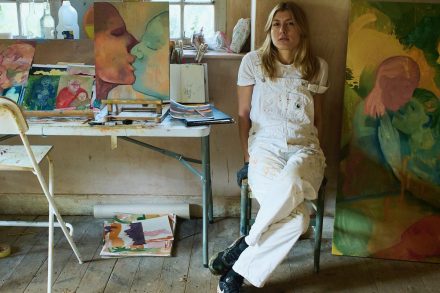
Figures emerge like ghosts from Antonia Showering’s canvases, their sketchy lines and expressionistic color palette relaying an atmosphere of deeply personal narrative as much as an emotional message, wordless but with universal resonance. Take 2025's "The Waiting Room" (2025), from her current show, titled In Line, at Timothy Taylor: A woman, resting on a bed in a pool of maroon, has just given birth; her belly appears aglow in a warm yellow as her newborn, outlined in pale purple, rests next to her, umbilical cord still attached. “I wanted to talk about the vulnerability about someone postpartum,” says the artist. The hues she’s employed are bodily, those of flesh, fat, and veins, yet here transcend into a surreal haze of life’s first moments. Antonia Showering, 5L (2024).

Antonia Showering

How Liberation Day rocked Switzerland

When President Donald Trump gathered the world’s media to the White House Rose Garden to unveil America’s “Liberation Day,” Swiss viewers were cautious but optimistic.  Administration insiders had assured us that we had nothing to fear. During Trump’s first term in office, Switzerland had been the port in the storm of European opinion. As outsiders to the European Union, we were able to forge our own relationship with the American superpower. Our small alpine nation, with its population of 9 million, rose from the eighth largest foreign direct investor in the United States to the sixth. Swiss companies, like Nestle, Stadler and Novartis, ramped up their American operations, generating profits and jobs for both countries.

switzerland

Breakfasts, massages and reinvigorating Swiss thermal waters

Last January, one of the first things my son-in-law wanted to know was if I’d found a “boy toy” after spending a week at Lavey-les-Bains, following our Christmas holiday in Burgundy, where half of us now live. The other half lives in Australia. The renowned Swiss thermal waters lie under the Dents du Midi that rise above Lac Léman in the Swiss canton of Valais like four, glistening white, enamel incisors. Applicants for Swiss nationality must name Les Dents if applying for a Swiss passport in le Valais or le Vaud where we lived for sixteen years, from 1968 to l984. My answer was “no.

Swiss

Biohacking and skiing at the Alpina Gstaad

Biohacking, one of the more bearable buzz words of recent times, refers to the practice of using science, technology and self-experimentation to improve the body’s function and performance. When I was recently invited to experience the Alpina Gstaad’s new three-day wellness program — designed to “biohack your ski trip for improved performance and mood” — I didn’t hesitate. Here was not only a chance to improve my disastrous skiing but also to restore my pitiful liver, which had taken a particularly heavy beating in the festive run up to 2025. What better place to kick off “Dry January” than a five-star spa tucked away in the Bernese Highlands?

gstaad biohacking

The rotten core of Credit Suisse

From our UK edition

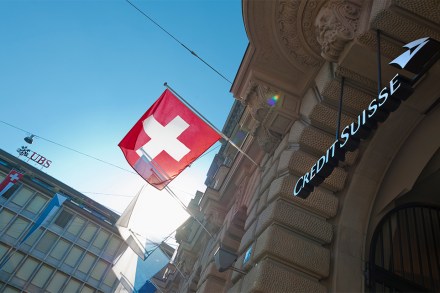
The tale of Credit Suisse ought to be Buddenbrooks on steroids. A staid Swiss lender enters marriage with a racy Wall Street investment bank and gives birth to a monster. Scandal follows scandal. CEOs come and go. In March 2023, the bank ends up being flogged to its arch rival UBS for a miserly $3 billion. Inside Credit Suisse, the backstabbing and treachery were more suited to a medieval court Duncan Mavin is well placed to tell this corporate horror story, having written a book about one of Credit Suisse’s most notorious clients, Lex Greensill, an Australian melon farmer turned fintech champion. Greensill Capital, which employed David Cameron as a Whitehall lobbyist and international frontman, turned out to be a house of cards.

Treachery! Americans rank Britain the world’s best country

It turns out the Revolutionary War was fought in vain. According to a US News and World Report survey, most Americans prefer the United Kingdom to these United States. In Cockburn’s estimation, this a betrayal, a national embarrassment and the least patriotic thing an American could say. We might as well join the Commonwealth.  According to the US News annual Best Countries ranking released on Wednesday, Americans believe the UK is the best country in the world. The report, which aggregates data from respondents worldwide about cultural influence, quality of life and power among other categories, ranked Switzerland first for the fifth time in eight years. America came in fifth, falling one spot since last year.

nigel farage britain united kingdom country

Haunted by Old Russia: Rachmaninoff’s lonely final years

From our UK edition

Ask a roomful of concert pianists to pick their graveyard moment in Rachmaninoff’s Piano Concerto No. 3 (1909) and they’ll almost certainly point to five or so pages halfway through the last movement where an ant nest of piano notes infests a sparse orchestral threnody. When an elderly Vladimir Horowitz performed this passage – lank, dyed pageboy hair framing his Bela Lugosi face, hands darting over and under each other like butterflies – he looked more like a weaver at his loom than a virtuoso at his instrument. There are flickers of concentration, but the overall impression is one of extreme insouciance. ‘I am a Russian composer, and the land of my birth has influenced my temperament and outlook’ The originator of this style of playing was Sergei Rachmaninoff himself.

Credit Suisse lingers still. Why?

If G-SIBs were a gentlemen’s club rather than a category invented by the Basel-based Financial Stability Board, Credit Suisse would have been kicked down the front steps months ago. G-SIBs are the thirty "global systemically important banks" and even within that list, Credit Suisse counted among those with the lowest "required levels of addition capital buffers": in short, regulators considered it rock-solid. But that was a judgment on its end-2021 balance sheet, not its management. Credit Suisse has been so badly run for so long — so riven by tension between the dull Swiss wealth business it ought to have been and the global player it imagined itself to be — that some of us wondered how it survived.

credit suisse

A deluge of deviants in Davos?

Sex workers take Switzerland! As the World Economic Forum gets underway in Davos, it's not just politicians and business leaders flying in for a few days: droves of prostitutes are said to be heading into the Alpine resort town. Cockburn can’t pretend to be surprised: what more do we expect from the 1 percent? One visiting escort told German tabloid Bild that she's charging $700 per hour or $2,500 per night. She also said she preferred the visiting Americans and Brits as bedfellows: "Unfortunately, Germans are stingy when it comes to tips." Customer details, given their high profiles, are typically hush-hush — politicians could get in big trouble back home if their excursions became public.

prostitutes davos

How to see Switzerland by train

From our UK edition

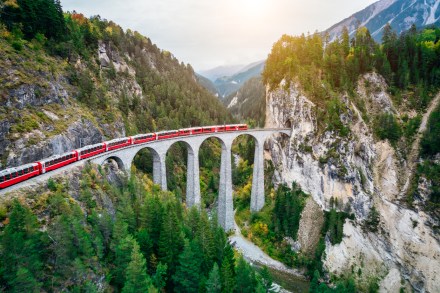
As we all know, the Swiss love their clocks, their cheese and their chocolate. They also adore their railway. The trains are clean, comfortable, convenient and you can set your (Swiss) watch by them.  The system is 175 years old this year, a fact recently celebrated by the running of the world’s longest train through the Swiss Alps. It was quite a feat and took years to plan. The 1.2 mile-long train comprised 100 carriages and passed over 48 bridges and through 22 tunnels during its 15-mile journey, setting a new Guinness World Record as it did so. If you’re exasperated by British trains with the constant strikes, delays, cancellations, melted rails, frozen points, leaves on the line or the ‘wrong type of sunlight’ (do you remember that one?

The roots of 20th-century German aggression

From our UK edition

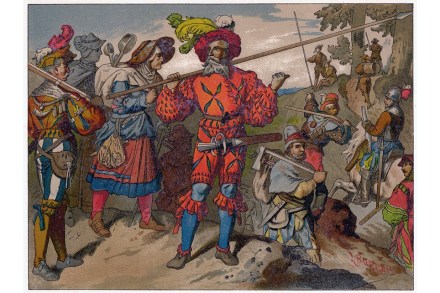
It is the contention of Peter Wilson, professor of the history of war at Oxford University and the author of an acclaimed history of the Thirty Years’ War, that military historians have focused too much on the German wars of the 20th century in trying to understand German ‘militarism’ as a distinctive characteristic – a ‘genius for war’ imitated by others. As he points out, Germany and Austria lost the first world war, and Germany, with Austria now attached, lost the second as well. A ‘genius for war’ evidently needs some rethinking. Wilson wants to place these modern wars in perspective, stretching back to the 15th century.

High tea with the Queen in a heavenly palace?

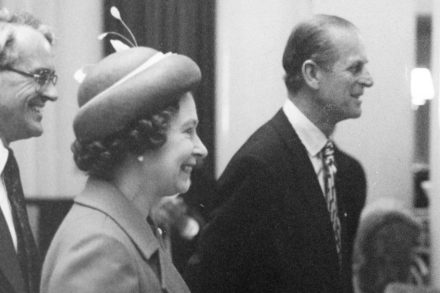
My British husband, Richard, and I were glued to our TV on September 8 when Queen Elizabeth passed away. We, like all who took a keen interest in the British royal family, and admired the Queen and Philip, had been expecting her death — she seemed so frail on the balcony during her Jubilee. I particularly noted the beautiful baby blue ensemble she wore with a matching brimmed hat. It seemed just right for her — modest, feminine and fragile. Richard was born and raised in the UK and was of the generation that stood up when the King or Queen came on the telly.

queen elizabeth richard

A Joycean odyssey

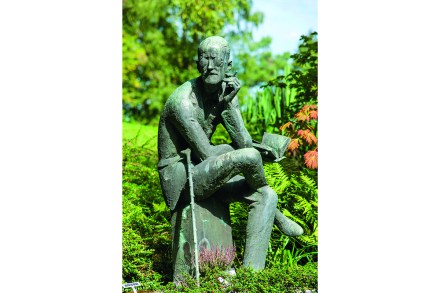
In retrospect I should have done it the other way round. When I mapped out the walk from my elegant Zurich hotel it looked to be about twenty minutes. What I failed to spy was the topography — and soon I was climbing a pretty serious hill through a high-end residential neighborhood. It was hot. I soldiered on, obviously appearing to the unamused Swiss on the sidewalk a weird and confused American, huffing and puffing and smoking. Then the little mountain plateaued into a blind road, a ball field and across from it the cemetery. Now it was just a matter of finding his grave. No writer, possibly no person I have never met, has occupied as much time in my mind as James Joyce. I first read Portrait of the Artist as a Young Man at fifteen.

Joyce

The timeless mystery of Charlie Chaplin

From our UK edition

Eleven years ago, I was summoned to the Manoir de Ban, a huge white house overlooking Lake Geneva, to meet Michael Chaplin, Charlie Chaplin’s oldest surviving son. Charlie Chaplin had lived here for the last 24 years of his life. Now the house was empty, and the family wanted to turn it into a museum. I doubted it would ever happen, but I was keen to look around the house and I was eager to meet Michael. Chaplin’s biographer, Simon Louvish, had called him ‘the family rebel’. Michael had written a frank teenage memoir called I Couldn’t Smoke the Grass on My Father’s Lawn. The house was all shut up, but Chaplin’s looming presence was everywhere.

‘Staying Switzerland’ on Ukraine is impossible

From our UK edition

The striking thing about the financial sanctions on Russia is not their severity, but just how many countries are joining in the effort. Switzerland has today announced that it will adopt the EU sanctions on Russia, particularly significant because it has been the biggest recipient of private transfers by Russians in recent years. The fact that such a traditionally neutral country is imposing sanctions will deepen the wedge between Putin and the rest of the ruling elite. Meanwhile in Asia, Japan, South Korea and Singapore have signed on to the economic measures on Russia.

We could learn a thing or two from Swiss democracy

From our UK edition

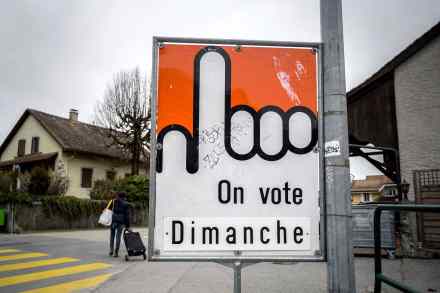
There was another referendum in Switzerland over the weekend. This one was about protecting the young from the evils of tobacco by banning advertising anywhere children might see it. This strikes me as a good deal more liberal than the measure from New Zealand’s mildly fascistic Jacinda Ardern, who insists that young people must never smoke at all, ever, or indeed the situation here where none of us is allowed actually to see a cigarette packet in case it gives us ideas. But it’s not just cigarette advertisements that the Swiss were voting on. There are other referendums on animal (and human) experiments in research as well as a couple of lesser measures to do with stamp duty and the media.