Swimming

The truth about the French drownings

From our UK edition

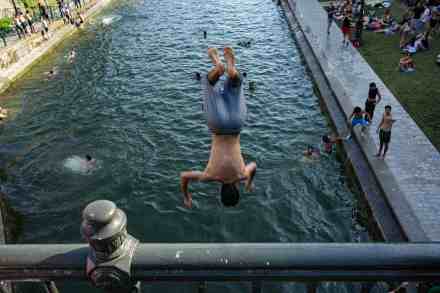
More than 90 people drowned in France between 19 June and the end of the month during the country’s intense heatwave. Government figures released last week were accompanied by a warning from sport and youth minister Marina Ferrari. ‘Very young children are particularly vulnerable and must not be left unsupervised,’ she said. ‘There are young people engaging in dangerous behaviour, such as “I’m going to jump off a bridge” or “I’m going into an unsupervised canal”.’ Such antics were de rigueur during the heatwave, particularly in cities such as Paris, where people cooled off by leaping from bridges into rivers and canals. In the Canal Saint-Martin, in the heart of the capital, two young men drowned in separate incidents.

Wild swimmers are the most boring people in Britain

From our UK edition

There’s much to enjoy about the autumn months in the UK. Teenagers are restricted to school playgrounds rather than the high street between the hours of nine and three. Landlords in rural pubs start remembering that they have a fireplace that might be worth lighting. And provincial airports become populated with polite, cashmere-wearing pensioners on their way to the Azores, rather than gangs of stags and hens drinking the Wetherspoons dry at 7.30 a.m. But there is a fly (or should that be waterborne parasite?) in the ointment. There was a time when there was no such thing as ‘wild swimming’. You just called it swimming outdoors.

Reform’s motherland, Meloni’s Italian renaissance & the adults learning to swim

From our UK edition

46 min listen

First: Nigel Farage is winning over women Does – or did – Nigel Farage have a woman problem? ‘Around me there’s always been a perception of a laddish culture,’ he tells political editor Tim Shipman. In last year’s election, 58 per cent of Reform voters were men. But, Shipman argues, ‘that has begun to change’. According to More in Common, Reform has gained 14% among women, while Labour has lost 12%. ‘Women are ‘more likely than men… to worry that the country is broken.’ Many of Reform’s most recent victories have been by women: Andrea Jenkyns in the mayoral elections, Sarah Pochin to Parliament; plus, there most recent high profile defections include a former Tory Welsh Assembly member and a former Labour London councillor.

London is due a lido renaissance

From our UK edition

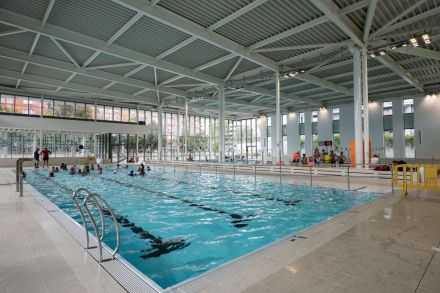
There are 1,000 spaces available for the 6-9 a.m. lane swimming session at Tooting Bec Lido in south London. On Sunday it was fully booked. After a few frantic lengths (at 91m, it is Europe’s longest), we are all shooed out at 8.50 a.m. by the lifeguards to make way for the daytime swimmers. Those slots are like gold dust and sell out within minutes of becoming available. Across London it’s the same story: swimming spaces are a precious commodity. After three heatwaves so far this summer and the warmest June on record for England, it’s easy to see why so many people are craving access to outdoor water. In total, the capital has just 15 lidos (if one includes a couple of ponds). Even the Serpentine is fully booked on good days.

Penn finally accepts that Lia Thomas is a biological man

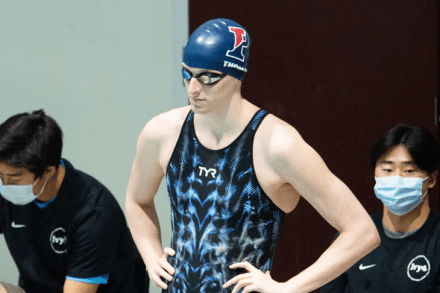
The University of Pennsylvania just reversed course on one of the most controversial sports decisions in recent memory. After a federal investigation, the university agreed to restore titles and records to biological female swimmers who were forced to compete against Lia Thomas – a transgender-identifying male athlete. In addition, Penn will send apology letters to the affected athletes and adopt sex-based definitions going forward, limiting women’s sports and facilities to biological females.It’s being hailed in some circles as a win for common sense and women’s rights. And it is. But let’s be clear: this was not a moral epiphany. It was a forced retreat.Penn, like many elite institutions, didn’t arrive at this outcome willingly.

Lia Thomas

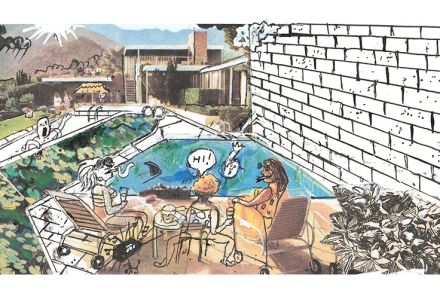
Is it ever acceptable to ask to swim in a friend’s pool?

From our UK edition

I’ve always loved English swimming pools. I can’t help it – I am a pool-fancier. The lumpy feel of the blue lining beneath pale feet; the peculiar, chlorinated smell of the pool hut where you do the knicker trick; the scratchy pool towel, the near-collapsing deckchair by its side; the greying sky overhead. There’s the swimming, too, but that’s not what gets me. No, the English pool is a particular social idea, a knowing nod to vulgarity, a paradis artificiel in our rainy climes. Chips Channon, an early adopter, knew it when he insisted on putting in a pool at Kelvedon in 1937, as did Viscount Astor when he went against his mother Nancy’s wishes and did the same at Cliveden.

Do you have Dryrobophobia?

From our UK edition

You first start to notice them in that desultory way you become aware of the floating specks across your vision that signify a migraine is on the way. Perhaps you saw a woman in Waitrose wearing a black one and wondered why she was sporting a giant version of the Umbro football manager’s coat from the 1990s. Then someone pointed out the hot pink camo combo on the sidelines at an under-12s rugby tournament and, looking across the pitches, you realised just how ubiquitous they have become. By the time you spot my own hate-favourite – the Dryrobe Advance Abstract, a limited edition now out of stock which looks like the old Channel 4 test card – you may be experiencing full-on throbbing temples.

The Sarah Storey Edition

From our UK edition

28 min listen

Dame Sarah Storey is Britain’s most successful Paralympian of all time. She is a 45-time World champion, a 23-time European champion, and a 77-time world recorder breaker – including times she broke her own records. Earlier this year she won her 18th and 19th Olympic golds at the Paris 2024 games. On the podcast, Sarah talks to Katy Balls about switching from swimming to cycling, the influence of bullying at school and the funding disparity that Paralympians face. She also talks about working with Dan Jarvis and Andy Burnham on improving cycling infrastructure, as well as her preparations for the next Olympics – Los Angeles 2028. Plus, where does she keep all those medals? Produced by Patrick Gibbons.

A new approach to swimming lessons

If the meme is to be believed, I do not hate journalists enough. You would be hard-pressed to find a more self-loathing individual — and yet I cannot bring myself to cheer on AI or venture capital’s march through the newsroom. I worry not for my own sake but for the future of my favorite type of journalist: the foreign clickbait farmer. Armed with a broken pocket translator and battered Fourth Edition of Roget’s Thesaurus (1977), these writers fearlessly tackle the issues of the day.

swim

Paradise lost: the decline and fall of Hampstead’s ladies’ pond

From our UK edition

‘We’re surrounded by sociopaths,’ I whispered to my friend as I scanned the scene before me. We were sitting on a bench overlooking the meadow at Kenwood Ladies’ Pond on Hampstead Heath, and for the first time in my 20-odd years of visiting, I felt a sense of detachment: like I was an observer rather than a participant. A lot’s changed since the pandemic, but nowhere have I felt it more keenly than when I go for a swim at my beloved pond. This last, precious corner of paradise in our smog-filled city has been desecrated, and I am heartbroken. The ladies’ pond opened in 1925, and nearly 100 years on it’s still the sole women-only outdoor swimming amenity in the country. For most of that time it was a fun, free and flexible delight.

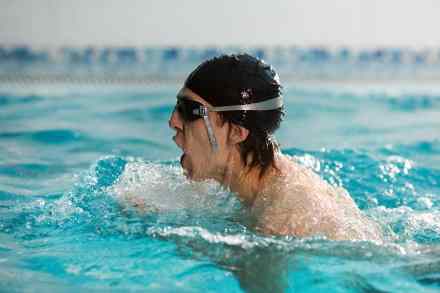
The art of breaststroke

From our UK edition

I’m house-sitting for the foreign correspondent while he attends the funeral of his beloved father-in-law Toto, the last of the languid Old Etonian gentleman bankers. And he has a pool. And what a pool it is. The days here are roasting; the sun is now the enemy. Already dead leaves crackle underfoot. So I swim in the evening, when it is a little cooler. The pool is built into the hill above the house. On one side is a wide apron of smooth white stone slabs. Beyond the apron is a rose garden and stone-built pool house with power sockets and a beer fridge. On the other side the water falls over a brim with an ‘infinity’ effect.

Swimming with the snakes

Perhaps being a Pisces gives me a natural affinity for water. Not all water, mind you. I’ve never liked to swim where I can’t see what’s beneath me. I prefer to believe that my love of water comes from spending so many early summers in our swimming hole in Weston, Connecticut. When my father was making a barn into our house and the surrounding fields into gardens, lawns and terraces, using boulders and rocks from the notoriously rocky Connecticut soil for foundations and borders, he was intentionally creating an unusual home. When he used more rocks to make a swimming hole for dipping his sweaty body, he unintentionally created a watery playground for the family — a summer haven.

snakes

Lia Thomas doesn’t deserve our compassion

Reka Gyorgy showed commendable courage this weekend for finally speaking out against the National College Athletic Association's rules regarding trans competitors. The Virginia Tech swimmer and Olympian was bumped out of a finals spot in the 500 free due to transgender University of Pennsylvania swimmer Lia Thomas's participation. In a letter posted to her Instagram account, Gyorgy wrote, "It feels like that final spot was taken away from me because of the NCAA's decision to let someone who is not a biological female compete... [Thursday] is the result of the NCAA and their lack of interest in protecting their athletes." Gyorgy is one of the first NCAA female swimmers to speak publicly about the negative impact Thomas's participation in the sport has on women.

lia thomas

Cold water swimming

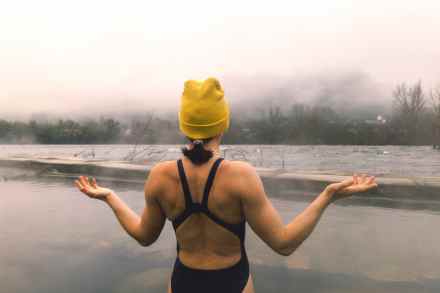
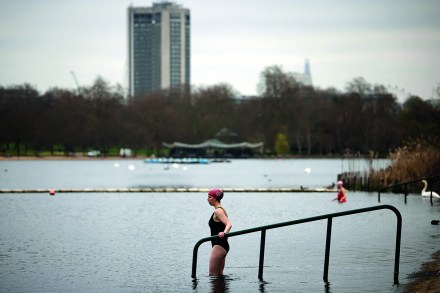
The woman on the path has come to a dead stop. She’d been shuffling along in that bunched-up posture we all developed when we bought smartphones, a two-fingered salute to the millennia of evolution that managed to pull humans into an upright position. Now she’s staring, open-mouthed, at her surroundings. I rather enjoy the shocked faces of passersby who catch sight of us swimmers at the Serpentine Pond in Hyde Park in our flimsy suits as we lower ourselves into the cold water each morning. I look still more shocking when I get out. My skin turns from its normal skimmed-milk color to bright neon, as though it has been slapped. And it has in a way: when you first enter water thats barely above freezing, you do get a shock.

swimmers

Floods you with fascinating facts: Trees A Crowd reviewed

From our UK edition

Listening to Trees A Crowd, a podcast exploring the ‘56(ish) native trees of the British Isles’, solved one of childhood’s great mysteries for me. Why, when you plant a pip from one type of apple, does it grow into a completely different type of apple tree? The answer — one kind of apple tree will typically cross-pollinate with another variety to pass on a different set of genes — is less interesting than the next bit. Which is that if you do plant, say, a Braeburn seed, and it takes, you’re likely to end up with crab apples.

Letters: Police must focus on deterring crime, not responding to it

From our UK edition

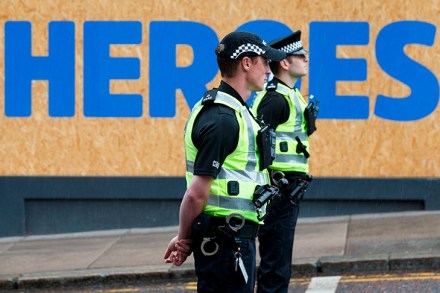
Deterring crime Sir: Rod Liddle is right to highlight the politicisation of the police as a source of their inadequacies, but I think he misses the crucial point (‘Defund the police’, 27 June). We simply do not have bobbies on the beat to even feel sympathy for, and this means that constructive relationships between a recognisable police officer and their community are a rarity. As Kevin Hurley describes, many black youths in our cities have nothing but hatred towards police officers, and this cannot be a surprise when the only interactions they have with them are being forced to empty their pockets after being suspected of criminal activity.

Letters: The joy of balconies

From our UK edition

The closing of churches Sir: Stephen Hazell-Smith is quite right in writing that churches should re-open (Letters, 18 April), however the issue is now more fundamental. Recent weeks have demonstrated a crisis of leadership in almost every aspect of national life, excluding the Queen, who has exercised a spiritual leadership made necessary by the failure of bishops. The closing of churches may be seen as a defining moment in the life of the Church of England. As the Archbishop of Canterbury broadcast from his kitchen on Easter Day, impervious to the damage his ‘leadership’ has caused, many Anglican clergy and people I know looked to the image of the Pope in an almost empty St Peter’s, and saw the true image of Christian service.