Strategy

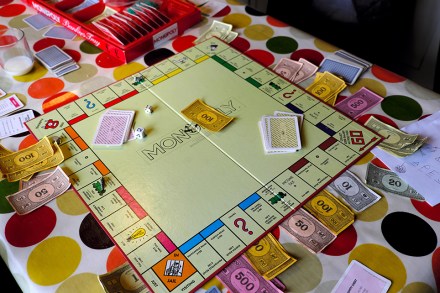
Playing Monopoly is not such a trivial pursuit

Which came first to the designers of chess: the rules or the metaphor? It feels impossible to prise the system from the story: a military battle between two monarchs, each with perfectly symmetrical assets and equally balanced capabilities. Yet there have been dozens of ‘reskins’ of chess, swapping the kings and their minions for characters from, say, Lord of the Rings, or The Simpsons, or even, bewilderingly, M&M chocolates. Play is the primary way in which every human first tests and explores the world  Sometimes the new metaphor imbues the game with a socio-political frisson. A recent example pitches rockers – white men in leathers holding screaming guitars – against jazz musicians – black men in white suits nursing saxophones.
We should all embrace the power of games

If both players in a game of draughts stick to their optimal moves, the game will always end in a draw. You or I might have guessed that anecdotally. But being a mathematician, Marcus du Sautoy knows it for sure. The calculations that proved it took 200 desktop computers 18 years to perform. The Prussian High Command used a game called Kriegsspiel to test the abilities of aspiring officers When such a simple game produces such numerical complexity, imagine the fun a mathematician can have with something like Go, the Chinese institution whose number of possible games contains an estimated 300 digits. (The number of atoms in the observable universe only contains 80.

Russia’s brutal strategy of war is failing

From our US edition

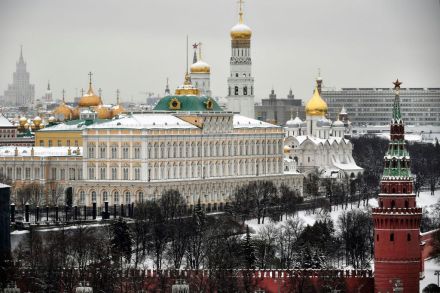
Ukraine’s devastating attack on the Crimean Bridge and Russia’s sickening response — deliberately targeting civilians — perfectly encapsulate how these adversaries are fighting this war. Ukraine has a coherent strategy, effective operational design, and close coordination among its forces. Russia is failing because it has none of this. The centerpiece of Ukraine's strategy is eviscerating Russian combat power without getting into a raw slugfest that would sacrifice its own troops. That means knocking out Russian combat power without a head-on battle, wherever possible. How does Ukraine do that?

Another wasteful defense budget for the Pentagon

From our US edition

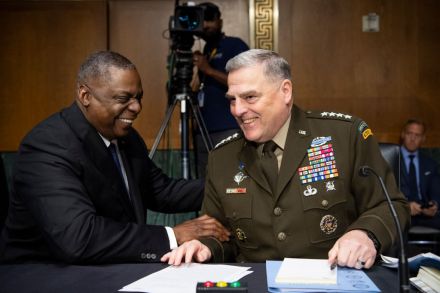
In a perfect world, lawmakers responsible for crafting defense policy would actually debate defense policy. Yet rarely does this occur when the annual National Defense Authorization Act (NDAA) works its way through Congress. If there is debate, it typically revolves around numbers: how much money does the Pentagon need to keep the United States safe and ahead of its strategic competitors? How many F-35 airframes should be purchased for the Air Force? How much cash should be appropriated for the various “assurance initiatives” the Defense Department runs on a daily basis? This year was no different. The Senate this week sent a compromise $768 billion NDAA to President Biden’s desk in a resounding vote after a multi-day hiccup over amendments killed the original version.

congress defense budget