Stock market

Silver linings: the asset that’s outperforming gold

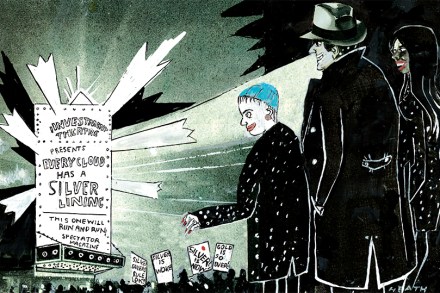
It could have been technology stocks such as Amazon and Zoom, of course; or government bonds; or cash; or a property, preferably in the countryside. As the COVID-19 crisis rippled around the world and locked-down economies crashed into one of the worst recessions ever recorded, there were plenty of different ways investors might have tried to ride out the storm. But there was one asset they could easily have overlooked, and yet which would have outperformed almost any of them: silver. For much of the past decade, silver has been ignored as a largely irrelevant alternative to gold. In the past few months, however, it has started to shine. The precious metal has soared in price, outperforming most alternatives.
silver

The stock market isn’t the success story Trump thinks it is

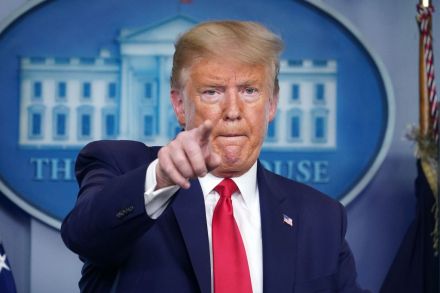
COVID-19 is still raging, with little sign of coming under control. The economy is already a tenth smaller than it was at the start of the year. Joblessness is soaring. And the budget deficit? Don’t even ask. But, hey, perhaps we shouldn’t worry about any of that. As the President of the United States keeps pointing out, the stock market is doing great, and, in his opinion, anyway, that means America, to borrow the kind of slogan that fits neatly onto a baseball cap, is great again as well. There is a problem, however, with Trump’s breezy 21-character analysis. It is not really true. The main equity indices reflect many different things, and the health of the economy is not always one of them. https://twitter.

stock market

Why are US shares performing so well when the economy isn’t?

A staggering 20 million Americans lost their jobs in April and yet the US stock market had its best month for decades, with the S&P 500 up 13 percent. Since then job losses have continued to mount, and yet the market is still higher. How can US shares be doing so well when the evidence of economic devastation is overwhelming? Even odder, the US stock market (S&P 500, down 13 percent year to date) is doing far better than the UK (FTSE 100, down 23 percent YTD) and European indices (Eurostoxx, down 26 percent YTD), and yet UK and European governments have protected millions of jobs through various furloughing schemes.

market shares

Biden lets Trump write his own political epitaph

It’s time to take stock of Congress. Georgia Sen. Kelly Loeffler’s new financial disclosures indicate that in recent months she hastily divested herself of even more stocks than was previously apparent. A riveting new report from the Atlanta Journal-Constitution has the goods: it indicates that even as Loeffler — reputed to be worth about $500 million together with her husband Jeff Sprecher who, incidentally, is the chairman of the New York Stock Exchange — was issuing panegyrics to Trump for his visionary leadership, she was dumping millions, including $18.7 of Intercontinental Exchange stock and investments in T.J. Maxx and Lululemon, in late February and early March. She also invested in a company producing coronavirus protective wear.

trump disinfectant

Coronavirus might not be all bad news for the stock market

From our UK edition

There cannot be many positive aspects to the coronavirus outbreak, but I wonder if it carries one for stock markets.  We had been told repeatedly, before all this, that the markets badly needed a ‘correction’ after their uniquely long bull run. If they were now sliding because of a banking or commercial event, confidence might collapse. If, however, they are falling because of a disease, will it also mean that confidence will recover more quickly once the disease is contained? This is an extract from Charles Moore's Spectator Notes, available in this week's magazine.

Market hysteria is not all down to coronavirus

Is this really about a virus? Oil has plunged 30 percent, the S&P Index seven percent. What is happening on the markets today has less the feel of a rational reaction to world events than one of the periodic panics which grips world markets — with coronavirus a mere excuse for a sell-off which was perhaps coming anyway. The deadliest words for world markets are not ‘coronavirus’ and ‘Covid-19’ but ‘decade-long bull market’. The latter idea has planted in many investors’ heads that the good times could not have gone on much longer — there had to be a correction or crash. It is true, as well, that the US, in common with many developed countries, has not suffered a recession for over 10 years. That, too, feels unnatural.

market

Why has Trump followed his impulses to Iraq?

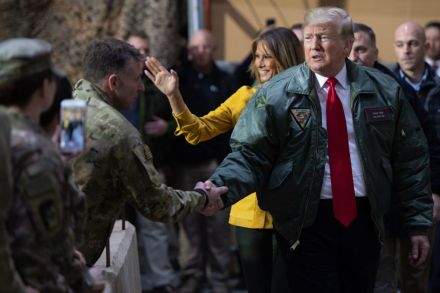
Better late than never. On the day that the New York Times unearthed the Queens podiatrist who, in exchange for favors from Fred Trump, had diagnosed young Donald as suffering from bone spurs in 1968 that precluded military service in Vietnam, he finally visited a war zone. Trump didn’t seem to be suffering from any overt infirmities as, together with Melania, he mingled with troops in Iraq, where he seems predisposed to maintain a military presence. Keeping armed forces in Iraq will allow him to up the pressure on Iran if he chooses and to launch commando missions into Syria. To the probable relief of his aides, his trip also gets him out of the White House, where he was fulminating about the refusal of Democrats to pay for a border wall.

iraq

Why I’m boycotting ‘Davos in the Desert’

From our UK edition

The current stock-market correction has been steaming down the track since August and I claim no wisdom for having predicted it: the FTSE100 dipped below 7,000 at the start of the week, having shed all of the 10 per cent it had gained since it began to surge in April. Weaker UK growth forecasts from the EY Item Club, reflecting the impact of the Brexit impasse on business and consumer confidence, are just one factor in the autumnal mood. But let’s cheer ourselves up with a round of applause for our veteran investor Robin Andrews, whose ‘Faangs to Banngs’ trading idea I offered you on 1 September.

Is the UK uninvestable?

From our UK edition

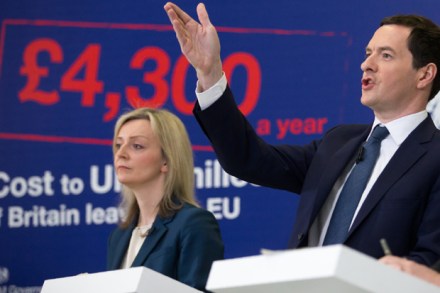
It is always a pleasure to spend time in the company of Messrs Neil, Nelson and Forsyth. True to form, an evening of lively dialogue, in a packed auditorium at the Royal Institute of British Architects, discussing the implications of the chancellor’s spring statement last week, did not disappoint. Prior to the event I have to admit to being a tad gloomy. This had less to do with the cold I was nursing, and more to do with a call I received recently from a broker friend of mine. He told me that one of his clients, running a multi-billion dollar global equity fund out of New York, had just sold his last remaining UK equity. Hardly music to the ears of an UK equity fund manager.

A return to normality

From our UK edition

It is easy to mock the most strident critics of capitalism, like Bernie Sanders and Jeremy Corbyn. It’s harder to ask whether they might actually have a point. Consider the past ten years of evidence. Since the collapse of Lehman Brothers, wages for ordinary workers have been on the floor — even today, the average pay packet in Britain is lower than it was before the crash. The main response to the crisis has been to print money, through quantitative easing and ultra-low rates. This artificially inflates assets. And who benefits? Those who have the most assets: in other words, the very rich. Since the crash, the amount of wealth in Britain has risen by more than £4 trillion — almost half of which has accrued to the richest 10 per cent of households.

London Stock Exchange picked a bad year to join a pan-European project

From our UK edition

The marriage of the London Stock Exchange and Deutsche Börse may not be stone dead but that’s the way to bet, as Damon Runyan would have said. This so-called ‘merger of equals’ — with the Germans holding the larger stake and the top job but with the head office in London, at least to begin with — has foundered over a demand from EU competition authorities that the LSE should sell its majority stake in MTS, an Italian bond-trading platform. Having had its alternative proposal (to sell a French clearing operation) rejected, the LSE refused to comply, allegedly without first consulting its German partners.

The bust that wasn’t

From our UK edition

It has been a month since the UK voted to leave the European Union — but something is missing. Where is the economic collapse? What of EUpocalypse Now? Where is the Brexageddon that we were promised? To the shock of many — not least business titans who bankrolled the Remain campaign — the instant collapse doesn’t seem to be happening. The UK economy is, for now at least, taking Brexit in its stride. The oft-predicted job losses? During the three weeks from 23 June, job listings were up 150,000 compared to the same period last year according to Reed Group, a recruitment consultant. ‘That’s an 8 per cent rise,’ says James Reed, its chairman. ‘The vote hasn’t affected things — people are still hiring.

Is the sale of our only global-scale tech firm to Japan a vote of confidence in the UK?

From our UK edition

It’s easy to see why Arm Holdings, the UK’s only global-scale internet technology company, looked worth a quick £24 billion bet by Softbank of Japan. At $1.32 to the pound, the price is a lot cheaper than it could have been before polls closed on 23 June, when sterling stood at $1.50; that made it easy for Softbank to offer a fat premium over last Friday’s closing Arm share price — and harder for Arm’s board to say no. As for Arm’s business, it’s unlikely to be knocked by Brexit since its microchips are priced in dollars and sold chiefly to smartphone makers in Asia and the US. And its prospects — in the development of the ‘internet of things’, from driverless cars to WiFi-powered kitchens — are huge.

If you’re riding the FTSE rebound you might still want to sell in May

From our UK edition

When the FTSE100 fell close to 5,500 in February, we all said ‘Mr Bear is back’. On Tuesday the index hit a high for this year of 6,400, and we all wondered whether Mr Bear had done what I said he wouldn’t, and shuffled back to hibernation. But the truth is that shares have lately moved in parallel with the oil price, which has perked up partly for technical reasons including temporary curtailment of supply from Kuwait; and a major element of the FTSE recovery is in commodity stocks that had been wildly oversold. So we shouldn’t read any great swing of confidence into a market still 600 points down on a year ago.

This great commodity rally doesn’t mean that spring has arrived

From our UK edition

All in all, this is an odd moment for an outburst of high spirits: not from me — I’m as phlegmatic as ever — but from commodity investors. The price of a barrel of oil has rallied from $27 to $40 after talks between Saudi Arabia and Russia about restricting supply; one pundit called that ‘meaningless theatre’ but others expect a climb back to $50. In a similar mood, copper prices have risen by almost a fifth — reflecting producer cutbacks combined with a belief that the Chinese downturn in demand might not be so severe as was first feared.

Apocalypse now? Markets seem set on a self-fulfilling prophecy

From our UK edition

All this talk of a new financial apocalypse, so soon after the last one, is starting to annoy me. Partly because investors as a crowd are so irrational; -partly because so much that governments and central banks have done to contribute to the current market mayhem seems to work against the sensible efforts of ordinary folk to build a bottom-up recovery. Markets first. We’ve had hissy fits about China, even though connections between the Chinese and UK economies are so marginal. We’ve had near-hysteria about the prospect of (and in the US, the start of) rising interest rates.

Investment: This dragon won’t bite

From our UK edition

At the risk of sounding like Neville Chamberlain, how bizarre that we should be panic-selling our stock-market investments in reaction to the news of a slight economic slowdown in a faraway country to which we export little and whose direct investments in our own economy created fewer than 5,000 new jobs last year. Throughout the mini-crash of 2016, it has become received wisdom that a Chinese slowdown is threatening the global economy, spreading contagion to every corner of the globe. The fear manifested itself in a 3.

Mr Bear is back: sit tight because he may be with us for a while

From our UK edition

Like Leonardo DiCaprio in The Revenant, we’ve just been savaged by a bear but we’ll probably survive. Leading UK-listed stocks have fallen 20 per cent from last April’s peak after a six-year climb, and the FTSE100 chart has taken on a saw-toothed downward trajectory that suggests, to those who rely on such indicators, that there are further falls to come. The end of quantitative easing and the US Federal Reserve’s first interest-rate rise in almost a decade set the direction of travel. The sinking oil price, combined with worries about a global debt build-up, darkened the mood. Repeated bouts of mayhem on the Shanghai bourse, though little or nothing to do with western investors, have provided a news peg.

The Spectator’s Notes | 21 January 2016

From our UK edition

Many have rightly attacked the police for their handling of the demented accusations against Field Marshal Lord Bramall, now at last dropped. They ostentatiously descended on his village in huge numbers, chatted about the case in the pub and pointlessly searched his house for ten hours. But one needs to understand that their pursuit of Lord Bramall — though not their exact methods — is the result of the system. Because the doctrine has now been established that all ‘victims’ must be ‘believed’, the police must take seriously every sex abuse accusation made and record the accusation as a reported crime (hence the huge increase in sex abuse figures).

VW and the truth of engineering: say what you do, do what you say

From our UK edition

Not that I was much of a boy racer, but the sexiest car I ever owned was a 1982 Volkswagen Scirocco with the lines of a paper dart and the cornering of a cheetah. I once drove it overnight from the City to Tuscany with a blind date who barely uttered a word, en route or afterwards. In an era when British factories could make nothing better than a laughable Allegro or a downmarket Escort, everyone coveted a German car — the top choice for twenty-somethings being the VW Golf convertible (Sciroccos were rarer) whose quality came as a revelation after years of broken fanbelts and burst radiators on unreliable Minis. These were machines that spoke of Teutonic perfectionism and the will to win in global markets that we Brits had lost.