Stock market

Trumponomics is working

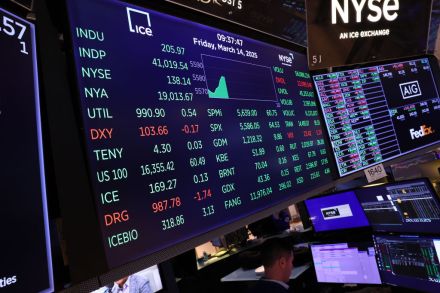
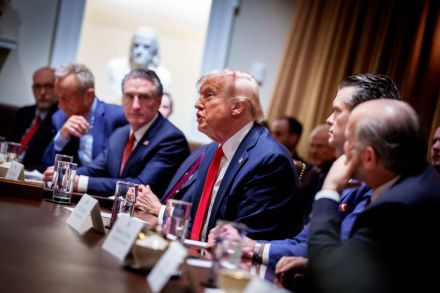
Remember the old quip about economists? “That’s all very in practice,” they say, “but how does it work out in theory?” Nobel laureate Paul Krugman of the New York Times is a splendid example of that sort of folly. On the evening of November 9, 2016, Krugman skirled that the election of Donald Trump would precipitate economic Armageddon. “If the question is when markets will recover,” he said, “a first-pass answer is never.” How could they recover since the nation had just elected an “irresponsible, ignorant man who takes his advice from all the wrong people,” that is to say, he didn’t take advice from people like Paul Krugman.Reality check: the day Krugman wrote that, the market closed at 18,589. In the last few days the Dow broke 50,000.

Trump

Are AI stocks about to crash?

Bitcoin has lost almost a quarter of its value. The tech-heavy NASDAQ index on Wall Street has started to fall. And even leaders of the industry, such as the Google CEO Sundar Pichai, have started to warn about valuations getting out of control. We already knew that AI was driving a boom in investment. But this week there are worrying signs the market is about to crack. The only real question is whether that turns into a full scale crash. Bitcoin, as so often, is leading the market rout. More than $1 trillion has been wiped off the value of the crypto market over the last six weeks, with Bitcoin itself down by 28 percent since its peak.

AI
1929 crash

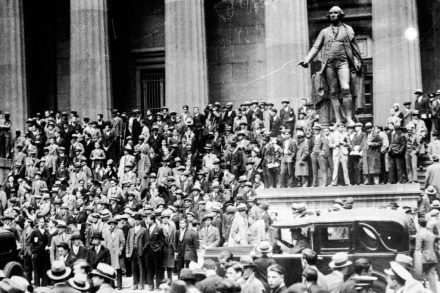
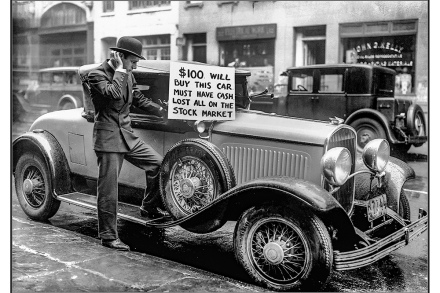
Andrew Ross Sorkin reconstructs the 1929 crash

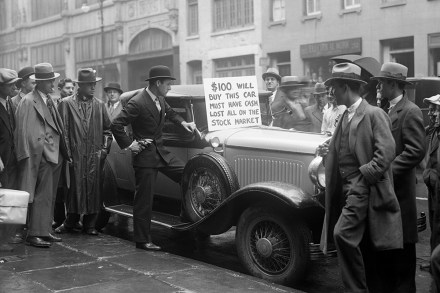
During the great financial panic of 1907, the banker J.P. Morgan locked the titans of the financial world in his lavish private study to determine which banks to rescue and which to let fail. This intervention saved the banking system, restoring public confidence. But trust in Wall Street was shaken to its core. Six years later, Congress passed the Federal Reserve Act, which sought to stabilize the American financial system by establishing a central bank to regulate credit and serve as lender of last resort. By the mid-1920s, the very mechanisms that were designed to promote stability had fueled a surge in stock market speculation.

Deals, deals, deals vs China, China, China

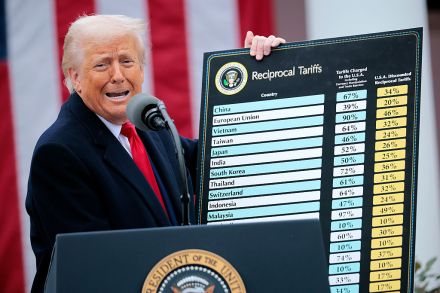
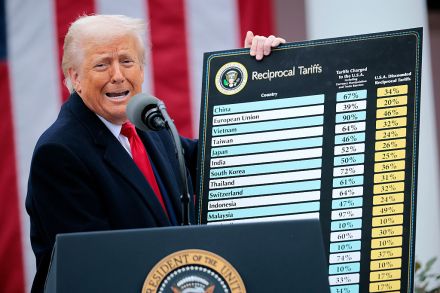
How was your Liberation Month? It’s been almost 30 days since Donald Trump stood in the Rose Garden of the White House and announced a shocking set of massive tariffs on the world. The event caused huge convulsions in the economic universe: trillions were wiped off the stock market and, under huge pressure, Trump did agree to a 90-day pause on reciprocal tariffs. After that he exempted electrical goods, though his standard 10 percent remains, and the heads of most financial analysts are still spinning trying to figure out what it all means. Yet for all the angst and the apoplexy, yesterday the S&P 500 index closed just 1 percent down from where it was at the beginning of the month.

Who knew about Trump’s flip-flop?

As a piece of financial punditry, it could hardly be bettered. “THIS IS A GREAT TIME TO BUY”, screamed a post on the platform Truth Social on Wednesday morning. Hours later, the S&P 500 surged by 9 percent – its biggest percentage rise since 2008. The only trouble is that the tipster handing out this invaluable advice was the same man whose announcement caused the surge in the stock market: Donald J. Trump. Unsurprisingly, it has raised questions about who knew that Trump was about to do an about-turn and delay tariffs for 90 days – and whether any of them used the information to their personal advantage. Insider trading has long been treated as a serious issue among corporations.

shares

The art of the pivot

“THIS IS A GREAT TIME TO BUY!!!” President Donald Trump wrote on his Truth Social account yesterday morning. With trillions of dollars wiped off stock market value since his tariff announcements last week, this appeared to be an attempt to manufacture a silver lining. It also happened to be a literal statement. Within a few hours, the stock market was surging as Trump announced a 90-day pause on the higher “reciprocal” tariffs for most countries, while hiking the tariff on Chinese goods to 125 percent. Was this careless? Intentional? Insider trading? According to the White House, it had been the strategy all along. The President told reporters it had been “the biggest day in financial history.” Speaking to his aides beforehand, Trump noted the market was rallying.

pivot

Trump loves chaos. What happens when he loses control?

“Don’t be a PANICAN,” the President shared on his Truth Social account this morning, as the Dow was dropping 900 points. This is Donald Trump’s new word for his tariff critics, who he has grouped together as the “new party based on Weak and Stupid people!” There is another way, the President insists: “Be Strong, Courageous, and Patient, and GREATNESS will be the result!” It’s another post in a long line of all-caps messages shared by the President over the weekend. “ONLY THE WEAK WILL FAIL!” was Friday’s update. “WE WILL WIN. HANG TOUGH,” was Saturday’s inspirational message.

control chaos

Give Trump’s tariffs a shot

So the big question is: will it work? Will Trump’s protectionist policies, announced with some fanfare at a Rose Garden event at the White House yesterday, increase American prosperity? Or will they harm the economy?  Opinion on that matter is sharply divided. In one corner we have the free traders. They are wringing their hands and warning about higher prices, disruption of international trade and a trade war no one can win.  In the other corner are – what to call them? Most are not “anti-free traders” or “economic protectionists” (though some are).  Let’s call them “fair traders.” They like the idea of free trade – in theory. What they don’t like is the ethic of “free trade for thee but not for me.

Is Trump’s tariff zeal beginning to wane?

The President can’t stop talking about his favorite word – tariffs – although this week his comments are having a new effect. Rather than plummeting, the stock market is showing signs of life – climbing by more than 1 percent – on the news that Donald Trump’s plans for “reciprocal” tariff seemed to have been scaled back significantly.  For weeks the President has been suggesting that come April 2, trade retribution would really kick in: any country that has an “unfair” trading partnership with the United States (Trump was even thinking of extending this to taxes like VAT) would see an equal import tariff imposed on the country.

Recession? What recession?

The stock market, traditionally a leading indicator, entered correction territory last week. But does that indicate that a recession is coming? Well, it’s an old saying on Wall Street that the market has predicted ten of the last three recessions. Markets hate uncertainty, and no one knows how President Trump’s efforts to use American tariffs to force our trading partners to lower theirs will turn out. But foreign trade is increasingly important to all countries, so it’s likely that, after some political Sturm und Drang, deals will be struck and international trade will continue the strongly upward path it has been on since the end of World War Two. By definition, a recession is two consecutive quarters of contraction.

shares

Can the MAGA coalition survive a recession?

The color red splashed across every news channel yesterday, as Donald Trump’s seemingly blasé attitude towards a possible recession wiped $4 trillion off the United States’s stock market. All day and all night, the airwaves were dominated by talk and speculation over the future of the US economy, as the President pushes forward (and pulls back) certain parts of his tariff agenda.  It’s the sheer uncertainty that has investors spooked, leading to one of the worst days on Wall Street in years. The details of this “period of transition” for the economy that the President alluded to are so vague, and so unclear, that you can make of the comments almost whatever you want.

recession

Has America checked out of Airbnb?

Airbnb is in trouble. Nick Gerli, CEO of real estate consulting firm Reventure, reports, “The Airbnb crash is real,” along with a list of the top ten cities where the company’s revenue has collapsed. “Watch out for a wave of forced selling from Airbnb owners later this year,” Gerli forbodes. https://twitter.com/nickgerli1/status/1673774695693385728 Last month the Wall Street Journal reported, “Airbnb reported higher revenue and profit in the first quarter, but customers reserved fewer-than-expected stays and the company gave a mixed outlook for the second quarter, spooking investors.” And while Investors Business Daily this week forecast “a new, more promising comeback attempt” for Airbnb stock, murmurings of an “Airbnbust” are hard to ignore.

airbnb

Why the Biden stock market is even worse than you think

If you’re the sort who rarely checks your 401K and other investment accounts, you may be blissfully unaware of what a dismal year (plus) its been for the stock market. Many prominent media personalities, particularly ones on CNBC, promised us that Biden would be a boon to the stock market because Trump was too erratic. But while the market started hot in 2021, it's mostly been ice cold ever since, with a few fake rallies thrown in to tease us. How bad has the Biden era been for stocks? Consider some numbers I crunched prior to the market opening on December 12.

Silver linings: the asset that’s outperforming gold

It could have been technology stocks such as Amazon and Zoom, of course; or government bonds; or cash; or a property, preferably in the countryside. As the COVID-19 crisis rippled around the world and locked-down economies crashed into one of the worst recessions ever recorded, there were plenty of different ways investors might have tried to ride out the storm. But there was one asset they could easily have overlooked, and yet which would have outperformed almost any of them: silver. For much of the past decade, silver has been ignored as a largely irrelevant alternative to gold. In the past few months, however, it has started to shine. The precious metal has soared in price, outperforming most alternatives.

silver

The stock market isn’t the success story Trump thinks it is

COVID-19 is still raging, with little sign of coming under control. The economy is already a tenth smaller than it was at the start of the year. Joblessness is soaring. And the budget deficit? Don’t even ask. But, hey, perhaps we shouldn’t worry about any of that. As the President of the United States keeps pointing out, the stock market is doing great, and, in his opinion, anyway, that means America, to borrow the kind of slogan that fits neatly onto a baseball cap, is great again as well. There is a problem, however, with Trump’s breezy 21-character analysis. It is not really true. The main equity indices reflect many different things, and the health of the economy is not always one of them. https://twitter.

stock market

Why are US shares performing so well when the economy isn’t?

A staggering 20 million Americans lost their jobs in April and yet the US stock market had its best month for decades, with the S&P 500 up 13 percent. Since then job losses have continued to mount, and yet the market is still higher. How can US shares be doing so well when the evidence of economic devastation is overwhelming? Even odder, the US stock market (S&P 500, down 13 percent year to date) is doing far better than the UK (FTSE 100, down 23 percent YTD) and European indices (Eurostoxx, down 26 percent YTD), and yet UK and European governments have protected millions of jobs through various furloughing schemes.

market shares

Biden lets Trump write his own political epitaph

It’s time to take stock of Congress. Georgia Sen. Kelly Loeffler’s new financial disclosures indicate that in recent months she hastily divested herself of even more stocks than was previously apparent. A riveting new report from the Atlanta Journal-Constitution has the goods: it indicates that even as Loeffler — reputed to be worth about $500 million together with her husband Jeff Sprecher who, incidentally, is the chairman of the New York Stock Exchange — was issuing panegyrics to Trump for his visionary leadership, she was dumping millions, including $18.7 of Intercontinental Exchange stock and investments in T.J. Maxx and Lululemon, in late February and early March. She also invested in a company producing coronavirus protective wear.

trump disinfectant

Market hysteria is not all down to coronavirus

Is this really about a virus? Oil has plunged 30 percent, the S&P Index seven percent. What is happening on the markets today has less the feel of a rational reaction to world events than one of the periodic panics which grips world markets — with coronavirus a mere excuse for a sell-off which was perhaps coming anyway. The deadliest words for world markets are not ‘coronavirus’ and ‘Covid-19’ but ‘decade-long bull market’. The latter idea has planted in many investors’ heads that the good times could not have gone on much longer — there had to be a correction or crash. It is true, as well, that the US, in common with many developed countries, has not suffered a recession for over 10 years. That, too, feels unnatural.

market

Why has Trump followed his impulses to Iraq?

Better late than never. On the day that the New York Times unearthed the Queens podiatrist who, in exchange for favors from Fred Trump, had diagnosed young Donald as suffering from bone spurs in 1968 that precluded military service in Vietnam, he finally visited a war zone. Trump didn’t seem to be suffering from any overt infirmities as, together with Melania, he mingled with troops in Iraq, where he seems predisposed to maintain a military presence. Keeping armed forces in Iraq will allow him to up the pressure on Iran if he chooses and to launch commando missions into Syria. To the probable relief of his aides, his trip also gets him out of the White House, where he was fulminating about the refusal of Democrats to pay for a border wall.

iraq