Steven Knight

Excruciating: Netflix’s House of Guinness reviewed

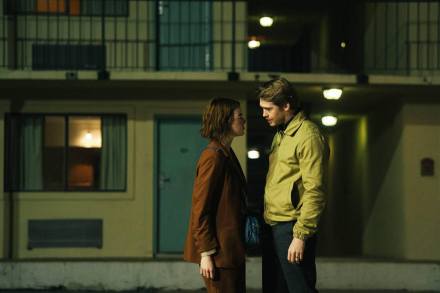
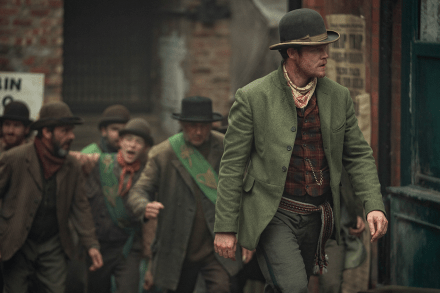
First the surprising news: not a single one of the four Guinness siblings in 1868 Dublin is black; and only 25 per cent of them – surely a record for Netflix – is gay. Now the bad: despite these oversights, House of Guinness remains very recognisably the work of Steven Knight, the Peaky Blinders screenwriter who once set a drama in 1919 Birmingham and said to himself: ‘I know just what this period needs to make it more echt: a cameo appearance by dub poet Benjamin Zephaniah.’ As a Brummie (more or less), I loathed Peaky Blinders.

The power of BBC’s The Narrow Road to the Deep North 

It’s been a good week for fans of TV dramas that are set partly in Syria, feature poetry-lovers confronting extreme violence, like to keep their viewers in the dark (sometimes literally) and have main characters with Australian accents (sometimes accidentally). But there are also significant differences between the two examples on display – with The Narrow Road to the Deep North the much more sombre and The Veil the considerably more bonkers. Adapted from Richard Flanagan’s Booker-winner, The Narrow Road began in Syria in 1941. Through what would prove the programme’s characteristic murk, a group of Australian soldiers led by one Dorrigo Evans could just about be seen rescuing a young boy and joshing about the respective size of their penises.

I’m warming to Meghan Markle – only joking

You know that urge when you’ve got friends coming for the weekend and you just have to spend the previous week putting together all the essentials for a successful stay: personalised bags of truffle-flavoured popcorn and pretzel nibbles for their bedside; hand-blended, sensually curated bath salts; layer cake flavoured with honey from your private hives; etc? Well, if you’ve never had that urge, I’ve got some disappointing news: With Love, Meghan may not be the programme for you. Wait, no, actually, it might yet. But not for pleasurable reasons. Only for car crash-TV reasons. It’s like the lifestyle-TV equivalent of one of those rare public appearances by Mark Zuckerberg where he pretends he is not a robot.

This month in culture: June 2024

From our US edition

The Fall Guy In theaters now Ryan Gosling’s career is rather bizarre if you think about it, from drippy romcom protagonist in The Notebook to brooding car noir hero in Drive to laughable failure in The Nice Guys to musical star in La La Land and Barbie. Now he takes a stab at renewing his hardass ways in The Fall Guy, an adaptation of Lee Majors’s 1980s series which pairs him with Emily Blunt and is, in a way, an homage to the careers of “stars who do their own stunts” even if Gosling does not do so himself. There’s even a stunt show planned for Universal Studios’ Hollywood theme park based on the movie, prior to its release.

culture

Dramatic, urgent and intriguing: BBC1’s This Town reviewed

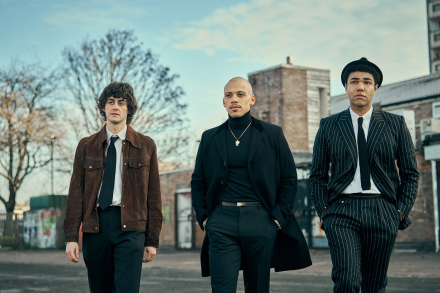
After conquering the world with Peaky Blinders (and before that by co-creating Who Wants to Be a Millionaire?), Steven Knight was last seen on British television giving us his frankly deranged adaptation of Great Expectations. Happily, he’s now returned to form with a show that, while not a retread exactly, is definitely Peaky-adjacent. In This Town we’re back in a Birmingham – this time in the 1980s – that’s rundown, riven, violent and soul-stifling, yet that Knight presents with unmistakable love. Nor, once again, is there any escaping the overwhelming power of the family as a blessing and a curse.

olivia colman great expectations

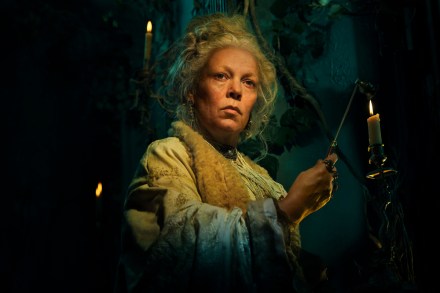
The new foul-mouthed Great Expectations is as bad as you’d expect

From our US edition

When Peaky Blinders creator Steven Knight’s adaptation of Dickens’s A Christmas Carol aired on FX in 2019, it was very quickly decided that, whatever it was, it wasn’t Dickens. From Guy Pearce’s foul-mouthed Scrooge to a scene in which Mrs. Cratchit strips and offers Ebenezer sex in exchange for money to buy the medicine she needs for her son Tiny Tim, it was a strange combination of would-be gritty social realism and hysterical prurience. It was not well-received in the United States: Salon’s comment that it was “short on joy and very, very, very long on purgatorial slogging” was typical.

Is Peaky Blinders past its peak?

From our US edition

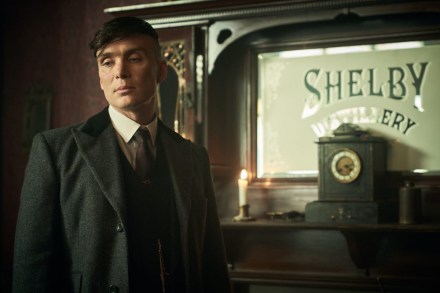
This article is in The Spectator’s inaugural US edition. Subscribe here to get yours. Peaky Blinders would have you believe it’s the best of British: sharp suits and vests, the workingman’s flat cap and the gangster’s slo-mo swagger, the chug of Anglo alternative rock, and a smörgåsbord of regional accents, Academy Award-nominated guest stars and oh-look-I-remember-him cameos from historical figures. These are the ingredients of Britain’s answer to the American sagas that set new standards for television: The Sopranos, The Wire, Breaking Bad. Yet there’s always been the whiff of style over substance to Peaky Blinders, a sense of looking back without seeing anything new.

peaky