Stephen sondheim

Plenty of drama but no controversy at the 2024 Tonys

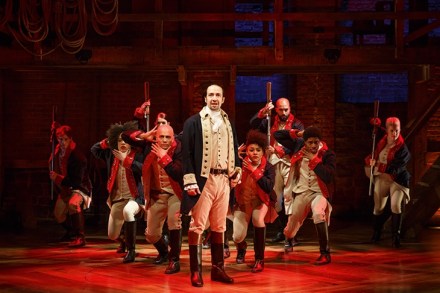
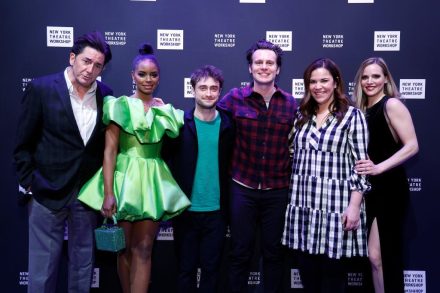
Major awards ceremonies are unpredictable. The Oscars this year were well-behaved, but recent events have boasted everything from "The Slap" to the Curb Your Enthusiasm­-esque farce of Warren Beatty and Faye Dunaway announcing that the wrong film had won Best Picture. Still, that’s nothing compared to the Grammys this year, in which Killer Mike won three awards and celebrated his victory by being led away from the ceremony in handcuffs. So the hope was, for this year’s Seventy-Seventh Tony Awards, that there would be drama, but rather less drama, if you catch my drift. Certainly, there was event.

tonys

Finally, a version of Merrily We Roll Along that works

Merrily We Roll Along starts in 1976, at a party held by big-shot Hollywood producer Franklin Shepard, who is surrounded by stars (not least his second wife, a veteran Broadway siren, and his young lover, the nubile leading actress of his latest hit movie). It ends in 1957, with stars of a different kind: constellations in an inky sky that provoke awe and inspiration for a younger, more naive Frank, as he sits on a rooftop with friends Mary and Charlie, dreaming about their future. The juxtaposition — of celestial bodies with shiny, obnoxious celebrity — helps to frame this musical about the loss of innocence.

Merrily

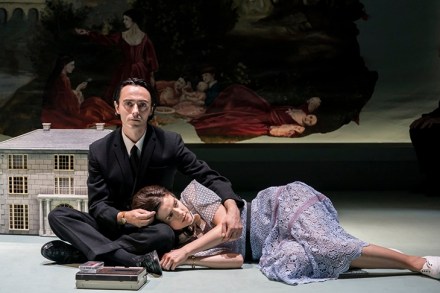
Here We Are is in many ways confused

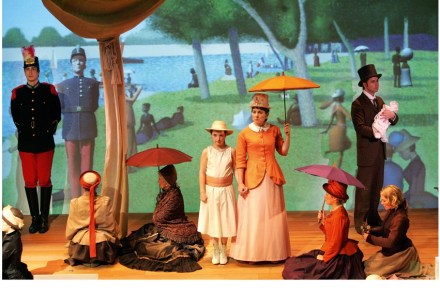
“I have always conscientiously tried not to do the same thing twice,” American composer and song-writing legend Stephen Sondheim once told the New York Times Magazine. In his final ever musical, conceived over a decade ago and executed after his death aged ninety-one in 2023, Sondheim has once again, like a magician, conjured surprise. Here We Are is many things and it isn’t always successful. But this maverick musical is wildly original — not least in suspending the songs themselves almost entirely for the second act.

Bringing back Stephen Sondheim and enduring a new Andrew Lloyd Webber

On Sunday April 16, the curtain went down on Andrew Lloyd Webber’s Phantom of the Opera for the last of 13,981 performances on Broadway, a titanic thirty-five-year run grossing north of $1.3 billion. The end of an era? Not quite — dating back to the 1979 opening of Evita, Lloyd Webber musicals have run continuously on the Great White Way for forty-four years. That streak is now hitched to the fortunes of Bad Cinderella, which opened just weeks before Phantom closed. The show gets a lift from a lush score and some winning numbers, as well as sumptuous set design. The whole premise, however, turns out to be a pumpkin, and it may spell midnight for the composer’s magical run within the year.

Lloyd webber

Swing for me

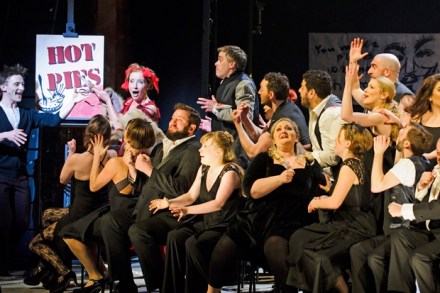
Lots of folks go to swingers’ parties; fewer go by accident. I achieved this distinction, once — and in my defense, I will plead only that my ignorance of the situation was so extreme, my credulity so extensive, that it took my asking one couple, in complete earnest, the most hilarious and incidentally incisive questions a person in my situation could ask — “How did you two meet?” and “How do you know the host?” — in order to set the record straight. To the first, the one said that the other’s husband had introduced them. The answer to the second was the old chestnut about “college roommates,” et voilà! At parties nowadays, I just ask people what they do for work.

company

Remembering the brilliant Stephen Sondheim

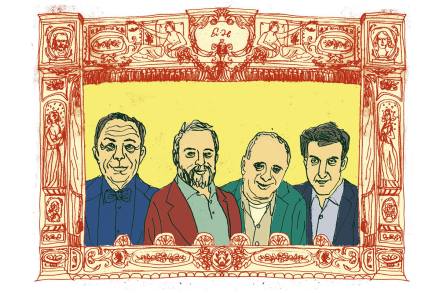
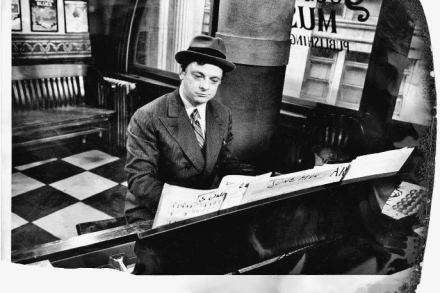
The composer and lyricist Stephen Sondheim’s death at the age of ninety-one does more than simply rob the world of musical theater of its most distinguished practitioner. With the exception of Tom Stoppard, there was probably no greater figure in contemporary world drama. To mourn his passing, even at his extraordinary old age, is only to pay dutiful homage to one of the most extraordinarily diverse (in its usual meaning) and accomplished canons of work that any figure in English-language drama has ever produced. He was born in New York City in 1930 and remained the most Manhattanite of talents all his life.