Statues

Trump has given America back its heroes

This weekend, two statues were installed on the White House grounds. On the north side of the Eisenhower Executive Office Building stands a statue of Christopher Columbus. On the south side is “Freedom’s Charge,” a life-size portrayal by Chas Fagan of two soldiers in the Continental Army, one with a rifle, the other with a billowing Bunker Hill flag. In ordinary times, the temporary placement of such tokens of America history at the White House might pass without comment. These are not ordinary times. On the contrary, America is just now emerging from a destructive frenzy of woke self-loathing and iconoclasm.  Just a few years ago, no emblem of American achievement was safe from crusading vandals.
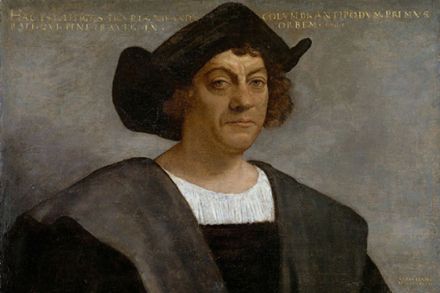
Christopher Columbus (Getty) heroes

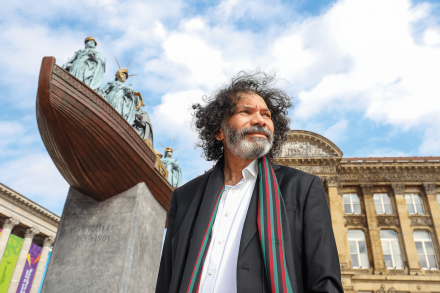
Stop tearing down controversial statues, says British-Guyanan artist Hew Locke

From our UK edition

When Hew Locke was growing up in Guyana, he would pass by the statue of Queen Victoria in front of Georgetown’s law courts. Henry Richard Hope-Pinker’s 1894 statue had been commissioned to mark the monarch’s golden jubilee, but not long after Guyana became independent from British rule in 1970, the statue was beheaded and the remains thrown into bushes in the botanical gardens. ‘I remember being shocked that such a sacrilegious thing could happen,’ says the Edinburgh-born, Guyana-raised, London-based 62-year-old artist. ‘It set me thinking about what public statues are for. Who are these people? How come we pass by them without noticing every day?’ Half a century later and thousands of miles away, Locke is still thinking about these questions.

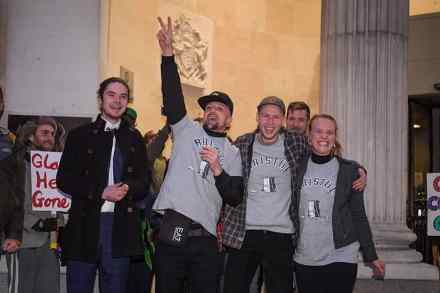
Will Colston’s statue wreak its revenge?

From our UK edition

The statue of the Bristol merchant Edward Colston is apparently guilty of a hate crime. Let us hope that the four charged with pulling him down are indeed, for their sake, ‘on the right side of history’, as they claim, since statues have a habit of getting their own back on those who dishonour them. The statue of Theagenes (5th C bc) provides an instructive example. A Greek from the island of Thasos, Theagenes was one of the greats of the games’ circuit (so one should hope: his father was a priest of Heracles). As a boxer and all-in fighter (pankratiast), he won twice at the Olympics (boxing 480 bc, pankration 476 bc), and 22 times at the three other major games (Pythian, Isthmian and Nemean).

Adieu, Teddy Roosevelt

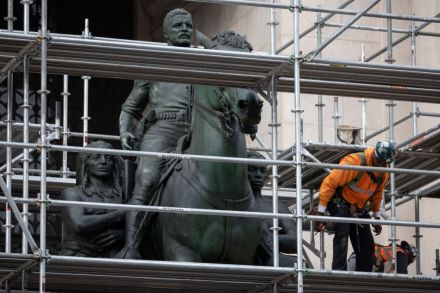
It is a custom to offer a blindfold to prisoners facing a firing squad. Just so, the authorities covered the statue of Teddy Roosevelt that has stood in front of the American Museum of Natural History before it is carted off to its new home in North Dakota. Everywhere one turns, America’s past is being dismantled. Just last month, a statue of Thomas Jefferson that had graced New York’s City Hall for 187 year was removed.  At schools and colleges across the country, images are being covered or removed, buildings renamed, history rewritten. It’s open season on the past. Back in June 2020, I wrote about the decision to remove the statue of Roosevelt from in front of the institution he help to found.

roosevelt

Rhodes, Columbus and the next heritage battle

From our UK edition

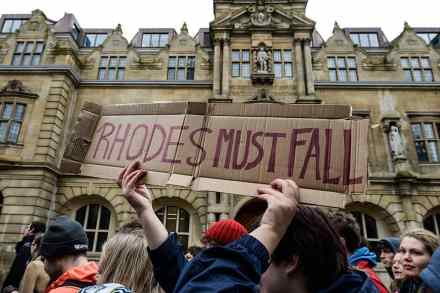
On 12 October this year, Columbus Day, a statue of the Italian in Belgrave Square was vandalised by activists from Extinction Rebellion who described Columbus as ‘father of the slave trade’. Entirely ignorant of his life and ambitions, Columbus’s critics frequently turn to the searing denunciations of Bartolomé de Las Casas who excoriated the Spanish policy towards the native peoples of America. They are unaware that Las Casas was a great admirer of Columbus, and that this friar, who felt such pity for the native Americans, actively recommended the mass importation of black African slaves as an alternative labour source. In the same week as the Extinction Rebellion stunt a new plaque was unveiled at Oriel College, below a statue of Cecil Rhodes.

How the ancients showed their true colours

From our UK edition

In the 18th century, art historians’ admiration for the beauty of white-ish ancient Greek marble statuary led people to draw conclusions, on the back of their belief in classical ‘authority’, about white superiority. This, we are told, turned many classicists into racists. Today some members of the Cambridge Classics Faculty feel the white-ish plaster-cast replicas of those statues in their museum ‘entrench[es] racism’ in the same way. Their proposal is to put up a notice about it. Wow. Go, Cambridge! That’ll show those racists! And surely those still disgustingly white originals all over the world need notices as well. Two things need to be said.

Rhodes to redemption: why Oxford needs a monument to Benjamin Jowett

From our UK edition

Not since September 1642, when a mob of Parliamentary soldiers opened fire on the sculpture of the Virgin Mary carved into the side of the University Church, has Oxford been in such a fury over statues. The ‘Rhodes must fall’ campaign that started among radical students in 2016 has now spread to the senior common rooms, particularly the SCR of Worcester College which, astonishingly, has taken over from Balliol and Wadham as the headquarters of the workers’ revolution.

What the Romans would have made of Diana’s statue

From our UK edition

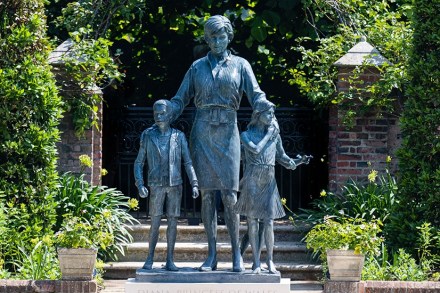
The recently unveiled funerary monument of Princess Diana prompts comparison with Greek and Roman archetypes. To many, Diana was a heroic figure. Greek sculptors represented females as dignified figures, intricately coiffed, in graceful, loose-fitting, free-flowing tunics and ankle-length cloaks, with contrasting vertical and diagonal folds. Males were nude, a public statement of power and physical perfection, as if human significance did not end in death. Both were idealised figures, illustrating character and quality, not likeness. There is no hint of heroic ideals in this Diana, dressed presumably as a nursery teaching assistant. She does not even look like Diana, an attractive, delicate-featured woman.

The C of E’s misguided obsession with statues

From our UK edition

The Church of England has once again misunderstood the mood of the nation. Guidance published this week urges the country’s 12,500 parishes and 42 cathedrals to address, search out, assess and remove offensive artefacts of ‘contested heritage’. The framework follows the call by Justin Welby, Archbishop of Canterbury, for a review of church statues. Of course racism must be taken seriously, but I doubt I was the only cleric who, upon hearing this development, let out a loud groan. The edict is both a concession to advocates of divisive identity politics and a distraction from the more pressing issues on which the church should be focused.

The misguided plan to ‘retain and explain’ statues

From our UK edition

When Mao’s Red Guards first got to work in China, they defaced statues before they tore them down. It was common to find a statue of Buddha, for example, with new signs saying: ‘Destroy the old world! Establish a new world!’ Boris Johnson’s government isn’t keen on statue removal, but it is offering a compromise. Oliver Dowden, the Culture Secretary, has adopted a policy of ‘retain and explain’, whereby the statue remains but with a plaque giving more historical context. Explanation, it is assumed, can only be good. Yet you only have to look at the single case where ‘retain and explain’ has been deployed to see what we could be in for.

The truth about statues and the law

From our UK edition

There is a proposal to change how we criminalise people who damage statues. This proposed change is set out in the Police, Crime, Sentencing and Court Bill and has received much criticism — it is the supposed cause of last night’s protests in Bristol, the first place in the UK to see a prominent statue being toppled last summer. But it is not for lawyers to tell the public what they can or should think — the law is the law, but any changes to it are political decisions. Lawyers can elucidate how our regulations currently work but it is for the public and their politicians to decide what those regulations are. So it is worth looking at how the law treats those who deface public monuments and that, perhaps, can inform whether we think the regulations need changing.

Why Edinburgh’s Adam Smith statue should stay

From our UK edition

In the wake of the Black Lives Matters protests last year, Edinburgh Council announced the creation of the 'Slavery and Colonialism Legacy Review Group'. Headed by Sir Geoff Palmer — an academic and human rights activist — the group is looking at all public memorials on council land that ‘perpetuated racism and oppression’ with the option of ‘removal or re-interpretation’ for problematic monuments. The grave of Adam Smith, as well as a statue dedicated to the Enlightenment thinker, have both been identified by the review due to a passage in which Smith, according to the body, ‘argued that slavery was ubiquitous and inevitable but that it was not as profitable as free labour.

The problem with renaming London’s streets

From our UK edition

In Taksim Square, the busy central hub of Istanbul, a large, viril monument stands. In the centre is Mustafa Kemal Attaturk, the father of modern Turkey (although, perhaps not the contemporary one). When Attaturk came into power, he immediately set about changing the country from Empire to Nation. This meant progressive Western values, the alphabet; a dismissal, in some cases, a blanketing of the culture and customs before it. Almost by accident, this sparked a nostalgia for the Empire that is potent in today’s Turkey. In the hotel nearby, the Kurdish receptionist gets to work. 'Did you see the monument?' he says to me bleakly.

Maggi Hambling’s Wollstonecraft statue is hideous but fitting

From our UK edition

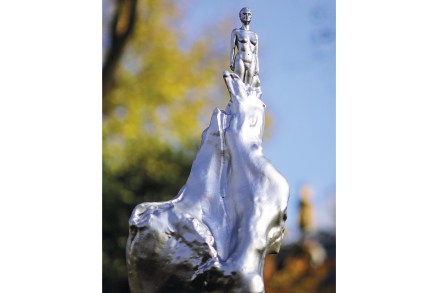
Frankly, it is rather hideous — but also quite wonderful, shimmering against the weak blue of a late November sky. The new statue ‘for’ Mary Wollstonecraft (1759-97), the radical writer, journalist, teacher and novelist, had drawn quite a crowd to Newington Green in north London when I went to see it. They were gathered round it, puzzled and questioning, trying to work out what to think of the tiny figure on top, the garish silvery finish, the heaving bulbous mass below. The memorial, designed by the sculptor Maggi Hambling, has been vilified since its unveiling a few weeks ago by critics who have focused on the nude female figure, bothered by the beautifully styled tits and perhaps perturbed by the very obvious bush of pubic hair.

The new crusaders

In July, the world’s most powerful man tweeted the words ‘There Is A War On Christianity’. Donald Trump’s tweet referred, somewhat cryptically, to an interview on the One America News Network with a man the President identified as ‘Dr Taylor Marshall, author’. Marshall told the interviewer, Jack Posobiec, that the protests that erupted after the killing of George Floyd had spawned a movement seeking to ‘erase Christian civilization’ through mob violence. ‘The goodness that we have experienced in our nation emerged from a Christian culture,’ Marshall said. ‘And these atheists, these socialists, these Marxists, they know that and they are attacking it.’ Marshall is a prominent figure in the US Catholic online subculture.

churches

Welcome to the District of BLMbia

When South Vietnam was overrun, Saigon was renamed Ho Chi Minh City. When the Bolsheviks triumphed in Russia, St Petersburg, Tsaritsyn and Nizhny Novgorod became Leningrad, Stalingrad and Gorky. It’s a common in history: lose a war, lose a name. In the summer of 2020, half of America has lost a culture war. And the torrent of new names is coming.On Tuesday, a special Washington DC commission convened by Mayor Muriel Bowser released a toponymy report on the of the nation’s capital. The report’s findings are dire. It turns out that DC is absolutely full of locations honoring people that have been canceled.Most troublingly, there are gigantic national monuments right in the middle of the city.

washington monument name

Nicholas Coleridge: The Ghislaine Maxwell I knew

From our UK edition

I have known Ghislaine Maxwell for more than 40 years, since she was a student at Balliol. I always liked her, everyone did, and I find it hard to reconcile the Ghislaine I knew with the heinous crimes of which she now stands accused. I visited her several times at Headington Hall, her family house on the edge of Oxford, when her father Robert Maxwell was at the height of his power. It was a peculiar house, rented from the council, like an enormous municipal town hall. The entrance hall and corridors were lined with at least a hundred framed cartoons by Jak and Mac of the great narcissist newspaper owner. The spare bedrooms had buzzing minibar fridges like in a hotel.

Should Nicola Sturgeon get a statue?

From our UK edition

The Scottish National party and its supporters like the world to see Scottish independence as a final act of decolonisation, Scots throwing off the yoke of English imperialism and, with it, the taint of having been imperialists themselves. Last week Scots academic Sir Geoff Palmer compared it to the process that led to his native Jamaica gaining its independence. Yet Scots were the greatest of British colonialists and, for most of the 300-odd years of the Union, strong unionists. Scots statuary of figures from before the 1707 Act of Union is quite sparse. But even those few earlier Scots haven’t been exempt from the wider debate about our monuments.

The woke war on religion

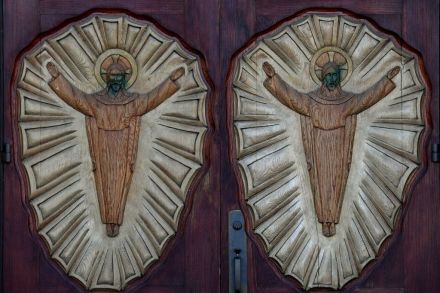
Though you wouldn’t know it from most American media outlets, the phenomenon of vandalizing and burning religious sites which is accelerating in Europe has, like a virus, jumped an ocean and is now among us. Over the past month, statues of Christ and the Virgin Mary have been damaged in states as far apart as Colorado, Missouri, New York, Tennessee, and Massachusetts. On July 11, a vehicle was driven into a Catholic church in Florida with the clear intent of burning the building to the ground while congregants were inside. But it’s not just Catholic symbols and edifices being targeted. America’s Jewish community has received similar treatment.

religion

Statues and limitations

Statues do more than monumentalize individual achievement. They embody the self-image of those who raise, cherish and preserve them. It is this common self-conception that is being upended by the wave of iconoclasm that is sweeping through American cities. The race to raze structures that have stood untouched for decades or centuries disturbs because, instead of reassessing the past, it attacks it to reorder the present. Wherever you stand on this, the ‘debate’ is limited by Western visual traditions and stunted by patchy education. In Wisconsin, the abolitionist Hans Christian Heg was yanked down. In San Francisco, Ulysses S. Grant, a president who set the US Army on the Klan, was deposed. In Washington, DC, Gandhi, once praised by W.E.B.

statues