Statues

Why did we not ban Huawei earlier?

From our UK edition

‘Just rejoice’, as Mrs Thatcher once said about something else. The government’s decision to debug our national security by getting rid of Huawei is the right one (although seven years is much too long). The puzzle is why it did not happen earlier. At the end of January, I interviewed the US Secretary of State, Mike Pompeo, when he came over here. We knew by then everything we needed to know about the Chinese government’s control of Huawei and the lack of trust this must engender. The British government also heard clearly from Mr Pompeo — and from Australia — that its preference for Huawei 5G threatened the deep trust of the Five Eyes intelligence partnership. Yet it sent him away empty-handed.
Trump is taking on the historical revisionists

From our UK edition

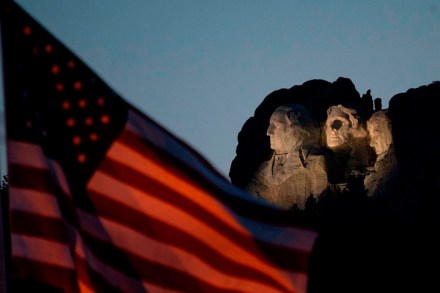
Ahead of Independence Day last week, CNN went live to its correspondent Leyla Santiago. Here is how she described the upcoming celebrations: ‘Kicking off the Independence Day weekend, President Trump will be at Mount Rushmore, where he’ll be standing in front of a monument of two slave owners and on land wrestled away from Native Americans.’ She went on to report that the President was expected to focus on efforts to ‘tear down our country’s history’. And where might the President have acquired such an idea? Even a few years ago it would have been unthinkable for a major network like CNN to have described Mount Rushmore in such nakedly hostile terms.

Trump takes on anti-nationalism

Even the most ardent Trumpist must admit that it has been a bad few months for the President. The COVID-19 crisis robbed Donald Trump of his strongest argument for re-election, the economy, and made his administration seem ineffectual. He was wrongfooted by the riots after George Floyd’s death. The country has been in chaos under his watch. He has looked weak, even disorientated. His polling slid.Yet Trump, ever the reality entertainer, loves a comeback story — and last night he launched his. Under the heads of Mount Rushmore, on a blue-white-and-red dais, the President marked Independence Day with a fiercely patriotic and defiant speech. It was an address that tackled, head on, the crisis that has rocked America in recent weeks.

anti-nationalism

Pigeons are the solution to the statue controversy

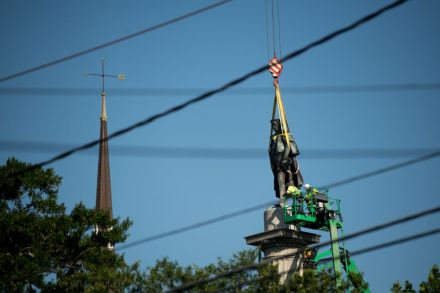
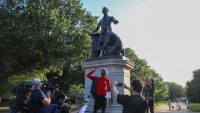
Will nobody think of the pigeons? That thought has repeatedly occurred to me, as beloved roosts for generations of urban pigeons have been toppled in one city after another on both sides of the Atlantic by the radical left, in the greatest eruption of iconoclasm since the era when Theodora graced the burlesque stage in Constantinople. Tearing down Confederate war memorials, it turns out, is a gateway drug to toppling statues of Catholic saints, Civil War abolitionists and Abraham Lincoln himself. Gradually, it has dawned on a horrified, watching world: they don’t hate Confederates. They hate statues! All statues!Now, thanks to the actions of a lawless few, countless pigeons in cities in America and Europe have been rendered homeless.

pigeons

Don’t hold your breath for Joe Biden’s Sister Souljah moment

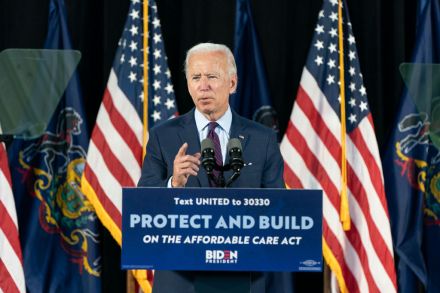
'While Biden was in his basement, @realDonaldTrump had 5.3 MILLION+ viewers tune in to his rally,' wrote GOP chairwoman Ronna McDaniel last week. It's a variation on a theme for the Republican party of late: take the vacant airwaves left by a subdued Biden campaign and fill them with spurious claims about the whereabouts of the presumptive Democratic nominee. Sure, Biden has been quiet, relative to Trump — who isn't? — but he hasn't been totally basement-bound. The former vice president has been venturing out for socially distanced local speeches. He gave one on healthcare in Lancaster, Pennsylvania on Thursday, stopped off in the Pennsylvania towns of Yeadon and Darby the week before, and hosted an economic round table in Philadelphia on June 11.

sister souljah

Do we erase black history when we take down statues?

The Summer Of Our Discontent is in full swing and the social guillotines — at first applied to legitimate injustice and prejudice — have now come for history itself.We watch as mobs tear down statues and monuments to the past. The destruction is supposedly performed in the name of justice, but can we seize true justice by destroying the past?American history is a fascinating and sometimes tragic tale of oppression and rebellion, injustice and progress. There is a push and a pull to it all that has led us to be the most successful and prosperous society in human history.Undoubtedly there has been much pain: but how can we know how far we’ve come if we’re not allowed to see where we’ve been?The history of black America is an exhaustive tale of overcoming.

statues black america
jesus

White Jesus

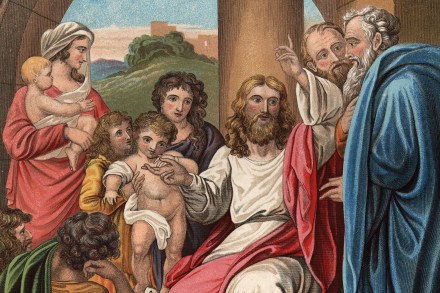
It’s not the best of times to be a statue — or even an icon. Last week Shaun King, a well-known campaigner on racial issues, wrote that icons and statues which depict Jesus as white should be removed. 'They should all come down,' King said. These icons are 'tools of oppression and racist propaganda...all murals and stained glass windows of white Jesus, and his European mother, and their white friends should also come down’. King received an enormous amount of abuse and even death threats — including from a group of retired police officers in Long Beach, California. Shaun King is an influential figure.

Holland Park must not fall

From our UK edition

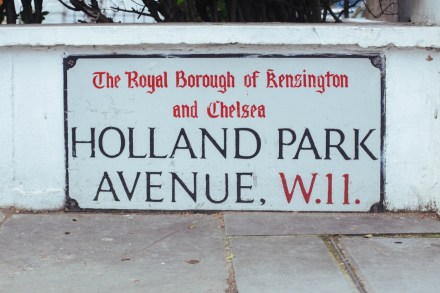
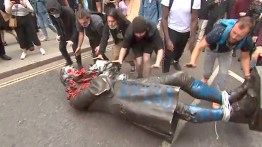
The latest victim in this summer's mania could be the name of one of London's best-known and wealthiest areas: Holland Park, in the west of the capital. A monument in the park itself, of the 19th-century politician Henry Vassall-Fox, the third Baron Holland, was splattered with red paint on Wednesday. After, the Royal Borough of Kensington and Chelsea suggested that the park, underground station and entire district could end up being renamed. The park and neighbourhood was named after Henry Fox, the first Baron Holland. His descendent, the third Baron, technically owned slaves and dozens of plantations in Jamaica through his wife's estate. Hence this weeks' desecration, with a cardboard sign left perched in the bronze statue's arms reading 'I owned 401 slaves.

Portrait of the week: Lockdown eases, debt rises and three killed in Reading

From our UK edition

Home Pubs in England would be allowed to reopen for table service from 4 July, Boris Johnson, the Prime Minister, told the Commons, his words being met by an exclamation from one MP of ‘Hallelujah’. But drinkers would be expected to supply names and addresses before being served. Restaurants, museums, galleries, cinemas, hotels and hairdressers could also reopen, but not bowling alleys. Churches could reopen for services, including weddings, with a limit of 30 people, provided no one sang. The ‘two-metre rule’ was reduced by way of advice to one metre, to be combined with mitigating measures, such as facing in different directions. The government discontinued its daily televised briefings.

We should build more memorials to controversial people

From our UK edition

I have been making the best of lockdown by reading properly, from start to finish, Edward Gibbon’s Decline and Fall of the Roman Empire, in a seven-volume edition that is less daunting than it sounds, when you consider how addictive his rolling prose is. I have just reached the point, near the end of the great work, where Gibbon describes the sack of Constantinople by the armies of the Fourth Crusade in 1204. The blind Doge of Venice had persuaded the crusaders to interrupt what was supposed to be an attack on Muslim Alexandria by diverting to the Byzantine capital, where Venetian merchants had a large number of grievances to settle. Gibbon lists the marvellous classical statues, many of bronze, that were melted down by the victors and turned into coins for everyday use.

great self hate

The Great Self Hate

A group of children recently gathered one morning near the Soldiers’ and Sailors’ Monument in Riverside Park. The adults in charge handed out brightly colored pieces of chalk and soon the sidewalk and plaza were cheerfully adorned with mottos such as Black Lives Matter, Black Trans Lives Matter, Tell Me Why the Police Need Tanks, Let Justice Roll Down, and — my favorite — Burn It Down.  Burn down the Soldiers’ and Sailors’ Monument? No need. New York City has had it roped off for years as it crumbles away.   The 96-foot monument was in its time a tribute to the New York soldiers and sailors who fought for the Union during the Civil War. The cornerstone was laid in 1899 by Gov.

Our collective nervous breakdown

It’s being sold by some as a glorious revolution, but what Western culture is really experiencing is a garden variety nervous breakdown. It’s hard to pinpoint exactly when it began, but it’s certainly well progressed, wouldn’t you agree? The latest mania for gathering in furious mobs to denounce and expunge reminders of our past is what therapists call transference. We don’t hate our forebears anything like as much or as vigorously as we hate ourselves. How could we? They gave us everything we have. Instead, we are shamed by them. Born into what, statistically, is the easiest time in human history to be alive, what have we done or worked towards relative to the men and women cast in bronze or marble who came before?

nervous

Teddy Roosevelt saw this mob coming

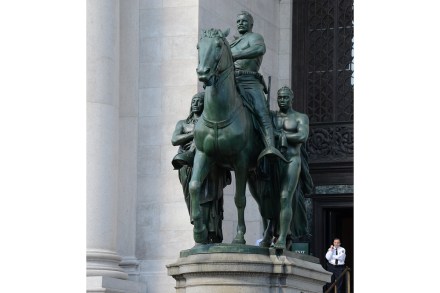
So now they have come for Teddy Roosevelt. The large bronze statue of TR on horseback, flanked by a black man and an American Indian, will be removed from the spot it has graced since 1940 in front of New York’s Museum of Natural History. Why? According to Warren Wilhelm Jr — known to some as Bill de Blasio — the statue is being moved (to where no one yet knows) ‘because it explicitly depicts Black and Indigenous people as subjugated and racially inferior.’ Does it? I don’t think so. I think both flanking figures exude strength and dignity. I also think they stand in solidarity with the jovially commanding figure of Roosevelt.

theodore roosevelt

Self-righteous vandals

Violent left-wing activists have taken to styling themselves as antifa, short for ‘anti-fascists’, though their street-fighting tactics resemble nothing so much as the Brownshirt thuggery practiced by fascists themselves. This did not stop NPR national political correspondent Mara Liasson from likening these hooligans to the heroes of World War Two. On the anniversary of D-Day, June 6, while America’s cities still smoldered after days of riots and looting, Liasson took to Twitter to call the Normandy invasion the ‘biggest antifa rally in history’. Dumb jokes are nothing new on Twitter. For many liberals today, however, it’s no laughing matter.

statues vandals history

Why stop at destroying statues?

From our UK edition

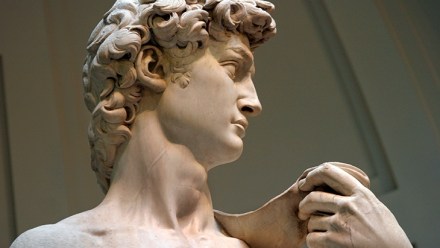
The actor John Cleese has been wondering if we should destroy Greek statues because Greeks believed ‘a cultured society was only possible if it was based on slavery’. That was not a Greek belief, but might the existence of ancient slavery suggest that their statues deserve to be knocked down anyway? Two points: first, the ancient world was one in which there were laws, but no concept of human rights, or of the sanctity of life; second, slavery was simply a universal fact of life, rather like hunting. Anyone could be enslaved at any time — captured in war or by pirates at sea — and many were born into it: all were the automatic private property of their owners. Few people thought twice about it. Everyone who was anyone had slaves.

Is there anywhere visitors will be welcome this summer?

From our UK edition

Do stock markets foretell the future while politicians fudge and economists mumble? No: share prices collectively have a life of their own — driven by herd mentality, weight of money and the available range of investment choices — which indicates little more than the simple fact that what goes up must one day come down and vice versa. Both the FTSE100 and America’s S&P500 indices lost a third of their value between late February when the pandemic began to look serious and a month later when the rate of virus transmission was at its height. So far, so logical. But since then, both have sustained rallies that defy all public and corporate pessimism. Now, just as shops and factories are reopening, both markets look ‘overbought’ and wobbly again.

Letters: Did Bristol really want to see Colston fall?

From our UK edition

Hong Kong’s success Sir: Carl Heneghan and Tom Jefferson are right to compare the UK’s Covid-19 response with Hong Kong’s (‘Who cared?’, 6 June). We write as UK-trained emergency physicians, who have worked as specialists in both the UK and Hong Kong. In many ways, the economic and healthcare contexts are similar. The majority of care is delivered at minimal cost to the patient at the point of care; we share similar per capita GDP and human development indices. But we responded very differently to Covid. In Hong Kong, initially all patients with possible Covid were admitted to hospital until they tested negative. No one with suspected Covid was transferred to care homes. Healthcare staff, patients and the public routinely wear surgical masks.

Made to measure: where did the metre come from?

From our UK edition

Made to measure The government started reviewing whether we should stay two metres apart while social distancing or whether one metre would do. What is a metre? — Since 1960 it has been defined as the distance travelled by light in a vacuum in 1/299,792,458th of a second. — But it was originally defined by the post-revolution French government as one ten-millionth of the distance between the Equator and the North Pole, on a meridian through Paris. — The signing of the Metre Convention on 20 May 1875 by representatives of 17 nations officially established the metre as an international unit of measurement. — If everyone in Britain joined the queue for Primark it would go 1.6 times round the Earth with social distancing at one metre, and 3.

What Britain should learn from Belgium: history can be reappraised

From our UK edition

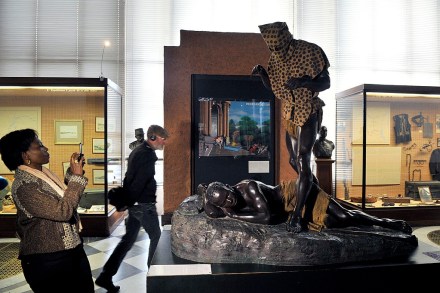
Is it best to erase history, or reappraise history? We haven’t started taking down statues of royalty in Britain yet, but they have in Belgium: statues of King Leopold II were vandalised across the country last week and taken down. It was no surprise – in the bloody history of colonialism, he was one of the bloodiest rulers. He took personal control of the Congo, effectively enslaved everyone, ruled by sadistic brutality (hand and foot removal were a common punishment), killed about half the population, and extracted great wealth. However, the lesson to learn from Belgium is not statue removal, but what they have done to the enormous monument that King Leopold and his successors built to pay tribute to their colonial endeavours.