Sport

The political implications of the Commonwealth Games in Glasgow

From our UK edition

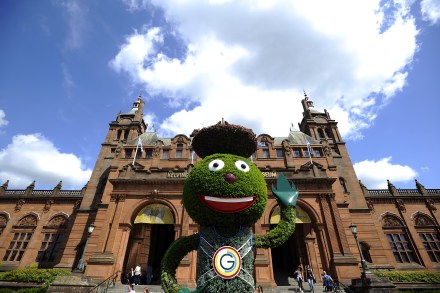
Several people have asked me to write something about the politics and potential implications of the Commonwealth Games which open tonight in Glasgow. As is sometimes the case, I am happy to oblige. There aren't any. To think otherwise is to insult the great Scottish public. I am often prepared to do this, not least because it often needs to be done but in this instance, and not for the first time, the people are liable to be more sensible than the pundits. Back in the day, it was sometimes claimed that the campaign for (modest) home rule in 1979 was scuppered by Scotland's woeful (yet epic!) misadventure in the 1978 World Cup. I've always thought that theory insulted the electorate.

Why we’ll mostly be supporting Germany on Sunday

From our UK edition

If you’re walking through any built-up area in England between 8 and 10pm this Sunday and you hear a cheer you can be pretty sure it means one thing – Germany have scored yet again. One of the great myths we were fed as children in the 1980s and ‘90s was that the English don’t like the Germans, and in particular the living representatives of all things Teutonic on earth, the German national football team. We love ‘em, and I imagine most English people will be supporting Germany on Sunday. I remember being stuck in the countryside in 2006 and watching the Argentina-Germany quarter-final in a pub; the place went wild when Germany equalised and then won.

So are public-sector workers really underpaid?

From our UK edition

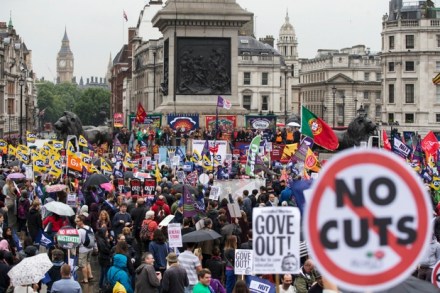
Public benefit Public sector unions held a strike over pay. How well are public-sector workers paid compared with their counterparts in the private sector? — Comparing jobs like for like, public sector workers earn between 2.2% and 3.1% more than private sector workers in April last year. — In the lowest-earning 5% of workers, public sector workers earned 13% more than private sector workers. — In the highest-earning 5%, public-sector workers earned 6% less than private sector ones. Source: ONS Fine, fine, fine Network Rail was fined £53 million for running late trains. We are used to public authorities fining us, but how much do they fine each other? £2.5m: Fine imposed upon York hospital by government for missing A&E targets.

World Cup diary: England’s obscenely rich footballers don’t give a monkey’s

From our UK edition

What a fabulously boring England performance. I watched it only because I had this to write and now feel resentful towards you, which is unfair. Because I don’t suppose you want to hear anything about it, really. The inquest into our national team’s appalling performance at this World Cup (“I couldn’t have asked for any more from the players” – ©Roy Hodgson, every game. Well in which case, mate, you’re the wrong bloke for the job.) has of course already begun. It is being said that Woy has been given an easy ride – which is a way, I suppose, of not giving him one. But when we look for the reasons it’s worth remembering this.

When Geoff Boycott was a DJ in a Sydney nightclub

From our UK edition

Sport isn’t about putting a ball into a net or over a bar or into a hole. It’s about the people who are trying to do those things. Frank Keating, late of this and several other parishes and now just late, understood that truth, which is what made him such a great sports writer. Matthew Engel explains in the introduction to this anthology that his old colleague ‘liked sportsmen and made lasting friendships with them. This would be impossible nowadays.’ Most of the pieces report on those friendships rather than on matches: by portraying sportsmen as they were off the pitch Keating revealed what made them succeed on it.

World Cup diary: Italy were poor but England were worse

From our UK edition

Another fairly unpleasant evening spent watching England playing football. Ah well. It used to be that England were renowned for two things: we could score from set pieces, and we knew how to defend set pieces. In fact we rarely scored from open play – but give us a corner, or a free kick, and suddenly we became dangerous. Similarly, we rarely conceded from set pieces. This was a consequence of the English game, I suppose. Against Italy we conceded from a set piece in fairly lamentable fashion. Worse, though, was the endless parade of wasted corners and free kicks. I don’t know how many corners we had in the second half – maybe eight? Only one found the head of an England player.

World Cup diary: Was the ref playing for Brazil?

From our UK edition

Suspicions that FIFA is an organisation given, occasionally, to a bit of corruption will not have been allayed by the first match of the 2014 World Cup. Brazil won with two goals from a player who should have been sent off, including a penalty which clearly wasn’t a penalty, while Croatia had a perfectly good goal disallowed and were denied a rather more clear cut penalty themselves. Incidentally, I say “Brazil” – and so do ITV. So do FIFA. And so does the OED, Wikipedia and Google. But not the BBC. The BBC says “Brasil”. Of course it does.

State of the Union – not good

From our UK edition

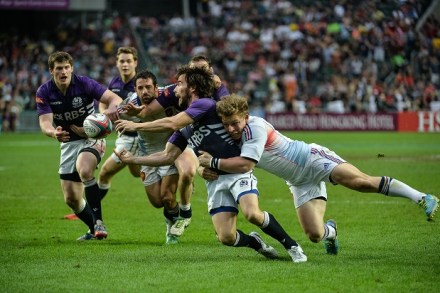
Mr S attended the international rugby union 7s tournament at Twickenham on Saturday, which was graced by some 76,000 people – mostly yuppies on the razzle by the look of things. I regret to report that this crowd of genteel, if beery, English people loudly and roundly booed the Scottish team. The Scots ran in several tries against the hapless Portuguese, and each score was met with open resentment, while every Scottish handling error, missed tackle or infringement was cheered with glee. The noise was shattering, the atmosphere hostile. No other team received a barracking (as is right: booing is abhorrent). Even the Australians, who are the default villains at Twickenham, were given a measure of respect.

What’s right with Saracens — and José Mourinho’s Chelsea

From our UK edition

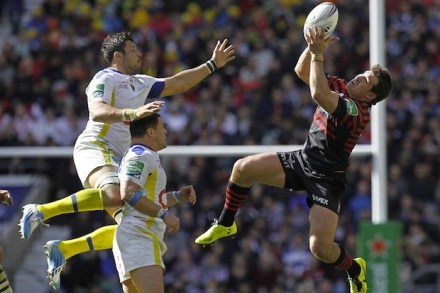
It’s hard to love Saracens rugby club — their centre is called Bosch, a word that also describes their bulldozing style of play — but you have to admire the demolition job they did on Clermont Auvergne in the semi-finals of the Heineken Cup. The flamboyant French side, free-runners to a man, had 68 per cent of possession, 64 per cent of territory and yet were tackled into impotence. Clermont limped off the Twickenham turf, stuffed 46–6. The English club play Toulon, the defending champions, in the final in Cardiff on 24 May and again I will be supporting the French team, not just  because this will be the last match of Jonny Wilkinson’s career.

Hancock’s half hour on the treadmill

From our UK edition

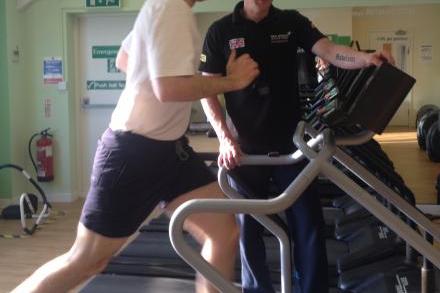
Osborne protégé Matt Hancock has climbed rapidly up the government ranks; leaving plenty of enemies in his wake. The ruthlessly ambitious Education and BIS minister is always in a hurry; but that does not look like it has done him much good for an actual race: ‘When Haverhill decided to host its first ever half marathon I thought it only right, as the local MP, to sign up to it myself. Now only 4 weeks away it’s certainly crept up on me. I am running for St. Nicholas’ hospice in Bury – a fantastic hospice that helps so many families in Suffolk.’ Jokes aside, you can sponsor Hancock here.

A Tragedy at the Theatre of Dreams, starring David Moyes

From our UK edition

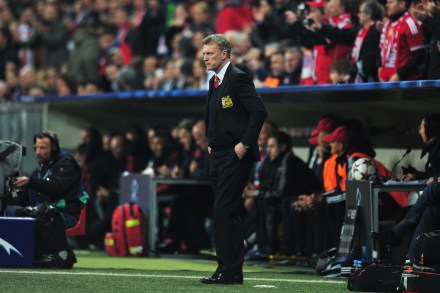
And so the axe fell and the crowd cheered for they loved nothing more than a good beheading. They had been waiting for this execution for some time and would have grown restless if they had been denied their head very much longer. Now the deed is done and they are booting David Moyes's napper up and down the Stretford Road. We all knew it was coming and Moyes, being an intelligent man, must have known it too. His ten month reign at Manchester United has been perhaps the greatest - and also grimmest - drama since Brian Clough's ill-fated 44 days in charge of Leeds United. Hello David Peace, you have your subject now. Paradoxically, one of the few souls to emerge from this Tragedy in the Theatre of Dreams with their dignity intact is Moyes himself.

In defence of the Boat Race

From our UK edition

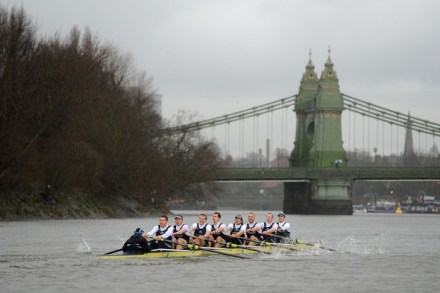
It’s Boat Race time again and as soon as the BBC starts its broadcast on Sunday there will be those who invade Twitter and such places, having a moan faster than the Bullingdon Club can trash an Oxford curry house. Why’s it always the same two teams in the final? The more strident will demand why licence fee payers’ money is being spent on a private race that’s of no interest to anyone who wasn’t educated under one set of dreaming spires or the other. It’s amazing how many people went to Oxbridge, in that case. Why do more than seven million viewers tune in each year, and why has the BBC just renewed its contract for another six years? Why are the riverbanks rammed solid with spectators for four miles?

The Spectator – on the purpose of the Olympics

From our UK edition

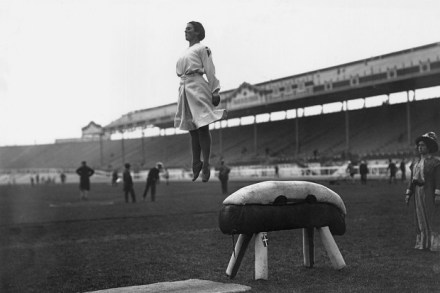
When the idea of a modern Olympic Games began to be discussed, Spectator writers couldn’t really see the point. ‘Beyond a certain waste of money, there will be no harm in the new whim,’ the magazine ruled in 1894, but the notion that the competition would bind nations together didn’t seem very convincing: Why? Is it because they will all for a few days be recalling the Greeks and their achievements, and their short-lived superiority in all the arts? They cultivated of all Europe once studied Latin; but they cut one anothers' throats for all that with a singular unanimity of brutality.

In defence of the BBC’s Sochi commentators

From our UK edition

You can trust the BBC to behave like a leaf blown by any breeze, but even that spineless leviathan (if such a beast could exist) might have tried to grow a pair and stick up for its admirably manic commentators at the Sochi Winter Olympics. It was Ed Leigh, Aimee Fuller and Tim Warwood on the opening weekend’s snowboarding contest that really got people going. There were a few hundred complaints, and one or two media observers who really should have known better got very snooty. Frankly anybody who can get worked up about some slightly over-the-top commentary on a sport no one has ever seen before should really get out more. However, the BBC, bless it, did promise a ‘review of its procedures’ or some such drivel.

It’s not just Kevin Pietersen. England needs a whole team of new heroes

From our UK edition

Englishmen used to be deported to Australia as a punishment. Now they get sent back to England as an act of mercy. There was not much of a campaign to ‘free the press box three’ after Australia’s immigration services ordered the eviction of the men from the Sun, Mirror and Daily Mail before the winter’s wretched Ashes tour was over. Having arrived with the players for the warm-up matches and watched as defeat followed humiliating defeat, they were the last men standing when the one-day series got under way. Other papers had kindly brought home their ‘dukes’ after the Test series and sent the ‘butlers’, as cricket reporters call each other, to cover the hit and giggle.

India holds the cricket world to ransom; England and Australia agree to pay

From our UK edition

Almost no idea is rotten enough that it can't or won't be defended by some scoundrel somewhere. Even so, the equanimity with which some folk have greeted the proposed ICC coup is startling. Sure, the likes of Andy Bull, Mike Selvey and Simon Wilde each note that the ECB-CA-BCCI takeover is seriously flawed but, gosh, something needs to be done about the International Cricket Council and, by jove, this is at least something. Besides, Giles Clarke and his two pals say they wish to protect test cricket so we should take that assurance at face value and all will be well. Or something. I must say that seems an oddly credulous approach but there you go.

Five reasons to be cheerful about British sport (yes, even the cricket)

From our UK edition

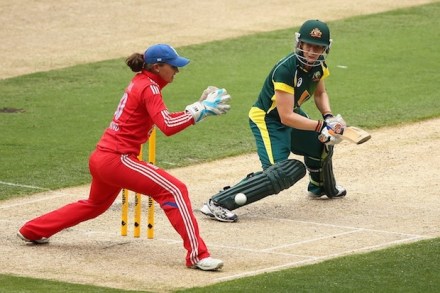
James Cook’s third voyage as an English captain ended in disaster, stabbed to death and disembowelled by a pack of angry Hawaiians in 1779. The latest Captain Cook’s third tour since taking charge of the national cricket team has been just as successful, with Alastair’s England given the Hawaiian treatment by Australia. But don’t despair: for the British sports fan there are plenty of reasons to be cheerful. Try these: 1. Our women cricketers are thumping the Aussies, and it’s the women’s Ashes that matters, right? Just remind any passing Australian of that, and last summer’s Lions tour too, if you’ve got the time.

A Carve-Up That’s Just Not Cricket

From our UK edition

By god, you know matters have come to a wretched pass when you feel inclined to defend and protect the International Cricket Council. And yet, remarkably, such a moment is upon us. Like the old Roman republic, the ICC is threatened by a triumvirate. In this instance, Crassus is represented three times as India, England and Australia bid to carve up cricket's empire between themselves. Few people doubt change is needed. The ICC has been broken for ages. It is easy to conclude that it has outlived its usefulness. Nevertheless, that does not mean any proposed alternative is going to produce better outcomes for cricket. The proposals for reforming cricket's governance and, more pressingly, its finances are mooted in a 21 page paper that, usefully, has been leaked. You can read it here.

A time for despair but not for panic

From our UK edition

All winning cricket teams are alike; each losing cricket team loses in its own way. It doesn't matter, right now, that Shane Watson and Michael Clarke will never be chums just as it did not matter very much, back in the day, that Shane Warne and Adam Gilchrist couldn't stand one another. Victory spawns solidarity. Happiness too. We are wired to over-react to defeat and under-react to victory. England have been trounced in Australia. Battered in Brisbane, assaulted in Adelaide and pummelled in Perth. The tour has become a travelling horror show and, god help us, there are still two tests left. A 5-0 whitewash is a distinct possibility. Don't believe anyone who suggests the Aussies might ease up now the little urn is back in their possession.

A crucifixion in the City of Churches

From our UK edition

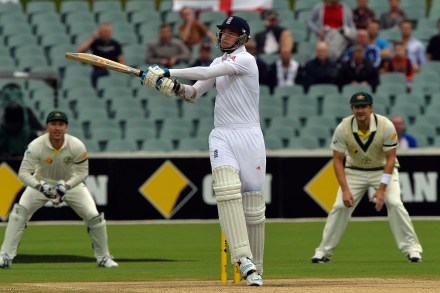
Here we go again. Time for another round of that perennial game so wearily familiar to England cricket supporters: Hunt the Positives. It is a mean game because, most of the time, there aren't any. Certainly not today. England were abject in Adelaide. Scarcely any better than they had been in Brisbane. If, borrowing from Evelyn Waugh, we classify sides as Leading team, First-Rate team, Good Team and Team we must acknowledge that England, at present, rank as Team. And as Mr Waugh would have put it, Frankly, Team is pretty bad. Less a team, in fact, and more a rabble. With the exception of Joe Root's second-innings knock England can take nothing but misery with them as they cross the Nullarbor Plain to Perth.