Spain

Drinking with Picasso

In February 1900, a critically acclaimed art exhibition went up at a Barcelona café called Els Quatre Gats. It was neither the first nor the last show mounted at the establishment, a popular drinking spot for avant-garde artists, writers and others. It was, however, the very first solo outing for one of the café’s regular patrons: a brash nineteen-year-old local art student named Pablo Ruiz Picasso. It has now been fifty years since Picasso died, on April 8, 1973, and even as that anniversary is being commemorated worldwide with new exhibitions and publications, he has never really faded from public consciousness. His art and even personal objects associated with him are avidly collected, and he continues to inspire filmmakers, musicians and other artists.

picasso

There’s a sherry for everyone

On cold nights, a zesty margarita just isn’t going to cut it. You need a bolder tipple: a glass of sherry, the fortified wine favored by retired generals, members of the Diogenes Club and Ordinariate priests swotting up on Thomas Aquinas for the next Sunday sermon. It’s an appropriate drink with which to reflect on the complexity of life itself. You can go from the crispest blanco sherry, through a series of progressively richer flavors, to the most moreish dulce rum-colored sherry. When I passed through Jerez de la Frontera in southern Spain’s Andalucía region, every bar was jammed with great quantities and varieties of sherry. I had stumbled — literally, as I was hiking a hundred miles of the Camino from the coastal city of Cádiz to Seville — upon the Mecca of sherry.

Spain’s caminos come calling

I haven’t come close to dying of thirst in Texas, where I live. In Spain’s little-known Extremadura, however, I found the odds increasing. Wandering through wide-open scrubland in hundred-degree temperatures, my only company was lots of Spanish bulls, unfazed by the blistering heat as I sweated my heart out. The population of Extremadura has been sparse since the Muslim occupation, but there are plenty of cattle. As I headed north from Seville on the Via de la Plata, the latest leg of my extended Camino de Santiago pilgrimage crisscrossing the Iberian Peninsula, Extremadura struck me as remarkably like Texas ranching country.

spain

Down Santiago way

Hiking toward the Spanish border on my second day after setting off from Bayonne, I set down my backpack on a grassy patch beside a beach. It was bloody hot — August in the southwest of France — and the sight of beachgoers taking a shower had a cooling appeal. I stripped to my underwear and enjoyed the bracing shower burst. Then I looked down. Water was cascading over what looked like leprosy, breaking out over the right side of my chest. Feeling self-conscious, I got dressed and plodded on. Twenty-five miles later, at the sparkling city of San Sebastián, the pain proved too much. I lifted my shirt to two Portuguese pharmacists — and they pointed me toward the nearest hospital. I had herpes zoster, commonly known as shingles.

Camino

Gibraltar rocks on

Tourists take the cable car to the Top of the Rock to pester the monkeys that live at the summit, but the best thing about this clifftop arena is the view. Standing on the cliff edge, gazing down at the big ships traversing the busy strait below, you realize what makes Gibraltar so important. Spain lies behind you, Morocco lies ahead. To your left is the Mediterranean and, on your right, the wild Atlantic. This is the bridgehead between Africa and Europe, the gateway between the Old World and the New. No wonder Britain has always been so determined to hold onto it. Whoever controls the Rock controls this narrow strait and all the traffic that passes through it, about a quarter of the world’s shipping.

gibraltar

How I became Hispanic

Several years ago I applied for a teaching position in an American university. In response I received a lot of forms to fill out, including one that required me to identify my ‘ethnicity or race’. I hate to tell this to those of my liberal friends who relish historical analogies from 1930s Europe, but when I noted how black Americans were classified in the form —‘You are defined as Black even if only one of your parents was an African American’—the Nuremberg Race Laws came to mind. When I look at myself in the mirror, I see, even with a summer tan, a very white man. So I assumed it would be a waste of time to fill in the part about race on the form the university had sent me.

hispanic

Under the skin of Seville

It was night when I arrived in Seville. A taxi took me through a maze of winding backstreets then came to an abrupt halt at the head of a pedestrian-only lane. ‘You’ll have to walk from here,’ said the driver. Uncertainly I dragged my suitcase down one dark alley after another, then suddenly came out onto a plaza lined with orange trees. Soaring above me, spotlit against the black sky, was the cathedral steeple. It was a breathtaking sight with its delicately latticed walls of golden stone, so tall I had to tip my head back to see the spire at the top. The cathedral stretched beside it, filling an entire block. Four hundred years have passed since Seville was the greatest and most glamorous city on earth, as glittering and alluring as New York City is today.

seville

The thinning of the Spanish monarchy

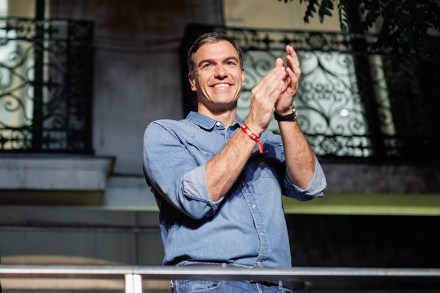
Juan Carlos, ex-King of Spain, behaved foolishly in relation to money and sex, and so his decision to leave Spain is sad, but justified. That seems to be the view of most moderate people outside Spain who are not ill-disposed to the monarchy. But is it right? Certainly Juan Carlos’s foolishness was real, but his imposed exile (it is not really voluntary) to the Dominican Republic is not a punishment for a crime: there has never been any legal process. It is a partisan political act which is bad for the unity of Spain. Juan Carlos’s exile was forced on the current King, his son Felipe VI, by a weak prime minister, the Socialist Pedro Sanchez.

spanish monarchy