South china sea

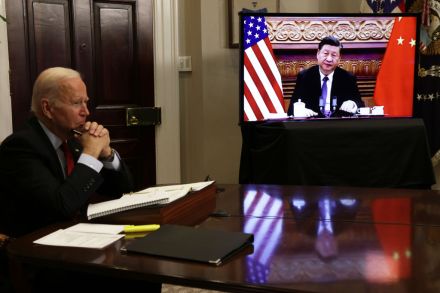
Biden and Xi will resolve nothing in San Francisco

A year ago today, President Biden and Chinese President Xi Jinping shook hands with each other on the sidelines of the G-20 Summit in Bali, Indonesia, in an attempt to reset the world’s most important bilateral relationship. The two men, who knew each other during their previous encounters at the vice presidential level, hoped to exploit their familiarity with one another to bring US-China relations onto a more productive plane. And for a moment, the Bali talkathon seemed to have that effect.

xi

The advent of AI-piloted planes

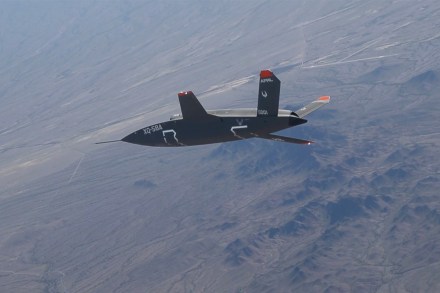
The US Air Force conducted the first flight test of the XQ-58A Valkyrie drone, from Kratos Defense and Security Solutions, piloted by artificial intelligence, on July 25. The test was part of a years-long effort headed up by the Air Force Research Lab designed to integrate advanced technology into the Air Force’s arsenal. The lessons learned and data gathered from the test will be applied to the Collaborative Combat Aircraft program, which seeks to procure an unmanned combat drone capable of working — collaborating — with manned systems, like a traditional fighter jet.  Bringing AI into the fold offers numerous benefits to the modern warfighter.

The Kratos XQ-58 Valkyrie ai drones

Did Hunter Biden influence Obama-era China policy?

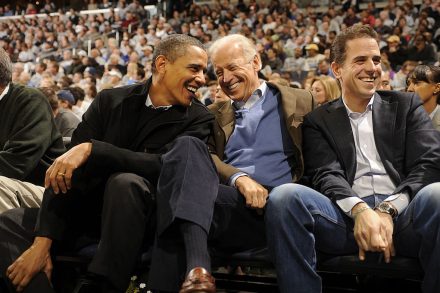
“Fighting corruption is not just good governance,” Joe Biden once said. “It is self-defense. It is patriotism, and it’s essential to the preservation of our democracy and our future.” Going into the first term of his presidency, President Obama gave then-Vice President Biden one of the most important foreign policy portfolios: managing the US relationship with China. However, there is precious little to show for this prodigious assignment.

hunter biden

China: one bully to rule them all

Several years ago, I visited the War Remnants Museum in Ho Chi Minh City, Vietnam. It’s located, a bit surreally, in the former United States Information Agency building. Formerly called the "Museum of Chinese and American War Crimes," it showcases various captured US military equipment. What was particularly jarring to me was learning of the millions of Vietnamese civilians killed during the Vietnam War era. Of course, there’s a bit of irony here: a building formerly dedicated to projecting American public diplomacy and messaging in Southeast Asia now serves the different propaganda purpose of seeking to portray America as a violent aggressor guilty of war crimes.

south china sea

Geopolitical jockeying in a time of pandemic

You might think a global pandemic and the worst crisis since World War Two would lead to a welcome, if temporary tamping down of military activity in already tense and contested environments. Yet even as the novel coronavirus ravages the world, old fashioned geopolitical jousting continues in Asia, reminding us that the passing phase of COVID-19 will simply return much of the world to the status quo ante of great power competition. In a strange way, the ongoing military activities and geopolitical jockeying of China and the United States in Asia’s vital waterways is almost comforting.

Talking turkey with William F. Buckley Jr. on Quemoy

Sixty years ago, as a college student, I spent Thanksgiving on the island  of Quemoy off Formosa (as Taiwan was still called) eating Taiwanese turkey with Taiwanese generals, William F.  Buckley, Jr.  and chopsticks. Present-day college students — or even their parents — may not have heard of Quemoy — or its twin island, Matsu — until now. Or even Buckley, the highly articulate founder of modern conservatism, for that matter. Xi Jinping has been taking a hard and measured look at President Biden and our Department of State since last March when the Chinese Communist Party had Andrew Blinken and Jake Sullivan all but kowtowing to the CCP’s foreign affairs chief, Yang Jiechi, at a summit in Anchorage, Alaska.

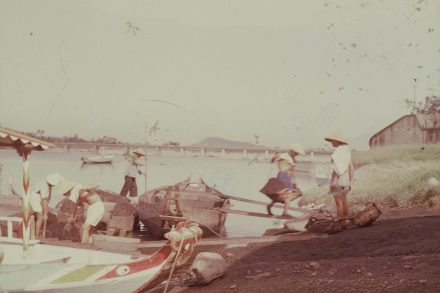
quemoy

Biden should embrace Britain’s new Indo-Pacific strategy

While final negotiations on the UK’s relationship with the EU continue to drag, No. 10 is moving rapidly to expand Britain’s role in the Indo-Pacific, returning ‘east of Suez’ after a half-century absence. Tied to this goal, Prime Minister Boris Johnson unveiled a modest, yet real, increase in Britain’s defense spending last month, totaling some $21.25 billion and pledging to once again make Great Britain the foremost naval power in Europe. Johnson’s budget announcement sets the stage for implementation of London’s long-awaited ‘Integrated Review’, which is touted as the most significant strategic reassessment of the UK’s diplomatic and security policies since the end of the Cold War.

indo-pacific