Social media

I feel sorry for Dylan Mulvaney

When it comes to using trans influencer Dylan Mulvaney to promote the iconic Bud Light brand — a favorite beer here in the backwoods — my first impulse was in line with that of Kid Rock, who used cases of the stuff for target practice. It’s a reaction many Americans, insulted by what they perceive to be an attack on their traditional values and gender stereotypes, are having to varying degrees as they boycott the beer giant, reportedly to the tune of billions of dollars. Progressives, meanwhile, can’t get enough of Mulvaney.

dylan mulvaney

Banning TikTok: a how-to guide

“Whoever controls big data technologies will control the resources for development and have the upper hand,” Xi Jinping declared shortly after assuming control of China. In the years since, the Chinese surveillance state has exploded at home and abroad, thanks to espionage-adjacent apps such as WeChat, but none has raised as much ire as TikTok. Following reams of data showing that your teenager’s favorite app is poisoning their mind and spying on them, the calls to ban TikTok are now coming from inside the House… and Senate. But how would such a ban actually work? What does it mean to ban an app that is supported by the technological infrastructure of the CCP?

tiktok

TikTok’s revealing ‘bold glamor’ filter

Everybody wants to be beautiful, but very few people are. Think across the entirety of history. Empress Sisi, Cleopatra, Ginger Rogers, Jane Birkin. You could probably count the number of actually beautiful people on ten fingers. A lot of people are good-looking or fine. But beautiful is rare. Along with everything else that Generation Z feels entitled to — success, feeling heard, holding people responsible for their ancestral guilt — they also insist that we recognize their beauty (whether they have it or not). Their Instagrams are filled with beautifully taken photos, with beautifully poured lattes, on a beautifully curated grid. It doesn’t matter if they look like Shrek because it’s all done so damn beautifully.

tiktok bold glamor

The new war on weight

We’re getting fatter. We even have a whole day dedicated to it now, World Obesity Day. We are reminded about our expanding waistbands and inflated cheeks every time we walk down the street, or look at an XXL model stuck onto a magazine cover to make the rest of us chubsters feel empowered. I don’t feel empowered at all. I feel alarmed — and confused. In a time when such advanced medicine is at our fingertips, the obesity problem is worse than ever. In America, one person dies from cardiovascular disease every thirty-four seconds, making it the biggest killer in the country. Globally, the World Health Organization estimates that obesity is responsible for 2.8 million deaths each year. But what if there were a simple way to stop us from eating ourselves to death?

weight

The new age of the con man

In the precarious world economy of 2023, everyone is selling you something — and much of that something doesn’t amount to anything. Companies, of course, sell you products and services; much of their junk amounts to solutions for problems that didn’t previously exist, though at least there’s still some sort of deliverable. Meanwhile, in worlds as essential to human flourishing as personal finance and bodily fitness, an ever-expanding class of so-called “influencers” are selling a whole lot of nothing dressed up as something. Their underlying success, ostensibly tied to their ability to help people become richer or fitter, depends in actuality on their ability to sell advice or investment opportunities that are likely only to enrich themselves. How did this happen?

con

The enigmatic rise of Colleen Hoover

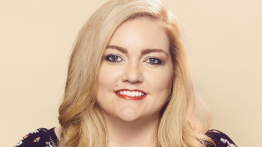
The world’s bestselling author is a forty-three-year-old mom you probably haven’t heard of. In fact, unless you’re an extremely online fiction reader between the ages of sixteen and twenty-four, Hoover is likely to be a bit of an unknown quantity. It’s hard to see how she can stay that way: with 1.1 million followers on TikTok — her fans call themselves her CoHort — Hoover is the platform’s most popular author. As a result of her #BookTok fame, “CoHo” is now the second most followed author on Goodreads; while most authors have a single book on the bestseller list, Hoover dominates with multiple books at a time. In late January this year, her books held three of the top five spots on the New York Times bestseller list.

colleen hoover

Stop turning dead authors into sex symbols

From our UK edition

'As Gregor Samsa awoke one morning from uneasy dreams he found himself transformed in his bed into a TikTok sensation.' This is not – blessedly – how Franz Kafka’s The Metamorphosis begins. But almost exactly a century after his death, the Bohemian writer would be astonished to find that not only had his friend and literary executor Max Brod disobeyed his instructions and published works of his that included The Trial and The Castle, but that he had become, of all things, a social media sensation. It was reported recently that Kafka has become the unlikeliest of sex symbols.

The toxic women of gym TikTok

From our UK edition

The hashtag 'gym creep' now has more than 37.3 million views on TikTok. Honestly, I’ve watched hundreds of these videos and the only weird behaviour I can spot in any of the clips is from the women recording the unsuspecting men while they work out. 'Watch this creep,' the lady will say as a confused male just happens to glance at the camera that’s been shoved in front of him. Scandalous! Gina Love is one of these women. The TikTokker, whose feed mainly consists of her trying on different shades of lipgloss, went viral after posting a video of her doing deadlifts, supposedly catching out one of these so-called #gymcreeps. 'Watch this creep come over to my personal bubble while doing Romanian deadlifts,' Love wrote.

In defense of paranoia

Maybe it’s because I grew up during the “stranger danger” milk carton kid era (for those too young to know what I’m talking about, milk cartons were the original Amber Alert) or because of the burgeoning twenty-four-hour news cycle — or maybe I was just born neurotic — but I became convinced as a child that I was going to end up getting murdered by my bus driver in a schoolbus lot on the outskirts of town. Every morning, I’d ask my mom no fewer than a hundred times if she was going to be there when I got off the bus. My fear seemed irrational for a seven-year-old, but I was obsessed.

paranoia
TikTok

Has time finally run out for TikTok?

To see the catastrophic effect TikTok has on the brains of our young, you don’t have to look very far. Earlier this year a young family member ended up in the emergency room with a cup vacuum-stuck to her lips. After a few tugs and half a jar of Vaseline, it turned out that the bright idea stemmed from the #KylieJennerChallenge on TikTok. A few thick lips aside, there is something sinister going on with the Chinese-run platform. With every iteration of social media, the corresponding brood of teens has become lonelier, more miserable and even more anxious. This process has reached its purest form in TikTok. The difference is that this time it might have been by design.

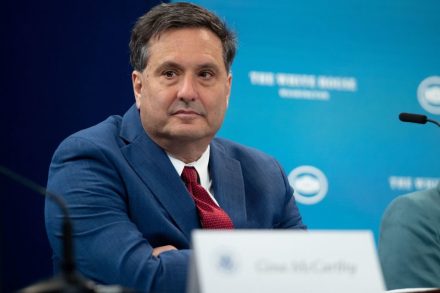
With Ron Klain gone, who’s running the Biden administration?

After President Joe Biden’s State of the Union address last year, White House chief of staff and the administration's resident Twitter addict Ron Klain joined a confab of journalists on Twitter Spaces to discuss the speech. When a reporter asked Klain, in response to Biden’s poor approval ratings, whether he thought they were having trouble getting their message out, Klain responded, “Well, I’m doing Twitter Spaces, aren’t I?” It was a perfect demonstration of how Klain had taken to guiding administration policy in accordance with the whims of Twitter.

ron klain

Stop broadcasting your ‘personal news’

From our UK edition

‘Some personal news! Delighted to announce I’ll be joining [insert major company] as the new [insert extremely impressive-sounding, well-paid, prestigious job title] this week! It’s been great working at [insert other major, if slightly less gleaming company] but I’m so [insert word denoting excitement or thrill, including "excited" and "thrilled"] at what the future holds! You can find me at [new prestigious institutional email address].’ It is no exaggeration to say that over the past week, half of my Twitter feed has been composed of alerts that follow this exact script. As the trickle thickened to a deluge, I wondered if there was some secret spoof going on. Were they all in on a new year joke?

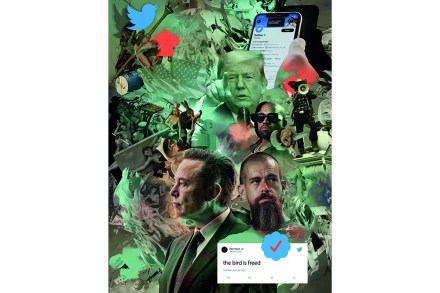
Elon Musk makes it up as he goes

Since Elon Musk’s takeover of Twitter, the script has been flipped. Pontificators at all points of the ideological spectrum are spinning to figure out what his intentions are with the platform and how that pertains to platform moderation going forward. Musk is seemingly making up Twitter policy on the spot by tweet — and then asking his team to come up with a justification post-tweet. This has happened on several occasions. His actions all came to a head Thursday night when Twitter, apparently under the direct instruction of Musk, suspended the accounts of several high-profile journalists from the New York Times (Ryan Mac), the Washington Post (Drew Harwell), the Intercept (Micah Lee), Mashable (Matt Binder), Voice of America (Steve Herman) and CNN (Donie O’Sullivan).

elon musk

Can social media be sex-positive?

There’s a new dawn for social media, and tech CEOs have morning wood. Twitter has a new owner, Elon Musk — did you hear? — and he’s looking to turn the slovenly hellscape into a financially viable company. The path? Subscriptions and paid content. In response, Tumblr, once the horniest hub of the internet, announced in November that it was allowing nudity again after banning “adult content” in 2018, which cost 30 percent of its user base and even more cultural relevancy. This came after years of incremental changes from the current owner, Matt Mullenweg, who acquired Tumblr from Verizon in 2019. https://twitter.com/ajplus/status/1069671569495085059 This may spark optimism in those reminiscing over the hornier days of the internet, but it’s a false hope.

What Jordan Peterson gets wrong about anonymous Twitter accounts

“The best we can hope for concerning the people at large is that they be properly armed.” So sayeth not Grendel69 on Twitter, but Alexander Hamilton, writing under the name Publius, the handle he adopted along with James Madison and John Jay when they were writing The Federalist Papers. But if Twitter had existed, well, Hamilton may well have been a shitposter, one who made Grendel69 look like a lightweight. Anonymity, pseudonymity, whatever you want to call it, is oft maligned, particularly in the digital square. The debate about it will likely always be with us, unless, somehow, the internet magically ceases to exist, forcing mankind up out of its sitting position. (As that wouldn’t be good for my income streams, I’m going to have to hope it keeps on keeping on.

jordan peterson

Madison Cawthorn is right about metrosexuals on social media

Madison Cawthorn, the one-hit-wonder congressman from North Carolina who was defeated in his primary earlier this year, used his final address on the House floor yesterday to condemn “soft metrosexuals.” In the spirit of not kicking a guy when he’s down (Cawthorn will be gone by January), let’s cut him some slack and acknowledge that, melodramatic language aside, his speech made a valid point. Social media is to blame, at least in part, for weakening American culture. “America is weak,” Cawthorn declared. “Her sons are sickly, and her daughters are decrepit. Our country now faces the consequences of enabling a participation trophy society. We’re no longer the United States. We’ve become the nanny state.

Can Twitter still be saved?

A philosopher once famously said that Hell is other people. What the world has learned from Twitter is that Hell is other people’s opinions. It’s no wonder, then, that when Elon Musk came bounding into Twitter headquarters in late October — after changing his Twitter bio to “Chief Twit” — a popular response, on Twitter and off, was, “welcome to Hell.” When Musk, in an open letter to Twitter advertisers, wrote that he doesn’t want the site to become a “free-for-all hellscape,” he touched a debate concerning a much larger issue — balancing free speech against the need to keep hate, propaganda and manipulation out of public forums, particularly digital ones that can spread malicious content around the world instantly.

twitter

In defense of Twitter

Twitter probably isn’t going anywhere. Major platforms don’t just vanish, after all. If we’re not still posting in 2023, then I’ll buy you all a drink — a bet you poor saps won’t be able to hold me to because you won’t be able to find me on Twitter. Still, if Musk’s “decimate and innovate” plans don’t work then Twitter will decline. It might get slower and buggier and more prone to crashing. Platforms don’t have sudden deaths, but they do have slow and painful ones. Even Myspace still exists. Will Twitter follow it into online obscurity? Not soon, perhaps, but it will in the end. Nothing lasts forever. So our thoughts turn meditative. Writers sometimes comment on Twitter as if it has trapped them in a toxic relationship.

taliban twitter

Left-wing Twitter goes full Apocalypse Now

In the film Apocalypse Now, Martin Sheen’s Captain Willard comes upon a remote outpost defending a bridge. Hoping to confer with the commander, he instead finds a delirious state of chaos. A machine gunner fires heavy caliber rounds into the night while trading taunts with an unseen member of the Viet Cong. “Who’s the commanding officer here?” Willard asks. “Ain’t you?” returns the bewildered gunner. After being awakened by his compatriots, “The Roach,” an apparently stoned soldier with a tiger-striped grenade launcher, advises that the VC is close. He propels a grenade off into the distance and the taunts of the enemy are silenced. “Hey, soldier. Do you know who’s in command here?” asks Willard. “Yeah,” answers the Roach before walking away.

Why I couldn’t wait to buy a Twitter blue tick

From our UK edition

I’ve just given Elon Musk $8 a month to get a blue tick by my name on Twitter. The fact I haven't been able to secure one of these ticks on merit like so many other nonentities has been a source of near-constant irritation for the past half decade, particularly given how much time I spend on the site. My assumption had been that a Spectator-reading Twitter employee would eventually accept my brilliance – perhaps after reading something rude I'd written about Meghan Markle – and press the required button to make it happen. But when I finally accepted this wasn't likely, about two years ago, I decided to take matters into my own hands. I began filling out the website's online verification request form.