Social media

My ongoing war with the ‘vinfluencers’

‘Slut-shaming’, ‘sexist’, ‘garbage writing’, ‘offensive towards women’, ‘aggressively distasteful’, ‘nipple-ist’ ‘old bitch’ that I am, I stand by the article I wrote in the April issue of The Spectator about influencers and the social-media celebrities who use their looks to sell wine — despite the outrage of those who are so clearly and irreparably under the vinfluence already. My take on the new advertising powerbase that is ‘influencing’, and the media-doping tactics that are often used to gain that influence, remains the same.

Vinfluencers

Covid has emboldened our modern censors

From our UK edition

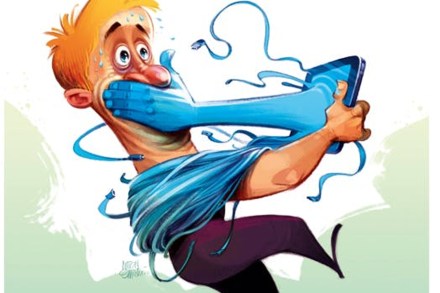
The past year has accelerated all kinds of trends that were already moving through our societies. Social atomisation, the decline of the high street and communities, the rise of the nanny state — Covid and lockdown have brought all of these to the fore. Among the most concerning is the rise of Big Tech censorship, and the way in which a handful of Silicon Valley oligarchs have come to set the terms of debate and even rule on what is true. This week representatives from Facebook and Twitter were brought before parliament to discuss their firms’ censorship of discussion around Covid. Two particularly pertinent cases were raised — though there are many more.

The curious rise of cottagecore

From our UK edition

Cottagecore, not to be confused with cottaging, is an aspirational lifestyle trend. The word is relatively new —although you’ll find it used all over TikTok — but the idea isn’t. If you have ever dreamt of leaving behind the urban sprawl for something more bucolic, or donned a cheesecloth dress and flower crown in the hope that it will make you seem a little folksy, you’ll understand the aesthetic. Cottagecore is the eternal search for a pastoral idyll, updated for the Instagram generation. It is hardly surprising that such a romantic movement has been revived during a time of pestilence and isolation. Throughout the pandemic, many of us have felt as though we aren’t exactly living our #bestlife.

Thirst trap: how ‘vinfluencers’ took over the wine world

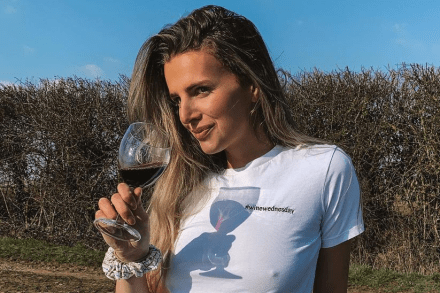
The first time I saw the Instagram feed of Georgie Fenn I thought she was a model stooge. Utterly gorgeous, Fenn regularly poses in carefully picked diaphanous clothing, ‘nipple poke’ a specialty. Paid brand collaborations offer excellent returns. Her artfully shot images tagged with maxims as trite as ‘It doesn’t matter what you’re drinking as long as you’re enjoying it’ are a marketeer’s wet dream. Miss Fenn is an up-and-coming ‘vinfluencer’ — that is, she uses her considerable social media presence (31k and rising @winingawaytheweekend) to sell wine.

vinfluencers

The first-century saint who went viral

From our UK edition

Earlier this year, Saint Veronica went viral. A tweet observing that every painting of the saint made her look like a merchandise seller at the Crucifixion was liked more than 35,000 times and retweeted more than 6,700 times. Not bad for a first-century saint. I disagree slightly. Veronica doesn’t strike me so much as a proto T-shirt tout, more as an early Christian super-fan. ‘I touched the hem of his garment.’ ‘Yeah? Well, I literally mopped the sweat from his brow.’ The Sudarium of Saint Veronica is one of art history’s more peculiar subjects. While some saints and their attributes are easy to confuse (Tau? Sword? Saw? Tongs?

Promising material squandered: BKLYN – The Musical reviewed

From our UK edition

BKLYN — The Musical gives itself a headache for no reason. What does ‘BKLYN’ mean? Perhaps it’s a random jumble of letters caused by a muffin landing on the keyboard. A punter who sees the title once and later looks it up online is unlikely to recall the precise order of the letters, and his search will probably fail. And he’ll have trouble discussing the show with his friends because he won’t know how ‘BKLYN’ is pronounced. It turns out that the show’s heroine is called Brooklyn, and the writers decided to capitalise her name and extract three of its letters. Sensible theatre-makers don’t create problems like this for themselves.

The true cost of Gordon Elliott’s crass stupidity

From our UK edition

Thanks to Covid, there could be no spine-tingling roar at the Cheltenham Festival this year as the first race runners set off, no exultant crowds lining the rails from the finish to the winners’ enclosure to cheer their sweaty heroes. Twitchy racing officials will have watched with their gaze half averted for fear that equine fatalities or excessive whip use by jockeys desperate to extract the last ounce of effort from their mounts will have swelled the chorus of the sport’s opponents and would-be eradicators. Publishing schedules mean that I must write before a Festival race is run, but I have no doubt that the week will have been dominated in many minds by the Man Who Wasn’t There.

Clubhouse left me with one question: why am I here?

From our UK edition

For my 13th birthday in 1995 I requested — and got — my own ‘line’. This meant that I could jabber all night without taking the phone out of service for everyone else. Getting your own line was a rite of passage for teenage girls in America back then, and everybody just sighed and let us get on with it. Talking on the phone all the time was simply something girls did. Women, meanwhile, at least according to film and TV, spent their time sitting by the phone eagerly awaiting calls from men that usually didn’t come. But then the feminised world of the endless, open-ended voice call dwindled with the arrival of mobile phones and a preference for texting, messaging, tweet-messaging, and the easy WhatsApp voice note.

The myth of ‘progressive’ thinking

From our UK edition

One of the guiding instincts on the political left is that society should be ‘progressive’. Social attitudes, politics and the economy should all advance together, making society fairer and more equal in the process. In this view, a tax can be progressive if it targets the income of the wealthy, just as a law is considered progressive if it protects the rights of a minority. This progressive worldview permeates almost all thinking on the modern left. And yet the contemporary idea of the progressive society has undergone a logical collapse. It has been driven that way by activists, some of whom represent groups with valid causes, but whose messages have been concentrated and distorted out of all proportion by the lens of social media.

Can Clubhouse compete with Twitter?

From our UK edition

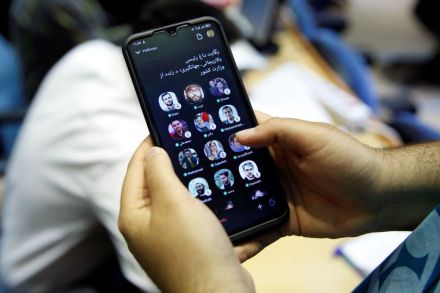
Everyone wants to be an influencer. Even for hobbyists like me there's a strangely addictive quality to the upward crawl of the follower count on the three big beasts: Instagram, Twitter and Facebook. Now, influencers have their eye on a fourth.  Clubhouse is a new, invite-only social network beloved by the likes of Elon Musk and Mark Zuckerberg. The format is similar to an old-school chat room, but all the rooms are packed full of ‘influencers’ (mostly small-time) where you can listen to and comment on each other's audio files. Packed full of love-heart ❤️ and thanks 🙏 emojis, it’s definitely a nice place to hang out. Expect to hear the word ‘community’ a lot, and much talk of ‘kindness’.

The big tech bullies

From our UK edition

I was in the kitchen preparing the family’s dinner when the inauguration of Joe Biden was on TV, so I caught only mysterious fragments of his speech, over the noise of the blender and stuff. ‘I want an hour — an hour — with my own teen wolf,’ Joe seemed to say at one point. And then: ‘America, America, I give to you my vest.’ I raced through to the living room when someone announced that Garth Crooks was going to sing ‘Amazing Grace’ — good choice, Joe, I thought. Garth seems to have lost a little weight and indeed colour, but he did a decent job. It all went well enough, given the circumstances, and at no point did Joe ask why all those people were there and was it his birthday or something.

How Facebook became a freedom-gobbling corporate monster

From our UK edition

Southwark Playhouse is beating the latest lockdown with a zingy new musical about social media. The performers, Francesca Forristal and Jordan Paul Clarke, remember the far-off days when Facebook was just a harmless supplement to ordinary social interactions. How did it turn into a freedom-gobbling corporate monster? We meet the Zuckerbergs, Mark and Priscilla, as they usher a TV crew into their mansion like a pair of politburo bigwigs showing tourists around a glue factory in North Korea. The down-to-earth billionaires offer bland answers to scripted questions. ‘How do you raise children when you can give them anything?’ Mark reveals that the mini-Zuckerbergs are treated like normal kids.

Bad influence: Instagramming from Dubai isn’t ‘work’

From our UK edition

January is when the difference between the rich and the poor becomes most evident. Whereas many people face a month plagued by the three Ds — debt, divorce and doldrums — the famous tend to take off for more clement climes. Simon Cowell famously frolics at the Sandy Lane Hotel in Barbados at the start of each new year, and I myself have spent many January days at the Ritz-Carlton — but only the one in Tenerife, because I believe in keeping it real. This winter, subdued British airports have also seen a mass exodus of a particular youth tribe recognisable by their bright white teeth and deep mahogany tans — the hordes of youngsters who are reality TV stars and/or create content for Instagram. And most of them are going to Dubai.

The tech supremacy: Silicon Valley can no longer conceal its power

From our UK edition

‘To see what is in front of one’s nose needs a constant struggle,’ George Orwell famously observed. He was talking not about everyday life but about politics, where it is ‘quite easy for the part to be greater than the whole or for two objects to be in the same place simultaneously’. The examples he gave in his 1946 essay included the paradox that ‘for years before the war, nearly all enlightened people were in favour of standing up to Germany: the majority of them were also against having enough armaments to make such a stand effective’. Last week provided a near-perfect analogy.

‘The internet raised me’: the strange world of online star Belle Delphine

From our UK edition

Belle Delphine lives in a mock Tudor house in a gated community in Hove. It’s necrotic, and soothing. You could be anywhere, and this is apt. Belle lives on the internet, where she entertains her subscribers, who pay $35 a month through the website OnlyFans. She is 21, and she grew up on the internet. ‘It raised me,’ she says. I watch one of her films before we meet. It shows her dressed as a Disney princess in a long pink wig and small clothes. She attacks herself with paint and rides a fluffy unicorn while shouting. Is the unicorn the internet? Is she the unicorn? I hate the film — the childishness makes me uncomfortable — but it isn’t for me. I make my husband watch it and demand he describes his emotional response. He makes a strangled noise.

Twitter is in China’s pocket

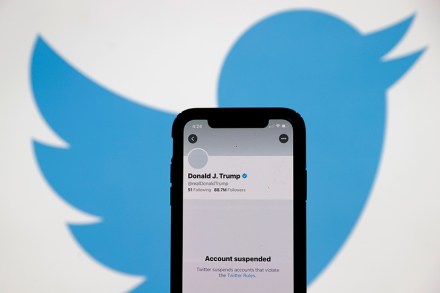
Twitter has been quick on the draw when responding to tweets by President Trump in the last month, as he furiously and mistakenly attempts to make his case for winning an election he did not win. Within minutes, Trump’s tweets are flagged as containing disputed information regarding the election. Twitter is very invested in babysitting the President of the United States, sometimes with cause. But the tech giant’s scrutiny of spurious posts from other governments is not as close: if Twitter will not label a tweet as containing false or ‘disputed’ information, it is by default suggesting that it is accurate. This is the dilemma Jack Dorsey has created for himself in assigning his company to be the absolute arbiter of truth.

chinese twitter china

The dangers of censoring anti-vaxxers

From our UK edition

Earlier this week, the Labour party wrote to the government urging it to bring forward legislation so that social media companies which fail to ‘stamp out dangerous anti-vaccine content’ can face financial and criminal penalties. ‘The government has a pitiful track record on taking action against online platforms that are facilitating the spread of disinformation,’ said Jo Stevens, Labour’s shadow culture secretary. ‘This is literally a matter of life and death and anyone who is dissuaded from being vaccinated because of this is one person too many.’ My first thought on hearing this was how pitifully out of touch the Labour party is.

Why New Yorkers are fleeing the city in droves

From our UK edition

New York Back when people used to read newspapers, they called it a ‘human interest’ story. Now it appears as just another statistic. The know-nothings on social media, who express utter drivel on a daily basis, will have pretty much ignored it, but a dreaded pro-Biden sheet actually published the full story. A young Japanese man came over to the Bagel from Tokyo to make it as a jazz pianist, and that he did. He started a trio of his own and toured with several bands until the fateful night of 27 September, when he rode the New York subway after a video shoot. Tadataka Unno is now 40, and a new father, but he most likely will never play an instrument as a professional again.

The post that ends the Trump presidency

There's a joke about a guy who gets anxious on airplanes. The passenger next to him, trying to be helpful, suggests ways he might relax. A drink? A Xanax? A movie, or a nice nap? The anxious man shakes his head, annoyed. He can't relax. He can't lose focus. He can only sit, gripping the arm rests, staring straight ahead in a state of white-knuckled, sphincter clenching terror. Why? Because his terror is the only thing keeping the plane in the air. This notion of anxious acting-out as our sole line of defense against chaos — call it the Control Freak’s Fallacy — isn’t new, but it is certainly having a moment in the run-up to the 2020 election.

post

The dismal rise of the modern elopement

From our UK edition

I didn’t realise how attached I was to the traditional British wedding — the whole messy, pricey, drunken business — until I discovered it was under threat. The new fashion is for elopement, just the happy couple, one or two friends and a photographer, all perched on the edge of some picturesque cliff or on a mountain top. It makes sense while we’re all social distancing, but I suspect the elopement trend is set to continue — and I think it’s dismal. I first saw the signs when I asked a friend what he was up to this Saturday. ‘Oh, I’m just off to an elopement,’ he said. My immediate instinct was that he should call the police.