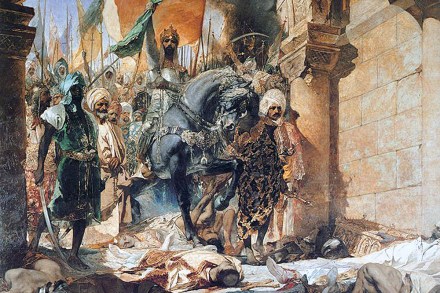
Siege

The Battle of Cross Street: High and Low, by Amanda Craig, reviewed

From our UK edition

Writing a state-of-the-nation novel that is also tense and funny is no mean feat, but that’s what Amanda Craig seems to have accomplished in High and Low. Ambitious and far-reaching, ittakes not a scalpel but a machine gun to the issues of modern city living, leaving no target safe. Set on a north London street over the course of a single day, it compresses time and space, which, together with its plethora of characters, gives a feeling as oppressive as the city itself. Cross Street houses a cosmopolitan mix of the privileged and the poor. Prospect Park and the Cross Estate are both metaphorical and geographical parallels, rubbing together while rarely intersecting. Alongside these highs and lows, Craig focuses on the world of the writer.

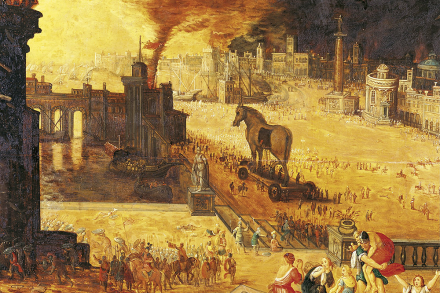
The Trumpian appeal of a Trojan horse

Given the tonnage of missiles launched at Iran, it seems remarkable how relatively few Iranians have been killed. But the Americans have no interest in wasting multimillion dollar ordnance on pain-in-the-ass innocent bystanders. However, Donald Trump is now considering a land invasion. That would have been unwise, as the ancients knew. Knowing all about the problems of land assaults against defended cities, the ancients often preferred to lay siege. That could be a wearisome business and did not necessarily guarantee success. Troy was besieged for ten years, but it took the trick of the wooden horse to take it. So when the Persian king Darius (c.

trojan horse

The medieval English matriarch was a force to be reckoned with

From our UK edition

In 1448, Margaret Paston, a wife and mother in her twenties, wrote to her husband John urgently requesting more weapons: she needed crossbows, poleaxes, windlasses and jacks. In John’s absence, a local lord was trying to take over Gresham, their property in Norfolk, and was mounting a violent siege of the manor house. Margaret was leading the defence. She was multi-tasking, however. In the same letter she also asks John to send some almonds and sugar, as well as woollen cloth for gowns for their young sons and broadcloth for a hood for herself. The missive survives as part of the Paston letters, the largest extant set of medieval correspondence relating to a single family in England.

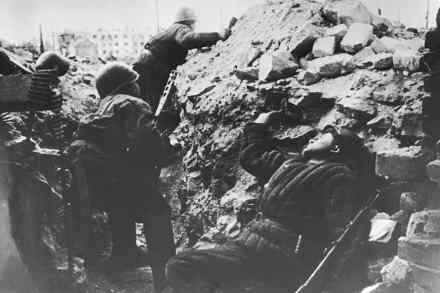
The nondescript house that determined the outcome of the second world war

From our UK edition

Sometimes the struggle for a single small strongpoint can tip the whole balance of a greater battle. One thinks of the closing of the gates of Hougoumont farm at Waterloo, or the bloodless German seizure of Fort Douaumont at Verdun – an error it took an estimated 100,000 French lives to reverse. According to Iain MacGregor, this role at Stalingrad was played by a non-descript four-storey building in the city’s central district, codenamed ‘the Lighthouse’, but subsequently known as ‘Pavlov’s House’, after one of its garrison’s leaders, Sergeant Yakov Pavlov.