Shipping

The song of the bearded seal and other marvels

From our UK edition

In his satirical Devil’s Dictionary, Ambrose Bierce defined the ocean as ‘a body of water occupying about two thirds of a world made for man – who has no gills’. Bierce may have been right to poke fun at human arrogance, but he underestimated the importance of the seas. Averaging almost 3,700 metres (12,000ft) deep, the ocean constitutes around nine tenths of the habitable space on our planet. It plays a commensurate role in the Earth system, not least as an engine – a ‘blue machine’ in the phrase that also titles an excellent book by the physicist and science presenter Helen Czerski – that moves heat around the planet.
The Baltimore bridge disaster puts the worst of the internet on show

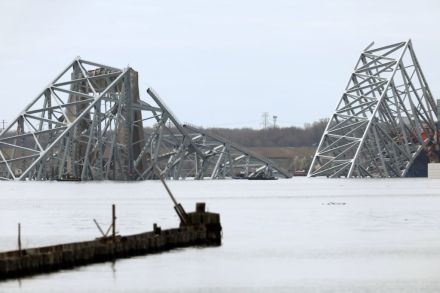
A 948-foot cargo ship hit the Francis Scott Key Bridge in Baltimore, Maryland at 1:27 a.m. this morning, causing it to collapse. Within minutes, all of X/Twitter suddenly became experts on cargo and supply chains. As rescue workers plunged into the chilly waters in the early morning darkness, accounts were driving clicks from the comfort of their beds with rumors of engine failure, foreign intrigue and Pete Buttigieg’s incompetence.  Some on the far right have already determined the crash was a terrorist attack, beating both the Department of Transportation and local government to any official pronouncement. “This ship was cyber-attacked,” Andrew Tate posted on X from his Romanian exile, leading the charge. “Lights go off and it deliberately steers towards the bridge supports.

baltimore bridge

How does the global art market move?

Art market reporting tends to be more sensationalist than, say, the news about corn futures. Breathless accounts of high-stakes bidding abound, remarkable discoveries of forgotten treasures in thrift shops get big headlines, and who’s up or down and how much money the fluctuation involves become fodder for salacious gossip. Interesting though these tales undoubtedly are, though, they don’t provide a realistic picture of the art business. While they may be less gossipy, some nuts-and-bolts stories away from the headlines can be just as compelling for those with an interest in the art market, and how what we see displayed in our homes, public spaces and cultural institutions depends upon very practical considerations to get there.

art market

‘Broken France’ feels much healthier than Britain

From our UK edition

Some business stories are useful economic signals, some are not. For example, I’m not building any hopes on news that Ferrari sales are up 15 per cent thanks to buyers demanding ‘cashmere and corduroy’ interiors. Indicative of greater realism among the very rich is the statistic that superyacht sales are down by a third following a spectacular two-year boom. And far more worrying are other maritime bulletins, one from the Danish shipping giant AP Moller-Mærsk, the other from the fiefdom of the Hong Kong billionaire Li Ka-shing. Maersk has downgraded its forecast for global container demand this year to a fall of 1 to 4 per cent, on the basis of slowdown in China and lower stock-holding by western companies.

The ancient Greek ship that was too big for any harbour

From our UK edition

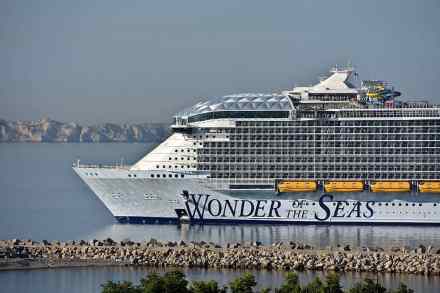
The biggest cruise ship yet built has just been launched, but in like-for-like terms, it comes nowhere near the Syracusia, built c. 240 bc on the orders of the Sicilian tyrant Hiero II. A small ancient Greek freighter might be about 45ft long, a trireme 120ft, a large merchantman 130ft. The Syracusia was nearly three times longer, constructed out of enough material to build 60 triremes. It had three floors. The lowest contained the cargo. On the second were the 30 cabins, covered in multicoloured mosaics telling the story of Homer’s Iliad. The cooks’ galley came complete with a seawater fish-tank, with a 20,000-gallon freshwater cistern in the bow.

Big government is ruining trucking

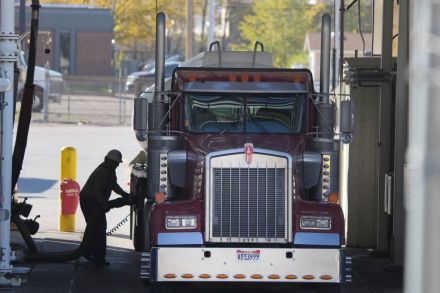
With Christmas right around the corner, the supply chain crisis, and what or whom to blame for it, is a hot topic this season. The New York Times and Wall Street Journal recently published a pair of articles about a purported nationwide shortage of truck drivers causing delivery delays. According to Business Insider, however, the reports of a driver shortage are “overblown.” Time, too, rebutted the claims with a column declaring that “The Truck Driver Shortage Doesn’t Exist.” (My theory is that all the sane truck drivers in America abandoned their rigs and ran for the hills the moment they heard Joe Biden say he “used to drive an 18-wheeler.” Egads!) What, then, are we to believe? Why, the truck drivers themselves, of course! So off to Sapp Bros.

Why filling Father Christmas’s sack will cost more this year

From our UK edition

Bank of England governor Andrew Bailey looks increasingly uncomfortable as inflation notches upwards from ‘nothing to worry about’ towards the Bank’s latest prediction of a decade-high 4 per cent peak later this year and a possible ‘Oops, we’re back to the 1970s’ if spiralling wage and price pressures confound the forecasters. I wrote last week about the UK’s lack of lorry drivers, but that’s just one of many bottlenecks that need unblocking, as Bailey says, to bring ‘a wave of supply back on to the market’ and quell the blip. More significant globally, and much more difficult to resolve, is the logjam of shipping.

Which football teams are the biggest losers?

From our UK edition

Mounting losses The England football team beat San Marino 5-0, taking to 56 the number of competitive games that the micro-nation has gone without a victory since 1990. Has any other football team exceeded this record?— In English league football, the record number of games without a win is 36, held jointly by Derby County (2007/08) and Macclesfield Town, who have achieved the feat twice, in 2012 and 2018.— San Marino, who have won one match, a friendly against Liechtenstein in 2004, can take heart from Fort William FC, which went 73 games without a win before hammering Nairn County 5-2 in a cup game in 2019. Big canals The Suez Canal was blocked by a grounded container ship. Which are the biggest shipping canals?

From ancient Greece to TikTok: a short history of the sea shanty

From our UK edition

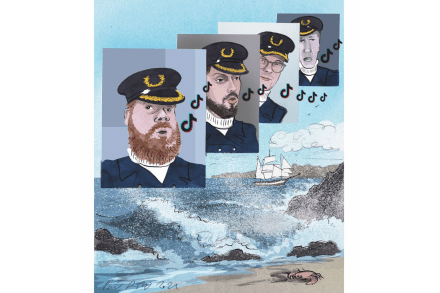
Many things are now normal that would have seemed unlikely a year ago. But even in this strange new world the sudden rise of the sea shanty is, perhaps, strangest of all. It all started in December when Nathan Evans, a postman from North Lanarkshire, posted a video of himself online — a lone figure filmed in no-frills close-up, hoodie high under the chin, beanie pulled down to the eyes — singing the 19th-century whaling song ‘Wellerman’. A trickle of views became a storm, thousands turning to millions (now billions) and just like that sea shanties went from kitsch, Last Night of the Proms novelty to global phenomenon. The song went viral — the centre of a new internet craze: #ShantyTok. Fast forward a few months and Evans, whose song went to No.