Sex

The good sex award goes to Sarah Hall: Sudden Traveller reviewed

From our UK edition

Sarah Hall should probably stop publishing short stories for a while to give other writers a chance. If she’s not the best short story writer in Britain, then — but why even finish that sentence? Her novels are good, but it’s in the short form that she excels, with strange, unsettling tales that have made her the only author to be shortlisted three times for the BBC National Short Story Award. (She won it once.) Her greatest gift is, through a blend of the carnal and the cerebral, to invoke a physical response, something atavistic, in the reader.

Women are sick and tired of receiving nudes on gay dating apps

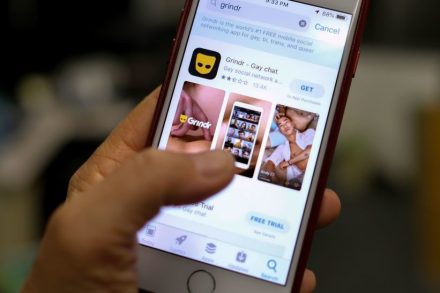
Time to put it away, boys, the colonists are blushing. Gays might be longing for the days when it was only marauding gangs of bachelorettes terrorizing homosexuals in their native habitats. But step into any gay bar today and you’re likely to find multiple disparate clans of shrieking girls haranguing the DJ and pounding fruity cocktails without even sporting Team Bride tiaras and penis straws. It’s one of the ballsier intrusions in this age of tearing down walls and dictating human sameness. And, inevitably, women have crashed the last frontier, gay sex apps, and it’s not going well for anyone. ‘Send me a dick pic and I will cut it off,’ screeched one women on her Grindr profile, a location-based gay men’s hookup app.

grindr gay

Walmart shouldn’t be selling dildos

'Honey, could you run over to Walmart and pick up some Honey Nut Cheerios, some OJ, and a couple anal plugs?’ Walmart has been selling sex toys for a while, mostly online but also in its stores. Now 'America’s store’ is upping the ante. The Behemoth from Bentonville has contracted a small boutique manufacturer, Massachusetts-based Clio, to supply a range of high-tech sex toys, produced with 3D printing technology, for sale in almost all Walmart stores. Walmart got into the sex toy business late, but has dived decisively down that rabbit hole since acquiring the ‘hip' e-commerce site, Jet.com, in 2016.

walmart sex toys

Let’s talk about sex | 25 July 2019

From our UK edition

Every so often an idea for a show will come along that is perfect, and therefore should never be made. A sitcom based on Julian Assange’s time in the Ecuadorian embassy. Or a gender-flipped version of What Women Want. These are concepts to treasure, to return to, to discuss with friends. Once made flesh though, they disappoint. And this is what happened with the podcast My Dad Wrote A Porno. Here’s the concept. One Christmas Jamie Morton is asked to review a self-penned manuscript by his dad, which turns out to be astonishingly bad erotica written under the pen-name Rocky Flintstone. Morton recruits two old friends — BBC Radio 1 presenter Alice Levine and producer James Cooper — to read it out and talk about just how bad it is, a chapter an episode.

Hands free

From our UK edition

Eight years ago, I had an erotic epiphany. It was around midnight: I had sex on the brain and porn on my laptop. Suddenly, everything felt wrong and a wave of sadness washed over me. I felt like some sleazy man from a Michel Houellebecq novel. I no longer wanted to be that kind of man. So I made a solemn vow to abstain for at least 60 days. Back then, I thought I was the only man in the world who had taken such a vow. (And in case you’re wondering, I lasted 45 days that first time and now remain free of porn.) Little did I know then that that year — 2011 — was when a forum called NoFap was set up on social media platform Reddit by Alexander Rhodes to support men like me. The name NoFap is meant to be an onomatopoeic representation of the sound of masturbation.

The futility of the sex strike

Progressives spent decades telling conservatives how harmful sexual restraint was. Yet our open-minded friends on the left now seem to have discovered a new appreciation for the benefits of abstinence. Take the ‘#SexStrike’ led by the actress Alyssa Milano. The message is simple: no sex for men until new limits on abortion are rolled back. In particular, activists and their mainstream media allies are incensed about a new ‘heartbeat’ bill in the state of Georgia which would ban most abortions after around six weeks of pregnancy. This isn’t the first sex-strike aimed at female empowerment.

sex strike

The new freedom

From our UK edition

For me this book evokes a Gigi duet moment: ‘You wore a gown of gold.’ ‘I was all in blue.’ ‘Am I getting old?’ ‘Oh, no, not you.’ Memory plays us false, and it takes the skill of a sympathetic historian such as Virginia Nicholson to sift the evidence, written and oral, and unfold a story that is both plausible and sound. I look back to my 1960s life and think how many of us were metaphorically clothed in gold… how we strode through the years enjoying new freedoms, new loves, music, clothes, drugs, opportunities. I have in my time contributed to the myth of unalloyed pleasure, extolling the 1960s for the quickening pace of change, the broadening mood of happiness and hope.

The cruise of a lifetime

From our UK edition

Near the start of Fleur Jaeggy’s extraordinary novel Proleterka, the unnamed narrator reflects: ‘Children lose interest in their parents when they are left. They are not sentimental. They are passionate and cold.’ Passionate and cold is also an apt description of Jaeggy’s writing: the fierceness of her words erupts from the seams of her tiny, frigid sentences, sometimes just a word or two long. It also fits the narrator, even though she evidently hasn’t lost as much interest in her abandoning parents as she’d like. Her ‘sudden desire’ for her father’s ashes opens the book; then we are plunged back into her recollection of a fornight’s holiday with him on a cruise to Greece on SS Proleterka when she was 15.

Bad romance | 7 February 2019

From our UK edition

I interviewed a prominent 1970s women’s liberationist recently and ended up discussing the sexual culture of her political heyday. ‘Everyone was sleeping with everyone,’ she said. ‘You had to have a good reason not to sleep with someone.’ I felt a stab of envy, a sharpened version of what I feel browsing black-and-white snaps from back in the day. There is often a dishevelled sexiness. There are the gleefully knowing expressions from women newly unafraid of unwanted pregnancy, and the ‘why not?’ insouciance of slouching shaggy-haired men and their slender sheepskin-coated girlfriends leaning against doorposts. What a dreary distance we’ve travelled to get to the present dating landscape.

An eye on the prize

From our UK edition

We don’t know whether ‘Aziz H’ listened to radio plays as he grew up in Yemen. In fact we don’t even know his real name, nor what he looks like. He was unable to get the visa that would have allowed him to come to London to receive his prize as one of the winners in this year’s BBC World Service/British Council International Playwriting Competition. His drama, A Broken Heart in a Warzone, is the first he’s written for radio but he seems to know instinctively how to create character through voice alone, atmosphere through simple cues, drama out of juxtaposing situations. ‘As someone who isn’t a writer,’ he told the competition organisers, ‘I doubted making it to the shortlist.

The Spectator Podcast: time to make your own mind up about a no-deal Brexit

From our UK edition

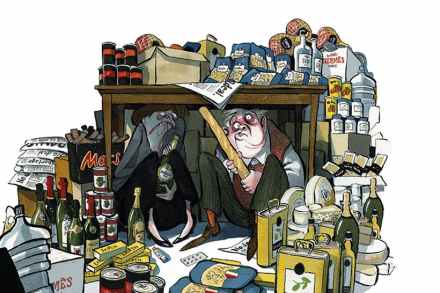
Lorries backing up in Kent, a Mars bar shortage, and no more Rome city breaks – these are just some of the things that we have been warned about when it comes to a no deal Brexit. But what will really happen? In this week's cover piece, Ross Clark weighs up the pros and the cons. It's fairly neutral, but on the podcast, we hear from two people who are anything but. Lord Peter Lilley, Tory MP, has said that a no-deal Brexit would be better than the status quo; he's joined by Ian Dunt, editor of politics.co.uk, who thinks that it would be an 'unmitigated disaster'. It was a pretty fiery exchange from the two Brexit experts - the debate ranged from nuclear isotopes to Chinese kettles. Tune in to make your own mind up about no deal.

Low life | 3 January 2019

From our UK edition

The Airbnb accommodation at Paddington, chez Mohammed, was a fourth-floor room measuring about nine feet by five. As well as having a single bed, this small space was extraordinarily well equipped, with a wardrobe, huge fridge, sink, draining board, ironing board, microwave oven, kettle, two electric hobs, a set of saucepans and enough cutlery and crockery for a select dinner party, and a television set. The room’s heat, which came from an unidentifiable source, was tropical. The mattress had a couple of broken springs and was horribly filthy, but the sheet covering it smelt freshly laundered and for just £22 a night I was well pleased.

A rake’s progress

From our UK edition

This monumental unabridged audio production of Casanova’s memoir The Story of My Life in three volumes covers his first 49 years. He was born in 1725 into a struggling theatre family in Venice, the carnival centre of Europe, and masks, masquerades and music were so much in Casanova’s blood that a glorious, effervescent theatricality lights up these 125 hours. The narrator, Peter Wickham, is so convincing that he must surely have had difficulty re-assuming his own identity after the final recording session. Constantly seeking pastures new, Casanova travelled through France, Russia, Spain, Constantinople, Poland and England, transported by sedan chair, sleigh and felucca, but mainly by hideously uncomfortable carriage (74 changes of horses between Moscow and St Petersburg).

Out of control | 3 January 2019

From our UK edition

You may have noticed the flood of podcasts that’s been pouring out of the BBC since the launch of its BBC Sounds app. This is supposed to give us easier access to the programme archive but actually has been an excuse to show off the podcasts now made by the corporation, from the specially made How to be a Muslim Woman to Turbulence, a clever series of linked short stories by David Szalay, which was commissioned by Radio 4 and released as a podcast at the same time as being broadcast on the network. Podcasts are not bound by time and the demands of a schedule. They can last for ten, 20, 50, 100 minutes, taking as long as the story, the conversation, the facts require.

The Spectator Podcast: Brexit, Bellingcat, and bondage with ethics

From our UK edition

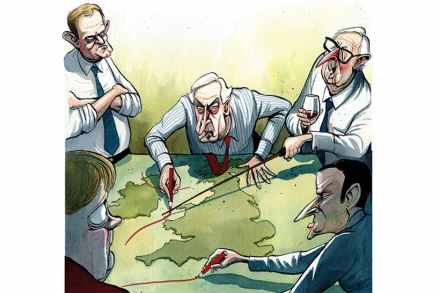
This week, Brexit negotiations grind to a halt again as Brussels and the UK draw mutually exclusive red lines on the Irish border problem. We talk to James Forsyth and Dan Hannan on what next for Brexit. We also look a little deeper into the methods and mission of Bellingcat, the investigators that unveiled the true identities of the Salisbury suspects. And last, we investigate a sex industry that is trying to become more ethical. Brexit negotiations have hit a brick wall again, and this time, no deal looks closer than ever before. The latest snag over the Irish border seems impossible to solve. But all this is a EU strategy to divide and conquer, argues James Forsyth in this week’s cover piece – Brussels has used Ireland to carve up the UK and back it into a corner.

Passionate pursuits

From our UK edition

André Aciman’s 2007 debut novel, Call Me By Your Name, was a sensuous, captivating account of the passionate love a cosmopolitan teenage boy bore for an older American man, which has since been made into an elegant and successful film, directed by Luca Guadagnino. For readers of all sexual persuasions, there was universality in young Elio’s desperation, the false starts and misreadings in his interactions with his desired; the consummation and the final disappointment. Love, unrequited or not, is something of an Aciman speciality, and he returns to it here in his fourth book, Enigma Variations. More of a collection of vignettes than a straightforward novel, it examines the emotional turbulence of the narrator with an exacting, often lyrical eye.

A mind going to waste

From our UK edition

The revival of interest in mid-20th century novelists is one of the most positive and valuable developments of our time. This has particularly brought about a reconsideration of the work of women. Beginning, perhaps, with the creation of the Virago classics, female authors have been brought back into print and given the sort of serious treatment they rarely received in their lifetimes. The Virago list of classics is not what it was, but the excellent Persephone Press has carried on the task of rediscovering out-of-print authors. Occasionally, other mainstream presses have wondered whether a new readership might be found for names from the past, and Hodder is now trying its luck with five novels by Pamela Hansford Johnson.

Public enemy

From our UK edition

Arinzé Kene’s play Misty is a collection of rap numbers and skits about a fare dodger, Lucas, from Hackney. Lucas (played by Kene) gets into a scuffle on a bus and is later arrested for entering London Zoo without a ticket. That’s the entire narrative. Obviously, Kene can’t create an evening’s entertainment from such meagre pickings, so he turns his tribulations as a dramatist into the show’s second storyline. Playwrights moaning about writing plays is a theme of scant interest to audiences, but Kene enlists our sympathy by examining his quest to write a drama that satisfies both black people and the playgoing bourgeoisie.

Let’s talk about sex | 6 September 2018

From our UK edition

This week was bad news for fans of good television drama series — mainly because there’s now three more of the things to keep up with if you don’t want to feel left out of office conversations. The one that stirred up the most advance media excitement was Wanderlust (BBC1, Tuesday), on the traditional grounds that it promised to be unusually explicit about sex. And in that, it certainly didn’t disappoint. The first episode began with a flurry of masturbation (not a phrase I can remember using in a TV column before). First, Joy, a middle-aged therapist, slipped a hand beneath the morning bedclothes — until her teenage son came in to ask where his shoes were.

US Catholic bishops could be forced out of office by a horrific dossier on sex abuse

A Pennsylvania grand jury report released last night has revealed that the Catholic Church in six dioceses systematically and sneakily covered up sexual abuse by priests on a horrifying scale. The American Church has now been plunged into the worst crisis in its history. The 884-report comes less than a month after the revelation that ex-Cardinal Theodore McCarrick, former Archbishop of Washington DC, was a compulsive predator. His serial molestation of seminarians was an open secret, and cannot possibly have come as a surprise to some of his friends in the US hierarchy. The grand jury report – which examined only a tiny fraction of America’s nearly 200 dioceses – has set off an explosion of rage from US Catholics on social media, including many priests.