Second world war

Bring on the Trump protests

From our UK edition

The coming week will see the last major commemoration of a second world war anniversary – 80 years since VE-Day – which a handful of surviving veterans will attend. It is unjust that VJ-Day in August will attract much less attention, but so did the Far East campaigns, much to the contemporary chagrin of the ‘Forgotten Army’ in Burma. One of Bill Slim’s soldiers was George MacDonald Fraser, whom I knew and adored, as did millions of fans of his Flashman books. In his fine memoir Quartered Safe Out Here, George described how one May day in 1945, as his company lined out to attack a Japanese-held village, a green young officer ran out in front of them and cried ecstatically: ‘Men! The war in Europe is over!
What would Livy have made of Trump’s treatment of Harvard?

From our UK edition

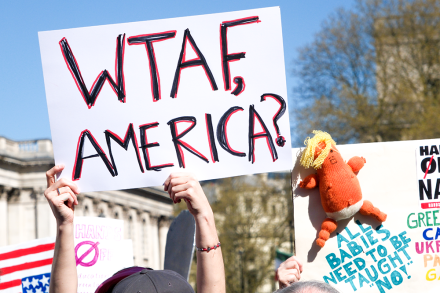
It is not surprising that Donald Trump holds the law in contempt. That is what happens when you have a criminal as President. His treatment of Harvard University is an example: he has cancelled a very large grant, saying Harvard is guilty, as charged, of doing nothing about student riots, on the back not of evidence, but simply a collection of opinions. For nearly 250 years, the Roman plebs (about 99 per cent of the free population) fought a battle to have some say in the way Rome was governed against the wealthy elite who made up the Senate, Rome’s ruling body. Under the kings (753-509 bc), they had no rights at all, but with the inception of the Republic, the real battle began. The story is told by the Roman historian Livy.

How I found Christianity

From our UK edition

I wasn’t brought up in the faith. My maternal grandfather was a Methodist lay-preacher, but when my mother left County Durham for marriage in south-west Scotland, she left the religion of her childhood behind. My Scottish father’s experience of church gave him an odd penchant for the electric organ, but that was about it. So when, at the age of 12, I screwed up my courage and came out as a Christian, Dad put his hand on my shoulder – for the only time – and said: ‘It’s OK, son; it’s just a phase.’ Now, as my Christian phase approaches its seventh decade, I find myself looking back and wondering what had happened to me. What caused me to risk that first venture of exposed dissidence? There were mediating institutions and people, of course.

Bringing modernism to the masses in 20th-century Britain

From our UK edition

The second world war was won in the cafés of central Europe – the intellectual milieu that produced Edward Teller, Leo Szilard and Eugene Wigner, and before them Albert Einstein. But even though America was an alluring destination, many of the 1930s escapees from Nazism ended up in Britain. There were scientists in their number, too, but Owen Hatherley concentrates on the newcomers’ effect on how post-war Britain looked. He examines their role in photography and film; in the design of printed books; in art, especially public art; and in architecture and town planning. Perry Anderson’s 1968 essay ‘Components of the National Character’ was dismissive of the impact of the diaspora.

John Hemingway and the lost world of Angels One Five

From our UK edition

You will doubtless have read the news and possibly even an obituary of Group Captain John ‘Paddy’ Hemingway, the last of ‘the Few’, who died this week at the great age of 105. That he lived beyond the age of 21 is little short of miraculous, of course – given that he was shot down no fewer than four times in just a fortnight during the Battle of Britain, which claimed the lives of 544 pilots out of nearly 3,000 who fought for Fighter Command. Without the victory their service and sacrifice brought, it’s highly likely that the outcome of the second world war would have been reversed.

Were the Arctic convoy sacrifices worth it?

From our UK edition

You need only mild interest in the second world war to be aware of the Arctic convoys of 1941-45, escorted by the Royal Navy through savage weather and unimaginable cold to deliver supplies to Russia. Their purpose was to keep Russia in the war; the conditions were such that storms could last nine days, blowing ships hundreds of miles apart and playing havoc with communications. That’s not to mention enemy action by submarine, air attack and large surface raiders such as the Tirpitz and Scharnhorst. Some 4.5 million tons of aid were delivered at the expense of 119 ships and 2,763 lives lost.  Was it worth it? Opinion at the time was divided.

Jonathan Raban’s last hurrah

From our UK edition

Jonathan Raban, who died earlier this year, left this memoir almost complete. It tells two stories, artfully braided. One concerns the first three years of the author’s parents’ marriage, when Peter Raban was abroad serving in the second world war. He rose to become a major in the Royal Artillery, fighting in France and Belgium, evacuated from Dunkirk and proceeding to North Africa, Italy and Palestine. The second is about the author’s stroke in 2011, aged 69, his rehabilitation in a neurological ward where, on his first morning, a nurse asked ‘Do you want to go potty now?’, and the start of a new life as a hemiplegic.

Latvia is alive with song again

From our UK edition

Every five years Latvia stages a week-long song and dance festival and this year my wife’s Latvian cousins got us tickets to two of the biggest events. I had no idea what to expect. The first evening, in a vast open-air arena in the Mezaparks forest outside Riga, while the light faded behind the tall pines, we watched a 10,000-strong choir dressed in varied costumes – the men in cream or grey flared frock coats and black boots, the women in flower crowns, tartan shawls and striped skirts – as they sang traditional songs. The next day in the Daugava stadium we thrilled to an astonishing 17,000 amateur dancers swirling in intricate and flawless formations to bagpipes, folk and jazz.

I may never recover: Sisu reviewed

From our UK edition

When I went into the Sisu screening I knew only that it was a Finnish film, so was expecting an arthouse drama, maybe featuring bearded men in nice fisherman knits and herrings being salted, rather than this hyper-violent, viciously bloody exploitation flick from which I may never recover. It is a swift 90 minutes and will please those who desire this experience, and it is clever in its simplistic, empty way. But if it’s not your genre, you will almost certainly find yourself praying: ‘Dear God, I’ll never tell another lie if you just make this end.’ The film begins with a title card saying that ‘Sisu’ is a Finnish world that can’t be translated.

Sad, blinkered and incoherent: Arcola’s The Misandrist reviewed

From our UK edition

A new play, The Misandrist, looks at modern dating habits. Rachel is a smart, self-confident woman whose partner is a timid desperado named Nick. Both accept that Rachel must make all the important decisions in their lives and she orders Nick to submit to ‘pegging’. After some perfunctory resistance, Nick obeys. ‘Lube me up,’ he cries and she plunges a pink truncheon deep into his digestive tract. Afterwards he claims that the experience was so uplifting that even his ancestors enjoyed a taste of bliss from beyond the grave. Lisa Carroll’s ironic and frivolous comedy is fun to watch. The characters are enjoyable and the lightweight, throwaway acting meets the script’s requirements.

The £6m country house that was home to Churchill’s secret army

From our UK edition

The high-risk, adrenaline-fuelled operations dramatised in recent BBC1 mini-series SAS Rogue Heroes left viewers gripped. Not quite as attention-grabbing, but no less fearless (or dangerous), were the activities of another special forces unit, the Special Operations Executive (SOE) – a volunteer force set up in 1940 to wage a secret war. Famously ordered by Prime Minister Winston Churchill to ‘set Europe ablaze’, this band of brave agents were often dropped by parachute into Nazi-occupied territory, tasked with sabotage, subversion and helping local resistance movements. Many of them were serving soldiers with commando training; others had been drawn from civilian life.

My lunch with the Queen

From our UK edition

None of this would have happened had I accepted my neighbour’s invitation to dine with a Swiss billionaire banker, or bb. (Sorry, Real life.) He’s an old friend, the bb, and untypically Swiss. He boozes, schnoofs, and chases women, or Afabs, as the absurd youth of today call them. Booze, alas, now goes to my head, and as the song says, it lingers like a haunting refrain for at least a couple of days. I had kick boxing early the next day so I chose to watch the 1949 classic, Sands of Iwo Jima, and snub the Swiss bb. The film was made in 1949 and stars the greatest of them all, John Wayne, luckily no longer with us to see what his beloved America has turned into.

Churchill and the house that saved the world

From our UK edition

A short train journey from London, in the outer reaches of suburbia in Kent, sits the house that saved the world. Or rather: it’s the house that saved the man who saved the world. The property in question, of course, is Chartwell, which 100 years ago this month was bought by a certain Winston Churchill, then a Liberal MP. Back then his career was in ascendance: in 1924, with Churchill having crossed the floor, Stanley Baldwin made him Chancellor, a post he retained until 1929. But then, rather suddenly, he was out in the cold. That was when Chartwell – and the 81 acres it sits in – came to the rescue.

The £15m Surrey mansion where Rudolf Hess was held prisoner

From our UK edition

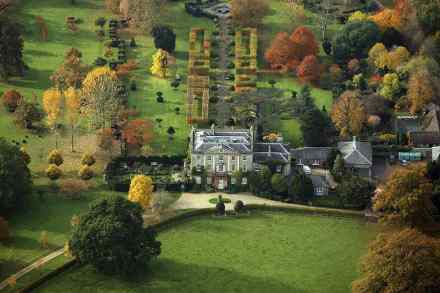
The restoration of any run-down English country mansion is likely to involve extensive re-roofing, re-plumbing and re-wiring. Only one, however, is likely to uncover microphone wires hidden deep within walls by MI6, or involve the polishing of a grand, three-storey oak staircase over which Hitler’s top henchman, dressed in full Nazi regalia, tried to throw himself (failing when he got his leg stuck in the balustrade). Mytchett Place, between Ash Vale and Frimley Green in Surrey, is a sprawling 23,000 sq ft Victorian house that has just hit the sales market for £15 million.

Spare us the preaching: The Railway Children Return reviewed

From our UK edition

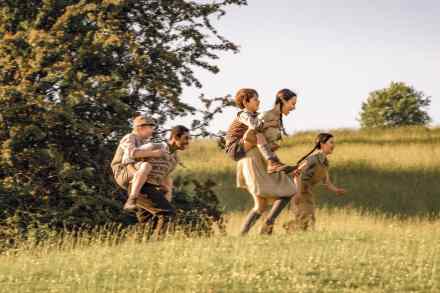
It doesn’t help the cause of The Railway Children Return that the original 1970 Railway Children film is currently on iPlayer. Just to test my capacity to cry, having emerged dry-eyed from the new one, I came home and re-watched the original. Yup. The 2022 sequel has three scenes of the new cohort of Railway Children – three second world war evacuees from Manchester, Lily, Pattie and Ted – waving goodbye to their soldier father as he departs for war, in the fog, never to return. Violins soar. Eyes remain dry. The 1970 film has just one scene of Daddy arriving home, in the fog of a steam train, and it still makes me sob every time. So is a return more moving than a departure? It certainly can be, but you have to live through the desolation first.

In praise of Greek royalty

From our UK edition

New York Prince Pavlos, heir to the Greek throne, turned 55 recently and I threw a small dinner for him. Pavlos is a hell of a prince, father, husband and businessman. He’s tall, good-looking, a gent in every way, intelligent, hard-working and has never put a foot wrong. Neither has any member of his immediate family. Compared with them, the rest of European royals seem wanting, but then I’m prejudiced. The Greek royals are Danes, and the oldest reigning clan of Europe. Unlike another royal family whose name escapes me – it is the Platinum Jubilee issue after all – the Hellenic one has had no divorces, no scandals, and if physical looks mattered, the Greek royals would be the ruling family of Europe. At present Pavlos comes to the dojo after work and trains hard.

Fascinating exhibitions – clunky editorialising: Breaking the News at the British Library reviewed

From our UK edition

In The Spectator office’s toilets there are framed front covers of the events that didn’t happen: Corbyn beats Boris; ‘Here’s Hillary’; Jeremy Hunt wins the Tory leadership contest. The British Library has something similar at its Breaking the News exhibition. The difference is that these ones actually made it to the newsstand. It’s enough to make any passing journalist break into a sweat. ‘Titanic sinks, no lives lost’, reported the Westminster Gazette in April 1912; ‘King Louis XVI dodges the guillotine’, we are told in the 1793 issue of the London Packet. The Sunday Times’s 1983 Hitler diaries hoax appears in this hall of infamy.

Mostly gripping – and boasts not one but two Mr Darcys: Operation Mincemeat reviewed

From our UK edition

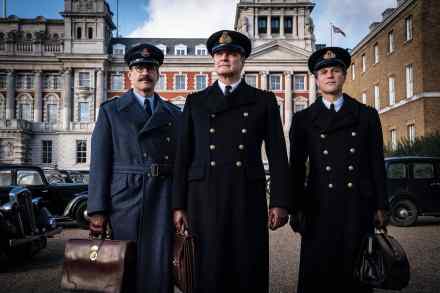
Operation Mincemeat is based on the book by Ben Macintyre, which in turn is based on what Sir Hugh Trevor-Roper called ‘the most spectacular single episode in the history of deception’. It is so spectacular that the film doesn’t have to do much aside from tell it, and that’s what it does, straightforwardly, plainly, no bells and whistles. It’s a classic tale of British second world war derring-do and the sort of film you’ll watch with your dad on a Sunday afternoon, before or after Ice Cold in Alex. Plus it has a terrific cast that includes not one but two Mr Darcys (Colin Firth and Matthew Macfadyen).

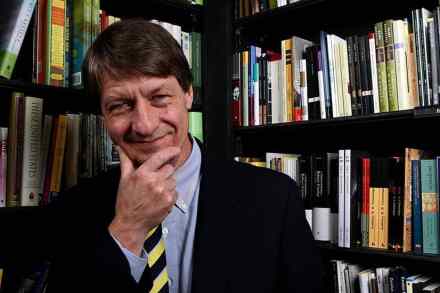
The moral courage of P.J. O’Rourke

From our UK edition

Was it Socrates who said that chaos was the natural state of mankind, and tyranny the usual remedy? Actually it was Santayana, and boy, did he ever get it right. My friend Christopher Mills has given me a terrific book, The Wages of Destruction by Adam Tooze, about the making and breaking of the Nazi economy. I thought I knew everything there is to know about that period, but I hadn’t thought of global economic realities, the ones that actually won the war. Germany’s limited territory and lack of natural resources led to war. Germans had been starving since the end of the Great War, and needed the corn of Ukraine and the oil deposits of Romania in order to feed themselves and keep warm. Once in power, all Hitler needed to do was deal; instead, well, you know the rest.

Robert Harris on Boris Johnson, cancel culture and rehabilitating Chamberlain

From our UK edition

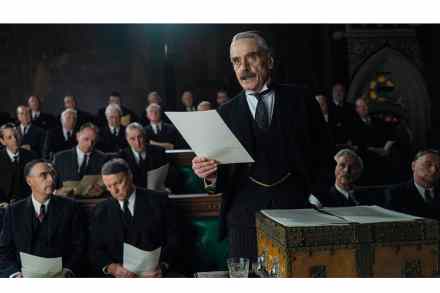
Robert Harris has long been on a one-man crusade to reverse history’s negative verdict on the architect of appeasement. He argues that it was Neville Chamberlain’s duty to go the extra mile for peace and give Britain the moral authority to fight Hitler in the second world war. ‘There seems to be a general feeling that he couldn’t have done much else. He bought us precious time.’ Now the appearance of an acclaimed Anglo-German Netflix film Munich — The Edge of War, starring Jeremy Irons as Chamberlain, and based on Harris’s 2017 novel Munich, gives him the chance to bring his quixotic campaign to a mass audience.