Seagulls

Why are the young obsessed with drinking water?

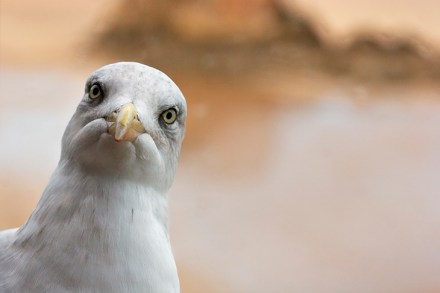
Greetings from Edinburgh, where the air is full of love and seagulls. Mostly seagulls. They soar, they sweep, they swoop above the Old Town, the New Town, the castle and the cathedral. They are everywhere. They strut down the Royal Mile, tourists and rickshaws scattering to make way for them. They descend from on high to attack your bag of chips as you sit at your lunch table in the Assembly Gardens. They are fearless and fabulous and huge. They are herring gulls mostly, with wingspans of up to 5ft (seriously) and lifespans of up to 20 or 30 years (oh yes). I love them, with their beady-eyed authority and mocking squawk that asserts with every piercing cry: ‘I have been around for 30 million years or more and belong here quite as much as you do.
The scourge of Britain’s seagulls

What’s happened to seagulls? They used to be rather charming. The plaintive cawing of gulls used to be the nostalgic soundtrack to any seaside holiday. In the banal, best-selling book Jonathan Livingston Seagull, the eponymous bird flies for the spiritual joy of it and learns great truth and wisdom. The one thing it doesn’t do is nick your chips. How times have changed. Today, if you go to a harbour town in Cornwall, say, and buy an edible treat, there’s an even chance you’ll see out of the corner of your eye a white flash and — whoosh! — the top half of your pasty has gone. 'Bastard!' you shout vainly at the culprit. The other gulls all yak with mocking laughter. Local news outlets are full of gull attack stories in the summer months.

Letters: Lessons for Boris from the classroom

Lessons for the government Sir: James Forsyth suggests that the Prime Minister wishes to avoid sounding as if he is blaming voters for the rise in coronavirus infections (‘Lockdown breakdown’, 26 September). Mr Johnson appears to have already crossed that line. In education we recognise that a teacher has lost control of their class and of their own good judgment when they become exasperated with their pupils for not learning anything. Fortunately, we know a great deal about how to help someone stuck in this negative cycle. Good teachers are predictable and consistent; they know that it is futile to claim that a rule is vitally important if it comes with a list of options and exemptions.

Letters: In defence of seagulls

China’s covered Sir: If Charles Moore had contacted the BBC, rather than conducting a fruitless Google search, we would have told him we run three China bureaux — in Beijing, Shanghai and Hong Kong — and that our three mainland correspondents are backed up by production and administrative staff locally. In Hong Kong, we have a team for the BBC’s online Chinese language service. We would have outlined our agenda-setting, and award-winning, reporting on the Uighurs over the last two years, as well as other major issues such as Covid and the situation in Hong Kong. We would have highlighted our BBC2 three-part series on President Xi. And we would have pointed out the audience growth for our Chinese language service, despite our site being officially blocked in China.