Sculptures

What lies beneath | 2 June 2016

From our UK edition

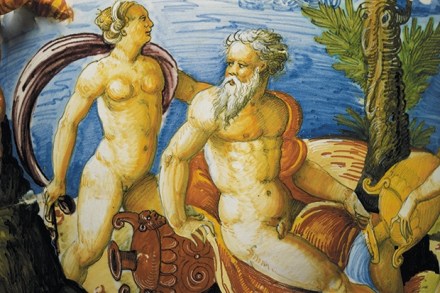
It was not so unusual for someone to turn into a god in Egypt. It happened to the Emperor Hadrian’s lover, a beautiful young man named Antinous, who was drowned in the Nile in the autumn of 130 AD. It was also the fate of Queen Arsinoë II, who had a complicated life. At the age of 15 she became wife to the 60-year-old ruler of Thrace. When he died in battle, she married her half-sibling, who murdered two of her sons. Her next husband was her full brother. A headless sculpture of Arsinoë stands about halfway around Sunken cities at the British Museum. It is, as a label rightly points out, an almost perfect fusion of Greek and Egyptian art. Arsinoë was represented as an incarnation of Aphrodite.

The great pretenders

From our UK edition

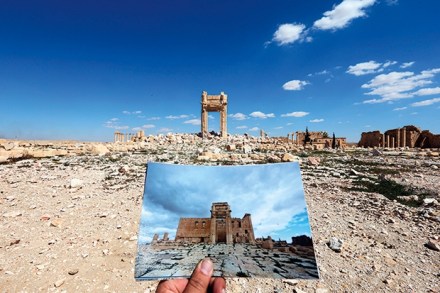
There is fakery in the air. And maybe the French are done with deconstruction. A drone operated by a French archaeology consultant called Iconem has been languidly circling Palmyra, feeding back data about the rubble with a view to reconstructing the ruins and giving the finger to Daesh. Cocteau said he lies to tell the truth. Iconem flies to tell the truth. In April, an exhibition called The Missing: Rebuilding the Past opened in New York which examined ‘creative means to protest preventable loss’. It was timed to coincide with the temporary erection of a frankly underwhelming two thirds-scale replica of the Palmyra Arch in Trafalgar Square, London. It goes to Times Square, New York, in September.

First Lady of Pop Art

From our UK edition

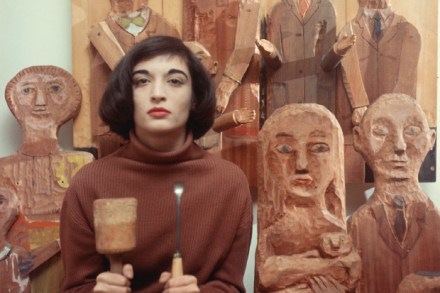
In 1961 the Venezuelan-American sculptor Marisol Escobar made a startling appearance at the New York artists’ group known as the Club that would set the tone for her unconventional career. The Club was where the alphas of contemporary American art met. Franz Kline, Robert Motherwell, Willem de Kooning and their ilk gathered there to take part in discussions, listen to talks, and escape their families. Abstract Expressionism was the house style and in its early days women, homosexuals and communists were all barred from membership. The Club was male, cliquey, exclusive and drenched in its own importance so when Marisol, as she was always known, arrived to participate in a discussion wearing a white mask over her face she caused consternation and even anger.

Surreal, strange and scatological

From our UK edition

Why do we put one work of art beside another? For the most part museums and galleries tend to stick them on the wall as if they were butterflies or beetles, putting similar species together: an array of impressionist flowers, baroque altarpieces, pictures by a certain painter. But there are other ways to do it. Carambolages, a refreshing and highly entertaining exhibition at the Grand Palais, Paris, presents a dizzying diversity of stuff according to a quite different principle: namely, billiards. ‘Carambolage’ is a term that originates from the game of carambole, or French billiards, as once observed by Van Gogh and Gauguin in the Café de la Gare, Arles. It translates into English as ‘cannon’: hitting one ball so that it strikes two others.

Paranormal activity

From our UK edition

In 1896, a group of five young Swedish women artists began to meet regularly in order to access mystical zones beyond the confines of mundane everyday reality. Every Friday, they would gather in order to contact the incorporeal beings they called ‘spirit world leaders’ or ‘High Masters’; among these were five named Ananda, Clemens, Esther, Gregor and Amaliel. In 1904, during a séance, Amaliel instructed one of the artists, Hilma af Klint, to make paintings ‘on the astral plane’ representing the ‘immortal aspects of man’. Many of the results of this occult commission are on display in Painting the Unseen, a new exhibition at the Serpentine Gallery.

Public offence

From our UK edition

[audioplayer src="http://rss.acast.com/viewfrom22/fightingovercrumbs-euroscepticsandtheeudeal/media.mp3" title="Stephen Bayley and Posy Metz from Historic England discuss public artwork" startat=1206] Listen [/audioplayer]There are, as adman David Ogilvy remarked, no monuments to committees. (That’s not quite true; Auguste Rodin’s ‘Burghers of Calais’ — you can find a version in Victoria Tower Gardens — is somewhat collectivist in subject matter.) But there are certainly abundant monuments to the committee mentality, the bureaucratic spirit and art-world groupthink. That is what most contemporary ‘public art’ amounts to.

Eurovision

From our UK edition

Before cheap flights, trains were the economical way to discover Europe and its foibles. Personally, I enjoyed the old fuss at border crossings. By the time I was 18, I had memorised those warning notices in the carriages: Nicht hinauslehnen; Defense de se pencher au-dehors; E pericoloso sporgersi. Those three different ways of saying ‘don’t stick your head out the window’, one bossy, the other pedantic, another gently pleading, summarised the nice subtleties of national borders that were philosophical as well as political. Europe is a marvel.

Moving statues

From our UK edition

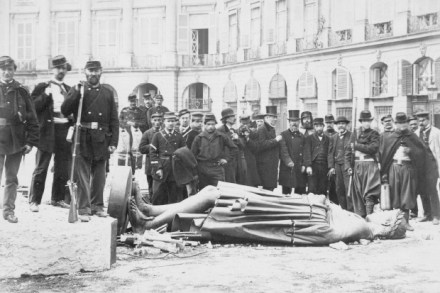
One of the stranger disputes of the past few weeks has concerned a Victorian figure that has occupied a niche in the centre of Oxford for more than a century without, for the most part, attracting any attention at all. Now, of course, the Rhodes Must Fall campaign is demanding that the sculpture — its subject having been posthumously found guilty of racism and imperialism — should be taken down from the façade of Oriel College. The controversy is a reminder of the fact, sometimes forgotten by the British, that public statues are intensely political. This was clear — until quite recently, at least — when one drove into the Syrian city of Hama. There, dominating a roundabout, was a large bronze representation of the late President Hafez al-Assad.

Lost in space | 19 November 2015

From our UK edition

In a converted barn in Dorset, not far from the rural studio where she made many of her greatest sculptures, Elisabeth Frink’s son Lin is showing me his incredible collection of his mother’s work. More than 20 years since his mother died, he’s kept the vast bulk of it together. ‘I owe it to mum,’ he tells me. ‘I’ve been very close to her.’ We’re surrounded by maquettes and plaster casts — shelves and shelves of them. Enormous figures loom over us, like Easter Island statues. Drawings and paintings (many never before seen in public) are stacked against the walls.

The man who made abstract art fly

From our UK edition

One day, in October 1930, Alexander Calder visited the great abstract painter Piet Mondrian in his apartment in Paris. The Dutch artist had turned this small space on rue du Départ, which also doubled as his studio, into a walk-in work of art. Even his gramophone, painted bright red, had become a note of pure form and colour. Calder was impressed by the squares and oblongs of the pictures all around. But he also asked a question: wouldn’t it be fun to make these rectangles move? With a perfectly straight face Mondrian replied that this wasn’t necessary: ‘My paintings are already very fast.’ As I walked around Performing Sculpture, the new Calder exhibition at Tate Modern, I mused on which of them had got the better of this exchange.

Of gods and men

From our UK edition

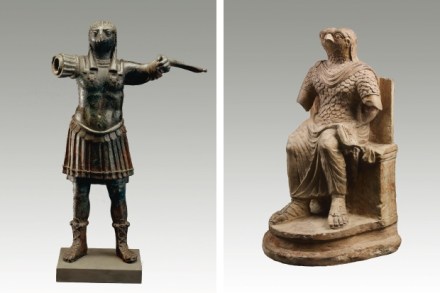
Over the stupefyingly long course of Egyptian history, gods have been born and they have died. Some 4,000 years ago, amid the chaos that marked the fragmentation of the original pharaonic state, an incantation was inscribed on the side of a coffin. It imagined a time when there had been nothing in existence save a single divine Creator. ‘I was alone in the emptiness,’ the god proclaimed, ‘and could find no place to stand.’ Nevertheless, beside him, he could feel the gods that were yet to exist. ‘They were with me, these deities waiting to be born. I came into being and Becoming became.’ The gods emerged, to reign first on earth and then in the heavens, and history began.

Repetitive but compelling: Giacometti at the National Portrait Gallery reviewed

From our UK edition

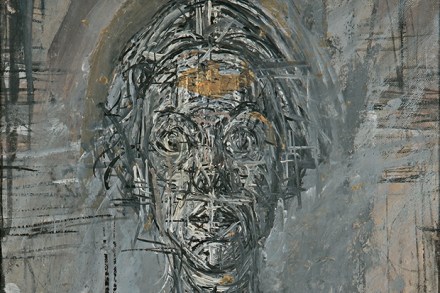
One day in 1938 Alberto Giacometti saw a marvellous sight on his bedroom ceiling. It was ‘a thread like a spider’s web, but made of dust’, an object that was both ‘very, very fine’ and in constant motion, like a snake except that ‘no animal’, he thought, had ever made such movements: ‘light and sweeping and always different’. This was, you might say, a revelation of the beauty that lay in extreme thinness and fragility. In Giacometti: Pure Presence at the National Portrait Gallery you see that process of attenuation occurring, in different ways, again and again in his art.

Touchy-feely – not

From our UK edition

‘The eye is fatigued, perverted, shallow, its culture is degenerate, degraded and obsolete.’ Welcome to the Palpable Art Manifesto of Romanian sculptor Paul Neagu. Art must be accessible to all the senses, he argued, for ten fingers will explain more than two eyes and the tongue might tell yet more again. His Palpable Sculpture is the focus of an exhibition at the Henry Moore Institute that itself ‘ascends to the condition of a work of art’, according to the Scottish artist and gallerist Richard Demarco. His opinion carries weight, for it was he who brought Neagu out of Romania in 1969 to exhibit and teach in Edinburgh. A succession of little galleries lead the viewer through Neagu’s playful mind.

Seeking closure | 13 August 2015

From our UK edition

A while ago, David Hockney mused on a proposal to tax the works of art stored in artists’ studios. ‘You’d only have to say they weren’t finished, and you are the only one who could say if they were,’ he suggested. ‘There’d be nothing they could do.’ This is the state of affairs examined in Unfinished, a thought-provoking little exhibition at the Courtauld Gallery. Once upon a time, it was as clear whether a painter had completed a picture as it was whether the gardener had thoroughly mowed the lawn. Indisputably, Perino del Vaga downed tools for some reason halfway through his ‘Holy Family with Saint John the Baptist’ (1528–37). That’s obvious.

Curiouser and curiouser | 9 July 2015

From our UK edition

Art is not jewellery. Its value does not reside in the price of the materials from which it is made. After all, the cost of the pigment, oil and cloth that made up a Rembrandt was negligible. It’s what he did with them that counts. On the other hand, spectacular works of art can be made from gold and gems, as is clear from some — if not all — of the items displayed in the new installation of the Waddesdon Bequest at the British Museum. ‘As soon as the swallows made their appearance,’ Baron Ferdinand de Rothschild wrote in his memoir Bric-à-Brac, ‘my father’s curiosities were packed and stored away in a strong room.’ It was the young Ferdinand’s privilege to help pack these objects.

Thinking inside the box

From our UK edition

Someone once asked Joseph Cornell who was his favourite abstract artist of his time. It was a perfectly reasonable question to put to a man who numbered Piet Mondrian, as well as other masters of modernism, among his acquaintance. But, characteristically, Cornell veered off at a tangent. ‘What’, he replied, ‘do you mean “my time”?’ In its way it’s a good response, as the exhibition at the Royal Academy, Joseph Cornell: Wanderlust, makes clear. The subtitle of the show refers to travel in mental space. In mundane reality, Cornell (1903– 72) seldom left New York City, and never ventured further afield than Maine. But in his imagination, he journeyed across the world and dwelt, mentally, in an era earlier than his own.

Shape-shifter

From our UK edition

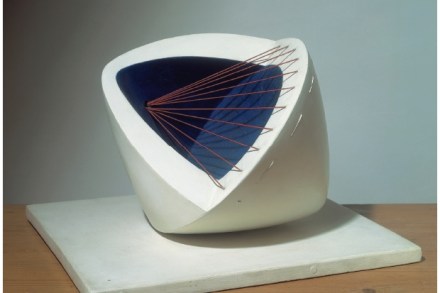
In the last two decades of her life, Barbara Hepworth was a big figure in the world of art. A 21-foot bronze of hers stands outside the UN headquarters in New York, emblematic of her friendship with secretary-general Dag Hammarskjöld — a Hepworth collector — and of her international fame. This was how a modern monument looked half a century ago: abstract but organic, romantic but starkly simplified. Since Hepworth’s death, however, her status has become less clear: was she a towering giant of modern sculpture or relatively minor, a slightly dreary relic of post-war Britain? Barbara Hepworth: Sculpture for a Modern World at Tate Britain does not quite supply the answer. But it does throw some revealing sidelights on her art and career.

The Craig-Martin touch

From our UK edition

The Royal Academy Summer Exhibition has very little in common with the Venice Biennale. However they do share one characteristic. Each always contains so many diverse and potentially incompatible elements that orchestrating a smoothly blended result is dauntingly difficult. But, as with many almost impossible tasks, some manage it much better than others. Michael Craig-Martin, this year’s chief co-ordinator at the RA, has produced a distinctly better result than usual. The Summer Exhibition always tends to look — as David Hockney once put it — like a jumble sale. But the 2015 edition is a jumble sale with pizzazz and a chromatic zing. The transformation begins before you even get into the exhibition.

More Marx than Dante

From our UK edition

At the start of Canto XXI of the ‘Inferno’, Dante and Virgil look down on the pit of Malebolge, the Eighth Circle of Hell, in which sinners guilty of simony, hypocrisy and graft are punished. The last of those spend eternity immersed in a river of bubbling pitch. This sinister black liquid, the poet noted, looks much like the tar that Venetians boil up in their arsenal to smear over the hulls of their ships. Those lines came to mind more than once as I walked around the 56th edition of the Venice Biennale, not least because a large section is installed in the ancient buildings of that very Arsenale. The Biennale is always the same — the crowds! the people! — yet always different.

He’s got rhythm

From our UK edition

One evening before the first world war, Henri Gaudier-Brzeska, fired by drink, tried out such then-fashionable dances as the cakewalk and the tango, ‘his eyes burning — his hair wild’. What was funny about this spectacle, his companion Sophie Brzeska confided to her diary, was not so much the dances as the sight of the dancer himself, ‘the young bear like nothing on earth with his seven league boots jumping in the air like an extraordinary buffoon’. It is a description that evokes many works displayed in a delightful little exhibition, New Rhythms, at Kettle’s Yard, Cambridge. This marks the centenary of Gaudier-Brzeska’s death; he was killed in action on 5 June 1915, aged 23. But it is not exactly a memorial show.