Scotland

Style, wit and pace: Netflix’s Dept. Q reviewed

From our UK edition

Can you imagine how dull a TV detective series set in a realistic Scottish police station would be? Inspector Salma Rasheed would have her work cut out that’s for sure: the wicked gamekeeper on the grisly toff’s estate who murdered a hen harrier and then blamed its decapitation on an innocent wind turbine; the haggis butcher who misgendered his vegetarian assistant; the Englishman who made a joke on Twitter about a Scotsman going to the chippy and ordering a deep-fried can of Coke… It would get lots of awards, obviously, but I doubt it would do that well in the ratings. As with Slow Horses, this is about enjoying the company of loveable misfits But you needn’t worry about Dept. Q (Netflix).

A journey through Edinburgh’s gothic past

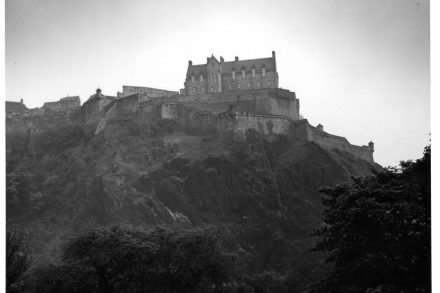
When Guillermo del Toro’s new film adaptation of Frankenstein makes its bloody advent on Netflix later this year, the backdrop for 19th-century body snatching and resurrection may look familiar to many viewers. It was shot last year on Edinburgh’s Royal Mile and images from the set suggest that, as ever with del Toro, this will be a hallucinatory and haunting exercise in Gothic extravagance. If so, he has picked the perfect city on which to unleash Frankenstein’s monster. Edinburgh is a place that wears its long and often violent history like a velvet cloak.

Edinburgh

Why were the Scots so much better at painting than the English?

From our UK edition

This exhibition is awash with luscious brushstrokes, but then that’s to be expected: it’s full of Scottish painting. Before the barren era of conceptual art, which most hope is over, people often observed that the Scots could paint while the English could draw. Why is a bit of mystery, but it was true right through the 18th and 19th centuries and well into the 20th. The Dovecot Studios exhibition opens with John Duncan Fergusson’s portrait of his lover and first muse, Jean Maconochie, painted about 1902. It’s a fabulous eyeful of brush marks.

Ash Regan on the rise of Reform in Scotland, what is a woman and why ‘no-one resigns anymore’

From our UK edition

21 min listen

In this special edition of Coffee House Shots, Lucy Dunn speaks to the Holyrood leader of the pro-independence Alba party, Ash Regan. Regan was formerly a member of the SNP and even ran to be the party’s leader after Nicola Sturgeon resigned in 2023. She defected to the late Alex Salmond’s Alba party 18 months ago and ran for party leader after his death. On the podcast, she talks to Lucy about the difference between Alba and the SNP, the threat of Reform in Scotland, the ‘performative’ nature of Scottish politics, the Supreme Court ruling over what is a woman, and why she was right to resign over the Gender Recognition Bill.

The polarising poet, sculptor and ‘avant-gardener’ who maintained a private militia

From our UK edition

Not many artists engage in the maintenance of a private militia, and it seems fair to assume that those who do may be bound to polarise. The Scottish poet, sculptor, ‘avant-gardener’ and would-be revolutionary Ian Hamilton Finlay was just such a figure: and boy, did he polarise. To his fans, he is a cult figure in the true sense, a limitlessly inventive visionary whose Lanarkshire home and garden remain a site of pilgrimage. To his detractors – notably, a number of vocal Finlay-bashers in the English press – he was a crank, a provincial megalomaniac possessed of artistic, literary and dictatorial pretensions quite out of proportion to his ability.

The lunacy of Gillian Mackay’s abortion bill

From our UK edition

I had spent my life so far in blissful ignorance of a woman called Gillian Mackay. I mean, I knew she existed – but how she existed and what she did with her existence did not impinge because she was safely sequestered in that booby hatch of methadone, lady-men, corruption and pies which we know as ‘Scotland’ and thus would have no jurisdiction over my life. This is, I grant, a solipsistic attitude to have taken – and I realise that now it has been shattered. A new and unwanted homunculus has slipped into my life, then, and I fear it is time to talk about the smirking, pudding-faced Green MSP on account of her member’s bill, The Abortion Services (Safe Access Zones) (Scot-land), which has been enacted.

How the SNP wasted £110 million on PR and spin

From our UK edition

No country in the UK receives more public money per head than Scotland. An extra £2,200 is spent on every person living there than in England – and £1,900 more than the UK average. Yet public services north of the border are falling apart. Take education. Scotland spends more per pupil than anywhere else – £1,848 per head compared with £1,543 in England. Yet standards have plummeted while those in England have improved. The latest Pisa rankings show Scottish pupils to be a year behind their English counterparts, despite a testing bias in favour of Scottish children. When it comes to economic affairs, some £2,228 per head is spent on growth initiatives, welfare and subsidy in Scotland, compared with £1,805 in England.

Why the SNP can’t lose

From our UK edition

What does a party get after nearly two decades in office, collapsing public services, an internal civil war and a £2 million police investigation? Re-election, again – perhaps with an even bigger majority. Last spring, under the hapless Humza Yousaf, the SNP’s grip on power in Scotland finally appeared to be loosening. But eight months on, the nationalists have managed a remarkable turnaround. The party now has a 15-point poll lead and it looks as though John Swinney will remain in Bute House at next year’s Holyrood elections. ‘The caretaker manager has got the job permanently,’ says one rival. The party’s change in fortunes owes less to Swinney’s skill as an operator and more to the spectacular collapse of Scottish Labour.

The maudlin, magical world of Celtic Connections

From our UK edition

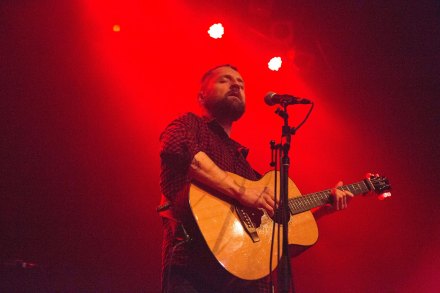
Is it possible to find a common thread running through the finest Scottish music? If pushed, one might identify a quality of ecstatic melancholy, a rapturous yet fateful romanticism, in everything from the Incredible String Band to the Cocteau Twins, the Blue Nile to Frightened Rabbit, Simple Minds to Mogwai. The Jesus & Mary Chain have a song called ‘Happy When It Rains’, which seems about right. There were moments during the launch event for Celtic Connections, Glasgow’s annual and much-valued winter celebration of roots music from Scotland and far beyond, when this bittersweet admixture of moods was thrillingly conjured up. At other times, it simply felt a little contained, even now and again flirting with that lethal old enemy, the Scottish Cringe.

Pure shores: a Scottish sea safari

In the narrow strait between Jura and Scarba, the sea does strange things. Standing waves barrel over phantom surf breaks. Steely waters seethe and swirl, as if stirred by invisible hands. No wonder the gulf’s name, Corryvreckan, means “cauldron of the speckled seas” in Gaelic; this is the world’s third largest whirlpool, classified as “unnavigable” by the Royal Navy. Yet here I am, aboard a thirty-seven-foot rigid inflatable boat (RIB), riding the rapids. Skipper Sandy Campbell cuts the engine so we can try “boat surfing,” the swell dragging us apace past Scarba’s looming quartzite cliffs. Islanders of old dreamt up mystical explanations for this phenomenon.

Hebrides

I love Edinburgh. I’m not sure it loves me

From our UK edition

This year I shall have lived in Edinburgh for a quarter of a century. I fell in love with the city on the 23 bus travelling from the New Town to the Old Town. There was so much architecture. Gothic and Georgian, medieval, baronial. So many turrets and finials, tollbooths and towers. I was drunk on the stuff. Add pomp – a Royal Mile, a castle, a palace. Then the libraries, art galleries, museums. And that’s before you get to bookshops and Edinburgh’s proud moniker, the first Unesco City of Literature. What other city has a railway station (Waverley) named after a novel or a high street (Princes Street) with shops on one side and gardens on the other? The 23 bus was taking me to the psychiatric hospital just beyond Morningside Edinburgh doesn’t love me.

Letters: The dangers of the ADHD ‘industry’

From our UK edition

Nothing left Sir: Rod Liddle is right to ascribe the establishment’s desire to suppress the truth in relation to grooming gangs to its fundamentally anti-working class mindset (‘We demand a right to truth’, 11 January). But he’s characteristically wrong to attribute this to ‘liberalism’. The contemporary left’s identity-politics agenda is born from the opposite: the postmodernist-derived idea that reality can be radically reconstructed through control of what is, and is not, communicated. Its various fantasies – and the public-sector interests that depend upon them – necessarily involve suppressing our powers of rational cognition.

Imperfections in wood lead to perfection in carvings

I am married to a wood snob. When we bought our house in 1999, my husband insisted that all the shelves (he is an antiquarian book dealer, so there are miles of them) should be made of “real” wood, with not an inch of Medium Density Fibreboard. The price made me squeal. But a quarter of a century on, while friends’ MDF shelving droops like cables between telegraph poles, ours remains beautifully strong and straight. Callum Robinson would understand why this matters, and he demonstrates it in his new book, Ingrained.

wood

The gross hypocrisy of the SNP

From our UK edition

If there’s one thing the SNP truly excels at, it’s maintaining double standards. The extraordinary case of the Scottish government and the missing legal advice makes clear just how hypocritical the SNP is when it comes to conduct in public life. Scottish nationalists are swift to condemn opponents at the slightest whiff of impropriety but, as this matter demonstrates, when it comes to their own morality, they’re more easy-going. Back in 2021, then first minister Nicola Sturgeon was cleared of breaching the Scottish parliament’s ministerial code over her involvement in the case of complaints made by female civil servants against her predecessor, the late Alex Salmond.

Sale of the century: why is the Kirk selling off hundreds of churches so cheaply?

From our UK edition

27 min listen

In this week’s Spectator, William Finlater reveals that some of the Church of Scotland’s most precious architectural heritage is being flogged off quickly, cheaply and discreetly. Most western denominations are being forced to close churches, but the fire sale of hundreds of Scottish churches is unprecedented in British history. In this episode of Holy Smoke, Damian talks to William about the Kirk’s apparently panicky reaction to losing half its members since 2000, and asks new Spectator editor Michael Gove – once a Church of Scotland Sunday School teacher – why his former denomination is staring into the abyss. Produced by Oscar Edmondson and Patrick Gibbons.

The tragedy of Scotland’s church sell-off

From our UK edition

‘We are not a heritage society,’ insisted the Rev David Cameron, Convener of the Assembly Trustees of the Church of Scotland. Speaking to the BBC in January, Mr Cameron claimed the Church has a ‘surplus of buildings and large property’, and that there is a need ‘to address our estate’. A church or kirk is usually the most historically important building in any given town or village In other words, the Church of Scotland is selling off its churches. Not just one or two here or there, but a lot, and for cut-price rates. Of course, the Church insists that the move is ‘painful but essential’, aping the language of a corporate multinational’s HR department. Yet the sheer scale and decisiveness of the move belie the patronising smiles of the Church hierarchy.

Salmond’s critics can’t ignore his lasting legacy

From our UK edition

When he lost his Gordon seat in the 2017 general election, Alex Salmond told his count and those watching – friend and foe – that ‘you’ve not seen the last o’ my bonnet and me’. The line comes from Sir Walter Scott’s Bonnie Dundee, an ode to John Graham, the 1st Viscount Dundee, who led the 1689 Jacobite uprising to restore James VII and the House of Stuart. Quoting the lyric was pure Salmond. Not only was he fond of weaving poetry into his public statements – an art sadly lost to most political rhetoricians – it reflected his self-mythologising as a modern-day Scottish rebel against the British establishment. Salmond saw himself and his politics in romantic terms.

Alex Salmond was an unstoppable force of nature

From our UK edition

It is hard to believe that I will no longer wake up on Monday mornings to the sound of Alex Salmond on the phone, either berating me for my latest offence against journalism or telling me what I should be saying about the most recent political scandal. The former SNP leader and First Minister of Scotland was of the old school: combative and relentless, always on the phone, never stopping, never at rest, a 24/7 politician. We always said he would never cease promoting the cause of Scottish independence while he still had breath in his body. He didn’t. Alex Salmond died in North Macedonia, shortly after giving a speech. He was the most astute, gifted, and energetic politician of his generation The Scottish political world is in genuine shock.

Is Scottish Labour really back?

From our UK edition

Labour’s first conference from government in 14 years might not be taking place against an ideal backdrop, with the Prime Minister and other ministers under scrutiny for accepting designer clobber and other goodies from party donors, but there is an unlikely glimmer of hope in the form of Anas Sarwar. Unlikely, that is, because Sarwar is leader of Scottish Labour and for almost a decade that great clunking juggernaut of electoral inevitability had sputtered to a halt and begun to rust. Reduced to just one seat north of the border and in a distant third place at Holyrood, the Scottish party had become an ominous lesson in how thoroughly Labour could be sidelined by a populist rival. There were times when serious Labour people wondered if the party would ever see majority government again.

Imperfections in wood can make for the loveliest carvings

From our UK edition

I am married to a wood snob. When we bought our house in 1999, my husband insisted that all the shelves (he is an antiquarian book dealer, so there are miles of them) should be made of ‘real’ wood, with not an inch of Medium Density Fibreboard. The price made me squeal. But a quarter of a century on, while friends’ MDF shelving droops like cables between telegraph poles, ours remains beautifully strong and straight. Callum Robinson would understand why this matters.