Scandal

An unprincipled Principal

From our UK edition

‘Dreaming spires’? Yes, but sometimes there are nightmares. Brian Martin, awarded the MBE for services to English literature, is at home in Oxford, where he spent most of his career teaching, and seems to know all about the professional and psychological complexities of the university. Holt College, his fourth novel, written with dedicated probity and Baedeker thoroughness, is a suspenseful tragedy without a hero — just a few men and women who mean well. Concerned with the administrative deliberations and manoeuvrings of the fellows of a respected, ancient college, the story serves analogically to show how an unscrupulous individual of obsessive ambition and manipulative cunning can turn even the most idealistically conceived democracy into a dictatorial hierarchy.


The end of brotherly love

From our UK edition

You can never completely leave a religious cult, as this strange and touching memoir demonstrates. Patterns of thinking, turns of mind, will linger with and haunt former members long after they escape. Rebecca Stott was born in 1964 into the Brethren, a low-church sect that had broken away from the Anglican church in the early 19th century and then broken away from itself, bifurcating into factions as movements set on purity and unity usually do. Cult is a strong word, but Stott’s branch of the Brethren really earned it. Her great grandfather, a sail-maker, joined the Brethren in Eyemouth, a fishing village not far from where I grew up in Northumberland. Back then the Brethren there was founded on frustration with the tax-collecting Kirk.

The sting of betrayal

From our UK edition

This may seem an odd thing to say about a writer who’s been officially declared a National Living Treasure in his native Australia, and was shortlisted for the Booker Prize three times before winning it with Schindler’s Ark — but I sometimes think Thomas Keneally is badly underrated. After all, Schindler’s Ark won that Booker Prize 35 years — and 19 Keneally novels — ago, and since then his reputation appears to have settled down into that of a solid craftsman: the sort of novelist who rarely lets you down, but who never quite hits the literary heights either.

A whistleblower mystery that illuminates the inner turmoil of the banking sector

From our UK edition

What troubled places banks have become, I thought as I listened to two news stories, one concerning a formal reprimand for Barclays chief executive Jes Staley after he tried to uncover the identity of a ‘whistleblower’, the other trailing new revelations about the Libor scandal. But both, I’m afraid, were so badly explained that the majority of listeners must have been none the wiser. The Staley episode is mysterious. Anonymous letters to Barclays directors made allegations about a recently recruited senior executive: Staley felt this was an ‘unfair personal attack’, believed ‘honestly but mistakenly’ that it was permissible for him to identify the author, and tried to do so with the help of a ‘US law enforcement agency’.

Tesco pays the price for its accounting scandal

From our UK edition

Tesco dominates the financial news this morning after the retail giant reached a settlement agreement for shareholders following an accounting scandal two and a half years ago. In addition to a fine of £129 million, Tesco will pay out about £85 million (plus interest) to investors in compensation. The money relates to an admission in 2014 that Tesco had been booking income from suppliers early. Put simply, the supermarket had brought forward payments from commercial suppliers for special deals such as promotions. Although the black hole was initially thought to be £263 million, it later transpired that the total was £326 million. Today's deal - also known as a Deferred Prosecution Agreement - has been agreed with the Serious Fraud Office.

The Spectator’s Notes | 26 January 2017

From our UK edition

The English tradition of dissenting judgments in important civil cases is a good one. They are often better than the majority view, because they tend to be advanced by judges who resist the self-aggrandisement of their profession. In the Miller case on triggering Article 50, before the Supreme Court, Lords Reed, Carnwath and Hughes dissented from the other eight. This is what Lord Reed says: ‘…the argument that withdrawal from the EU would alter domestic law and destroy statutory rights, and therefore cannot be undertaken without a further Act of Parliament, has to be rejected even if one accepts that the 1972 Act creates statutory rights and that withdrawal will alter the law of the land.

The Olympics proves it: we are not all equal

From our UK edition

An almost worldwide survey on penis length — the sort of thing I always read with a sense of trepidation and inadequacy — suggested that the countries boasting the largest of these flawed and devious appendages are all located in Africa. Especially West Africa, from the DRC down to the humid and still pristine jungles of Gabon. This suggests to me one of two things — either that the old racist cliché is absolutely true, or that Africans tell bigger lies than anyone else on the planet. Either or both of these explanations are likely to get me into trouble, so I suppose I’d better stop digging. Thing is, I can’t fathom another answer.

Why I’ll keep cheering for Caster Semenya

From our UK edition

An almost worldwide survey on penis length — the sort of thing I always read with a sense of trepidation and inadequacy — suggested that the countries boasting the largest of these flawed and devious appendages are all located in Africa. Especially West Africa, from the DRC down to the humid and still pristine jungles of Gabon. This suggests to me one of two things — either that the old racist cliché is absolutely true, or that Africans tell bigger lies than anyone else on the planet. Either or both of these explanations are likely to get me into trouble, so I suppose I’d better stop digging. Thing is, I can’t fathom another answer.

A five-ring fiasco

From our UK edition

The ambitions of the founding father of the modern Olympic Games, the Frenchman Baron Pierre de Coubertin — that they should be ‘the free trade of the future’ and provide ‘the cause of peace’ with a ‘new and mighty stay’ — were at once wildly optimistic and strangely prescient. Considering that they were first conceived of as a festival of sporting excellence in a spirit of internationalism, the Olympics have had an enduring habit of stirring up displays of humanity at its worst. To anyone who believes that the excesses of the Games over the past 50 years or so have betrayed a purer original legacy, these two books by Jules Boykoff and David Goldblatt provide bracing correctives.

A touch of class | 7 July 2016

From our UK edition

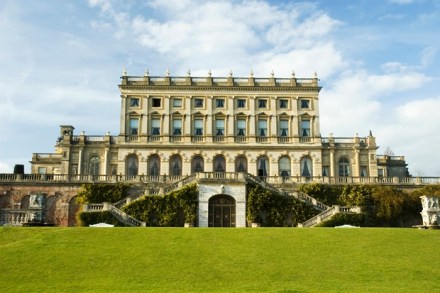
Cliveden is a good review for a divided country and I have waited, not too long, for it to feel resonant for Spectator readers; it aches with class-consciousness. It has food pens dependent on your status — whether you are eating in the National Trust grounds, or the swanky (I love this word; it’s so bitter) hotel inside the ‘manor’. And even if you are staying in the swanky manor, famous as the venue where John Profumo exploited the not-recovering child-abuse victim Christine Keeler — don’t call me a sighing Guardianista, I have done my research and she once aborted a child with a pen — in a swimming pool, you have signage to soothe your comparative class wretchedness, for you do not have a country house of your own.

Sex, lies and tax returns

From our UK edition

Call this a scandal? A few years ago, it wouldn’t have made the cut. If any reporter had taken the David Cameron tax ‘scoop’ into the now-defunct News of the World, he would have been laughed out of the building. ‘OK, just run it by me again. The Prime Minister’s dad was a stockbroker, right? Daddy Cameron operated this fund in Panama, or somewhere, and Dave had a few shares in it. Then before Dave became Prime Minister, he sold the shares and made a profit of 19 grand, after paying full capital gains tax in Britain. Where’s the story?’ ‘But boss…’ ‘Don’t you “But boss” me. I’m trying to sell newspapers here.

Mr Spock and I

From our UK edition

For a show with a self-proclaimed ‘five-year mission’, Star Trek hasn’t done badly. Gene Roddenberry’s ‘Wagon train to the stars’ is celebrating its 50th anniversary, although, as Marcus Berkmann’s entertaining and irreverent history points out, things could have been very different. Roddenberry’s initial idea was for a troupe of disparate 19th-century adventurers to explore the undiscovered corners of the New World in a grand airborne dirigible. While the prospect of Leonard Nimoy arching an eyebrow in a flimsy, flying gondola is irresistible, it’s hard to imagine such a concept proving as enduring as Roddenberry’s eventual brainchild.

A good editor and a good man

From our UK edition

Before embarking on this book, Jeremy Lewis was told by his friend Diana Athill that his subject, the newspaper editor and philanthropist David Astor, was too ‘saintly’ for a lively biography. As a publisher, she had worked on an earlier authorised tome, and thought she knew. Lewis, and Astor, proved more resilient. There are always column inches in a well-connected plutocratic clan such as the Astors. And Astor’s mother, Virginia-born Nancy, was the gold-plated battle-axe who made Cliveden, the family house in Buckinghamshire, the centre of 1930s appeasement. The story is really how Astor (born in 1912) took on his Christian Scientist mother, threw off the trappings of privilege, and became the owner and editor of the Observer during its mid-20th-century heyday.

Game over | 28 January 2016

From our UK edition

[audioplayer src="http://rss.acast.com/viewfrom22/whysexmatters-thedeathofsportandistheeusinkingwhetherbrexithappensornot-/media.mp3" title="Simon Barnes and Alex Massie discuss the crisis in sport" startat=830] Listen [/audioplayer]Like religion, sport can take any amount of passion in its stride. It’s indifference that’s the killer. Sport can be bubbling with incontinent hatred, poisonous rivalries, ludicrous injustice and the most appalling people doing the most appalling things: but as long as people still care, as long as the sporting arguments still echo, as long as newspapers are read from back to front, then sport’s future is safe.

Bad driving

From our UK edition

From ‘The Conscription of Wealth’, The Spectator, 22 January 1916: At recent race meetings streams of motor-cars have proceeded from London carrying down persons engaged solely in the pursuit of their own amusement, wasting petrol, wasting the labour of chauffeurs, and diverting in hundreds of detailed ways energy which ought to have been devoted to the carrying on of the war. A heavy tax on petrol and heavier duties on motor-cars, except where they are used for public work, would prevent this scandal. More generally, it is notorious that in all classes, with the possible exception of the very rich, the scale of expenditure is as high as, or higher than, before the war, and the only way of effectively dealing with the problem is to increase taxation heavily.

Strange young things

From our UK edition

[audioplayer src="http://rss.acast.com/viewfrom22/thegreendelusion/media.mp3" title="Douglas Murray and Steph Smith discuss whether all young politicians are oddballs" startat=1130] Listen [/audioplayer]Whenever the curtain is pulled back on youthful political activism, the picture is ugly. Three years ago, in Young, Bright and On the Right, the BBC followed students at Oxbridge fighting like vipers to get ahead in their university Conservative clubs. Along with the inevitable three-piece suits, wildly invented accents and endless talk of what ‘the party’ expected, there was also that characteristic lack of awareness that ‘the party’, like the rest of the world, remained largely indifferent to them.

Barometer | 8 October 2015

From our UK edition

The death of Diesel The Volkswagen scandal has brought into question the future of the diesel engine. A century ago its inventor, Rudolf Diesel, was himself the subject of scandal. On 29 September 1913 he disappeared from the steamship Dresden on its way from Antwerp to Harwich. He had retired to his cabin after dinner but had not changed into his bedclothes. His body was found off Norway ten days later. He was apparently on his way to discuss selling diesel engines to the Royal Navy for submarines, leading to suspicions that he had been murdered to prevent the technology falling into British hands. His financial situation, however, pointed to possible suicide. The Royal Navy went into the first world war with steam-powered submarines.

VW and the truth of engineering: say what you do, do what you say

From our UK edition

Not that I was much of a boy racer, but the sexiest car I ever owned was a 1982 Volkswagen Scirocco with the lines of a paper dart and the cornering of a cheetah. I once drove it overnight from the City to Tuscany with a blind date who barely uttered a word, en route or afterwards. In an era when British factories could make nothing better than a laughable Allegro or a downmarket Escort, everyone coveted a German car — the top choice for twenty-somethings being the VW Golf convertible (Sciroccos were rarer) whose quality came as a revelation after years of broken fanbelts and burst radiators on unreliable Minis. These were machines that spoke of Teutonic perfectionism and the will to win in global markets that we Brits had lost.

Barometer | 30 July 2015

From our UK edition

Safe house Lord Sewel is unique in leaving the House of Lords in disgrace. Until the House of Lords Reform Act 2014, only a treason conviction earned you expulsion from the House of Lords, and that only since 1870. At least two peers have been executed for treason, Simon Fraser, 11th Lord Lovat, and William Maxwell, 5th Earl Nithsdale, but both well before this date. — Thanks to the 2014 Act it is now possible to have your Lords membership terminated on two grounds: being jailed for a criminal offence with a sentence of more than one year, or failing to turn up for a whole session. But you cannot be ejected for non-attendance if prevented from attending through disqualification: by, say, an 11-month jail sentence.

Karen Danczuk comes to Lord Sewel’s aid: ‘Why are we to judge?’

From our UK edition

Yesterday Lembit Opik spoke out in defence of Lord Sewel after the Sun on Sunday published photos of the Labour peer snorting cocaine in the company of prostitutes over the weekend. While the peer has now stepped down from the Lords, should he want to make a comeback he can also rely on Karen Danczuk to fight his corner. The estranged wife of Simon Danczuk says people should refrain from judging the disgraced peer for what he does in his private life. Writing a blog post on her new website Selfie Made Woman, the former Labour councillor says the public should refrain from judging: 'I am not a journalist, nor am I a professional writer, there will no doubt be typos, or an incorrect use of an apostrophe, but #whyarewetojudge.