Saudi arabia

ESG is a surprise boon for fossil fuel giants

ESG, or environmental, social and corporate governance, has taken the financial world by storm. It first hit the scene in a 2004 United Nations report that argued the financial sector could rack up more profits if it focused on carbon dioxide reduction and UN-approved progressive causes and has ballooned into a big, green financial juggernaut. In 2021, ESG assets under management hit an estimated $35 trillion. Bloomberg projects that by 2025 $53 trillion will be invested in ESG vehicles — that’s over one third of global assets under management and over five times 2007’s total of $10 trillion of ESG assets.  The main thrust is to hasten the renewable energy transition to solve climate change by diverting capital from fossil projects to various green projects.

opec aramco esg

Congress doesn’t like the PGA-LIV merger

Will the biggest merger in golf history fall apart because of politics? From the moment the PGA Tour and LIV Golf shocked the world of sports by announcing their years of negging would end in marriage, questions about the nature and structure of the secretive deal have been raised not just by players, reporters, and fans, but by politicians as well — particularly from a pair of Democratic senators from Connecticut, Chris Murphy and Richard Blumenthal, both longtime Saudi critics. Now, it seems Congress is prepared to get seriously involved in whether this deal goes through, and what it means to have this level of investment from a foreign power in what they viewed as an American sport. https://twitter.

pga tour liv golf

Is the PGA-LIV merger sports’ biggest betrayal?

What just happened to golf?  On Tuesday, PGA Tour commissioner Joseph William “Jay” Monahan IV announced that the PGA Tour will merge with LIV Golf, creating a new super tour along with Europe’s DP World Tour.  So much for the war between golf’s establishment and LIV, the upstart league backed by Saudi Arabia’s $620 billion sovereign wealth fund. Starting next year, Monahan will be the super tour’s CEO, answering to its chairman, Yasir al-Rumayyan, a close ally of Saudi crown prince Mohammed bin Salman.  So much for moral posturing. Just last year, with LIV critics citing the Saudi regime’s ugly human-rights record, its links to 9/11 and Saudi thugs’ murdering and dismembering columnist Jamal Khashoggi, Monahan claimed the high ground.

LIV PGA

Flashback: Donald Trump predicted the PGA-LIV merger a year ago

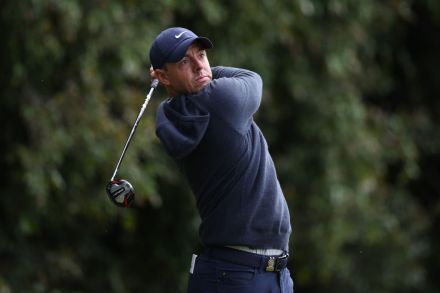
The PGA Tour will officially merge with LIV Golf, the Saudi-backed golf league, in a shock bid to squash the antitrust lawsuits brewing between the two corporations. It’s a surprising move considering the PGA Tour executives and some of their high-profile players, such as Rory McIlroy, spent the past year morally shaming the pros who defected. But one man who was not shocked was former president Donald Trump, whose organization hosts LIV events at his courses. In July 2022, Trump wrote on Truth Social: All those golfers who remain "loyal" to the very disloyal PGA, in all its different forms, will pay a big price when the inevitable MERGER with LIV comes, and you get nothing but a big "thank you" from PGA officials who are making Millions of Dollars a year.

donald trump pga-liv

After decades of waiting, China goes on the diplomatic offensive

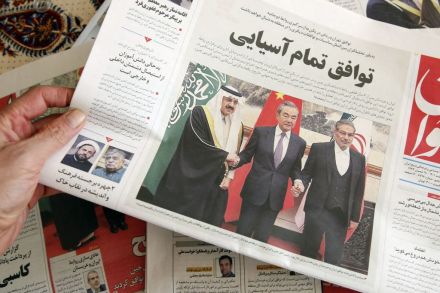
China has been an epicenter of diplomacy over the last month and American officials can’t help but take notice of the shift. Statesmen flying to China, hat in hand, to sign business deals with Chinese firms or enlist Chinese diplomats to assist in solving international disputes gives the foreign policy graybeards ulcers. The general rule seems to be: what’s good for China is bad for the United States. There’s no question that China’s Xi Jinping has had a good few weeks. After being occupied with a nationwide Covid-19 disaster that lasted for three years, Xi, a man whose entire legacy depends on China transforming into a superpower on par with or perhaps even surpassing the US, isn’t wasting any time before injecting his country back into the diplomatic arena.

syria peace

The Middle East catches diplomacy fever

Peace isn’t exactly blossoming like rosebuds in the Middle East. The region is still host to a devastating civil war in Yemen, a humanitarian crisis in Syria, sporadic terrorist attacks in Iraq and an endless tit-for-tat between the US and Iranian-backed militias in Iraq and Syria. Indeed, just last night, President Biden authorized several airstrikes against three militia locations in retaliation for a drone attack on an American base in Syria that killed one contractor and injured six others. But for an area of the world so often regarded as hopeless, the Middle East is suddenly looking like an epicenter of diplomacy.

syria peace

The US must punish Iran for aiding Russia

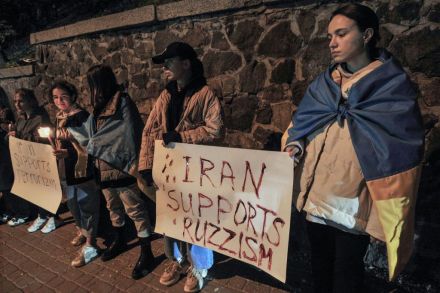
Russia’s brutal war in Ukraine has been disastrous for Vladimir Putin, but it has been a boon for the Islamic Republic of Iran. Western nations are increasingly concerned about Tehran’s profitable cooperation with Moscow, as Iran leverages Russian desperation to fuel its own ambitions. So far, Iran has sent hundreds of drones to Russia along with training personnel, and may soon send ballistic missiles. Tehran has continued its malign activities in the Middle East as well, attempting to steal American drones and blind American ships, attacking and endangering American forces and personnel, and supporting destabilizing groups such as the Houthis in Yemen. Iran has also ruthlessly repressed widespread protests at home.

Why China’s budding relationship with the Saudis spells trouble

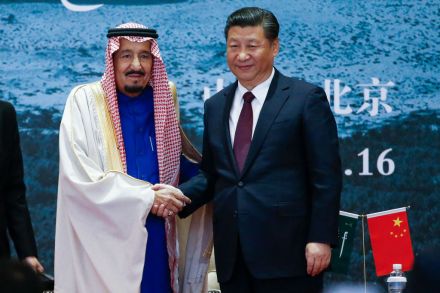
Joe Biden’s chickens are coming home to roost as Chinese President Xi Jinping visits Saudi Arabia. The trip itself has not been especially revolutionary. But it is another indication of America’s declining prowess in the region. Xi was given a welcome befitting an ambitious leader (and notably different from how Biden was greeted in July). Beijing and Riyadh signed numerous economic agreements worth about $29 billion in total, including with Huawei, which will only further the Chinese technology giant’s control over global telecommunications infrastructure. Xi also advanced his desire to make the yuan a competitor to the dollar in the global economy, pushing for the use of the yuan in the oil trade with Saudi Arabia.

The coming turbulent times in the oil market

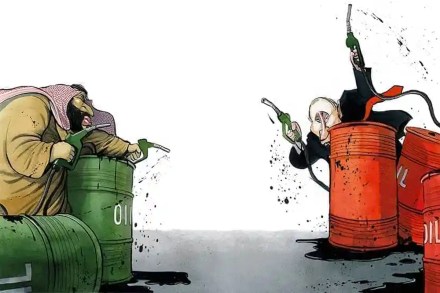
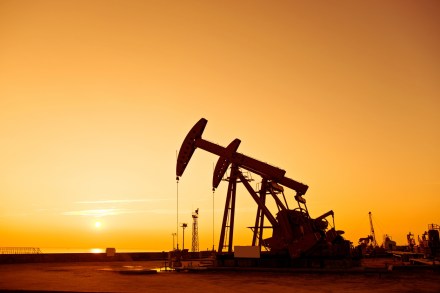
When the Wall Street Journal reported on November 21 that OPEC, the oil cartel dominated by Saudi Arabia, was planning to increase production by 500,000 barrels per day in December, the crude market immediately reacted. Oil prices plunged by 6 percent, bringing the Brent benchmark close to $80 a barrel. Saudi energy minister Prince Abdulaziz bin Salman, the older brother of king-in-waiting Mohammed bin Salman, immediately went to work disputing the report. No decisions at OPEC had been made, he said, and it was possible the cartel could even proceed with further production cuts if needed to maintain balance in the market (for the Saudis, "balance" is usually defined as padding the kingdom’s balance sheet). Abdulaziz’s intervention helped make up most of those earlier losses.

oil

How the US failed to stop OPEC from cutting oil production

Near the top of President Biden’s to-do list for the past few months has been to keep gas prices down. On Wednesday, this was dealt a likely fatal blow by the Organization of Petroleum Exporting Countries, or OPEC, which, led by Saudi Arabia, agreed to cut its overall production by two million barrels per day. In actuality, the cut will mean a reduction of more like one million barrels per day if it's taken into account that OPEC has been underproducing compared to its previously stated production goals. Still, this is a significant cut, and the effects on oil markets are already being felt.

How the Saudis embarrassed Biden over oil prices

As Americans confront high inflation rates, tumbling prices at the gas pump are at least giving them a little relief. Brent Crude, the global benchmark for oil, has declined by 27 percent from its $127 peak six months ago. Gas prices in the United States, which were averaging just over $5 a gallon earlier in the summer, are now in the $3.72 range. That means Americans are saving $10 to $15 every time they fill up their tanks. Yet crude is a global commodity, and its price can fluctuate for any number of reasons — war, recession, and an economic slowdown in China to name but a few.

The Mar-a-Lago raid’s Saudi connection

It appears that the FBI’s search of Donald Trump’s Florida residence was just the tip of the iceberg. Indeed, the Bureau's probe has been underway for months, and its decision to interview former White House lawyers suggests that law enforcement is not only interested in what was in the more than 700 pages of documents that Trump took, but also why he took them. The Washington Post recently alleged that some of those documents are related to nuclear weapons. This has shone a light on Trump’s prior attempts to share sensitive nuclear technology with Saudi Arabia, a country that has flirted with building nuclear weapons. Could Trump’s friends in Riyadh have been due for one of his infamous quid pro quos? History provides a guide. As early as 2016, Donald Trump Jr.

Blaming Saudi Arabia won’t make energy cheaper

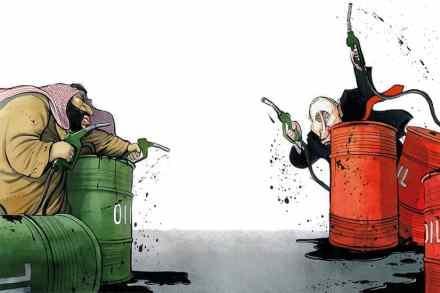
How outraged should we be that Saudi Aramco has reported a world-record quarterly profit of $48 billion, representing a giant bonus from the global oil price spike provoked by the war in Ukraine? Well, that’s how the cookie crumbles when you’re sitting on oil reserves so abundant and so easily accessible that your marginal cost of producing the next barrel is less than $10 when the market price has just doubled to $130 — as it did in March, before settling back to around $95 today. And you might think that this recent price retreat is likely to continue as oil demand begins to shrink with the onset of recession in developed economies – just as you worry that your own reserves will one day dwindle.

saudi arabia

How Biden made the energy crisis worse

During the course of my daily media interviews, one of the most frequent questions I hear is, “when will things get better?” Being the bearer of bad news is frustrating, but unfortunately that’s all I see for the next few years. Following the basic laws of economics, energy prices can only come down based on two factors: increase the supply or decrease the demand. They may not like to admit it, but President Joe Biden and his team understand the need for a supply increase. It explains the president's trip to Saudi Arabia to ask their king to increase oil production. He has dispatched envoys to Venezuela and Iran for the same purpose. Unfathomably, his administration continues its relentless attacks on domestic oil production.

energy

Russia is sidestepping American oil sanctions

When the European Union finally made the decision to ban 90 percent of Russia’s crude oil imports by the end of the year, the bureaucrats in Brussels were jubilant. The EU’s adoption of oil sanctions was thought be a big blow to Russian President Vladimir Putin, who depends on the revenue generated by his country's oil exports to fund his war in Ukraine. It doesn’t take a genius to figure out why European officials were so thrilled. The EU imported 2.2 million barrels per day of Russian crude last year, amounting to tens of billions of dollars in profits for the Kremlin every month.

Biden of Arabia

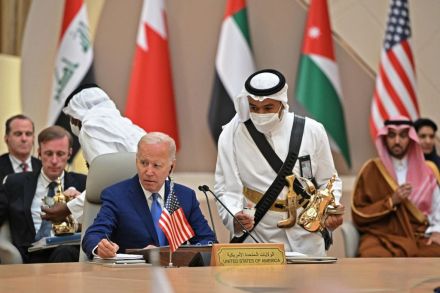
When news broke that President Biden was planning a trip to Saudi Arabia to visit the crown prince Mohammed bin Salman (known as MbS), members of his party were horrified. Representative Adam Schiff, the chairman of the House Intelligence Committee, was especially disturbed and recommended the White House cancel it outright. "I wouldn't go. I wouldn't shake his hand,” Schiff told CBS on June 5. "This is someone who butchered an American resident, cut him up into pieces in the most terrible and pre-meditated way.” That resident was Jamal Khashoggi, a former Saudi royal family insider who used his perch as a columnist at the Washington Post to raise awareness about the crown prince’s ruthless ways.

arabia

‘America or chaos’ is a false choice

There is an age-old dogma in the US foreign policy establishment: when America pulls back, chaos ensues. Like an anti-inflammatory that keeps arthritis under control, Washington’s presence in this or that region keeps enemies cowed, partners reassured, and the barbarians at the gates. Of course, just because an argument is popular doesn’t mean it’s accurate. There are several problems with the “America must be everywhere, at all times” line of thinking, the most poignant of which is that it turns the US military into an agency of global rent-a-cops.

Washington’s dirtiest war at last goes silent

Something strange, but miraculous, is happening in Yemen right now: no bombs are falling from the sky. According to the Yemen Data Project, an independent group keeping track of the violence in the Arab world’s poorest country, there hasn’t been a single Saudi coalition airstrike over the last week. This is the first time since Yemen’s civil-turned-proxy war began that an airstrike hasn’t been recorded, an unprecedented and welcome development for the millions of Yemenis who have lost so much as their rich Saudi neighbors seek to drive the Houthi-led rebel movement to the negotiating table.

What’s the difference between Yemen and Ukraine?

Millions of innocent civilians uprooted from their homes. Residential areas turned into dust, rubble and wire. Thousands of people killed in errant airstrikes. Store shelves emptied of basic staples. A humanitarian crisis dominating the everyday lives of a large swath of the population, who just want to escape the shelling and the fighting. This is the scene the world now equates with Ukraine, which has been subjected to a barbaric war of choice courtesy of Russian president Vladimir Putin. Yet for one poverty-stricken nation more than 2,400 miles to the south, this has been the grim reality for years.

yemen

The fantasy of an Israeli-Palestinian ‘peace’

Long-time readers of this site may be aware that yours truly has not only applauded the Trump administration’s successful efforts to normalize Israel’s relationship with several Arab countries but has also proposed awarding the Nobel Peace Prize to Jared Kushner, the architect of the Abraham Accords. There were many reasons for my bullish sentiments regarding the Trump administration’s Middle East policy. First and foremost, as I pointed out, it disrupted the old American paradigm that held that any effort towards rapprochement between Arabs and Israelis hostage to the ultimatums of the radical Palestinian leadership.

peace palestinian