Sarajevo

Haunted by the past: Winterberg’s Last Journey, by Jaroslav Rudis, reviewed

Jaroslav Rudis’s latest novel follows the 99-year-old Wenzel Winterberg, a Sudetenland German, and his middle-aged Czech carer, Jan Kraus, on what is a quirky European take on the buddy road-trip story. Marx claimed that ‘men make their own history’, but do so under the burden of the past, with the weight of dead generations upon them. The tragedy soon to become a farce begins, according to Winterberg, at the site of the Battle of Königgrätz, with the old man proclaiming: ‘The Battle of Königgrätz runs through my heart.’ He then rambles on about its ‘half a million ghosts’, their roles and where they lie now, before blaming the battle for the loss of his first wife, the madness of his second, and then the death of his third.


The plight of the evacuee: Asylum Road, by Olivia Sudjic, reviewed

Olivia Sudjic’s second novel, Asylum Road, is a smart and sensitively layered story that’s told through niggling memories, unspoken thoughts, white space. The past interrupts the present, which in turn tugs at the future. It begins and ends in a car — a couple ‘side by side, in motion with a change of view’ – and all the while the reader too is in a state of flux, unsettled. That’s a state Sudjic’s protagonist, Anya, is familiar with. Along with other unaccompanied children, she was evacuated from Sarajevo during the Bosnian war. Sent to live with her aunt in Glasgow, she’s been searching for a sense of belonging ever since.

Why did the New York Times minimize the Bosnian genocide?

From our US edition

‘Why Did I Let a Convicted War Criminal Practice Energy Healing on Me?’ wonders Jessica Stern in a New York Times excerpt from her forthcoming book. The war criminal in question is Radovan Karadžić, a Bosnian Serb leader responsible for the energetic orchestration and execution of genocide against Bosnian Muslims during the 1990s war. His most notorious crime against humanity includes the murder of over 8,000 Muslim men and boys over a few days in Srebrenica. The book in question is My War Criminal: Personal Encounters with an Architect of Genocide, a memoir of Stern’s interviews with Karadžić.

bosnian

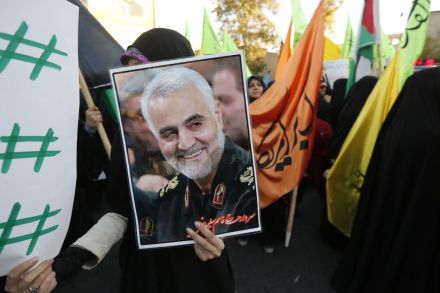
Taking out Soleimani is like stepping on a landmine to cure a headache

From our US edition

Talleyrand once commented that Napoleon’s execution of the Duke of Enghien in 1804 was worse than a crime. It was a mistake. Something similar could be said about President Trump’s liquidation of Maj. Gen Qasem Soleimani, the head of the Islamic Revolutionary Guard Corps. No one will miss the villainous Soleimani, but killing him was the equivalent of stepping on a landmine to cure a headache. What on earth could Trump have been thinking — if he was thinking at all? Trump has in effect ceded his foreign policy to the hawks. So much for Trump the restrainer. Hello, Donald Trump neocon. Trump has launched America into the path of a war with Iran that it can win but only at a cost that is disproportionate to the terrible cost it will pay.

neocon soleimani