San francisco

Inside San Francisco’s shoplifting industry

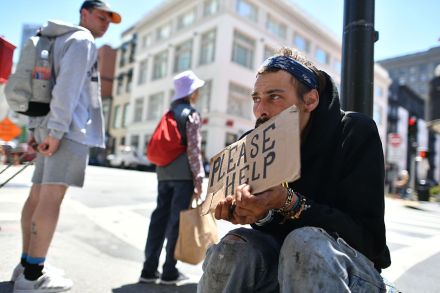
I went to San Francisco to document the homelessness crisis. What I did not expect was to witness the most blatant shoplifting I have ever seen. I was staying at the Holiday Inn, and just a short walk away was a Whole Foods. One morning around 8 a.m., I walked over to grab a breakfast sandwich. Before I even made it through the store, I noticed four different homeless individuals in different aisles stuffing bags with anything they could grab. It was not subtle. It was not someone slipping a sandwich into a coat pocket because they were starving. It was clear, obvious, brazen theft. Two security guards were stationed at the front of the store. Both were on their phones. They were close enough to see what was happening, but far enough away to make it clear they were not going to stop it.

Meet the anti-Gretas: the women celebrating nuclear energy

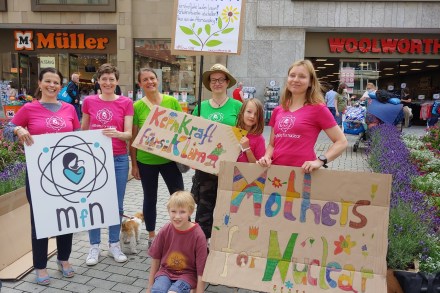
Over the course of their lives, Americans have an average carbon footprint of 1,300 tons of CO2. Paris Ortiz-Wines, a young woman from San Francisco, has already canceled hers out. She could hop on a flight every week for the rest of her life, eat ribeyes at every meal and sip almond milk all day long, and still be in the clear. Back in 2021, Ortiz-Wines played a key role in the campaign that stopped the closure of California’s only nuclear power plant, Diablo Canyon. This has already saved more than 30 million tons of CO2 emissions.  Ortiz-Wines is part of a new generation of women advocating for nuclear energy, even though surveys show most women are skeptics. Call them the Nuclear Power Rangers.

greta thunberg nuclear

The perils of London: a beginner’s guide

From our UK edition

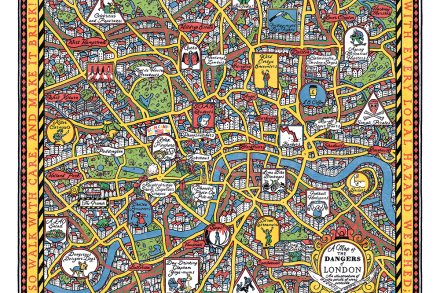
An interesting new perspective on London is doing the rounds. Our capital city is being advertised as a paradise. London, it seems, is suddenly a place where every building is a Wren, where every sunset is a Turner, where every neighbourhood is Notting Hill. The sentiment has even got a name – ‘Londonmaxxing’. It’s been invented by tech accounts on X who got excited by the long queues at AI events run by Vercel earlier this month. There has also been speculation that a disgruntled-with-Trump Anthropic could move to London. As much as I love London, like any true sceptical Londoner, I suspect bollocks. Look at the map by our resident artist J.G. Fox. Anyone considering the move should in fact be sniffer dog-aware of a multiplicity of perils.

Slouching towards Gavin

More through historical accident than anything else, Gavin Newsom has emerged as the de facto leader of the Democratic resistance. His dubious attempt to redistrict California along partisan lines won at the ballot box last month. It was a gamble – an open and explicit attempt at gerrymandering – which voters have rewarded. He is conspicuously modeling his image on Bill Clinton’s and Slick Willie is returning the compliment by letting insiders know that he is hugely impressed by Newsom’s talents. Newsom is also audaciously recasting himself as a working-class hero. He has said he spent his childhood “hustling” and that he “raised himself.” That rather downplays his rise as a protégé of the Getty family, which employed his father as its lawyer.

Gavin Newsom

The cruel, cold intellect of DC and San Francisco

New York vs Los Angeles is done to death. Those cities have already captured the American heart on stage and screen. The next great rivalry (or is it an alliance?) is unfolding between the bastions of the nerds: Washington, DC, and San Francisco. Each prizes a different facet of intellect – DC the operator, San Francisco the inventor, functioning as co-architects of a new American order. We tell ourselves SF and DC represent different values: disruption and order, innovation and stability. And yet the cities are locked in a symbiotic embrace. San Francisco builds new worlds in the image of its algorithms; Washington manages those worlds through policy and process. But this is a cold comfort. While both claim to act in the public interest, each sees the human as a problem to be solved.

san francisco

The $130 billion train that couldn’t

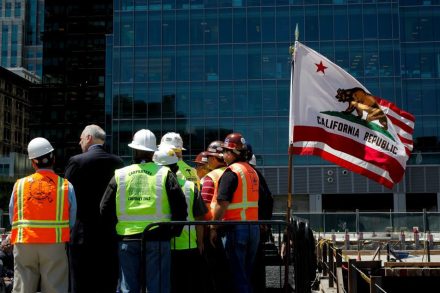
In the annals of stupid and poorly run schemes, the California High-Speed Rail project ranks among the worst. Its future, even a dramatically scaled down one, has become ever more precarious since the Trump administration’s Department of Transportation rescinded $4 billion in funds already granted the project. Governor Newsom has already filed a suit to reverse the action, but he can’t legislate away the reality that this project is an abject embarrassment. When voters approved $9 billion for the plan in 2008, the California High-Speed Rail Authority estimated that it would cost $33 billion and start running by 2020 – and that was just for the San Joaquin Valley portion. The cost has since ballooned to $130 billion, and no stretch is operational.

High-speed rail construction site in San Francisco, California

What’s the matter with Los Angeles?

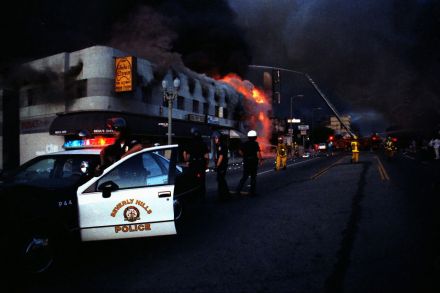
Los Angeles is reeling once again from urban disturbances, as it did in 1965, 1992 and 2020. After each outbreak the city is widely seen as a hopeless disaster that epitomizes everything wrong with American cities. That’s ironic because since its infancy Los Angeles sought to develop a new model of post-Dickensian urbanity – what the early 20th century minister and writer Dana Bartlett called “the better city” – one dominated by middle class single family homes. At the time, the city that was among the whitest, and most protestant in the nation. Bartlett predicted it would become “a place of inspiration for nobler living.”The strategy, a combination of vaulting ambition and careful planning, worked brilliantly.

LA Riots

A shining light in San Francisco

Alex Byrd was shooting meth in his wife’s bathroom while looking up a rehab center to check into. Before his most recent stint in prison, he’d been a major player in the drug trade, controlling distribution at every strip club on San Francisco’s Broadway Street and dealing all over the Bay Area from Oakland to San Jose. But while he was locked up, a leader in Nuestra Familia, his prison gang, offered Alex the chance to retire. When he got out, Alex promised his wife he’d never go back to prison again. But he was still an addict — and now it was a lot harder than it had been before, since he no longer had a constant supply of drugs. Now he had to work for his drug money, which is to say to engage in petty crimes like robbing Amazon stores. “It was a burden,” Alex says.

San Francisco

Kamala’s history of backstabbing her bosses

Vice President Kamala Harris was pushed to the top of the 2024 Democratic ticket more than a month ago — and it’s still not entirely clear how much involvement she had with the effort to force President Joe Biden to step aside from his reelection campaign. It’s a question worth clearing up as it turns out she has a history of leapfrogging her bosses. During her first sit down interview with CNN on Thursday night, Harris said she stood by her assessment of Biden’s cognitive ability after his debate against former president Donald Trump. But she was not asked if she played a role in the palace coup. Reporting indicates that Barack Obama, the Clintons, Nancy Pelosi and Chuck Schumer, among others, convinced Biden to step aside.

kamala

The Californication of the Democratic Party

When Joe Biden was elected in 2020, an overjoyed Los Angeles Times boasted that his goal was to “make America California again.” Biden has fulfilled the Times’s vision, if with less than complete success. Over the past few weeks, however, lunchbucket Joe from Scranton has been unceremoniously dumped by the Golden State elite — Nancy Pelosi, Adam Schiff, George Clooney and a passel of tech oligarchs — to be replaced with one of their own, Vice President Kamala Harris. But given the chances of a GOP win this year, the Californians have another favorite in the wings, Governor Gavin Newsom, for 2028. Harris’s elevation and Newsom’s looming challenge are but parts of what can be best described as the Californication of the Democratic Party.

California
crowd

Everything is under (crowd) control: the evolution of riot response

Worldwide unrest is great for those in the riot-gear business. Shields and batons have historically cornered the market as the cutting edge in crowd control, but in recent years it’s evolved to include robots, armored trucks and drones. Milipol Paris is the homeland security expo of all expos. This is the kind of giant showroom where you will find law enforcement and private security agents checking out the newest innovations in robot dogs, armored vehicles and unmanned turrets as if they’re going from painting to painting at the Louvre. The Milipol expo comes around every two years. In 2023, you would have seen men plugged into VR headsets killing terrorists with a pistol.

trump

How Silicon Valley fell for Trump

Just weeks after Joe Biden’s disastrous debate performance, the July 13 assassination attempt on Donald Trump radically shifted the election calculus yet again. Amid the intense, fast-moving news cycle, one event that would ordinarily have garnered wall-to-wall coverage went nearly unnoticed. “I fully endorse President Trump and hope for his rapid recovery,” Elon Musk posted to X on the day of the assassination attempt. In recent weeks, a legion of tech giants from the deep-blue stronghold of Silicon Valley have broken ranks and openly pledged support for the MAGA leader. With each new backer comes a slew of mega-donations to his campaign.

Dedicated to debauchery: the life of Thom Gunn

From our UK edition

In 1876, writing to his friend Gertrude Tennant, Gustave Flaubert set down a principle that artists and writers should live by: Soyez réglé dans votre vie et ordinaire comme un bourgeois, afin d’être violent et original dans vos œuvres. (Be regular in your life and ordinary as a bourgeois, in order to be violent and original in your work.) The life of the English poet Thom Gunn had its disciplined aspect (he managed to hold down a job at least), but, overall, it was so dedicated to debauchery and excess that it’sa wonder it lasted as long as it did. The story, told in detail by Michael Nott, makes even the least censorious reader sometimes wonder why this seemed like a good idea. Gunn was born in Kent in 1929 to an upper-middle-class intellectual family.

The data-spew about Bob Dylan never ends

From our UK edition

When it comes to Bob Dylan, Clinton Heylin is The Man Who Knows Too Much. Since publishing his first biography, 1991’s Behind the Shades, he has become the world’s most committed Dylanologist, doggedly untwining the facts from the artist’s self-serving fictions. When he describes Dylan’s wildly unreliable 2004 memoir Chronicles: Volume One as ‘all a put-on... all a lie’, he has the receipts. As he never tires of pointing out, scholars and diehards are in his debt, but amassing data from sessions, setlists and now 130 boxes of Dylan’s formerly private papers is not the same as telling a good story. For someone innocently hoping to understand one of the cultural giants of the last century, the reading experience might resemble drinking from a firehose.

Newsom is asking the nation’s high court to right progressive wrongs

From our UK edition

California’s derelict legions are everywhere — under bridges, near railroad tracks, blocking off-ramps and weaving unsteadily across busy avenues on bicycles.  The soft-woke rich can no longer hide in luxe enclaves. Taxpayers are fleeing the troubled state, hundreds of thousands of them since 2020. California’s fabled quality of life is taking a rapid dive, yet the cost of housing, already outlandish, goes up and up. Five years ago, the Ninth Circuit Court of Appeals upheld Martin v. Boise, declaring that municipal laws, “prohibiting sleeping outside against homeless individuals with no access to alternative shelter,” violate constitutional protections against cruel and unusual punishment, thus voiding local vagrancy laws.

Newsom is asking the nation’s high court to right progressive wrongs

California’s derelict legions are everywhere — under bridges, near railroad tracks, blocking off-ramps and weaving unsteadily across busy avenues on bicycles.  The soft-woke rich can no longer hide in luxe enclaves. Taxpayers are fleeing the troubled state, hundreds of thousands of them since 2020. California’s fabled quality of life is taking a rapid dive, yet the cost of housing, already outlandish, goes up and up. Five years ago, the Ninth Circuit Court of Appeals upheld Martin v. Boise, declaring that municipal laws, “prohibiting sleeping outside against homeless individuals with no access to alternative shelter,” violate constitutional protections against cruel and unusual punishment, thus voiding local vagrancy laws.

A tale of two San Franciscos

About ten years on from the first appearance of a San Francisco “poop map,” which documented human waste incidents on the city’s streets, the Bay Area gem is struggling more than ever. It boasts a 25.7 percent office vacancy rate, nearly ten percentage points higher than the average rate across the United States. The city’s population fell significantly during the pandemic. Property crime rates are the highest of any city in the country. The streets are filled with homeless encampments that foster grime, drug abuse, sexual assault and violence. Just a few days ago, fashion retailer Nordstrom closed its five-level store in San Francisco after thirty-five years of business. The store had been a fixture of the city’s downtown area.

san francisco homeless

The rise and fall of bohemia

From our UK edition

In the Kunsthalle Praha, a smart new gallery in Prague, a Scottish professor from UCLA called Russell Ferguson is trying to explain to me the meaning of bohemia. Like a lot of fashionable buzzwords, it’s surprisingly difficult to pin down. Is a bohemian an artistic rebel? Or merely a pretentious layabout? Ferguson is an expert on the subject, and even he can’t quite sum it up. However, unlike most academics (and most journalists, for that matter) Professor Ferguson isn’t content to just sit around and chat. As well as writing a book about bohemia, he’s mounted an exhibition about bohemians here at the Kunsthalle – and after he’s shown me round, I have a far better sense of what bohemianism is all about.

The liberal rednecks of Northern California

"San Francisco is the only city I can think of that can survive all the things you people are doing to it and still look beautiful,” said Frank Lloyd Wright. You might say the same thing about Marin, the county you enter upon crossing the Golden Gate Bridge from out of the City of Fog, where my mother moved several years ago to be with my stepdad. Arresting in its natural beauty, gratifying in its varied and delicious cuisine, shocking in its exorbitant property values, Marin ranks in the top ten nationally for median household income. My mother’s town, like many around it, has not a little character. There's the old colonial Spanish influence, evidenced in the mission churches and the names of some of the communities: San Rafael, Corte Madera, San Anselmo, San Geronimo.

San Francisco reparations and the Golden Age of Revision

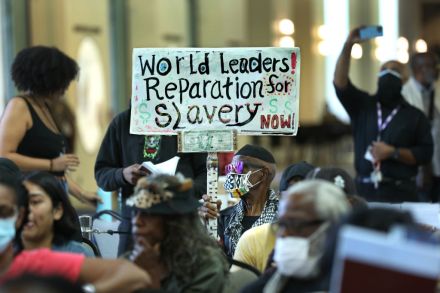
We live in the Golden Age of Revision. Not everyone has noticed, so let me mention some of the highlights of the art of the Michelangelos and Monets of the revisionist moment. First, of course, we have found the path to revising birth certificates and chromosomes on the matter of an individual's sex, or as we have been taught to say, gender. This is revision par excellence, but only the beginning. Then we have the New York Times in the company of many thousands of American school teachers who have miraculously overthrown the burden of snow-capped mountains of historical evidence and wizened learning of generations of historians. Their revision reveals that the real history of America began in 1619 with the arrival of Angolan captives at Jamestown.

san francisco