Salman rushdie

The wisdom of Salman

‘Things that would have seemed utterly improbable now happen on a daily basis,’ Sir Salman Rushdie tells me. ‘The implausible has now become everyday.’ Isn’t this a problem for a writer whose books derive from the fantastical traditions of magic realism and science fiction, where crazy stuff happening is what sets them apart? ‘It is.’ The active threat to Rushdie’s life from radical Islam is two decades behind him. His novels have a way of dealing in sour, sometimes apocalyptic ironies. His latest, the Booker-shortlisted Quichotte, is set in what it describes as ‘the Age of Anything-Can-Happen’.
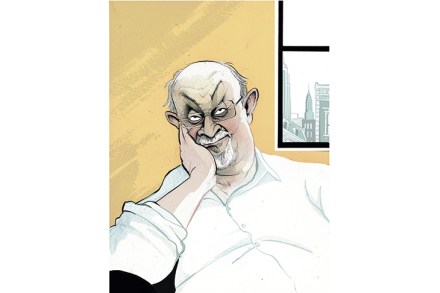
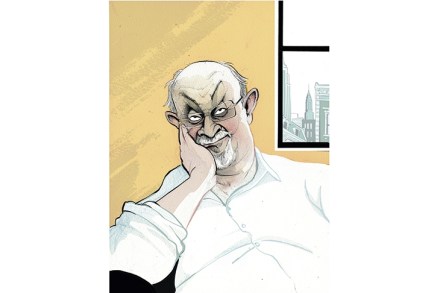
salman rushdie

Salman Rushdie: ‘The implausible has become everyday’

From our UK edition

When I say goodbye to Sir Salman Rushdie in his offices at New York University in Lower Manhattan in early March, we bump elbows. Not that it’s much more than a gesture, by this stage: we shook hands unthinkingly on first meeting, and we’d just shaken hands again. It’s a novelty, still halfway to being a joke. As I descend in the lift to Cooper Square, it occurs to me that if I’ve given Rushdie coronavirus I will be halfway to achieving what the mullahs couldn’t. Halfway funny as a hypothetical; halfway not at this distance, writing the piece up three weeks later. As Alan Moore’s nihilistic Rorschach puts it: ‘Good joke. Everybody laugh. Roll on snare drum. Curtains.’ I don’t imagine Rushdie will take offence at this.