Russia

Germany’s folly: Berlin has miscalculated on Russia and China

The notion that closer trade connections with the West will necessarily set less enlightened nations on a course toward prosperity and liberty is nonsense, but convenient nonsense. Germans have a phrase for it — Wandel durch Handel, change through trade — often given as a justification for their business dealings with Russia and China. Unfortunately, the change they triggered was in Germany. In one case it has been for the worse; in the other it appears to be headed that way. To start with Russia, it’s true that Germany’s ultimately disastrous dependency on natural gas from the east has its origins in the Ostpolitik years: by 1989 the Soviets were supplying West Germany with around a third of its gas.

germany

Washington’s yes-men in Japan

It was nighttime in Davos, 8:31 on January 18 to be exact. Japanese journalist Ganaha Masako had been standing out in the cold for three hours near the entrance to a building which, she had heard, was being used as a venue for a World Economic Forum event that evening. Ganaha had picked up on some additional chatter. Klaus Schwab, the head of the WEF, was rumored to be inside. It was a long shot, but Ganaha wanted to ask Schwab some questions about globalism. And then, suddenly, Schwab appeared. Fleshy cheeks jiggling slightly as he shuffled along the snow-dusted sidewalk, he stepped cautiously out of the WEF event forum with a few handlers. Ganaha pointed her camera at Schwab and asked him for an interview. He ignored her and kept shuffling along.

One year of war in Ukraine: six experts predict what will happen next

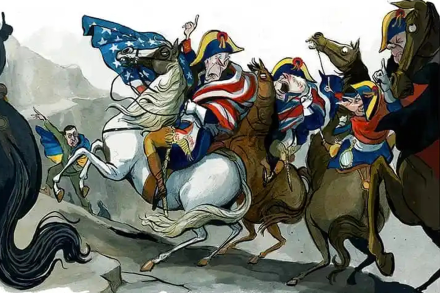
As the war in Ukraine enters its second year, today seems as a good time as any to reflect on its first, and see what the future might hold. Six foreign policy experts from across the spectrum of opinion offered their thoughts to The Spectator. As the war in Ukraine enters its second year, how do you foresee the conflict ending? Ted Carpenter: There are several possible outcomes, but the most likely is a ceasefire without a formal peace accord. That move would end the bloodshed, but it would leave the underlying disputes unresolved. Such an outcome would be similar to the armistice that ended the Korean War. It also would create the world’s largest and most dangerous “frozen conflict.

ukraine war nato

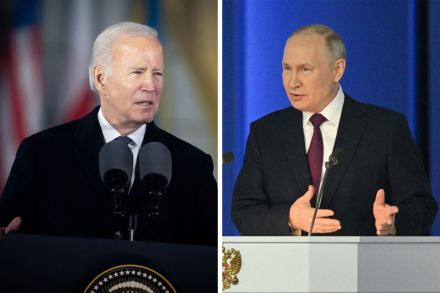
The contrast between Biden’s and Putin’s speeches

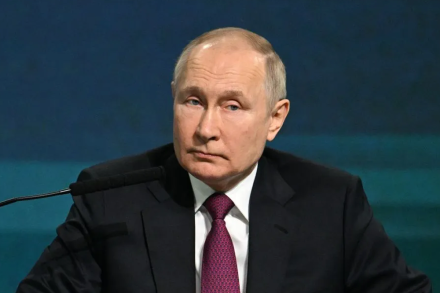
The contrast between the two presidents could hardly be starker. One is dwelling in his own dream palace, indulging fantasies about a return to superpower status while transforming his dismal fiefdom into a larger North Korea. The other is on a roll, creating a new grand alliance to prevent his foe from claiming suzerainty over Ukraine and engaging in further territorial predation. In his state of the nation address on Tuesday, Vladimir Putin served up his usual nauseating soup of anti-Western conspiracy theories, complete with references to Ukraine’s “neo-Nazi regime” and a Western “totalitarian” mission. If anyone knows anything about totalitarian impulses, it’s Putin himself.

leader loser

Will Biden’s Ukraine visit matter?

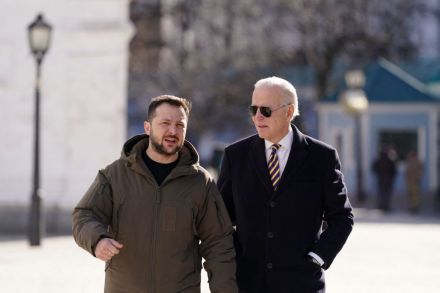
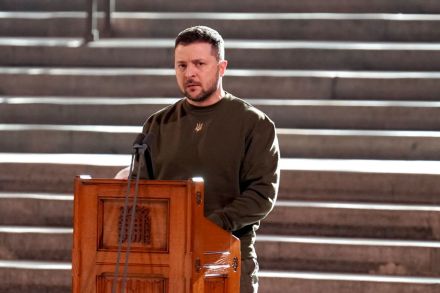
Kharkiv, Ukraine President Joe Biden on Monday showed the world that, as Volodymyr Zelensky said in his London speech two weeks ago, we do not need to be afraid of Moscow. Or maybe we don't need to be afraid so long as Biden is on Ukrainian soil. As I write this, Biden's train has likely crossed into Polish territory, and, on cue, the air-raid alarms are wailing across all of eastern Ukraine. No one I know in Ukraine, where I’ve been since the pandemic and throughout every minute of this war, thinks that Biden's visit accomplished something magical. But it did serve a crucial purpose: boosting the spirits here, amid a week full of warnings that Moscow will do something awful.

China is playing the long game over peace in Ukraine

From our UK edition

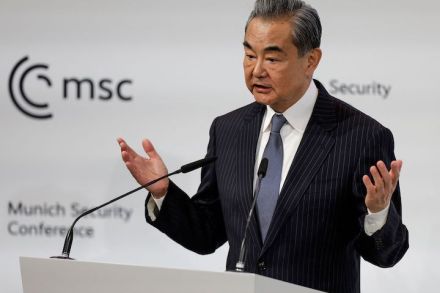
At the Munich Security Conference over the weekend, China’s foreign minister Wang Yi announced that his country was currently in consultations with ‘our friends in Europe’ over the framework of a peace proposal for Ukraine. It is to be laid out in full by President Xi Jinping on the first anniversary of Vladimir Putin’s invasion – 24 February. Beijing’s peace initiative would, said Wang, underscore the ‘need to uphold the principles of sovereignty, territorial integrity and the UN Charter’ but at the same time ‘respect [the] legitimate security interests of Russia’. On the face of it, it appears that Beijing is not saying anything new.

The real reason Zelensky wants the West’s jets

As the battlefront news for Ukraine turns grim, with even the New York Times conceding that “Ukrainians in [the] East” are “outnumbered and worn out,” the hope, as usual, is that a magic weapon will save the day. We have seen many such invocations in the last twelve months: Javelin anti-tank missiles, Stinger anti-aircraft missiles, M777 Howitzers, HIMARS long-range precision missile launchers, assorted Western tanks. All have been hailed in their time as potentially tipping the balance against Putin’s hordes. None have succeeded, or, in the case of as yet undelivered tanks, are likely to succeed, in altering the fundamental military balance in the war, though they contribute much to the balance sheets of the relevant Western arms corporations.

joe biden optimism jets

How Pink Floyd drama erupted over global politics

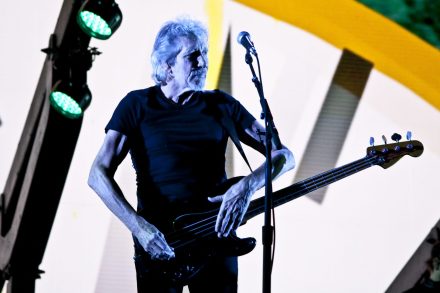
The author and lyricist Polly Samson did not mince her words earlier this month when she attacked the musician Roger Waters on Twitter. She described him as “anti-Semitic to your rotten core. Also a Putin apologist and a lying, thieving, hypocritical, tax-avoiding, lip-synching, misogynistic, sick-with-envy, megalomaniac.” She ended with “Enough of your nonsense.” Not only did her husband, Pink Floyd singer and guitarist David Gilmour, retweet her attack on his former bandmate, he added, “Every word demonstrably true.” Waters’s response was to tweet, with appropriate pomposity, “Roger Waters is aware of the incendiary and wildly inaccurate comments made about him on Twitter by Polly Samson which he rejects utterly.

Zelensky touches off a revolution in London

Kharkiv, Ukraine Wednesday, the morning after Russia sent six long-range missiles into the center of Ukraine’s second city, I went for a run in snow-covered Gorky Park listening to the music of the German band Scorpions: “Down to Gorky Park, listening to the wind of change.” Scorpions were singing about a park of the same name in Moscow but I wanted to hear that song here in Kharkiv. When that song was released in 1990, the Soviet Union was breaking up. There was so much hope. Ukraine and other nations that had lived under the Iron Curtain began the process of finding freedom, happiness, possibility. But Russia? Ah, I thought as I ran past the fresh crater of a Russian missile in Kharkiv’s Gorky Park, what happened to Russia? What happened to that “wind of change"?

Trump is wrong that the US should negotiate peace in Ukraine

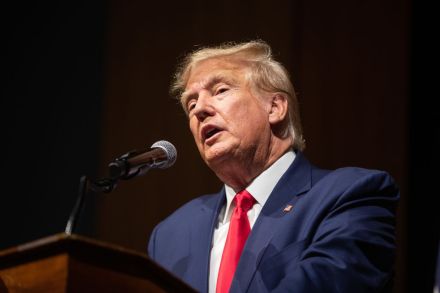
The GOP’s foreign policy doves and soft isolationists have grown stronger, with 40 percent of “Republican and Republican-leaning independents” saying the US is giving too much aid to Ukraine. Former president Donald Trump has now taken up the mantle of this movement, firmly anchoring himself to the anti-Ukraine aid faction of the party. Trump recently gave an interview to radio host Hugh Hewitt in which he made one thing clear: he’s no fan of aiding Ukraine. Asked about sending F-16s, Trump said, “I think the United States should negotiate peace between these two countries, and I don’t think they should be sending very much.” When Hewitt asked if the former president would cut aid to Kyiv, Trump responded, “we’ve got to make peace.

The balloon is a Chinese middle finger to the US

Military fighter jets have just shot down the Chinese Communist Party's gigantic spy balloon that had been hovering about 60,000 feet over the United States. The balloon was "taken care of," to quote President Biden, over the Atlantic Ocean, off the coast of South Carolina. Prior to the maneuver, the balloon drifted, unharmed, over our sensitive military sites and fellow citizens. It lingered there, doing what Chinese President Xi Jinping pleased, while rightfully indignant members of Congress representing those violated states took to press releases and cable TV to demand the federal government secure our sovereign airspace. All of this was no doubt churned back through the CCP's propaganda outlets, smearing America as divided, weak, and foolish.

The Baltic nations show the world how to defend freedom

It is not inevitable that the Baltic States of Estonia, Latvia, and Lithuania would be among freedom’s most potent defenders. Nestled between the Russian mainland and Moscow’s exclave of Kaliningrad, their only direct connection to their NATO allies is through the vulnerable Suwalki Gap. For its part, NATO only has small rotational forces stationed in the three countries. At first glance, one would expect these tiny nations (Lithuania is the largest at 2.8 million people) to prefer flying under the radar. Instead they have become some of the most vocal and powerful defenders of the Western way of life. Tiny though they may be, the Baltic countries have managed to stand up to the two greatest enemies of freedom at work today, Russia and China.

Erdogan’s plan for war, and peace

From our UK edition

There are ‘global issues that we both have on our plates’, US Secretary of State Anthony Blinken said, mysteriously, when he met with his Turkish counterpart last week. Foreign Minister Mevlut Cavusoglu, standing by Blinken’s side, thought the same. ‘We will focus on areas of partnership in bilateral and regional issues.’ Diplomacy as usual, then. Behind the boring platitudes lies a serious rift between Turkey and the United States. In late December, Syrian and Turkish defence ministers met in Moscow in the first proper meeting between the two governments in a decade. There are plans for another meeting between foreign ministers that could lead to a direct meeting between Turkey's leader Recep Tayyip Erdogan and Syrian president Bashar al-Assad.

Why Putin needs Prigozhin

From our UK edition

It’s been a tense couple of weeks for Yevgeny Prigozhin, the businessman and founder the of Wagner Group of mercenaries. Russian troops and Prigozhin’s mercenaries have been closing in on the strategic town of Bakhmut in eastern Ukraine, capturing territories around it. On 10 January, Prigozhin boasted that his forces had ‘taken control’ of Soledar, even as fighting continued inside the town and Ukraine disputed the claims. Two days later, Russia’s defence ministry announced that the ‘liberation’ of Soledar was complete. In a separate statement that same day, claiming to respond to various media inquiries, the ministry clarified that the urban territories of Soledar had been captured thanks to the “courageous and selfless actions” of the Wagner Group.

Germany’s broken promise to rebuild its military

Germany has a new defense minister. The funny thing is that nobody really knows who he is, what he stands for, and whether he’s capable of doing his job. Boris Pistorius will take over the ministry from Christine Lambrecht, whose one-year tenure was about as embarrassing and gaffe-prone as the Bundeswehr itself. There are too many blemishes on her record to examine in a single post — we would be here all day. But one of the more notable misfires was her tone-deaf New Year’s Eve video, where she reminded viewers that a war was going on in Europe as a fireworks display went off behind her. For many in the German defense establishment, Lambrecht’s departure can be summed up in two words: good riddance. Not much is known about her replacement.

Why Sweden and Finland still haven’t joined NATO

Sweden and Finland officially applied to join NATO last May, overturning their long-standing policies of neutrality. If their membership goes through, it will be one of the most consequential accessions in NATO history, bringing two technologically advanced militaries right on Russia’s doorstep into the fold. But as the eight-month mark approaches, neither nation has received the unanimous support from the other members that it needs. To date, twenty-eight members of the alliance have approved the Scandinavian nations’ memberships, with Hungary and Turkey as the two holdouts. Hungary has indicated it will vote to accept the accession in early 2023, which will leave NATO’s most undemocratic and troublesome member, Turkey, as the last hurdle.

Ukraine needs more than tanks

From our UK edition

What weapons will Ukraine get next? It’s a crucial question that matters perhaps more than anything else for understanding how the Russo-Ukraine war will end. For the last few months two different systems have received the most attention, systems that Ukraine has asked for almost daily. These are tanks, or MBTs (Main Battle Tanks), the key armoured vehicle of 20th and 21st century land warfare, and ATACMS (Army Tactical Missile Systems), the longest-range ammunition now available for the US-made HIMARS rocket launchers already in Ukraine.  Both are needed for the quickest possible Ukrainian victory in the war, though for now it seems that the first, tanks, are on their way and the other, ATACMS, are still a while away.

Why Putin won’t take Hitler’s way out

From our UK edition

The last time Europe fought a major war, there was no shortage of planning. We knew what peace meant. Winston Churchill and Franklin Roosevelt issued their Atlantic Charter in August 1941, before the Allied victory was anywhere close. This was followed by more meetings and conferences, including in Tehran in 1943 and later at Yalta, in Crimea, in 1945. The fighting never stopped, but there was a lot of thinking about the future of Germany, Europe and the new world order.  This sort of thinking is less evident today with Ukraine. Maybe it’s because Russia’s war in Ukraine, as bad as it is, isn’t yet a world war. It is happening some place out there, in ruined towns that few have ever heard of, and fewer still really care about. People are dying, but they are not us.

How Republican chaos could threaten aid to Ukraine

As the House GOP continues to make a fool out of itself trying to elect a speaker, those watching might be wondering how all of this will impact the war in Ukraine. The group of around twenty Republican lawmakers who have opposed Kevin McCarthy in the (as of this writing) eight votes taken so far for the speakership include some of the most hardline anti-Ukraine-aid Republicans, like Lauren Boebert and Matt Gaetz. A group this small in the House should be nothing more than an annoyance, but the changes they are demanding — and even those McCarthy has conceded to — give them far more power. The most threatening among them is a provision to return to the system whereby one member of the House can launch a motion to vacate the chair, forcing an up or down vote on the speaker.

The rise of Sudden Oligarch Death Syndrome

Since Moscow launched the invasion of Ukraine in February, the deaths of Russian oligarchs seem to be constantly in the headlines. Despite the official causes of death given, Cockburn has a sneaking suspicion that Vladimir Putin might have something to do with it. Death by unusual, news-making circumstances is a hallmark of his regime. The Russian leader intends for such deaths to make the news and for the world to blame the Kremlin for them. It forms part of his strategy of intimidating potential opponents and dissidents. Enemies of Putin that have gone to the West have faced radiation poisoning and attacks with powerful nerve agents. Those who have countered Putin in Russian politics have been jailed or gunned down in the streets. Now, apparently, oligarchs are in the crosshairs.

sanctions putin russia davos oligarch