Rupert murdoch

How Rupert Murdoch destroyed the innocent enjoyment of watching sport

In July 2000, Rupert Murdoch’s Sky acquired an obscure online gambling brand called Surrey Sports. It was little remarked upon at the time but this deal would change football forever. Two years later, Surrey Sports had become Sky Bet and, by 2004, people watching football on Sky Sports could bet on the game via their remote. And why not? After all, as the Sky Bet tagline reminded viewers: ‘It matters more when there’s money on it.’ For football fans, nothing was ever quite the same again. ‘It’s difficult to overstate what the slogan did for the normalisation of gambling in football,’ writes Darragh McGee in his impressive study of how our national sport, seduced by profit, surrendered to the gambling industry.

The secret to Rupert Murdoch’s strength

From our UK edition

Going to the theatre is a joy. When you are a character on the stage, less so. Over the past couple of months, I have been depicted in two plays. Having worked for Murdoch for years, I clearly enjoy pain and so, at my own expense, I went to see both. First up was a one-man show called Monstering the Rocketman at the Arcola in Dalston, which detailed how the Sun (me!) had accused Elton John of being involved in rent boy sessions. Our source, it turned out, had sold us a pack of lies, made more painful by the fact that the news editor, the reporter and I spent 90 minutes cross-questioning this stoat to satisfy ourselves he was telling the truth. It’s easy to be misled.

I crashed Rupert Murdoch’s birthday party

“This one is kinda dirty. Let’s see what the other one looks like.” Less than two hours before the guests started arriving for Rupert Murdoch’s 95th birthday party and a manager at the high-end Manhattan chophouse had spotted a stain on the welcome mat. It turns out they keep not one but two back-up red carpets at the Grill. I’d arrived hours earlier, accompanied by my photographer after receiving a tip-off the great and good of Murdoch-world would be descending on the venue. My plan – having learned every tabloid trick in the book from an early career at the Sun – was to have my snapper hose every Murdoch exec, editor and prominent person while I shouted a few questions. I would then publish the photo haul in a special edition of my newsletter, Breaker.

rupert murdoch

Inside the Murdoch family fallout

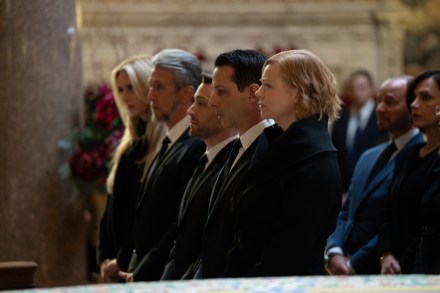
Terrific scripts, marvelous acting and glamorous locales – plus that haunting theme song – made HBO’s Succession superlative television. The show also took the sheen off being a billionaire. Who among us, watching Logan Roy (a barely veiled stand-in for media mogul Rupert Murdoch) mess with his children’s psyches, didn’t think “Isn’t it perilous to be quite so loaded?” Journalist Gabriel Sherman’s new book prompts a similar, aversive recoil. Every family has squabbles, but the Murdochs have fallen out with shocking animosity. Though it’s hyperbolic to claim, as the author does, that the struggle for control of News Corp broke the world, his gruesomely detailed account reveals how shattering the battles have been to those who fought them.

Rupert Murdoch’s warped vision of family

From our UK edition

When Rupert Murdoch divorced his fourth wife, Jerry Hall, in August 2022 he made her sign an agreement that she would not give any story ideas to the writers of Succession. Frankly he need not have bothered, because it’s all here in this utterly gripping book. The award-winning journalist Gabriel Sherman has been reporting on the Murdochs since 2008 and has interviewed them all at one time or another, so he really knows his stuff. He briskly covers Rupert’s entire career but concentrates on the man’s relationships with his children and the war of succession. Rupert was always an absentee father who put business before family. He divorced his first wife, Patricia Booker, when their daughter Prudence was only nine, and she rarely saw him.

The boundless enthusiasm of Asa Briggs

From our UK edition

It’s doubtful whether Asa Briggs ever had an idle moment in his life. Bestselling historian, pioneer of the new universities of the 1960s, chronicler of the BBC, champion of adult education, academic globetrotter and much more besides, he possessed phenomenal energy. He was a miracle of the kind of boundless enthusiasm that his Victorian hero Samuel Smiles had extolled in his book Self-Help. Short and tubby, with large glasses, Briggs effortlessly outpaced academic colleagues who tended to be left panting behind him. A joke did the rounds that if a word were to be coined for a unit of intellectual energy it should be an ‘Asa’. He was dubbed ‘the last great Victorian improver’ and ‘the Lord Macaulay of the Welfare State’.

Did the Wall Street Journal just prevent a war?

Zero-hour was approaching. A joint US-Israeli attack on the mullahs’ mountain fastness at Fordow seemed imminent. The B-52s were on the tarmac, the USS Nimitz had taken to sea, Ambassador Mike Huckabee was reaching for the smelling salts.  And then? A last-minute pause. “I will make my decision whether or not to go within the next two weeks,” said the President. Delays like these have now become a standard part of Trump’s box of tricks. If a drama – like the ‘Liberation Day’ tariffs of earlier this year – can be kept going for a little longer, then all the more time to extract further concessions from the opposing party. As negotiating tactics go there are certainly worse ones. But was there another reason?

Wall Street Journal

In praise of Rupert Murdoch

From our UK edition

In March last year, when the bosses of Jesus College, Cambridge, lost their legal battle for a ‘faculty’ to take down the 17th-century memorial of the college’s benefactor, Tobias Rustat, because of slavery connections, from their college chapel, they did not appeal against the verdict of the ecclesiastical court. They knew they would not have won. But, as I mentioned at the time (26 March 2022), the Church of England high-ups, angry at their own heritage law, are not giving up. The latest biannual report of the Archbishops’ Commission for Racial Justice backs attempts to change the church’s faculty jurisdiction rules and promotes the 47 recommendations of From Lament to Action, by the commission’s anti-racism taskforce.

HS2 has been a fiasco. It’s time to ditch it for good

From our UK edition

In a fantasy world of wise government vision and decision-making, HS2 would have been announced in November 1964, shortly after the Tokyo Olympics. Visitors to those games saw the future in the form of the Tokaido Shinkansen – the first Japanese ‘bullet train’, which raced 320 miles from the capital to Osaka, carrying 1,300 passengers per train and eventually running 360 trains per day, with average delays measured in seconds. But in that era, UK ministers thought only of axeing railways and building motorways. A de novo British high-speed network could not have taken off in the 1970s, when the French were building the first ligne à Grande Vitesse from Paris to Lyon, simply because we were broke.

Donald Trump alters the deal

Welcome to Thunderdome, where this week for the first time we saw major backlash to Donald Trump over an issue that was key to his past political success. The relationship between pro-life voters and Donald Trump was always transactional. The question Trump raised in comments this weekend is whether he views that transaction as over. In 2016, he needed the support of abortion foes to win the GOP nomination. Now, he doesn’t think he needs them at all, and it seems he’s more focused on a general election mindset of the suburban voters he lost in 2020 and his endorsed candidates struggled to win back in 2022. There’s already major backlash to Trump’s language from leading pro-life groups and figures — but is it enough to make an opening for another candidate to rise in response?

Prince Harry’s UK phone hacking claims dismissed

Prince Harry’s recent run of bad luck is continuing, after it was ruled Thursday that his phone-hacking claims against a UK publisher have been thrown out by a High Court judge.  The judge also dismissed Harry's conspiratorial claim that there was a “secret agreement” between Buckingham Palace and the British press, calling the arrangement Harry described “implausible.” In his ruling, the judge said that the prince’s case had “not reached the necessary threshold of plausibility and cogency.” Harry’s lawsuit accusing the publisher of the Sun tabloid of unlawfully snooping on him, can go to trial.

harry court

Can the 2024 election save cable news?

No doubt Rupert Murdoch breathed a sigh of relief when Florida governor Ron DeSantis’s decision to launch his presidential campaign on Twitter proved disastrous. The announcement, hosted by Elon Musk, was derailed by technical glitches, leading to twenty minutes of awkward silences interrupted by occasional hot-mic moments of frustration. Even after Musk and his team at Twitter got things going, the highly anticipated event drew a meager audience of just 300,000 live listeners. The second stop of the DeSantis campaign, immediately afterward, was at Fox News, for an interview watched by an average of 2 million viewers.

cable news

Chris Mullin’s eye for the absurd remains as keen as ever

From our UK edition

Journalists seldom get to the top in politics. They find it hard to trot out the dreary virtue-signalling that political communication often requires. Chris Mullin, I suspect, finds it almost impossible. He was a Bennite, but the Bennites quickly discovered he was unreliable. The Blairites might have welcomed him had they not suspected, rightly, that he would get the line wrong sooner rather than later.  There’s an endearing vanity in the way Mullin reports every kind remark made about his previous published diaries The only journalist to have made the top job in politics is Boris Johnson, and he crashed and burned. My friend Denis MacShane, who has ability and charm, also crashed and burned on his way up.

What did Succession get right about the Murdoch empire?

From our UK edition

24 min listen

Andrew Neil, The Spectator's chairman and super fan of the HBO show, Succession, joins this episode to talk to Freddy about where the show overlapped with the real life media empire of Rupert Murdoch, who has his own problems of succession to think about. This conversation was originally filmed as an episode of 'The View from 22' from Spectator TV, which you can watch here.

vice president tucker carlson

Tucker Carlson is the new Voldemort

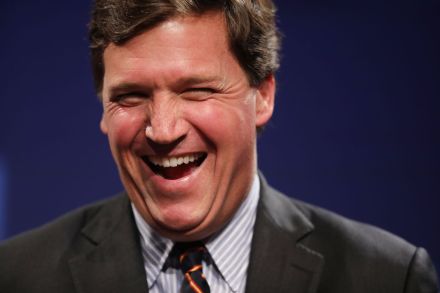
Murdoch gets what Murdoch wants — and this time, it’s to erase any evidence that Tucker Carlson ever existed. The media mogul is so insistent that the “T”-word remain unspoken that he has purportedly banned any mention of the ex-host across the Fox networks.  This is bad news for Chadwick Moore, author and contributing editor at The Spectator after he announced his new book, Tucker, that comes out next month. Moore tweeted that he’d been blacklisted from the network after announcing the book, saying: “I’m not allowed on Fox anymore, because I wrote a book about @TuckerCarlson. I’ve been banned from the network.

murdoch

What Succession got right about Rupert Murdoch

HBO's flagship drama Succession came to an end on Sunday night. The tale of the Roy saga was heavily based on the Murdoch family, to the point that Rupert Murdoch's divorce agreement from his fourth wife Jerry Hall stipulated that she would be barred from providing plot points to the show's writers. But how close is the fiction to reality? Spectator chairman Andrew Neil — who spent over a decade as editor of one of Murdoch's top newspapers — joins Freddy Gray on Spectator TV to discuss. "There was enough of an overlap to make it interesting, and enough of an overlap to say, 'yeah, that's happened in real life, that's the kind of thing that goes on,' but not enough to give the lawyers at HBO palpitations," Andrew says. He describes how Logan Roy "ran his company like a king.

Don’t ban harmless office humor

Work is hard, no matter what form it takes. I’ve toiled away as a waitress at a busy chain restaurant and I’ve also worked in the biggest newsroom in London. Both were highly stressful, both had me swearing like a sailor — and both were more fun when it was hectic. Silence is far more anxiety-inducing than marginally-orchestrated chaos.  Tucker Carlson, fired from Fox News last week, has been chastised for his office etiquette after videos surfaced showing him bantering with colleagues and guests.

vice president tucker carlson

Why does the ‘c’-word upset Americans so much?

Recently I dined with an old American friend at my home in Sydney. He brought up the sacking of the Fox News host Tucker Carlson, reportedly for, among other things, using a terrible curse word, which my friend referred to coyly as "C U Next Tuesday." I was baffled for a minute.  “Do you mean ‘c—’?” I asked. “Oh, don’t say that!” “C—, c—, c—!” I cried. He cringed as if being assaulted physically.  Fresh from the news about Carlson, the New York Post reported that ESPN fired journalist Marly Rivera for using the word against a female colleague trying to muscle in on her interview with Yankee player Aaron Judge.  Why does it upset Americans so much?

‘c’-word

Where does Tucker Carlson go from here?

Fox News stunned its viewers — and, according to sources within the company, its own staff — when it let go of primetime host Tucker Carlson on Monday. Fox News employees were said to be "shocked" and "upset" when they read the public press release announcing Tucker's departure from the network. "FOX News Media and Tucker Carlson have agreed to part ways," read the muted release. "We thank him for his service to the network as a host and prior to that as a contributor." Speculation as to the reasons behind Tucker's abrupt exit has run rampant. The initial online consensus was that Tucker was out due to his being named prominently in Dominion's defamation lawsuit against Fox — but that doesn't explain why Maria Bartiromo and Judge Jeanine Pirro are still on the air.

tucker carlson

Dominion v. Fox News: welcome to the media trial of the century

The most consequential legal case for the American media in seventy years begins Tuesday. The defamation suit brought by voting technology company Dominion Voting Systems against Fox News will test how far First Amendment protections can be stretched. It will also determine whether the never-ending media circus surrounding Donald Trump pulled America’s pre-eminent conservative news brand too far into the former’s president’s carnivalesque realm to escape unscathed. The stakes for Fox couldn’t be higher. First — though, in this uniquely fraught case, not foremost — there’s the money. Dominion is claiming $1.6 billion in damages caused by Fox News’s broadcasts related to the integrity of the company’s voting machines during the 2020 presidential election.

Fox News Protest