Royal family

I’ve found the perfect school for Harry and Meghan

From our UK edition

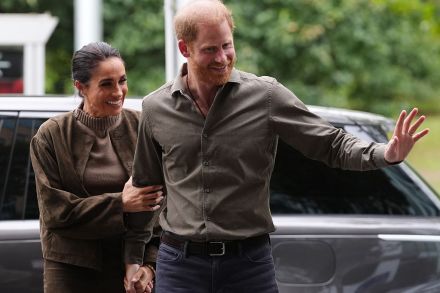
As the author of How to Lose Friends and Alienate People, I have to acknowledge that I still have some way to go to match the radioactive negativity Harry and Meghan generate with their every move. The Sussexes’ accumulated expertise in committing increasingly nauseating acts of hypocritical entitlement with every week that passes should qualify them both for a Regius Chair in Blithe Privilege at the University of Self-Regard. The latest episode in their narcissistic odyssey – The Sillyad – has been their agonising over where to send their children, Prince Archie and Princess Lilibet, to school. Harry and Meghan’s decision to educate them in England is, in its way, admirable.
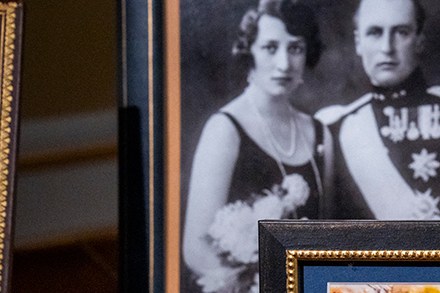
After Harald, what’s the future for Norway’s royal family?

Affable, unflappable and imposing (he was a 6ft 2in ex-Olympian), the late King Harald of Norway was also blessed with good luck for much of his life. The first notable dose of good fortune occurred at the age of three, when his mother managed to spirit him and his sisters out of their home country hours before the Nazi invasion – and away to safety in the US. He returned to a nation so devoted to its monarchy that the children of post-war Norway pooled their pocket money to help buy his grandfather, King Haakon, a royal yacht. The Norge remains in service to this day, funded by an uncomplaining nation. Compare that with Britain’s royal family, who had to wave farewell to their yacht Britannia back in 1997 after a long and toxic political squabble.

Harry and Meghan deserve a second chance

A little while back I came across a copy of Ted Hughes’s Laureate poems which had an inscription to some friends. Inside was an unpublished squib by the late poet laureate which read: ‘The Royalist/ Is afraid/ The Queen’s a pin/ In a hand-grenade.’ If I understand the poet’s meaning correctly then I count myself such a royalist. I dislike criticism of the royal family, especially of the monarch. When it happens it feels too much like people hammering at something fundamental – far more fundamental than the critic appreciates. If criticism is to be made it seems to me that it should be done privately, so as not to disturb the fragile equilibrium of the rather magical arrangement we have on these islands.

Do Meghan and Harry know what the monarchy means to Britain?

Dear Harry and Meghan, welcome back to Britain. I hope that things go well for you. But let’s be honest: a lot of us are a bit worried about your return. Please allow me to explain why I think this is. We feel that you do not really understand what the monarchy means to us. This might sound strange – you, Harry, were born into it and know it from the inside, so why should you take lectures from a commoner? But maybe an insider can sometimes be blind to what is clear to outsiders. The monarchy is how a certain aspect of the British national psyche is expressed. It’s an old-fashioned part of our national psyche, but it is not dead. It is difficult to talk about, because our culture is very used to ironizing and disparaging it, and is embarrassed about affirming it directly.

From Holbein to Snapchat, how royals have mastered their own image

From our UK edition

When Aston Villa won the Europa League recently, the focus was less on the football than on the Prince of Wales bawling ‘Sweet Caroline’. And while images of Wills bouncing in his box and cheering his favourite team wouldn’t seem to connect to a Tudor court painter, they probably wouldn’t exist without him. This year marks 500 years since Hans Holbein came to London and invented royal image-making at a stroke. The German-born artist’s vision of Henry VIII – legs apart, shoulders wide and with a codpiece the size of a prizewinning marrow – was an instant hit and remains the most famous image of our most famous king. More than that, it set a trend. Ever since, image-making has been as much a tool of the royal trade as throne, crown and sceptre.

Queen Camilla’s unusual phone app 

From our UK edition

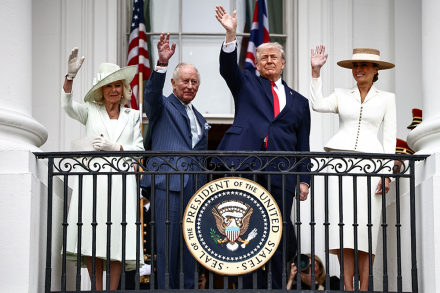
And so to the White House for a ringside seat at the Trump circus. Another assassination attempt on the President wasn’t going to stop the royal machine. After calls between Buckingham Palace, the West Wing and the secret service while the UK press pack nervously checked their phones mid-flight to Washington, praying for the British Airways wifi to hold, the King and Queen kept calm and carried on with their state visit. It was never in doubt. Despite the White House correspondents’ dinner shooting, there was too much fear behind Whitehall and Palace walls of disappointing the Donald to pull the plug. May I commend BA for its wifi and in-flight entertainment, which features The Royals, a lively podcast on the House of Windsor.

When will we admit that the special relationship does not exist?

From our UK edition

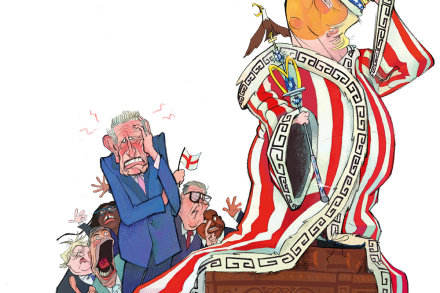
It was to King Charles’s great credit that he refused to fall for the Trump power handshake thing and instead retracted his own hand so that the orange psychotic was left, for a nanosecond, flailing and unsure of what to do with his right arm. It is always good to call the bluff of a bully, because they usually are bluffing. I would have preferred it if Chaz had executed a swift jujitsu move and thrown the President over his shoulder and onto the ground. But one cannot have everything – and of course the King was there to be emollient and to remind Trump of the things he quite likes about the UK: golf and class distinction, basically. He doesn’t seem to like us for any other reason – which is, in fairness, the mindset of almost every previous US president.

What Harry and Meghan don’t get about royal visits

King Charles III’s state visit to Washington this week is the monarchy executing its core diplomatic function with precision and dignity. In Donald Trump’s Washington, an invitation to an event with the British monarch remains the most sought-after in the city. By stark contrast, the King’s son and daughter-in-law careen around the globe representing no one but themselves. They dress up as royals in a sustained exercise in self-promotion and profiteering that repels observers and belittles the very institution that gave them their platform. One upholds the Crown’s purpose, while the other commodifies it. The Sussexes’ grift cheapens the Crown’s reputation and insults the public’s intelligence The King and Queen travel as invited guests of the US government.

Why America still longs for monarchy

Even when he’s not visiting the United States, King Charles III might occasionally daydream about what his reign would be like today if things had worked out differently 250 years ago. The King is not, of course, the head of government anywhere nowadays, and were Charles the king of America, he wouldn’t necessarily wield any more power here than he does in modern Britain. Yet there’s reason to think he possibly could – for the truth is, Americans love monarchy at least as much as they fear it, and they love the royal family, too.

The banality of Meghan the Martyr

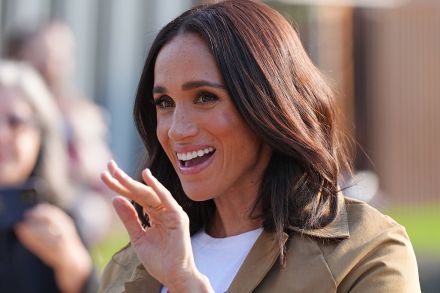
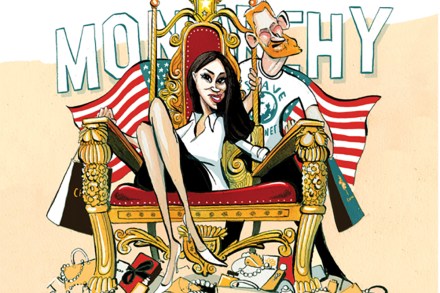
The great Dolly Parton once quipped “get down off your cross, honey, someone needs the wood.” This remark, aimed at attention-seeking self-described martyrs, could almost have been dreamt up for the Duchess of Sussex. Meghan, along with her ever-subservient husband Prince Harry, is currently bringing the gospel according to Meghan to Australia. During her quasi-royal tour to promote a wellness weekend that she is the keynote speaker at, Meghan has invented a new catchphrase – “Call me Meg” – and has been photographed smiling and looking appropriately radiant. The Netflix cash might be drying up, but enough has been banked for her to look a million dollars in the various Instagram-friendly outfits she has been sporting.

Meghan

Why Donald Trump won’t embarrass the royals

Elizabeth II was never particularly enthusiastic about birthdays. They were a good excuse for a parade or an honours list, but not a patch on a major wedding anniversary, let alone a jubilee. Those were a celebration of true dedication, not of mere longevity. Even so, were she still with us, the late Queen would have acknowledged that her centenary on Tuesday is a big deal. It would also have created a delightful conundrum for the Buckingham Palace anniversaries office, the department that sends out 100th-birthday congratulations from the sovereign. At the start of her reign, she was sending 385 of those each year across all her realms (by telegram). By the end, it was over 16,000 (by card).

Does it matter if Prince William believes in God?

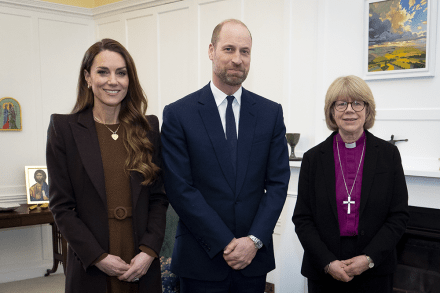
The Prince of Wales seeks to assure us that, as a friend puts into his mouth, ‘I might not be at church every day, but I believe in it.’ That formulation does not necessarily mean he believes in God or the doctrines of the Church of England. All it means is that he believes in the efficacy of the C of E and will dutifully fulfil his future role as its Supreme Governor. Actually, that is all we need to know. His great Tudor predecessor said she did not want to ‘make windows into men’s souls’; even kings are only men. The important thing, from a constitutional as opposed to a spiritual point of view, is that he acts the part with good grace, which he surely will. Whether he does so by divine grace poured into his heart is a question above all our pay grades.

Is my book about Meghan and Harry a ‘deranged conspiracy’?

From our UK edition

‘Deranged conspiracy’. That’s the Sussexes’ verdict of Betrayal, my second blast at Harry and Meghan, after the serialisation was in the papers at the weekend. Naturally, I’m grateful. The book now ranks No. 1 on Amazon. My biography of Robert Maxwell also benefited from his endless writs. Similarly, Richard Branson sued twice to prevent publication. He lost and was denied the licence to run the National Lottery. The tycoon Tiny Rowland was more subtle and effective. ‘Bower’s book,’ he announced, ‘is boring. He’s missed all the good bits.’ That hurt. My new book exposes the vainglorious Duke and Duchess’s downwards spiral over the past five years towards an inglorious endgame. Dwindling fame and fortune is forcing them to revalidate their royal status.

Spare us the girls’ weekend, Meghan

I almost spat out my toast (smothered with the As Ever, The Raspberry Spread Trio – "Made To Keep On Hand And Enjoy Often," $42 – naturally) in pure molten anticipation when I read that my role model in spreading jam to flour, sorry, speaking truth to power, will be hosting a women-only weekend "retreat" in Sydney during her forthcoming Australia jaunt, with tickets "a steal" at $2,699 AUD ($1,930 USD). I already had my credit card in my hot little hand until I remembered that, though I love to lunch tête-à-tête with one lady, being in the company of many women at once – with not one awful toxic man around – makes me feel like drawing crude approximations of penises on fragrant toilet doors after around half an hour.

Could Andrew Mountbatten-Windsor become ‘Lord Andrew’?

From our UK edition

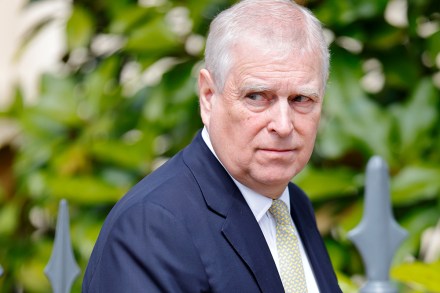
Never one for introspection, Andrew Mountbatten-Windsor has still managed to provoke some searching questions about the institution he once served. For example, what constitutes a family if it is royal? Since Victorian times, parliament’s rulebook, Erskine May, has forbidden ‘reflections’ on ‘the conduct of the Sovereign, the heir to the throne, or other members of the royal family’ in debates. Following Lib Dem pressure, that rule has been rewritten by Mr Speaker, who has stated: ‘Because this now relates to a person who is not a member of the royal family, the situation is completely different.’ But in what way? Clarity is needed.

Portrait of the week: McSweeney resigns, Starmer hangs on and Streeting plots

From our UK edition

Home Morgan McSweeney, the helmsman of Labour, walked the plank by resigning as chief of staff to Sir Keir Starmer, the Prime Minister, whom he had advised in 2024 to appoint Lord Mandelson as ambassador to Washington. Mr McSweeney’s resignation statement began: ‘After careful reflection, I have decided to resign from the government,’ as though he had been a member of the government. In a speech meant to be about funding for local communities, Sir Keir said he was ‘sorry for having believed Mandelson’s lies and appointed him’. But he added: ‘I had no reason to believe he was telling anything other than the truth’, even though the Financial Times had in 2023 reported that Mandelson had stayed at Jeffrey Epstein’s house when the financier was in prison.

How Andrew could save the royal family

From our UK edition

The tsunami of Jeffrey Epstein material released this month has been both horrifying and gratifying. It makes clear the extent of Epstein’s penetration of world elites – potentially even at the direction of various foreign intelligence agencies – and that this is a story as much about national security as financial and sexual irregularities. The lack of any proper oversight of the royal family may have given both the Russian and Chinese intelligence services their entry point into the British Establishment. The depositions also confirm the accuracy of what I had discovered researching Entitled: The Rise and Fall of the House of York, which was published last August.

How teetotal is Britain?

From our UK edition

Royal removals The King has had more success in stripping Andrew Mountbatten-Windsor of his royal titles than George IV had in removing the title of his Queen, Caroline of Brunswick-Wolfenbuttel. George, then Prince of Wales, and Caroline married in 1795 having got engaged before they actually met. On their wedding night, both found each other physically disgusting – although they did manage to conceive a daughter. Caroline went on to have a string of affairs, prompting delicate royal investigations, even though George was hardly a picture of fidelity himself. She later left England and set up with an Italian manservant, Bartolomeo Pergami, but returned to England when George ascended to the throne in 1820. His efforts to dethrone her via a Pains and Penalties Bill failed.

The Epstein files are a reminder that emails live forever

From our UK edition

Still they keep coming: email after email from Jeffrey Epstein’s personal correspondence, along with the almost unmanageable amount of other material in the Epstein files. They span two decades and an astonishingly wide range of topics: his Amazon purchases, missing laundry, the banning of his Xbox Live account, his reaction to photos of young women, how he considered potential plea deals and exchanges with famous people. There’s Sarah Ferguson’s message: To: Jeffrey Epstein [jeevacation@gmail.com] From: Sarah Sent: Sat 1/30/2010 10:22:44 PM You are a legend. I really don’t have the words to describe, my love, gratitude for your generosity and kindness. Xx I am at your service. Just marry me.

Which royals have appeared in court?

From our UK edition

Political frenemies Nigel Farage accepted Robert Jenrick into Reform UK in spite of having previously called him a ‘fraud’ (for boasting about securing hotels for migrants when in government and then campaigning against them in opposition). Some more political make-ups: — David Cameron called Nick Clegg his ‘favourite joke’ before forming a coalition with him in 2010. — Donald Trump chose J.D. Vance as his running-mate in 2024 in spite of Vance having called him ‘America’s Hitler’ and a ‘really bad person’. — George H.W. Bush served as Ronald Reagan’s vice-president between 1981 and 1989 in spite of having previously accused him of ‘voodoo economics’.