Romania

The tragedy of Paul Celan – trapped in his own allusive poems

From our UK edition

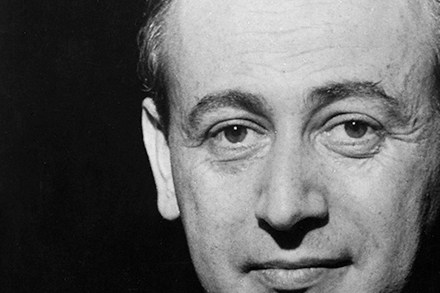
Some time in the late 1950s, Jacques Derrida and other intellectual luminaries at the École Normale Supérieure in Paris were surprised to be told that the excruciatingly introverted German-language instructor they had been avoiding in the corridors for several years was ‘the greatest living poet in the German language’. Paul Celan was reputed to be as ‘difficult’ as his poetry – rebarbative, then intriguing and finally unforgettable. His best known poem is ‘Todesfuge’ (‘Death Fugue’), which may refer to Jewish musicians in a Nazi death camp: ‘Black milk of dawn, we drink you at night...’ He can be heard online reciting the poem in a rising tone of suppressed hysteria.
The shadow of communism still looms over the Balkans

From our UK edition

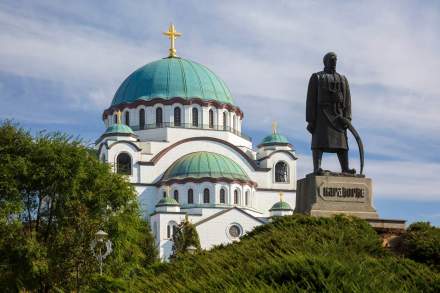
Our Serbian guide Zoran is a jovial fellow and as we rumble through the streets of Belgrade in our minibus he regales us with a joke about the difference between the various nationalities of the former Yugoslavia, all now with countries of their own. ‘We Serbs are rude,’ he says, ‘but the Croatians are self-centred, the Bosnians are thick, the Montenegrins are lazy and the Macedonians are just Serbs with a speech defect. As for the Slovenians, they are so polite they must be gay!’ Joking about each other is a definite improvement on fighting each other, as per so much of their history. The countries on my Balkan tour – Serbia, Romania and Bulgaria – have been struggling for more than three decades with their post-communist problems. But they do like a laugh.

Europe is its own worst enemy

Vice President J.D. Vance’s speech condemning Europe’s abandonment of basic western values was a seminal moment in US-European relations. It provoked immediate praise from American conservatives and disparagement from European leaders, including German Chancellor Olaf Scholz. Critics and admirers both recognized the significance of Vance’s message. The February 14 speech, which Mr. Vance gave on his first trip abroad as vice president, yielded millions of views on X and spawned dozens of op-eds in response. At the Munich Security Conference – typically a venue to discuss defense spending and the like – Mr Vance told the entire European leadership class that they themselves are the biggest threat to European security.

Romania’s democracy has descended into farce

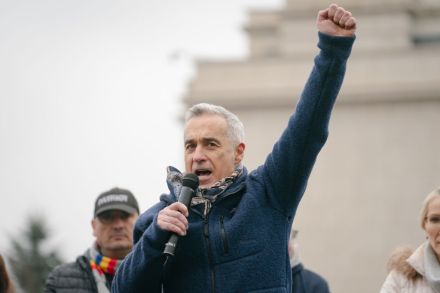
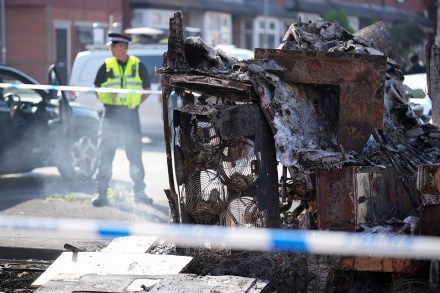
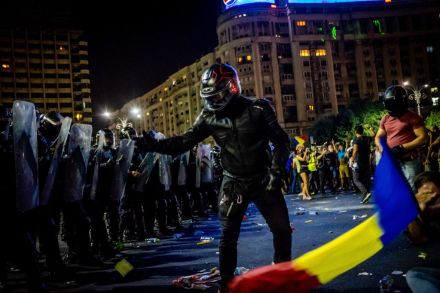
Violence broke out in Bucharest on Sunday evening after Romania’s Central Electoral Bureau disqualified Cǎlin Georgescu from running in May’s re-run presidential election. In a statement, the bureau justified its decision to exclude Georgescu on the grounds that his candidacy “doesn’t meet the conditions of legality” because he “violated the very obligation to defend democracy.” Supporters of Georgescu, whom the BBC has described as a “far-right, pro-Russia candidate,” gathered outside the Central Electoral Bureau to express their outrage and soon clashed with police. Until six months ago, Georgescu’s name was virtually unknown outside Romania.

Andrew and Tristan Tate touch down in Florida

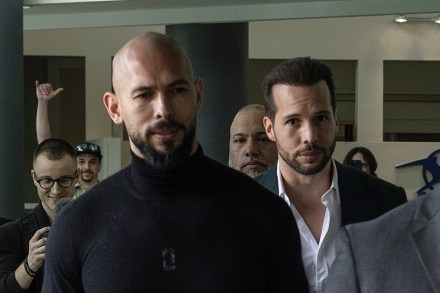
Andrew and Tristan Tate, social-media influencers in the infamous "manosphere," returned to Florida today after two years of judicial confinement. The Tate brothers were arrested in December 2022 on charges of rape, trafficking of minors and money laundering. Although they have never been formally convicted, the brothers have been in legal limbo in Romania while the investigation is underway. They have only just received permission to visit their home country, the United States, but they are still under judicial controls, meaning they must return to Romania when summoned. Andrew and Tristan were both former professional kickboxers who began gaining notoriety by voicing controversial opinions online.

tate

Calin Georgescu has exposed the rotten European Union

From our UK edition

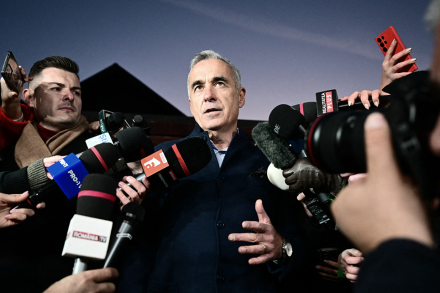
To the great surprise of very few the European Court of Human Rights this week rejected an appeal by Calin Georgescu to overturn last month’s annulment of Romania’s presidential election. The Eurosceptic Georgescu had won the first round of November’s election, but days before the second round Romania’s Constitutional Court cancelled the result because of alleged Russian interference on social media. In its decision, the ECHR said that Georgescu’s appeal fell outside its jurisdiction. That was the bad news for Georgescu. The good news was the publication of a poll this week that puts him firmly in front to win the election when it is re-run in May.

Letters: In defence of Radio 3

From our UK edition

Vote of no confidence Sir: Rod Liddle is too harsh on those calling for another general election (‘I hope you didn’t sign that petition’, 30 November). You do not have to be a Trumpian denialist to believe the result in July raised serious concerns. Labour received just 33.7 per cent of the votes cast, yet won 411 of the 650 seats in the Commons. Labour’s total votes amounted to 23,622 per MP elected. The figure for Reform UK was 823,522. First past the post in individual constituencies works well with two major parties. But when support is significantly more divided, it is not fit for purpose. The petition was surely born out of signatories’ frustration that their votes were not fairly reflected in the new membership of the legislature.

Kate Andrews, Mark Galeotti, Adrian Pascu-Tulbure, Michael Hann and Olivia Potts

From our UK edition

31 min listen

On this week’s Spectator Out Loud: Kate Andrews examines the appointment of Scott Bessent as US Treasury Secretary (1:20); Mark Galeotti highlights Putin’s shadow campaign across Europe (7:10); Adrian Pascu-Tulbure reports on the surprising rise of Romania’s Calin Georgescu (15:45); Michael Hann reviews Irish bands Kneecap and Fontaines D.C. (22:54); and Olivia Potts provides her notes on London’s Smithfield Market, following the news it may close (27:28).  Produced and presented by Patrick Gibbons.

The rise of Romania’s right-wing disruptor

From our UK edition

Strange things are happening again in global politics. In Romania, a former UN sustainability adviser who has made admiring remarks about the fascist 1930s Iron Guard movement has just won the first round of the presidential elections. If you like Andrew Tate, the notorious ‘manosphere’ influencer who also happens to be a Romanian resident, you’ll love Calin Georgescu. A trim 62-year-old former national judo champion, he likes to post videos of himself swimming in ice on TikTok. ‘I believe in my immune system because I have faith in my creator,’ he says. He’s a Putin admirer who ran on an explicitly anti-Nato, anti-EU and anti-Ukrainian platform.

Why there’s rioting in Leeds

From our UK edition

As something of a fan of riots and social unrest I was interested to know who, precisely, had gone doolally in the Harehills area of Leeds last week and started setting fire to buses and so on. The local police announced that it was a ‘serious disorder incident’, but I could find no information at all about who it was doing the rioting. Just people, I suppose – and we are all people, aren’t we? Still I scoured the paper – and nope, no enlightenment. Perhaps it was just northerners – Leeds is full of them, after all, and they can be fractious and violent when the mood grips hold of them. Inner-city northerners with their slavering pitbulls, their skag and their misplaced sense of pride and grievances.

What Britain can learn from Romania

From our UK edition

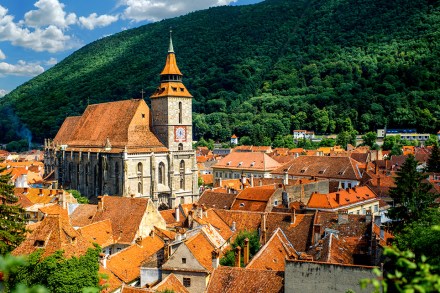
Romania gets a bad rap here, associated as it often is with organised crime. In recent years around half a million Romanians have settled in the UK, making them the fourth largest group of foreign-born residents. But the irony is that as Romanians head to Britain in search of a higher standard of living, we Brits should really be booking our flights to Romania to remind us of how our country once was. Romania has everything: fascinating medieval towns, unspoilt countryside, vibrant major cities and a 150-mile coastline. There are even still horses and carts on the roads. But the appeal is more than that: it’s the spirit of the place. If you want to go back to 1988 or even 1978 then a Wizz Air flight east is like a time-machine.

The immigrant’s experience of Europe

From our UK edition

Meet Ibrahim, from Syria. He fled Aleppo just before the bombs began to fall. A clean $4,000 in cash to a smuggler got him a fake passport and, voilà, a ticket to Europe – briefly in Greece, then in Germany (‘the people, they looked different’), now in Spain. Immigrant life was tough at first: the strange language, the alien norms, the overt racism. ‘He was not on their level. Just a refugee.’ Then a lucky break. He starred in a homemade porn video that went viral: ‘100 per cent real Arab bull.’ Next, he’s earning close to a seven-figure salary, owns a flash car and has women dripping off his arm. In Ben Judah’s illuminating depiction of modern-day Europe, almost everyone has a dream.

Kamala Harris laughs at a war

It’s nice to be prescient. On Thursday, in a column titled “Kamala Invades Poland,” I introduced the world to “cackle diplomacy.” “Silly partisan hyperbole!” I nearly heard as the social media-ites had their say. But then the vice president of the United States did me proud. Just a few hours after my column posted, there she was, holding a press conference with Polish President Andrzej Duda. Some say the people who run our government sent Kamala Harris to Eastern Europe in order to give her a chance to shine in the sphere of international relations. Watch her performance and tell me what you think. “I am here, standing here. On the northern flank...on the eastern flank...talking about what we what we have in terms of the eastern flank and our NATO allies.

‘Collective’ shines a light on Romania’s deadly corruption problem

From our UK edition

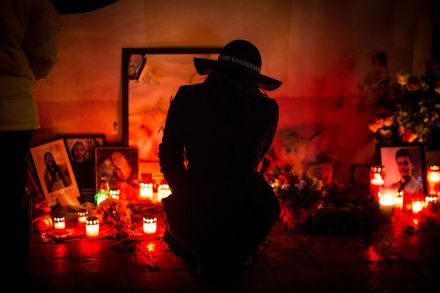
A gripping Romanian documentary has made history as the country's first film ever to be nominated for an Oscar in the international category. But 'Collective', which is also shortlisted for best documentary feature at tonight's ceremony, isn't a source of national pride. In fact, far from it: the movie shines a spotlight on the country’s rotten healthcare system. It follows a team of investigative journalists as they uncover deep-seated corruption in the aftermath of a deadly nightclub fire in Bucharest in 2015, that killed 65 people. While 27 died on the night of the fire, many more died in the months afterwards.

It’ll blow you away: Collective reviewed

From our UK edition

When I recommend this documentary to people, telling them it follows the journalistic investigation into a fire that broke out in a Bucharest nightclub, killing 64, with the majority not dying of their injuries but later in hospital, their look says: ‘Not a chance.’ Their look says: ‘This film is not something I wish to see.’ I felt similarly, but trust me on this. It’s gripping. It’s electrifying. It’s explosive. It plays like a crime thriller yet with real consequences. There are revelations that will make you gasp. And it opens a can of worms. Literally. The fire broke out at Club Colectiv in 2015 when a band’s pyrotechnics ignited the building’s soundproofing foam.

Romanians are paying the price for the EU’s impotence

From our UK edition

Romania’s democracy is looking increasingly fragile. Last week, tens of thousands of people gathered on the streets of Bucharest to vent their anger at the Social Democrat (PSD)-led government. The protest was organised and attended by many from Romania’s large diaspora; thousands are estimated to have returned for the demonstration. The response from police was furious: water cannon, teargas and truncheons were used indiscriminately. Journalists and unfortunate tourists were caught up in the melee. This was the show of force that many feared would come, following 18-months of mass protests against a government many believe is moving in a sinister direction. Romania, it seems, is Europe’s new illiberal state.

Face time | 14 September 2017

From our UK edition

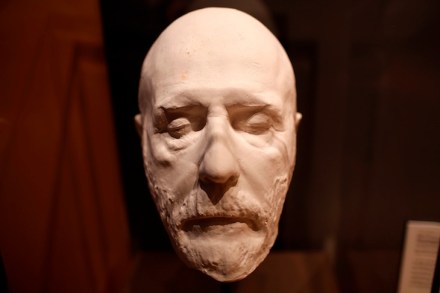
The inimitably pukka voice of Jacob Rees-Mogg echoed through Radio 4 on Thursday morning. He was not, though, talking about nappies, nannies or even Brexit; his topic instead was death masks and specifically that made of his father William, the newspaper editor and vice-chairman of the BBC, who died in 2012. Not long after Rees-Mogg had passed from this life, his facial features were immortalised in wax and silicon rubber by Nick Reynolds, godson of Ronnie Biggs and son of Bruce Reynolds (whose names you may recall from the great train robbery of August 1963).

Patience on a monument

From our UK edition

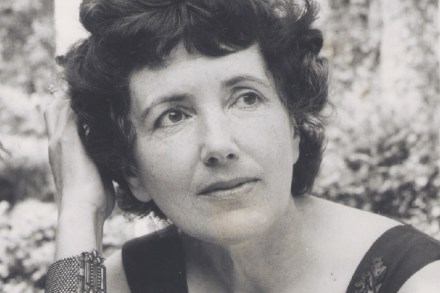
As a food writer Patience Gray (1917–2005) merits shelf-space with M.F.K. Fisher, Elizabeth David and Jane Grigson. Fleeing from the dreary predictability of her Home Counties upbringing, Gray became, among other things, the first women’s page editor of the Observer; co-author of a bestselling cookery book (the 1957 Plats du Jour with Primrose Boyd); and, nearly 30 years later, sole author of a classic, the 1986 Honey from a Weed. She was also a jewellery maker; textile designer; student at the LSE, where one of her tutors was Hugh Gaitskell; an intrepid traveller; research assistant to H.F.K.

A barren prospect

From our UK edition

In many ways this is a very old-fashioned novel. Jerome is 53, and a lacklustre professor at Columbia; his wife, Sylvie, 35, is a former topless dancer and aspiring film-maker. Sylvie has a dog but wants a baby. Together they will cross the former Soviet bloc looking for a child of their own, despite Sylvie having already had three abortions: Romania is their chosen finale, where, of course, orphans are two-a-penny. There is much to admire in it; but the clever bits aren’t funny and the funny bits aren’t clever. The novel is littered with references to continental theorists. Blanchot, Lefebvre, Baudrillard, Deleuze, Guattari, Lacan all show up — poor old Derrida, left out! — but they are there as intellectual window-dressing.

Tall story

From our UK edition

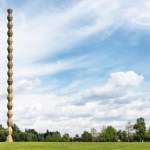
‘Everything is slow in Romania,’ said our driver Pavel resignedly, and, as it turned out, he was not exaggerating. He was taking us on a trip of about 150 miles, from Sibiu to Targu Jiu, to see the sculptures of Constantin Brancusi. Taking the faster route, we set off a little after 9 a.m. and arrived at about 2 p.m., stiffer, wearier and more comprehending of the reasons why, although Brancusi’s ‘Endless Column’ is among the most celebrated works of modernism, almost nobody — in the London art world, at least — has seen it. My inquiries suggested that an intrepid Tate curator had made it, but that was more than a decade ago.