Roger scruton

Why is the Italian media spreading fake news about Churchill?

From our UK edition

Dante’s Beach, Ravenna I know that, as the heat intensifies, you want me to write about the highly trained nudists who have stolen the best bit of our beautiful beach and what such manifestations of diversity, equity and inclusion entail. But I’m not going to, because I feel I must write instead about Churchill and Mussolini. In a three-hour documentary, the Italian equivalent of the BBC has (more or less) accused Churchill of ordering the execution of Mussolini on Lake Como in April 1945. His motive, apparently, was to stop the Duce making public secret wartime letters between the two of them that were very damaging to Churchill.
The clandestine side of Roger Scruton

From our UK edition

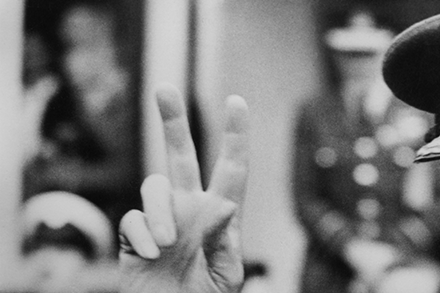
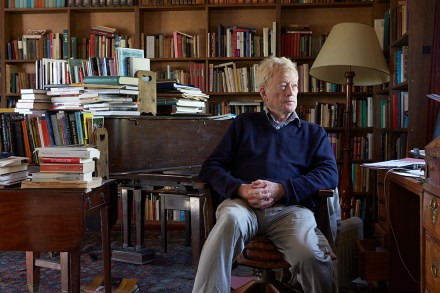
Sir Roger Scruton is remembered by most people as a conservative philosopher. Softly spoken and thoughtful in conversation, he was brave and unconventional in his views. Few things are as unconventional as being a convinced and articulate conservative. It cost him advancement in the academic world. But he was admired, liked and even loved by many. And today his work continues to be influential. But there was a part of Scruton’s life that is not well-known. It was clandestine. This secret life is currently being commemorated and honoured in an exhibition in Brno, the historic and rather beautiful second city of the Czech Republic. It is a two-and-a-half-hour train journey from Prague unless you are willing to face a direct flight on Ryanair.

Trump has given America back its heroes

This weekend, two statues were installed on the White House grounds. On the north side of the Eisenhower Executive Office Building stands a statue of Christopher Columbus. On the south side is “Freedom’s Charge,” a life-size portrayal by Chas Fagan of two soldiers in the Continental Army, one with a rifle, the other with a billowing Bunker Hill flag. In ordinary times, the temporary placement of such tokens of America history at the White House might pass without comment. These are not ordinary times. On the contrary, America is just now emerging from a destructive frenzy of woke self-loathing and iconoclasm.  Just a few years ago, no emblem of American achievement was safe from crusading vandals.

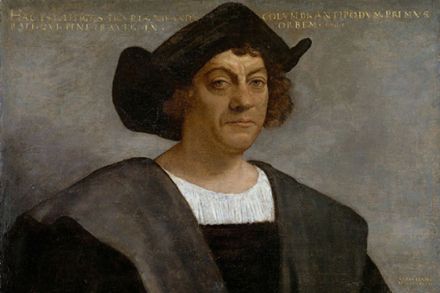
Christopher Columbus (Getty) heroes

Welcome to the Age of Jerks

From our UK edition

How screwed is Britain? I’ve checked with the Impartiality Police. They said stick to the facts. Like many ailing, ageing western democracies, we’ve had low growth, soaring debts and flat living standards for nearly two decades. Have our politicians met the moment? You tell me. Perhaps, as The Spectator has long advocated, we need some heretical and brave thinking to improve our prospects and make sense of the giant forces – of technology, ecology and demography – that are reshaping our world at a dizzying rate. For a decade, I have tried to rebalance the news, from events to trends. The result of all this: a new podcast from the Today franchise, called Radical. I’ve always had a soft spot for the word.

The key to Giorgia Meloni’s resounding success

From our UK edition

Giorgia Meloni has emerged as one of the most significant politicians in Europe since she became Italy’s first female prime minister in October 2022. I Am Giorgia, already a bestseller in Italy, is her account of how a short, fat, sullen, bullied girl – as she describes her young self – from a poor, single-parent family in Rome managed to do it. Her explanation is that she refused to play the victim, and found iron in her soul – even if, as she admits, she has never found happiness. It is an amazing story: how she transformed from an ugly duckling into the swan who is now a familiar figure on the largely male-dominated world stage, and whose humour, charm, friendliness and no-nonsense talk make her such a refreshing change.

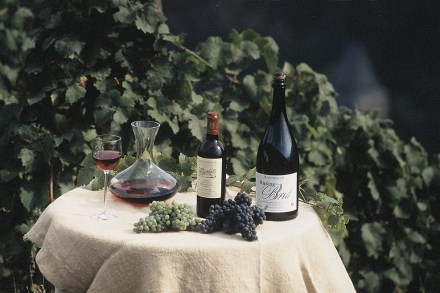
Should you bother decanting wine?

From our UK edition

We were almost having a symposium and I was invited to define Toryism in one sentence. I replied that one book would be easier: the late Roger Scruton’s On Hunting, which ought to be subtitled: ‘From Horse-Shit to Heaven: the Search for Love, Order and God.’ ‘But what if you leave out God, and therefore heaven?’ said one fellow: ‘What would be left?’ ‘What indeed. Many learned Tories – Dr Johnson, Salisbury and Quintin Hogg being obvious examples – would have given a simple answer: nothing.’ Those of us who have to do without God and yet avoid the abyss of nothingness can only fall back on eupeptic pessimism. Edward Fitzgerald’s Omar points the way: ‘A jug of wine and thou.

I’m not the only football-obsessed composer

From our UK edition

I was in Sweden a few weeks ago, where my music was presented in Stockholm in the most recent International Composer Festival. One of the orchestral works performed was my football-themed ‘Eleven’ (11 players, melodies of 11 notes, chords of 11 pitches and various football chants woven into the fabric of the score). I’m not the first composer obsessed with the beautiful game. Bohuslav Martinu’s ‘Half-time’, written in 1924, was inspired by the supporters of his team, Sparta Prague. And more recently there have been bold examples by English composers Mark-Anthony Turnage (who worked chants for his beloved Arsenal into his orchestral piece ‘Momentum’) and Benedict Mason, in whose opera Playing Away even the ball sings an aria.

What Shakespeare can teach us about cancel culture

From our UK edition

The following is an edited excerpt from Douglas Murray’s lecture at the Sheldonian Theatre earlier tonight, in honour of Sir Roger Scruton. It features the actor Kevin Spacey reciting a scene from William Shakespeare’s Timon of Athens. By the last year of his life Roger had finally been not just honoured in his own country but given a position by a Conservative government to advise on that most pressing of issues – how to try to build beautiful housing in a country desperately in need of housing and even more desperately in need of beautiful housing. Roger was engaged in his researches when a young snake of a man came to interview him and misrepresented what he had said.

Roger Scruton’s philosophy of wine

From our UK edition

The philosopher Roger Scruton died in January 2020 just a few weeks shy of his 76th birthday. He left behind a large circle of admirers and a correspondingly large shelf of books in a variety of genres – novels, opera libretti, volumes of occasional journalism, cultural and architectural criticism, and various philosophical works, popular as well as technical. He wrote and wrote about music, hunting to hounds and politics. He also wrote about the subject that brings us together: wine. Roger was a gifted teacher, always on the lookout for opportunities to educate the ignorant, enlighten the benighted and expand the horizons of those cramped by bigotry and parti pris. His missionary work extended to the pages of the New Statesman, in whose pages his wine columns appeared.

Roger Scruton’s campaign for beautiful buildings is finally being won

From our UK edition

Travelling around Britain, one is given the sense that built up areas are mostly ugly, while the countryside is mostly beautiful. As a lover of the urban, this is distressing. For new buildings to be ugly feels as inevitable as death and taxes. But it does not have to be. Over almost a decade, a small group of activists have brought beauty into the heart of development policy. The Housing Secretary Robert Jenrick's speech at Policy Exchange this week signals that a revolution is well under way, even if there is still a long way to go. Given that almost everyone thinks that the appearance of the built environment matters, it is strange that there has not always been a strong ‘beauty movement’ in British planning.

Letters: Why we need music festivals

From our UK edition

Disastrous decisions Sir: One cannot but agree wholeheartedly with Lionel Shriver (‘This is not a natural disaster’, 16 May). Given the unremarked impact of other diseases which she mentioned, Covid-19 is small beer. The government set out on the right path with its herd immunity policy, but was bounced into lockdown by the ‘science’, hounded by the media in full cry. We are now in a situation where employees, mainly in the public sector and supported by the unions, refuse to rise from their feather beds and return to work. This is not a situation from which we will recover easily — if at all.

Letters: When is a sport not a sport?

From our UK edition

Save the children Sir: Your leading article is correct that the government should have evaluated the detriment caused by shutting schools, against the risk posed by Covid-19 (‘Class divide’, 16 May). This is not a glib trade-off between protecting lives and allowing children to go to school: the predicament foisted on young people will affect their future for decades. Exams were abruptly cancelled in March. This has left many schools dealing with apathetic individuals. The disparity between disadvantaged and affluent students is widening: middle-class schoolchildren are twice as likely to receive online tuition, and only 8 per cent of teachers in low-income communities report more than three-quarters of work being submitted, compared with 50 per cent in the private sector.

How far should we go to defend free speech?

From our UK edition

This week sees the official launch of the Free Speech Union — an organisation that stands up for the speech rights of its members. It’s my baby, but a number of people have come on board as directors, including Douglas Murray and Professor Nigel Biggar. I’ve also had a lot of help behind the scenes from people who got in touch after reading about it in this column. I was on the Today programme on Monday to talk about it and have done a number of interviews since. By the time you read this, I’ll be recovering from the launch party, scheduled for Wednesday night. So far, it’s going pretty well.

Sir Roger Scruton’s last report could revolutionise UK housing

From our UK edition

Earlier this month the philosopher and author Sir Roger Scruton passed away. In a series of tributes to his work and his character, many reflected on the contributions he made to his fields of expertise and society at large. Today in central London, one of his final contributions was revealed. The Building Better, Building Beautiful Commission published its findings on housing in the UK this afternoon. The work, led by Sir Roger and Nicholas Boys Smith, is a product of a year-long review of the UK’s planning system, which has come up with 45 policy proposals organised around eight key themes for all levels of government. Scruton’s last piece of work was, for him, a very meaningful one.

Roger Scruton’s special role in Poland’s passage to democracy

From our UK edition

Roger Scruton’s funeral takes place in London today, and he’ll be in the thoughts and prayers of his admirers worldwide – many of them in Poland. We Poles owe him an unusual debt, one he mentioned in his Spectator diary last month when he wrote about his journey to Warsaw. Andrzej Duda, the Polish president, presented him with the Grand Cross of the Order of Merit in recognition of his ‘extraordinary efforts in supporting the democratic transformation in Poland and for developing Polish-British academic and scientific exchange’. In his Spectator diary, he wrote about how he also met men that day who had been imprisoned for 20 and 30 years under communism.

Tyranny of the minority

De mortuis nil nisi bonum, the Romans used to say: ‘Of the dead speak only good.’ We can speak nothing else of the friend and longtime Spectator contributor we lost in January. Sir Roger Scruton was a fearless and humane advocate for art, beauty, faith, peoplehood and tradition; a fierce defender of the right to free and honest speech; and a clear-eyed advocate for the legal inheritances and cultural unity of the English-speaking peoples. He was one of the first people to undergo ordeal by ‘cancel culture’, or persecution by progressives, which is why we dedicate this free-speech issue to him. In the early 1980s, Roger was effectively expelled from the academy for expressing conservative opinions in public.

Roger Scruton’s death impoverishes us all

As Douglas Murray says, Sir Roger Scruton was as scintillating in conversation as he was on the page. It was typical of Roger’s generosity that in September 2018, a month in which he had no less than three books coming out, he gave up an afternoon to recording a Spectator USA podcast at his home, Sunday Hill Farm in Wiltshire. We originally published it under the headline ‘Knight of the Living Philosophers’. His death at 75 impoverishes us all. Scruton was more than a philosopher. He wrote widely and well on subjects as various as wine and Wagner, fox-hunting and free trade. That month, Scruton the philosopher had published Conservatism: An Invitation to the Great Tradition.

Sir Roger Scruton

Roger Scruton: A man who seemed bigger than the age

From our UK edition

Sir Roger Scruton has died. Diagnosed with cancer last summer, he passed away peacefully on Sunday surrounded by his family. There will be a lot of things written and said in the coming days. But perhaps I could say a few things here. The first is to reiterate something that the Scruton family have said in their announcement of his death. There they refer to how proud they are of Roger and of all his achievements. I think I can say that all Roger’s friends share that feeling. His achievements were remarkable. He was a man who appeared to know about absolutely everything, producing books on architecture, philosophy, beauty, music, religion and much more. In many ways – as his former student Rabbi Sacks once said to me – he seemed bigger than the age.

Sir Roger Scruton: 1944-2020

From our UK edition

Sir Roger Scruton died today at the age of 75. In an article for the 2019 Christmas issue of The Spectator, republished here, he looked back on his year: January My 2018 ended with a hate storm, in response to my appointment as chair of the government’s Building Better, Building Beautiful Commission. But the new year brings a lull, and I hope and pray that the Grand Inquisitor enthroned by social media will find another target. February The 27th is my 75th birthday, and as it happens the last Wednesday meet of foxhounds for the season. We host the meet and celebrate with our neighbours.

Letters: Roger Scruton and the meaning of life

From our UK edition

Wonder and gratitude Sir: Roger Scruton, in a very personal and moving portrait of his year (‘My Strange Year’, 21 December), reminds us that crisis is opportunity; and concludes that the meaning of life is gratitude — something we may only realise when, as Virgil put it, ‘mentem mortalia tangunt’. I think that language may betray us a bit on this great question and that there is no meaning of life. Rather, the meaning is life. Our response to this is-ness — this amazing, often painful gift — may be to turn aside into the ressentiment which Nietzsche warns against; or — as Roger Scruton does — to feel wonder and sheer gratitude at what is, might never have been, and one day will not be.