Rock

Contains the loveliest new song I’ve heard in decades: Bob Dylan’s new album reviewed

From our UK edition

Grade: A ‘Rough’ in terms of the mostly spoken vocals, but only ‘rowdy’ if you’re approaching your 80th birthday, which of course Dylan is. This is a sometimes playful and often self-deprecating Nobel Laureate at work, the lyrics (like the vocals) carrying a whiff of late Leonard Cohen, the arrangements of some of the slower, if not funereal, songs a nod to Tom Waits. In ‘I Contain Multitudes’, the grizzled old boomer has given us his best song since ‘Idiot Wind’; like many on here, the delicate melody is implied by the chord changes rather than explicitly stated.

In defence of Prince’s late style

From our UK edition

In 1992 Prince released a single called ‘My Name Is Prince’. On first hearing it seemed appropriately regal. Cocky, even. Only in hindsight did it appear somewhat needy, a litany not of what Prince was going to do, but of the things he had already done. On it, he pulled rank on his status — ‘I’ve seen the top and it’s just a dream / Big cars and women and fancy clothes’ — called out young rappers for their potty mouths, and declared himself ‘fresh and funky for the 90s’. Context is everything. By 1992, Prince was still funky – but fresh? He had been, indisputably, pop’s premier agitator throughout the previous decade; as David Bowie was to the 1970s, so Prince was to the 1980s.

Skates on the edge of parody: The 1975’s Notes on a Conditional Form reviewed

From our UK edition

Grade: B+ Just what you wanted. An opening track that matches banal piano noodling to an address by Greta Thunberg. Followed by a hugely unconvincing stab at tuneless industrial metal on a song called ‘People’, in which the aforementioned — me and you, not them, of course — are cautioned to ‘WAKE UP!!’ Leafy Wilmslow’s middle-class skag-head prophet, Matty Healy, is back, then, with a series of injunctions for us all, spread over interminable length and always skating on the very edge of parody. The 1975 are probably Britain’s biggest ‘rock’ band — those quote marks are needed — and this vast slab of pretentious, gullible, vacuous commendations to us all went straight in at number one.

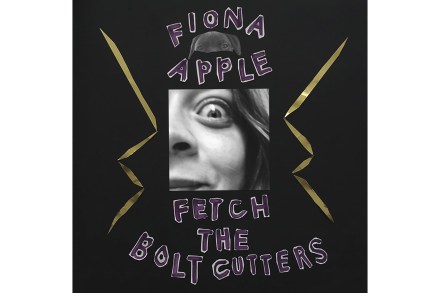
Beautiful voice, pretentious album: Fiona Apple’s Fetch the Bolt Cutters reviewed

From our UK edition

Grade: C+ Where did they all come from, the quirky yet meaningful rock chicks who don’t have a decent song between them yet put out albums by the bucketload? Back in the day it was just Joni Mitchell, who had four good songs, Laura Nyro who had two and Dory Previn who had one. Now there are thousands of these creatures, flaunting their intemperance without showing much brilliance. And all slavered over by the (still male) music press. Years of oppression, of being disregarded, they would argue. But disregarded for very good reasons, in almost all cases. Yeah, Carole King is ten times the songwriter James Taylor ever was. I will give you that. We got that wrong. But that doesn’t mean we have to be tormented for eternity by the likes of Laura flipping Marling, does it?

The musical benefits of not playing live

From our UK edition

Glenn Gould considered audiences ‘a force of evil’. ‘Not in their individual segments but en masse, I detest audiences.’ He retired from public performance on 10 April 1964, at the age of 31, having given fewer than 200 public recitals. The Canadian classical pianist had longstanding philosophical objections to the ritual of performing live. He found applause automatic and insincere, and often asked spectators not to bother. He even wrote a (partly) tongue-in-cheek manifesto, the Gould Plan for the Abolition of Applause and Demonstrations of All Kinds, in which he called for clapping to be banned. Gould believed that the most useful and honest response to music came following a period of solitary reflection, rather than as instantaneous public display.

Taylor Swift is fascinating – but you really wouldn’t want to be her

From our UK edition

There had been some question about whether Taylor Swift’s Netflix special would actually appear. Last year it seemed that the ownership of her old songs by her previous record label would scupper it. But no, Ms Swift is not to be resisted, and lo, Miss Americana is available right now on Netflix, one of its two big music documentaries for the spring. Many older men seem to have a visceral distaste for Ms Swift. If you share that distaste, then I’m sorry, it’s your loss, because she’s a fascinating figure (who has also made three truly terrific albums in Fearless, Red and 1989), and Miss Americana is well worth watching.

Grimly compelling: The Whitney Houston Hologram Tour reviewed

From our UK edition

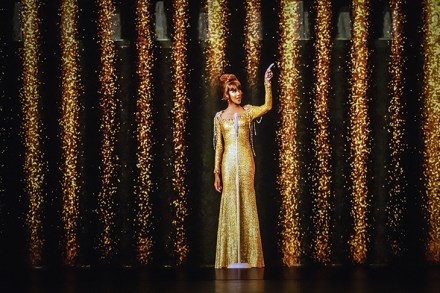
‘No matter what they take from me,’ sang Whitney Houston towards the end of a peculiar evening in Hammersmith, ‘they can’t take away my dignity.’ You want a bet on that? Eight years after she died, here was Houston — in holographic form — treading the boards once more. In death, as in life, she continues to be an object for others to make money from.The Houston on stage was not, of course, the addict who crumpled towards the end of her life; nor the one who couldn’t hit the high notes of ‘I Will Always Love You’ on her final tours. It was the beautiful young woman with the staggering voice.

‘All rock ’n’ roll starts and ends with Lou Reed’

This article is in The Spectator’s March 2020 US edition. Subscribe here.March 2013 I have written a song called ‘Lou Reed, Lou Reed’. It’s a hymn to the man in the title — a petition, as Jim Morrison would have it, to the gods of rock ’n’ roll. The song runs for just two minutes and consists of a three-note, sub-moronic riff and a two-word mantra repeated 71 times. The two words are ‘Lou Reed’. The song isn’t a hit, but it does cut a bit of a dash. The song’s subject even hears it. I hear from someone who hears that he heard it that he likes what he heard. Then, in October 2013, the subject of my song dies. My song, a throwaway, begins a strange afterlife.

luke haines peter buck

Land of hope and Victoria: The Kinks’ lost empire

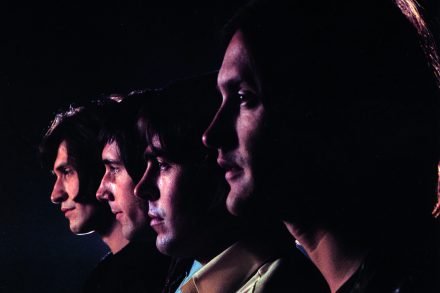
This article is in The Spectator’s February 2020 US edition. Subscribe here. Was there ever a more audacious album title than Arthur, or The Decline and Fall of the British Empire? The name of the Kinks’ 1969 masterpiece could almost be described, in Sixties vernacular, as ‘far out’. But just two years after the lysergic hurricane of 1967, the content of Arthur was ‘far in’, even by the Kinks’ distinctly un-psychedelic standards. Not for them the late Sixties’ return to Americana of the Stones (Beggars Banquet), the Band (Music from Big Pink) and Dylan (John Wesley Harding).

kinks

Woke slogans welded to incompetent grunge: Neil Young’s Colorado reviewed

From our UK edition

Grade: B- Horribly woke boilerplate slogans welded inexpertly to the usual incompetent Crazy Horse grunge. Young and his pick-up band of now 50-years standing usually work well together — as on Zuma, Everybody Knows This is Nowhere and even Ragged Glory. But that’s when there were a few decent songs in the mix, stuffed with compelling ideas and interesting imagery. That sort of thing is in terribly short supply here. ‘She Showed Me Love’ staggers along for an unendurable 13 minutes: ‘I saw old white guys trying to kill mother nature.’ Just old white guys? How about you check out the Indonesian and Brazilian loggers for a second? Then the tuneless thud of ‘Shut it Down’ — ‘shut the whole system down!

Audio blitzkrieg

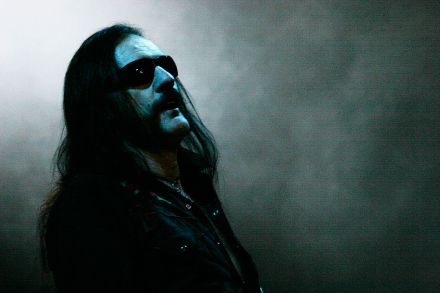
This article is in The Spectator’s November 2019 US edition. Subscribe here. Wokeness, first conceived of by the Armenian mystic George Gurdjieff (1872-1949) had barely reached the mainstream when Ian ‘Lemmy’ Kilmister died in 2015. Still, Lemmy had given considerable thought to staying woke. As a champion abuser of amphetamines, he’d spent more time awake and thinking than anyone since 1945. Perhaps his surprising death –– surprising, because he seemed indestructible –– was necessary in some Gurdjieffian way, to make room for the terrors that now occupy our psyches.

motörhead lemmy

Grandpa, who were the Rolling Stones, and why?

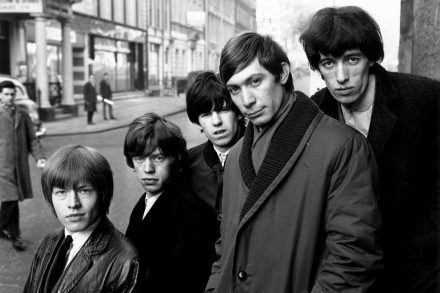
This article is in The Spectator’s October 2019 US edition. Subscribe here. The Rolling Stones’ delayed tour is back on the road. Not the tour they delayed after Keith Richards fell out of a coconut tree, but the one delayed because Mick Jagger had a heart attack. If you’re a boomer of advanced years and decayed taste, all this is no doubt a big deal, your last chance to see some of the last icons of the original and brief Rock Era, before you or they kick the bucket. Ladies and gentlemen, the greatest rock ’n’ roll band in the world, the Rolling Stones. Except they aren’t the Stones. They haven’t been the Stones for years.

rolling stones

At their best the Psychedelic Furs are fantastic

From our UK edition

It’s amazing what the movies can do. In 1986, the John Hughes teen flick Pretty in Pink — the one where poor girl Molly Ringwald and rich kid Andrew McCarthy get it together despite their friends’ disapproval — took its title from a Psychedelic Furs song, which featured heavily in the film. Whoosh! Suddenly they were proper stars. Or rather they were for a year or so. They reformed in 2000, but were just another band on the nostalgia circuit. Then along came another movie, the 2017 arthouse hit Call Me By Your Name, which featured their 1982 single ‘Love My Way’. Since then, the venues have grown again, the reviewers returned and the notices have been glowing. There are even whispers of another album.

Imagine ZZ Top stuck in a lift with Gary Numan: Sturgill Simpson’s Sound & Fury reviewed

From our UK edition

Grade: A– The outlaw country genre has shifted a little over the decades since Waylon and Willie, with each proponent trying to out-badass each other, the guitars getting louder, the lyrics either more obtuse or (in the case of David Allan Coe) more obscene. This takes it all one stage further. I don’t think Sound & Fury would go down too well at the Grand Ole Opry: it is more Seattle than Nashville, 40 minutes of howling rawk guitar, ferocious boogies and cheap synths. It sounds, at times, like ZZ Top stuck in a lift with Gary Numan. Grunge, blues, heavy metal, all rendered darkly as if Mark Lanegan were somewhere in the mix.

The Flaming Lips: King’s Mouth

From our UK edition

Grade: B- So a queen dies as her giant baby is being born. The baby grows very big indeed and soon everything in the universe is inside his necessarily large head. One day he sacrifices himself to save his subjects from a deluge of snow. The townspeople cut off his head and preserve it in steel so that it will last for ever. Some of them climb inside his mouth to have a look around. They see thunderstorms and stars, apparently. Exactly what you’d expect from another Flaming Lips concept album, I suppose, this time narrated by a bemused Mick Jones of the Clash.

The Boss goes to Bollywood

From our UK edition

Once upon a time two men sat in a New York bar lamenting the state of Broadway. So they decided to play Fantasy Musical. Several beers down they came up with a weird hybrid: a jukebox musical that injected the songs of Blondie into the plot of Desperately Seeking Susan. Somehow this botched centaur stumbled all the way to the West End, where it joined that throng of musicals that should have stayed on the drawing board. Blinded by the Light is a Bollywood-style musical comedy set in the Pakistani community of Luton that takes as its soundtrack the oeuvre of Bruce Springsteen. No drunk blokes in a bar could ever have conjured up such an implausibility. And yet it is a trueish story, inspired by the memoir of Sarfraz Manzoor.

Bruce Springsteen: Western Stars

From our UK edition

Grade: B– The first Springsteen song I ever heard was ‘Born To Run’, back when I was 14. I clocked the impassioned, overwrought self-mythologising, the grandiosity of the opening riff, the strange lack of a chorus given the promise of the verse. Well, OK, interesting, I reckoned — maybe even good. But great? Never. I shifted my judgment only once over the following 45 years. Born in the USA had the tunes and stories and the sheer heft that for once matched the chutzpah and the looks. The rest has been either just good or, more often than not, quite a bit less than good. I always reckoned that perpetual sideman Nils Lofgren was by far the superior songwriter, but Nils isn’t quite as alpha male as Bruce.

King of rock

From our UK edition

‘Invest in your hair,’ advises David Coverdale, a man with a shag of the stuff glossier than a supermodel’s and as big as a guardsman’s bearskin, even at the age of 67. (He won’t say that number. He insists his age is ‘three score and seven’.) ‘People say to me: “Do you colour your hair?” And I say: “Absolutely not.” ’ He pauses for half a beat. ‘ “I have a super hairdresser who does it for me.” Some guy came on Instagram, telling me: “Come on, David, it’s time to get rid of the wig.” It’s not something I bought from Frederick’s of Hollywood, you silly bastard! It’s a crowning glory!’ David Coverdale’s hair matters because of who and what he is.

Fashion victims

From our UK edition

There is something inexplicably exciting about pop’s notion of a ‘scene’: young musicians of similar outlooks drawn together by a common aim to transform music, referring to the past to create something of the present. But enough of Fleetwood Mac and the British blues boom. Instead, to fashionable Dalston, where a young quartet called Black Midi played to an uncomfortably full room in a converted cinema.

The grrrls are back in town

From our UK edition

The last time Bikini Kill played in London was in a room that now serves as the restaurant of a pub in Kentish Town. What a change 26 years can bring: on their return to the city last week, they filled the 5,000-capacity O2 Academy, Brixton, for two nights. That changed status, in truth, is not the result of the timelessness of their music — scrappy punk rock that at its most tuneful was pleasingly familiar and at its least tuneful approximated the sound of fingernails scraping down a blackboard at extreme volume. So why had 10,000 people bought tickets to see them in London?