Rock

No one should be doing indie rock at 43: Band of Horses’s Things Are Great reviewed

From our UK edition

Grade: B That thing, ‘indie rock’, is so well played and produced these days, so pristine and flawless, that it has become almost the antithesis of what it was back at the end of the 1970s, when the term was invented. Then it referred to bands who released stuff on small independent labels because the big labels wouldn’t take them on. Shouty, angsty and angular, or just weird and beloved by the befringed dolorous yoof, in their anoraks or donkey jackets, the whole thing had a pleasing DIY feel to it, even if it sometimes grated. These days ‘indie’ just tends to mean anodyne power pop played by whining blokes who haven’t had a shag for ages. So it is, I think, for Seattle’s Band of Horses.


The buzz band of 2022 sound like they’re from 1982: Yard Act, at Village Underground reviewed

From our UK edition

One of the curiosities of modern pop’s landscape is that no one knows any longer how to measure success. An artist can be a huge live draw, but make no impact on the charts; they can be consistent chart-toppers but minnows among the streamers; they can stream by the bazillion, but have no live following to speak of. The metrics of success are so unrelated to each other that anyone can prove anything these days: any band can be the biggest young band in Britain right now. Yard Act are one of those biggest young bands in Britain. Their debut album was a No. 2 hit at the start of this month. Properly big, right? Well, no, perhaps not. For one, it stayed in the chart for only two weeks.

A fond remembrance of Meat Loaf

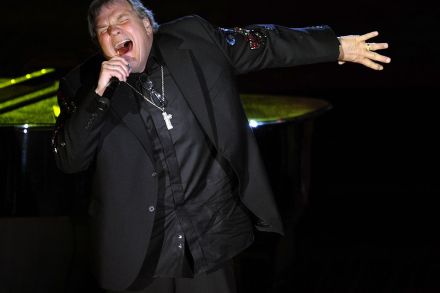
The death of the singer and actor Meat Loaf at the age of seventy-four may not have been wholly unforeseen, but it has nonetheless led to great sadness. The artiste born Marvin Lee Aday engendered enormous affection from both his peers and his millions of admirers. His music and outsized stage persona had a heroically go-for-broke quality that was mirrored in his offstage existence by bankruptcies and a rollercoaster career. But his records sold millions, and, almost as an afterthought, he appeared in some of the major cult films of the twentieth century. A music journalist once christened him "the uncoolest man in the universe" for releasing the album Bat Out Of Hell, a collaboration with Jim Steinman, in 1977.

As pretty as anything he’s written in four decades: McCartney III reviewed

From our UK edition

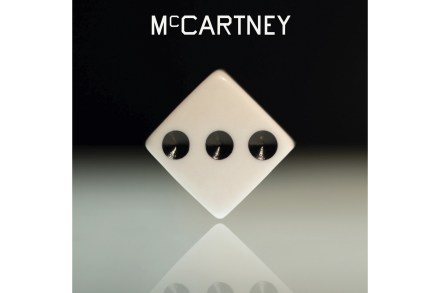
Grade: A- The greatest songwriter of the 20th century, or just one of the top two or three? Who else would you have up there? Kern, Gershwin, Ray Charles, maybe. Dylan for the words along with the music. But not, I think, John Lennon. It’s McCartney’s melodic imagination that captivates and sometimes staggers — ‘Here, There and Everywhere’, ‘Maybe I’m Amazed’. The Beatle it was not OK to like, and yet who, today, would prefer to hear the overwrought ‘Strawberry Fields’ to the easy, loping chime of ‘Penny Lane’? Yes, Wings were the naffest band imaginable. But even then I would take their worst album (Red Rose Speedway) over Lennon’s solo best (Some Time in New York City).

The quiet radicalism of the Chieftains

From our UK edition

Pop quiz time: which act was named Melody Maker Group of the Year in 1975? The answer is not, as you might expect, some testosterone-fuelled blues-rock outfit or a hip gang of proto-punk gunslingers, but a gaggle of semi-professional Irish musicians who performed trad tunes sitting down, dressed for church in cardigans, sensible shoes, shirts and ties. The Chieftains were so far from rock and roll they met it coming back the other way. On the cover of Irish Heartbeat, a later collaboration with Van Morrison, they could be mistaken for a loose affiliation of farmers, minor office clerks and earnest ornithologists waiting for a bus outside the town hall. It was a brilliant disguise. The Chieftains wore their radicalism lightly, but radical they were.

The death of the live album

From our UK edition

Next week The The release The Comeback Special, a 24-track live album documenting the band’s concert at the Royal Albert Hall in June 2018. Meanwhile, Steely Dan’s last man standing, Donald Fagen, has just released two live albums recorded in 2019. Their musical qualities notwithstanding, these releases feel like relics from a lost world. Much like the fondue set, the live album is much reduced from its 1970s and 1980s heyday, when a pretty blonde sideman-turned-solo artist called Peter Frampton could somehow shift eight million copies of the anodyne Frampton Comes Alive! The stand-alone contemporary live album is now an endangered species; MTV’s Unplugged series in the 1990s offered a final down-home twist on the format.

Banal and profound, bent and beautiful: Nick Cave & Warren Ellis at Edinburgh Playhouse reviewed

From our UK edition

Nick Cave has always been drawn to parable and fable, but more than ever these days he is engaged in the necessary work of mining magic from the base metal of day-to-day existence. The key lines in this show came early, during ‘Bright Horses’: ‘We’re all so sick and tired of seeing things as they are,’ Cave sang in that hollow, sorrowful baritone. ‘This world is plain to see/ It don’t mean we can’t believe in something.’ Cave’s recent songs have a terrible and powerful context: the death of his teenage son, Arthur, in 2015. As an artist he has confronted this personal tragedy side on, acknowledging its profound impact without letting it overwhelm his writing.

Good noisy fun: black midi, at the Edinburgh International Festival, reviewed

From our UK edition

This year we must love Edinburgh for her soul rather than her looks. The EIF should be commended for making the best of a tricky hand, but the lodgings for its music programme bring to mind a fallen society beauty forced from her New Town villa into a rented bedsit. Edinburgh Park is a cathedral-sized tent in a business park, wedged between the city bypass and a shopping mall. The wooden floor planks buck and roll like a galleon deck. There is a roof but no sides and the Covid-quelling ventilation is, shall we say, robust. So yes, forget the optics. In 2021, content is everything. As it transpires, it proved a fitting spot in which to experience three artists engaged in similar quests to remould the traditional and familiar.

An ode to Charlie Watts, the politest man in rock music

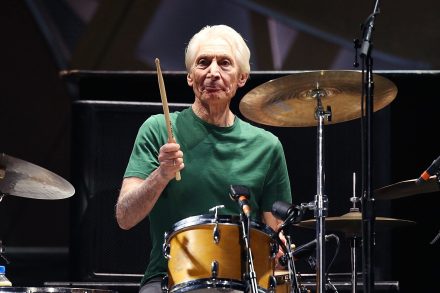
There can be few terms in the English language more debased than ‘rock star’. Nowadays, it seems, the press makes a fetish of every halfway plausible such chancer to appear over the horizon, regardless of whether their art will endure, or their generally slim recorded oeuvre instead be among the detritus one eventually takes to the nearest Goodwill store. But the Rolling Stones drummer Charlie Watts, who died today aged 80, truly merits a place in the pop pantheon. He wasn’t just an original among the standard tub-thumpers of his profession. He was unique. Back in 1963 the Stones’s first manager, Eric Easton, fastened on the essential thing about Watts, which was that he was ‘totally unpretentious’ and ‘perfect at his job.

Charlie Watts of The Rolling Stones performs live at Adelaide Oval on October 25, 2014 (Getty Images)

The joys of musical comfort food

From our UK edition

I’ve given up comfort food. I’m trying to shift lockdown pounds that have left me with the physique of the kind of ageing second-string wrestler you used to see on World of Sport early on a Saturday afternoon in the 1980s. It’s all eschewing oils and measuring portions round these parts, and so I have been seeking my comforts in music. Enough with your Lithuanian drone and your polyrhythmic technical metal from Indonesia! Bring me verses and choruses and melodies and vocal harmonies! Katy J. Pearson — a young woman from the West Country who perhaps wishes she were, instead, from the American west coast — was true comfort food. The whole thing also felt unnervingly like a real gig, the kind one used to go to Before All This.

‘Germans thought we couldn’t play’: Irmin Schmidt, of musical pioneers Can, interviewed

From our UK edition

‘The records are only half of the picture,’ says Irmin Schmidt, founder member of the great German experimental collective Can. ‘Live [performance] is the side of ours which actually has still to be discovered. For many of the people who came to our concerts, it was much more important in building up the legend than the records, because it was something extraordinary.’ Rock music is neck deep in retrospection these days, but the release of a ‘new’ Can album, Live in Stuttgart 1975, can’t be dismissed as just one more trawl through the floor sweepings. Instead, as Schmidt suggests, it reshapes what we know about one of the most influential bands of the 20th century.

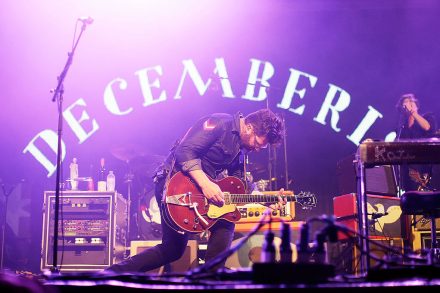
The Decemberists are the only band I adore who have a number of songs I actively despise

Sixteen years ago I interviewed a young American musician whose band had just signed to Rough Trade. We met in a café in west London, and he had with him a bag of records he’d just bought. In that bag were a handful of classic albums from the English folk revival, and in the intervening years Colin Meloy has steered the Decemberists to a frankly unlikely level of success, even topping the US album charts with The King Is Dead. Over three April weekends they have been performing shows to mark their 20th anniversary (which was actually last year, but pandemic and all that), which highlighted just what an idiosyncratic band they are. The English folk came through in the beautiful ‘January Hymn’, but also in one of Meloy’s other loves — the prog-metal side of folk.

decemberists

The songs are still as fresh and appetising as a hot loaf: The Lightning Seeds livestream reviewed

From our UK edition

One thing about a streamed festival is that the toilets are better than at the real thing. The other thing, though, is that it’s not really a festival. That’s not to knock the North Will Rise Again (TNWRA), which took place over Saturday and Sunday nights a few weeks back, the first featuring Liverpudlian bands and filmed in that city, the second coming from Manchester, with Mancunian groups. The simple fact is, you can’t replicate a festival online: what the best festivals offer is chance, when one stumbles across something wholly unexpectedly on some outlying stage at an unpromising time of day. Simple economics make that impossible for an event charging a tenner: unless you were to get Woodstock levels of attendance, there would be no way to pay the bands.

The mystery and romance of the cassette tape

From our UK edition

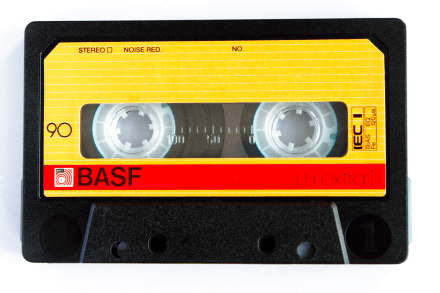
May the gods of Hiss and Compression bless Lou Ottens. As head of new product development at Phillips, the Dutch engineer invented the compact cassette in 1963 and changed music for ever. Ottens died last week at 94. A good age, and a good number. You could get a full album on each side. For many of us born in the 1970s, who came of age musically in the 1980s and 1990s, the blank cassette has an unkillable romance. We measured our lives in spools of magnetic tape: C60, C90, the occasional C46. Inside those hard plastic shells we surfed the thin end of the aural wedge, composing scrappy love letters in the medium’s notoriously tinny register — no bass, all treble. Tapes were desirable not for their audio quality, which was sub-prime, or aesthetic appeal.

The triumph of bedroom pop

From our UK edition

I must have been about 16 when I got my first Portastudio. The compact home recording unit had first been introduced by Japanese electronics firm Teac in 1979, offering unprecedented multitrack dubbing to the bed-bound amateur musician. For a little less than $1,000, you could record four separate tracks of instrumentation — as much as the Beatles had when making Sgt. Pepper — on an ordinary cassette tape. By the time I got my teenage hands on a four-track machine of my own, that price had come down by an order of magnitude. It was a chunky little unit in pigeon blue with just two microphone sockets and a small handful of mixing dials for volume control and stereo panning.

‘I like upsetting people’: Steven Wilson interviewed

From our UK edition

Steven Wilson is going about becoming a pop musician entirely the wrong way. For one thing, he’s into his fifties, not typically the point in life at which budding chart-botherers launch their assault on hearts and minds. For another, in an age in which pop stardom and identity politics have become entwined — in cultural discourse, at least, even if not necessarily in your teenager’s listening habits — he has everything going against him. ‘I come from a very well-adjusted family. I’m heterosexual. I’m white.’ Of course, Wilson doesn’t really expect to be competing against Stormzy and Dua Lipa and Cardi B.

Makes me nostalgic for an era when music was more than a click away: Teenage Superstars reviewed

From our UK edition

In Teenage Superstars, a long and slightly exhausting documentary about the Scottish indie scene of the 1980s and ’90s, there was a moment when a man revelling in the name of Stephen Pastel — his real name is Stephen McRobbie, and he must be pushing 60 now — was described as ‘the mayor of the Scottish underground’. Such a position — even one, as this, necessarily unelected — would be all but impossible to occupy today. With the internet and democratisation of music — its creation, its distribution, its consumption — has come the fallowing of what were once its most fertile fields: the local scenes created and inhabited by small numbers of interconnected people and encouraged by confident tastemakers — such as Pastel.

A criminally underrated songwriter: Matthew Sweet’s Catspaw reviewed

From our UK edition

Grade: A– The early 1990s were a lovely time for rock music: Beck, Sparklehorse, Sugar, Green on Red and Royal Trux. I wish I’d savoured it all more at the time, not realising that Damon and Noel would come along decked in Union Jacks and suffocate us with the precious (Damon) and the oafish (Noel). There was Matthew Sweet’s first album, too — Girlfriend; the missing link between Big Star and Neil Young. He is a criminally underrated songwriter, but then power pop has never found much traction over here since the fab four called it a day. Sweet is an engaging soul with a self-deprecation that occasionally teeters into self-loathing. Like Paul Westerberg, there is intelligence, humour and subtlety in his lyrics and always, always good tunes.

Virtuosic but slight – always prog’s problem: The Pineapple Thief’s latest reviewed

From our UK edition

Grade: B– Of all the various subdivisions in that wheezing and crippled phenomenon that we call rock music, prog has fared better than most, spawning its own devilish offspring in math rock and post-rock. Why? Maybe we are more amenable to bombast and pretension these days. Or perhaps new studio technology lends itself to the genre — hell, you can hear prog time signatures in top ten hits. Maybe more to the point, prog offers a broader avenue than, say, heavy metal or punk. Prog is often what bands end up doing even if that’s not what they think they’re doing: Radiohead, Muse — even Arcade Fire or the National. This is the 14th album from Somerset band the Pineapple Thief (prog is very much a West Country thing).

There’s scarcely a dull track: Deep Purple’s Whoosh! reviewed

From our UK edition

Grade: B+ Less deep purple than a pleasant mauve. Ageing headbangers will note a lack of the freneticism that distinguished Fireball and ‘Highway Star’. But by the same token they may be relieved that there are no six-minute drum solos, songs about the devil, or Jon Lord demonstrating that he can hammer the organ fairly quickly for an unimaginably long time. Instead you have extremely well played 1980s arena rawk — think Guns N’ Roses with a touch of prog thrown in. And decent tunes that do not outstay their welcome — Ian Gillan always was a catchy mofo, however ludicrously vaudevillian his vocals may be.