Riots

Sharing riot videos? You’re part of the problem

From our UK edition

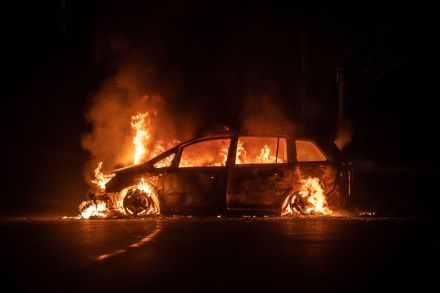
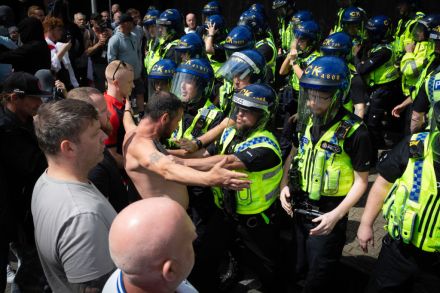
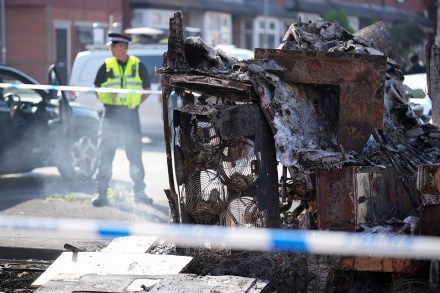
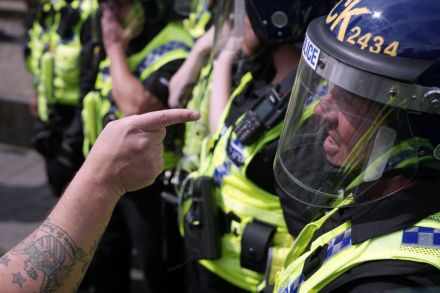
We’re told these riots are about immigration, racism, angry Islam, elite blindness and identity politics – and, to a point, that’s all true. But the disorder in British cities is also about the internet – and online videos in particular. People just can’t stop sharing ‘riot porn’, whether it be savage beatings, vicious clashes between rioters and the police, or buildings and cars being set on fire. Violence, like sex, goes viral because it is so addictive to watch. Unlike with pornography, however, there’s no stigma attached to the circulation of such footage, especially if the person on the receiving end of the brutality seems to be a villain. It’s schadenfreude on steroids.

Will Starmer crack down on social media?

From our UK edition

17 min listen

Courts have started giving out severe sentences to those involved in the riots today, but there is a continued clamouring for Keir Starmer to do more. The next step seems to be cracking down on discussions online, where social media platforms such as X and Telegram could be inflaming the riots. Could the government give in to this pressure, and what do we, as a society, lose if so? Cindy Yu talks to Katy Balls and non-affiliated peer Claire Fox. Produced by Cindy Yu.

Europe is worried that Britain’s riots might spread

From our UK edition

The riots that have erupted across England in the last week have been splashed across Europe’s newspapers and broadcast on the primetime news. There have been editorials in France’s Le Monde, video reports in Spain’s El Pais and podcasts in Sweden’s Aftonbladet. The Italian newspaper, La Stampa, published video footage of disturbances in Plymouth on Monday night, and described the rioters as a mix of ‘extremists and hooligans’. Why did the anti-immigration riots not explode first in France or Germany? Some of the coverage has been superficial.

Can our prisons take these ‘thugs’?

From our UK edition

16 min listen

Keir Starmer will be chairing his first Cobra meeting, as the government continues to grapple with the rioting that has broken out across the country. The weekend saw numerous examples of violence, including at hotels thought to be hosting asylum seekers. We had a statement from the prime minister condemning the ‘right wing thuggery’, but do we need a more complete approach to extremism? And will our prisons and our courts be able to accommodate the huge influx of offenders?  Oscar Edmondson speaks to Katy Balls and Ian Acheson, senior advisor to the Counter Extremism Project.  Produced by Oscar Edmondson.

The ‘community cohesion’ concept explains confusing police tactics

From our UK edition

Merseyside police were very keen to rule out the Southport attack as ‘terrorism-related’. This was despite subsequent remarks from the Home Office that counter-terrorism police were still assisting the investigation. That muddled explanation will fall on deaf ears. Whether this turns out to be an act encompassed within the dry legalistic definition of terrorism, the dead are still dead. Why are the police in the firing line this weekend? Why have they not been more forthcoming originally on details? Could a quicker reaction have dampened the riots we have seen over the past few days? One reason that the police strategy looks so baffling could be Merseyside’s concern that nebulous ‘community cohesion’ must be protected at all costs. Was it a flawed calculation?

Why there’s rioting in Leeds

From our UK edition

As something of a fan of riots and social unrest I was interested to know who, precisely, had gone doolally in the Harehills area of Leeds last week and started setting fire to buses and so on. The local police announced that it was a ‘serious disorder incident’, but I could find no information at all about who it was doing the rioting. Just people, I suppose – and we are all people, aren’t we? Still I scoured the paper – and nope, no enlightenment. Perhaps it was just northerners – Leeds is full of them, after all, and they can be fractious and violent when the mood grips hold of them. Inner-city northerners with their slavering pitbulls, their skag and their misplaced sense of pride and grievances.

The good news about the left’s growing resort to intimidation

It has not escaped the attention of media observers that the current outbreak of violent campus demonstrations is but the latest in a series of disruptive left-wing movements, starting with Occupy Wall Street in 2012, followed by the Black Lives Matter riots over the summer of 2020 and now the anti-Israel protests. The right, too, has been associated with disorderly conduct — most notably during January 6 and the Charlottesville rallies — but neither of these events were as well-planned or long lasting as what progressives have been up to. And this fact has led many journalists to speculate as to why the American left has become so attached to civil disobedience.

intimidation

Was the French Revolution inevitable?

From our UK edition

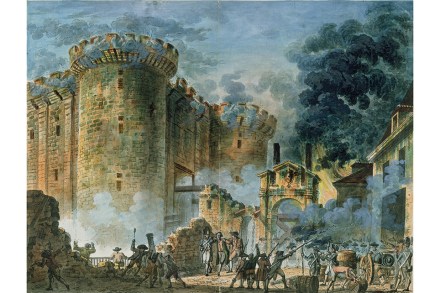
In the middle of the 18th century, on the north side of the Palais Royal gardens in Paris, there stood a magnificent chestnut tree called the Tree of Cracow. In his presidential address to the American Historical Association in 2000, Robert Darnton explained that the name Cracow probably derived from the heated debates that took place in Paris during the War of the Polish Succession, but also from the French verb craquer: to tell dubious stories. News-mongers or nouvellistes de bouche, agents for foreign diplomats and curious members of the public gathered round the tree, which was at the heart of Paris’s news network, a nerve centre for transmitting information, gossip and rumours.

The fine art of French rioting

From our UK edition

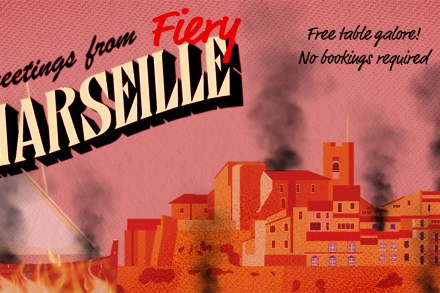
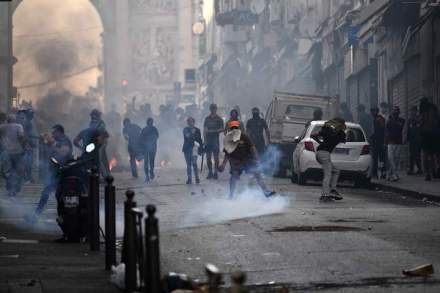
Marseille One of the benefits of holidaying during a riot is you feel remarkably safe. Ruffians have no interest in you while they can be having fun at the expense of a much more exciting foe, the police. And besides, there are Lacoste stores to be raided: they have no time for your wallet. The other major benefit is you can get a table anywhere. We had the best seat in France last week: the first-floor balcony of La Caravelle, an old-school bar overlooking Marseille’s historic port and the perfect vantage point for taking in the fine art of French rioting. The choreography unfolded in fits and starts. The police vans snaked around the water’s edge in military formation. Out filed the riot cops, their tessellated body armour making them look like mutant woodlice.

Why Europe riots

From our UK edition

Montpellier A spectre is haunting Europe. In France, Sweden, Germany, Belgium and even Switzerland, the rule of law is being challenged by the rule of gangs. Disaffected young people cut off from society feel nothing but nihilistic contempt for it. Higher temperatures and social media are creating a heated summer. Judging from recent events in Paris and Stockholm, this year could be the worst so far. The rise of gang violence is associated with immigration. Europe has shown itself incapable or unwilling to control the influx of migrants, some of them genuine asylum seekers, others simply opportunists. Nor have European politicians succeeded in dealing with the problems created by immigration, despite spending billions on social projects.

French racism is not the problem

From our UK edition

Last week we learned that a woman in a park in Skegness was dragged into the bushes and raped by a 33-year-old male. The man had arrived in the UK illegally on a small boat just 40 days earlier. If you have open borders and no checks on who is arriving, an uptick in crime will inevitably occur Strangely, I can find little anger about this. The story was reported in a couple of papers but there were no fulminating editorials or emergency questions in the House. Jess Phillips hasn’t found room to grandstand about it. Nor have Yvette Cooper, Stella Creasy or any of those other Labour MPs who like to shake their heads in disgust as the Home Secretary explains that the British taxpayers can’t forever foot the hotel bills of illegal migrants.

The French riots threaten the state’s very existence

From our UK edition

How dangerous are riots to the very existence of the French state? Most commentators avoid the question and concentrate on causes. The more whimsical attribute cause to that clichéd French historical reflex of insurrection; the sociologists to poverty and discrimination in the banlieues (suburbs); the far-left to French institutional racism and right-wing policies; conservative politicians to excess immigration, the ghettoization of France and the state’s retreat from enforcing law and order. But a growing chorus now evokes an unmentionable potential consequence: civil war. Of most concern is that those voices include groups with first-hand knowledge of the state of the country: the police, the army, domestic intelligence.

Tyre Nichols and the new black-cop white supremacy

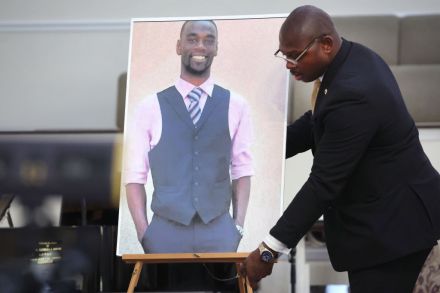
Racism has become an unfalsifiable proposition. Such is the central take-away from the race industry’s tortured reaction to a brutal police beating in Memphis, Tennessee. Five Memphis officers responded to what was initially reported as a car driving the wrong way down a street. The officers’ tactics during the stop of driver Tyre Nichols, captured on video, were an abomination: while shouting contradictory commands, the officers immediately escalated their use of force without apparent cause. It was Nichols who tried to deescalate the chaos — a responsibility usually put on officers, not on suspects. The cops struggled without coordination to cuff him, while delivering gratuitous kicks, punches to the face and baton strikes.

tyre nichols

Biden: MAGA is more extreme than Antifa, KKK

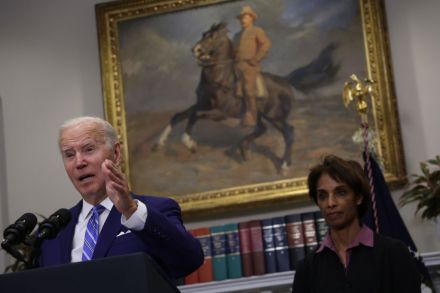
Being something of a barfly, Cockburn is used to overhearing tall tales, braggadocious orations, and outlandish accusations, also known as “fightin’ words.” So imagine his astonishment in learning that what he heard over his breakfast stout this afternoon was not the consequence of some riled-up Hill staffer who’d had a few too many, but was really and truly uttered by the (presumably sober) president of the United States. “This MAGA crowd is really the most extreme political organization that's existed in American history,” President Biden said. “Recent history,” he clarified. “Recent” is a relative term. Perhaps the explosive hate crimes of the Ku Klux Klan that reached their height in the 1920s are not “recent” enough for Biden.

Goodbye Bill de Blasio, New York-hating communist

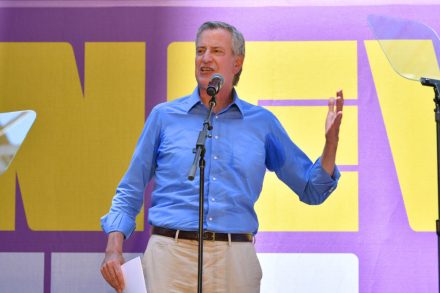
At the stroke of midnight on January 1, Bill de Blasio — New York’s bumbling, mildly sinister but profoundly incompetent mayor — got laughed out of office as his second term came to an end. Don’t let the door hit ya, the city collectively sneered...despite voting for the man twice. The new administration couldn’t even wait until morning to flip the official @NYCMayor Twitter account. One minute after midnight, it changed all its pictures over to ones of Eric Adams, before the man had even been officially sworn in. An image of the smiling new mayor loomed over de Blasio’s final message: a photo of he and his wife walking in shadow down a long hallway with their backs turned on a city they abandoned long ago.

bill de blasio

Biden’s Capitol speech shows how much he needs Trump

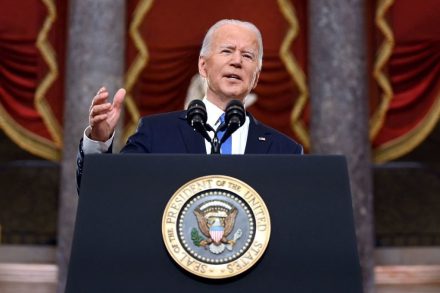
Joe Biden delivered. There was no somnolence, no quiescence. Instead, Biden lashed into his predecessor in unprecedented fashion to offer the most important speech of his presidency. It was a well-struck blow. Donald Trump cannot take Biden’s speech detailing his serial infamies lying down. Biden’s remarks were calculated to nettle, inflame and enrage Trump into further tipping his hand, such as it is. Biden, who was careful never to dignify him by mentioning his actual name, depicted Trump as a dissembler, a knave, a poltroon, a “remorseless, treacherous, lecherous, kindless villain” of Shakespearian proportions who is scheming, as far as possible, to subvert American democracy, whenever and wherever he can.

trump speech capitol
january 6 capitol riot

The Capitol riot transformed right-wing activism in America

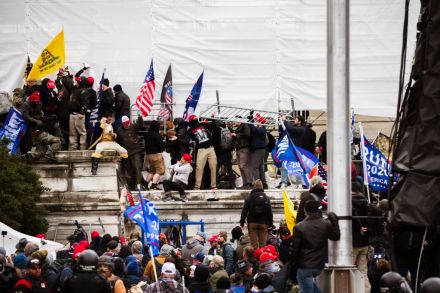
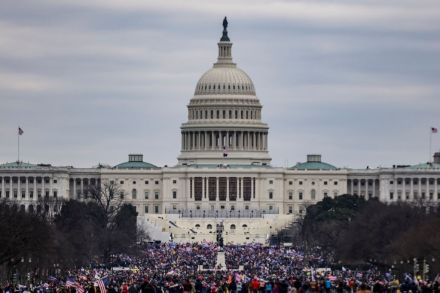
The invasion of Capitol Hill on January 6, 2021 represented the rise and fall of pro-Trump anti-governmental activism in a matter of hours. Its sensational success ensured its immediate collapse as the power of law enforcement came down on its head. Anyone involved must have experienced emotional whiplash. At the time, as millions of us watched on social media, there were smiles, and pranks, and a sense of deranged pageantry. “I can’t believe we’re doing this,” seemed to be the mood, perhaps accompanied in some cases by, “What can we do next?” Soon, many of the participants had an answer as they were booked into extended spells in jail. One year on, the organizations involved in the “Stop the Steal” rally and the subsequent rioting are in pieces.

Who’s a vigilante anyway?

The idea that what happened at the Capitol of January 6 was an “insurrection” was always a ridiculous and malevolent exaggeration. The passage of time has exposed that politically motivated lie and sent the rats scurrying for alternative explanations. Right on cue, we find a hobbyhorse leftist taking to the pages of the Washington Post — Jeff Bezos’s onshore publicity organ for the Democratic Party — to warn us against calling the protest at the Capitol an “insurrection.” The memo to Scribes and Pharisees has gone out. It’s no longer an “insurrection.” It’s been rebaptized a “sinister” act of “vigilantism.

january 6 trump vigilante

The Democrats should investigate themselves for insurrection

For nearly a month last summer a violent insurrection claimed control of Capitol Hill — in Seattle, that is, not Washington DC. The insurrectionists were leftists who proclaimed the six or so city blocks under their power to be a new state-within-a-state, the ‘Capitol Hill Autonomous Zone’, or CHAZ. Multiple shootings, murders and acts of arson took place before police finally restored legal authority on July 1. This insurrection, and the many other lethal incursions against the rule of law that took place last summer, have not occasioned much soul-searching or anger from progressives and liberals in the commentariat. The contrast with their fury over the riot at the US Capitol on January 6 of this year could not be more striking.

insurrection

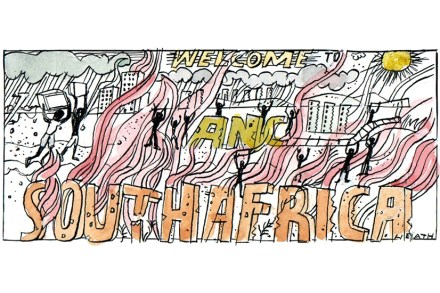
The real reasons for South Africa’s riots

From our UK edition

Sixty-eight years ago, when I was four, my Scottish father and English mother took me from London to South Africa, to a seaside town 20 miles south of Cape Town in the Western Cape. This is Fish Hoek (pronounced ‘fishhook’). I was brought up here, and after working in England and elsewhere in South Africa, I have returned. I have lived through the rise and fall of apartheid, and the 27-year rule of the ANC. I watched the terrible recent events, which seem to have subsided. We are sifting through the ruins and wondering what happened, and why. South Africa has nine provinces. Two of them, KwaZulu-Natal (KZN, formerly Natal) and Gauteng (with Johannesburg and Pretoria), have been devastated by violent riots.