Riots

Our resentment of migrants is centuries old: the Little Englanders of the Tudor era

From our UK edition

This Little World opens with a description of the riots of 1517, an explosion of pent-up hostility and resentment against ‘strangers and aliens’. Recently arrived migrants from France and the Low Countries were blamed for aggravating the poverty and want suffered by locals. That Easter, a rabble-rousing preacher had called for Londoners to remedy this injustice: ‘As birds would defend their nest, so ought Englishmen to cherish and defend themselves, and to hurt and grieve aliens for the common weale.’ Soon afterwards, on the May Day holiday, apprentices gave drunken, unruly vent to their frustration in riots. Five hundred years flash by and so little has changed.

California is doomed

Why is anyone even remotely interested in regime-changing a nasty, far-away foreign country that hates America when there is a nasty country much, much closer that hates us, too? OK, technically California is not a country, but it’s about the same size as Japan and Sweden. Its GDP – $4.1 trillion – is the fourth-highest in the world, behind the other 49 combined United States, China and Germany. It has as many residents as Canada. More people live here than in Spain or Saudi Arabia (and more than in our 22 smallest states combined). California is a monster in every way. That used to be a good thing: its powerful allure and economic might attracted the best and brightest from all over. Einstein taught in Pasadena, at Caltech.

California

What’s next for LA’s Mexican-American community?

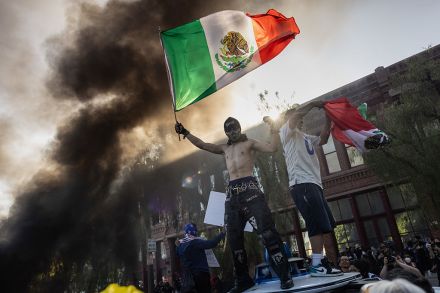
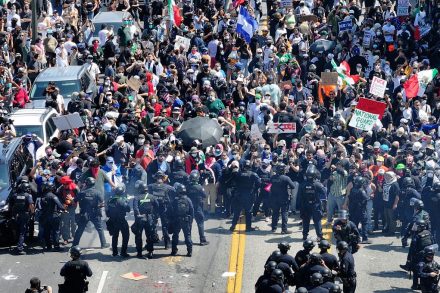
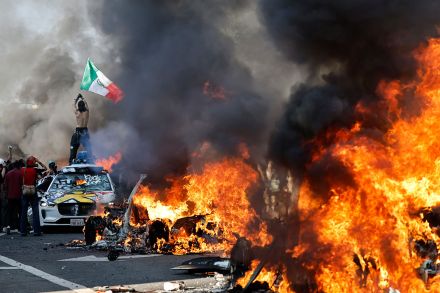
In 1976, the Ramirez Pharmacy opened in the Boyle Heights neighborhood of East Los Angeles. Appropriately located on the corner of East Cesar Chavez Ave, the pharmacy is the crowning achievement of my grandfather, Eddie Ramirez, and is in many ways physical evidence of the American dream.  But in today’s Los Angeles, we’ve seen citizens and non-citizens waving Mexican flags while torching cars, attacking police and burning US flags in protest of the Trump administration's immigration raids in the state. Protesters have looted businesses downtown and lit fires, leading to full blocks of the LA commercial district nailing plywood to their storefronts.  “Lately, since all this ruckus started with a protest, we have seen a drop in the business.

los angeles mexican ramirez pharmacy

The un-American revolution 

The riots raging in Los Angeles are an unwelcome present ahead of America’s birthday, which is less than a month away. But they’re also a timely reminder of just what that birthday, the Fourth of July, is about. After all, American independence was conceived in rioting and brazen defiance of law enforcement.  Some 250 years ago, Boston was aflame with the spirit of resistance. Then, too, as in LA today, soldiers had to be called out to quell the mobs. In 1770, that led to an incident known to history as the Boston massacre. Violently harassed by hundreds of protesters, seven British soldiers fired into the crowd, killing three people on the spot and wounding several more, two of whom later died.

revolution

What’s the matter with Los Angeles?

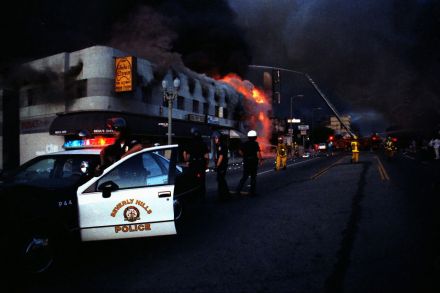
Los Angeles is reeling once again from urban disturbances, as it did in 1965, 1992 and 2020. After each outbreak the city is widely seen as a hopeless disaster that epitomizes everything wrong with American cities. That’s ironic because since its infancy Los Angeles sought to develop a new model of post-Dickensian urbanity – what the early 20th century minister and writer Dana Bartlett called “the better city” – one dominated by middle class single family homes. At the time, the city that was among the whitest, and most protestant in the nation. Bartlett predicted it would become “a place of inspiration for nobler living.”The strategy, a combination of vaulting ambition and careful planning, worked brilliantly.

LA Riots

Taxpayers subsidize LA unrest through California’s ‘protest-industrial complex’

Los Angeles has erupted into violence and at the center of it stands a cast of progressive activists and political operatives – some generously bankrolled by California taxpayers. One organization in particular has emerged as a key player: the Coalition for Humane Immigrant Rights, or CHIRLA. The LA-based nonprofit has long pushed radical positions on immigration – for example, in 2018, it spearheaded a campaign to abolish ICE. Its stated mission is to “build power, transform public opinion, and change policies” to achieve “full human, civil, and labor rights.” Critics might describe CHIRLA instead as a well-funded political engine for the open-borders left. And taxpayers might question the source of that funding.

LA riots
LA

Can Trump have Newsom arrested for fiddling while LA burns?

A great American city is descending into chaos, and the leader most capable and concerned enough to save it is 2,500 miles away, sitting in the Oval Office. Meanwhile as they can see the smoke rise from their houses, Los Angeles Mayor Karen Bass and California Governor Gavin Newsom are so desperate to see President Donald J. Trump fail, they would sacrifice their own constituents on the altar of political expediency rather than intervene to protect life and liberty.For his part, the President has suggested that border czar Tom Homan was right to threaten to arrest Newsom. “You cross that line, it’s a felony to knowingly harbor and conceal an illegal alien. It’s a felony to impede law enforcement doing their job.

Gavin Newsom blew his chance to stand for law and order

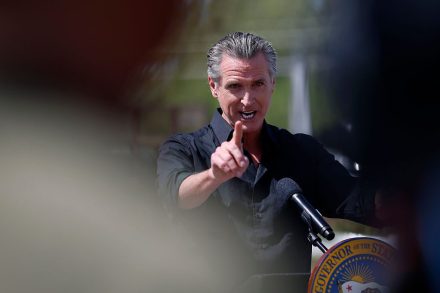
Gavin Newsom had a golden opportunity this week to prove that he’s learned something in the time since the summer of George Floyd. He had an opportunity to set himself up as a Democrat willing to take on the factions of his own coalition when their methods go from peaceful protest to setting fires in the streets, destroying property and all-out anti-cop violence. He could have taken a stand for law and order, taking flak from his own side for standing up for the law-abiding citizens of California. Instead, he blew it. He called the decision by President Trump to deploy the National Guard “an illegal act, an immoral act, an unconstitutional act,” and announced a lawsuit against the government over the issue.

gavin newsom

Whatever happened to antifa?

Since the 2024 presidential election, America has been braced for violence from the political far-left — and with good reason. Extremists like antifa, the “anti-fascist” group, are explicitly aggressive. They think looting, arson and intimidation are all acceptable, and until very recently they’ve had the support of the establishment. For a decade their liberal allies gave antifa carte blanche to cause criminal damage in the name of “resisting fascism” or opposing racism. So where is antifa now? What is it planning? It’s an understandable concern. The citizens of Portland remember all too well the bouts of rioting and violence by Black Lives Matter-antifa in November 2016, when Hillary Clinton lost to Trump.

antifa

100 Days of Starmer: the verdict

From our UK edition

25 min listen

Today marks Labour’s 100th day in office. But they are unlikely to be popping champagne corks in Downing Street – even if Lord Alli offered to pay for the Dom Pérignon. This has been a disheartening time for the government and those who wished it well. The promise of dramatic change has been overshadowed by a series of errors, misjudgments and scandals that one would associate more with an administration in its dying days than a government enjoying a fresh mandate, a massive majority and an absent opposition. Former shadow culture secretary Thangam Debbonaire and former deputy prime minister Thérèse Coffey join The Spectator's Katy Balls to discuss what went wrong and – if we think hard enough – what went right?  Produced by Natasha Feroze and Oscar Edmondson.

Who will protect me?

From our UK edition

Police are hunting a ‘hooded figure’ who sprayed ‘no whites’ on the wall of a primary school in Birmingham. The coppers presumably have racial hatred in mind, but there could be a much more innocent explanation for that which otherwise would be simply a case of vandalism – or even one of laudable graffiti art which may, one day, sell for millions of pounds to a rich idiot devoid of discernment. The school is located in the Alum Rock area of the city, a ward which consists almost entirely of ‘BAME’ people, according to a city council factsheet. So it may be that the hooded figure with the spray can was simply stating a fact, much as perhaps you are inclined to do when looking at television adverts or trailers for new BBC drama series.

Everything is under (crowd) control: the evolution of riot response

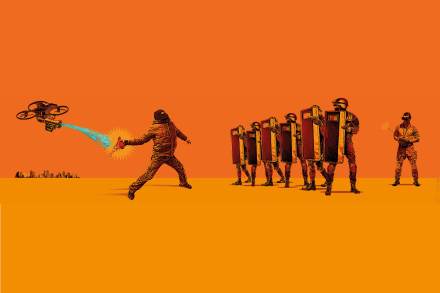
Worldwide unrest is great for those in the riot-gear business. Shields and batons have historically cornered the market as the cutting edge in crowd control, but in recent years it’s evolved to include robots, armored trucks and drones. Milipol Paris is the homeland security expo of all expos. This is the kind of giant showroom where you will find law enforcement and private security agents checking out the newest innovations in robot dogs, armored vehicles and unmanned turrets as if they’re going from painting to painting at the Louvre. The Milipol expo comes around every two years. In 2023, you would have seen men plugged into VR headsets killing terrorists with a pistol.

crowd

Letters: Britain doesn’t have a ‘two-tier’ policing problem

From our UK edition

Less is more Sir: While I wholeheartedly agree with Toby Young’s observation that ‘more censorship would make things worse, not better’ (No sacred cows, 10 August), I’m confused by his remedy – ‘more and better speech’. First, how does one decide what better even means, without it becoming a form of censorship? Second, and perhaps more worryingly, it feels like something Stalin might appreciate. ‘Quantity has a quality of its own,’ he once said. In their different ways, both incessant social media and weekly magazines rather disprove that.

How Ancient Greece handled riots

From our UK edition

Riots are difficult enough for us to deal with, let alone for the ancients, who had neither police nor prisons; and only late on housed troops in cities. Since Athenian citizens – the poor – made all political decisions, and the state and the rich funded them, there was little for them to riot about. The two riots organised by oligarchs to destroy democracy failed. But in republican Rome, political tensions between the rich and the poor could produce serious rioting, often designed to disrupt the voting. Tiberius Gracchus’ Bill (132 bc) forbade anyone from owning more than 120 hectares of public land (50 soccer pitches), the excess being distributed among the poor at 30 hectares per family. After blood-soaked rioting, it was passed.

Portrait of the week: riot justice, Olympic success and Ukraine’s Russian advance

From our UK edition

Home Riots subsided after 7 August, a night when many were expected but only empty streets or demonstrations against riots eventuated. By 12 August there had been 975 arrests and 546 charges in 36 of the 43 police force areas in England and Wales. Rioters could be released from jail after serving 40 per cent of their sentence, as part of the early release scheme to ease prison overcrowding, Downing Street said. Ricky Jones, a councillor for Dartford, now suspended from the Labour party, was remanded in custody after being charged with encouraging violent disorder in Walthamstow.

Why Britain riots

From our UK edition

33 min listen

This week: The Spectator’s Gus Carter was in Rotherham and Birmingham in the days after the riots. Locals tell Gus that ‘violent disorder isn’t acceptable but people from down south don’t know what it’s like up here’. A retired policeman in Birmingham adds that ‘it’s just yobs looking for an excuse – and yobbos come in all sorts of colours’. You can hear Gus’ report on the podcast. (02:25)  Next: Gus and Lara take us through some of their favourite pieces in the magazine, including Flora Watkins’ notes on ragwort and Isabel Hardman’s review of Swimming Pretty: The Untold Story of Women in Water.

Free speech stops riots 

From our UK edition

With depressing predictability, the riots have led to calls for more censorship. Historically, it was the authoritarian right who blamed outbreaks of civil disorder on too much free speech, but this knee-jerk, illiberal reaction is now more likely to be found on the left. I’m not just thinking of Paul Mason, who called for Ofcom to revoke GB News’s broadcast licence, or even Carole Cadwalladr, who tweeted: ‘This should be our Dunblane moment. Only with social media not guns.’ I’m thinking of statements by the Prime Minister and the Home Secretary. Is Sir Keir going to urge the police to investigate his own role in ‘whipping up violence’?

Starmer’s first big test

From our UK edition

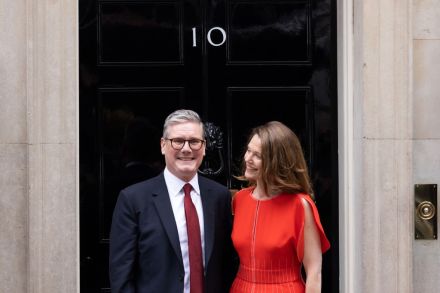
During the election campaign, Keir Starmer confessed to taking Friday nights off. ‘I’ve been doing this for years – I will not do a work-related thing after six o’clock, pretty well come what may,’ he told a radio host. But one month into his premiership, and the Prime Minister is struggling even to take his pre-planned summer holiday. Claims that Labour’s decisive victory would make the UK a pocket of stability in a polarised world now look hubristic. Starmer leads a country that others such as Australia and Malaysia are warning their citizens not to travel to. Meanwhile he is engulfed in a very public Twitter spat with tech billionaire Elon Musk. As if in response to No.

Why Britain riots

From our UK edition

Riotous summers seem to occur in Britain with about the same frequency as sunny ones: roughly every decade. Sometimes it’s Afro-Caribbeans protesting (Brixton in 1981), sometimes Asians (Oldham in 2001). The white working classes rioted over the poll tax in 1990 and in Southport this year. The riot in Harehills, Leeds, last month was precipitated by social services removing children from a Roma couple. Whatever sparks the unrest, what all riots have in common is that they involve mindless destruction. Rioters smash and burn their own communities and opportunists descend, trying to exploit the situation for political ends. Fake news and misinformation abound.