Richard nixon

The moral cost of inflation

Inflation is about far more than rising prices. In this excerpt adapted from Inflation: What It Is, Why It’s Bad — and How to Fix It, the book’s authors explain how the debasement of money ultimately corrupts society. The scenario is fairly standard: central banks devalue money; prices shoot up. Governments look for ways to tamp down inflation by keeping people from spending. They also respond with price controls, capital controls, higher taxes. Governments grow larger and often impose more constraints. People lose their freedom, and worse.

inflation

How we got to inflation

And just when everything was looking so tidy — the Ukraine war, a new Covid subvariant, mass shootings, a woked-up Disney operation — what should come along to light up our lives but 8.5 percent inflation? And who, I ask you, ought to wonder? Like acid reflux and obstreperous two-year-olds, inflation ranks high among human durable goods: always looming, never gone for long, even when it pulls back, and even then leaving its indelible marks. This, due to another human durable: the determination of governments, autocratic as well as democratic, to mishandle the pretended spreading of economic joy.

bewilderment

Saigon and Kabul: what would Nixon say?

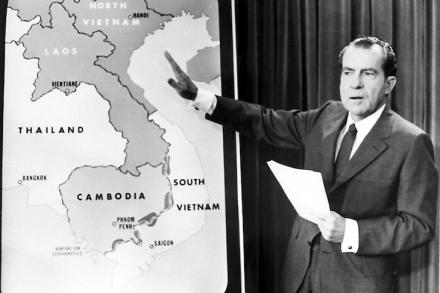
Having worked with former president Richard Nixon during the last years of his life, I’m often asked what his view would be about some present-day issue. Given the rampant comparisons between the calamitous fall of Afghanistan to the Taliban following the Biden administration’s precipitous withdrawal and the disastrous fall of Saigon in 1975, Nixon’s perspective would have been invaluable. He believed, like all strong, effective US presidents, that American strength means greater stability and peace and American weakness begets instability and conflict. With the end of the cold war and the bipolar international system, the US became the global hegemon, nearly solely responsible for a stable global order.

NIxon

Elvis and Nixon, the odd couple

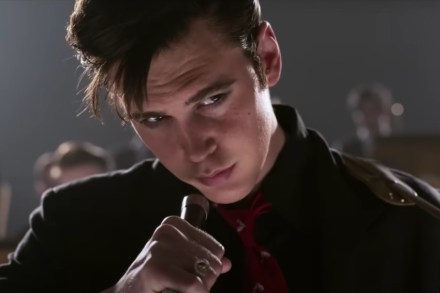
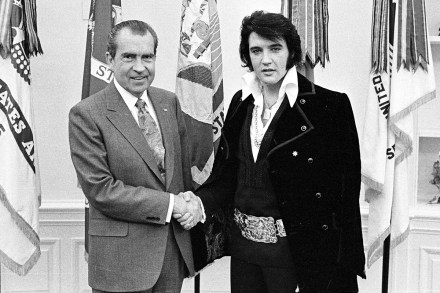
If you were called upon to invent the human antithesis of rock and roll, you couldn’t do better than our nation’s 37th president, Richard Nixon. Habitually clad in a funereally dark suit and dress shoes, even when strolling on the beach, Nixon’s tastes in music ran to the semi-classical strains of Mantovani and the Boston Pops, and a penchant for sitting alone at night brooding to Wagner. I once asked the legendary White House fixer Gordon Liddy what his chief thought, if anything, about pop music. ‘Crap,’ Liddy replied succinctly. In late 1970, the 57-year-old Nixon was at something of a low point. A combination of the continuing war in Vietnam and domestic economic woes proved disastrous for the GOP in that November’s midterm elections.

nixon

Richard Nixon took the high road in 1960. Donald Trump should now

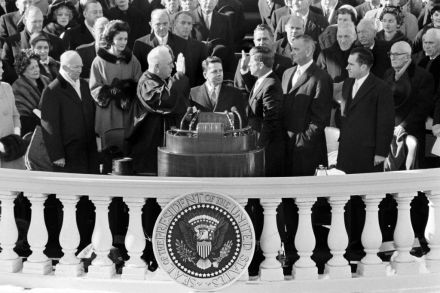
‘You gotta swallow this one, they stole it fair and square.’ That’s a Republican hack speaking to Richard Nixon, as fabricated in Oliver Stone’s 1995 biopic about our nation’s 37th president. The reference is to the 1960 election, in which Nixon’s opponent John F. Kennedy prevailed by 303 electoral votes to his opponent’s 219, although the popular margin was a scant 113,000, or about 0.16 percent, out of 68,837,000 ballots cast.

nixon

Impeachment doesn’t work

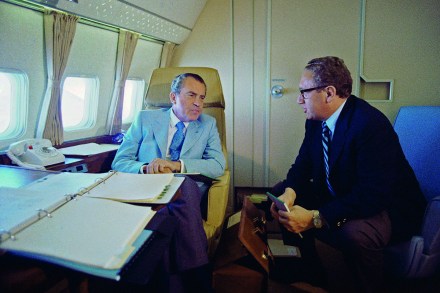
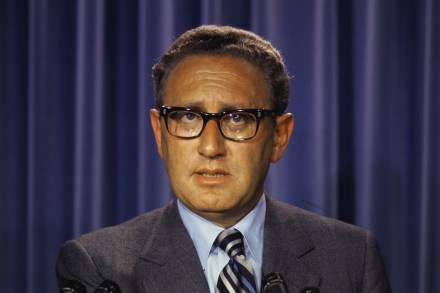
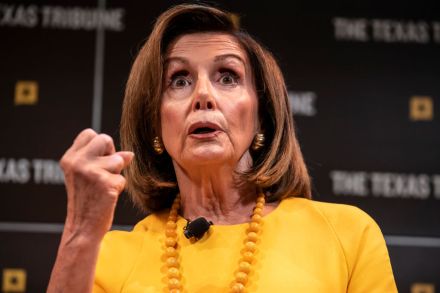
So, impeachment it is. Speaker Nancy Pelosi has announced that the House will begin articles of impeachment against President Donald Trump, and the vote will probably take place before the year is out. The inevitable is, it turns out, inevitable. Henry Kissinger knows something about impeachment. Not because his boss, Richard Nixon, was almost impeached, but rather because Kissinger is a realist. And the reality of impeachment is that it doesn’t work — the threshold for launching impeachment proceedings is low enough that it can be done frivolously, for merely partisan purposes. But the threshold for removing a president from office is so high that it has never been met, and it almost certainly won’t be met in the case of Donald Trump.

impeachment

Impeachment is regime suicide

The Democratic party and the chattering classes are playing a dangerous game with impeachment. Their are two modern precedents — Nixon’s resignation before his probable impeachment in 1974 and Bill Clinton’s actual impeachment in 1998. But neither is comparable to the contemplated impeachment of Donald Trump. All impeachments are partisan, but this one is in doubly bad faith: it has no chance of succeeding in removing Trump, and it has no chance of acquitting him in a way that will strengthen faith in the country’s institutions. The only outcome possible is to confirm for Democrats and Republicans alike the idea that 2020 is a regime-change moment, for reasons that go far beyond Trump.

impeachment rush

Why don’t Republicans care about the environment?

Why do conservatives oppose preserving the environment? Why do they fail to address the pollution of the air we breathe, the food we eat, and the water we drink? Why do they oppose regulating the plastic waste that destroys habitats and causes the extinction of species? If ‘conservative’ means conserving a way of life, then protecting the environment is not only helpful but necessary to conservatism. Instead, the environment has become a partisan issue for the progressive left, while conservatives defend the industrial system which causes pollution, deforestation, and animal extinction. According to the World Health Organization, 91 percent of the world’s population live in places where air quality exceeds health guidelines.

environment

Nixon and me

The day after Special Counsel Robert Mueller arrested and charged me, the Nixon Foundation falsely claimed that I had no relationship with the former president. The Nixon Foundation’s statement is ludicrous. The Foundation is run by people who never actually met Richard Nixon. In 1972, I was a junior member of Nixon’s re-election campaign staff. I have pled not guilty to Mueller’s charges, and am respecting a gag order issued by the judge. But on the question of my warm and extensive relationship with President Nixon, the record must be corrected. In 1972, as the youngest staff member on the Committee to Re-elect the President, I shook the great man’s hand only once, when he toured the re-election headquarters.

roger stone richard nixon

Richard Nixon: the president who made George H.W. Bush possible

After losing a US Senate race, Congressman George H. W. Bush was prepared to head back to the Texas oilfields and a life of relative obscurity when the new Republican president summoned him to Washington. The president thought highly of the young man and wanted to ensure his political future. He offered Bush the Ambassadorship to the United Nations, a position that would give him a chance to remain politically relevant as he burnished his foreign policy credentials. Bush accepted. And with that, Richard Nixon launched George H.W. Bush as a national figure.

george hw bush richard nixon

Republicans should have seen the Brett Kavanaugh ambush coming – Richard Nixon did

‘Who the hell would want to go through this?’ Former president Richard Nixon posed that question to me on October 11, 1991, as we discussed the spectacle of the Clarence Thomas confirmation hearings taking place before the Senate Judiciary Committee and the nation. While I thought Thomas would survive the fusillade of sexual harassment allegations made against him by Oklahoma law professor Anita Hill and win confirmation to the Supreme Court, I also believed that the trauma of the circus might discourage future outstanding candidates from accepting nominations or running for office.

richard nixon brett kavanaugh

50 years after Bobby Kennedy’s murder, the ‘deep state’ still reigns supreme

New York This week 50 years ago saw the assassination of Robert Kennedy, a man I met a couple of times in the presence of Aristotle Onassis, whom some Brit clown-writer once dubbed Bobby’s murderer. (Bad books need to sell, and what better hook than a conspiracy theory implicating a totally innocent man?) I once witnessed Bobby, at a Susan Stein party, asking Onassis for funds — the 1968 election was coming up — and Ari showing Bobby his two empty trouser pockets. Bobby’s assassination did alter American politics. Violence, black anger and despair spilled out on to the streets of American cities.

Encounters with eight presidents

Peregrine Worsthorne, the hugely distinguished British journalist, has died aged 96. He was a wonderful man and a brilliant columnist, who once described his job as 'the articulation of an intelligent, well thought out, coherent set of prejudices'. He also worked as Washington correspondent for The Times of London and the Daily Telegraph. In 2014, he wrote the following piece about meeting various American presidents. It was his last contribution to The Spectator. RIP. I feel a bit of a fraud writing about the ‘presidents I knew’, since journalists do not really get to know the great figures they interview or shake hands with. Indeed the relationship between journalist and great personage is about as false as any relationship can be, since each is trying to make use of the other.

Richard Nixon in September 1968

His dark materials

In this giant, prodigiously sourced and insightful biography, John A. Farrell shows how Richard Milhous Nixon was the nightmare of the age for many Americans, even as he won years of near-adulation from many others. One can only think of Donald Trump. Nixon appealed to lower- and  lower-middle-class whites from the heartland, whose hatred of the press and the east-coast elite, and feelings of having been short-changed and despised by snobs, held steady until their hero and champion unmistakably broke the law and had to resign his second-term presidency. Nixon won a smashing re-election in 1972, even as it was apparent that the White House was awash with skulduggery.

His dark materials

In this giant, prodigiously sourced and insightful biography, John A. Farrell shows how Richard Milhous Nixon was the nightmare of the age for many Americans, even as he won years of near-adulation from many others. One can only think of Donald Trump. Nixon appealed to lower- and  lower-middle-class whites from the heartland, whose hatred of the press and the east-coast elite, and feelings of having been short-changed and despised by snobs, held steady until their hero and champion unmistakably broke the law and had to resign his second-term presidency. Nixon won a smashing re-election in 1972, even as it was apparent that the White House was awash with skulduggery.