Richard ii

The Great Uprising: Doom Painting, by A.K. Blakemore, reviewed

From our UK edition

We can never know whether a historical novelist really gets it right, but there are clear missteps. One is ascribing anachronistic progressive attitudes – feminism or gay rights – to eras when they would have been unthinkable. Another is ignoring the vast impact of religion not just in everyday life but in the very psyche of historical figures. It’s not a mistake made by A.K. Blakemore in her weighty account of the torrid fortnight of the 1381 poll tax riots, also known (misleadingly) as the Peasants’ Revolt. The festivities of the church play a significant part in the rioters’ planning, with a culminating march on London at Corpus Christi, traditionally a day off work with exploitable drunkenness.
It seemed like the end of days: the eerie wasteland of 14th-century Europe

From our UK edition

In the early 1370s, Louis I of Anjou, the second son of the French king, commissioned a vast series of tapestries, now on display at the Château d’Angers, representing the Book of Revelation. In the middle of the narrative is a group of men on horseback wearing distinctively English armour; one wears pheasant feathers in his helmet – another mark of English soldiery. As for the Apocalpyse itself, its horsemen were led by Edward III. Edward’s 50-year reign dominated 14th-century England. But, as we see in Sceptred Isle, Helen Carr’s gripping narrative account of the period, Edward himself was dominated by the dream of taking the French crown. It led him to launch two great invasions, one in 1346 and the other in 1359.

Shakespeare as cruise-ship entertainment: Jamie Lloyd’s Much Ado About Nothing reviewed

From our UK edition

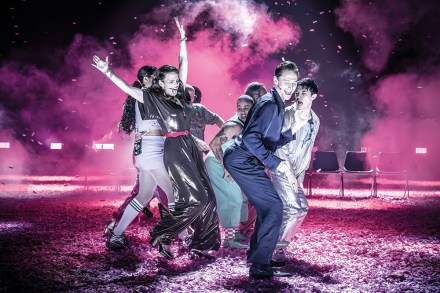
Nicholas Hytner’s Richard II is a high-calibre version of a fascinating story. A king reluctantly yields his crown to a usurper who wants his violent revolt to seem like a peaceful transfer of authority. This delicate, complex narrative is presented as a boardroom power struggle in corporate Britain. Snappy suits for the dukes and princes. Commando uniforms when they take to the battlefield. Jonathan Bailey (Richard) starts as a swaggering, coke-snorting yuppie who dreams of extending his realm overseas with someone’s else money. Disaster strikes, the crown slips. Calamity sharpens his awareness and he becomes a lyrical philosopher who laments the bewitchments and pitfalls of power.

The mystique of Henry V remains as powerful as ever

From our UK edition

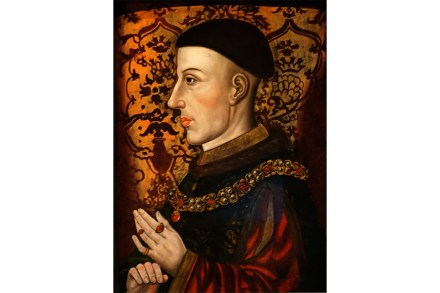
A rare portrait of King Henry V of England painted in the early 16th century shows him in profile. This unusual angle may have served two purposes. One was as a rather outdated emulation of Italian profile portraiture, with its blunt references to the might of imperial Rome; the other was to hide a disfiguring scar from a dangerous wound suffered at the battle of Shrewsbury in 1403. Henry was only 16 at the time of the battle, and it was a brutal way to earn his spurs. An arrow had penetrated his cheek six inches and lodged at the back of his skull. He was lucky to have survived both the wound and its treatment. But Henry was on the winning side; the defeated forces of Henry ‘Hotspur’ Percy were cut down ruthlessly.

The real Dick Whittington and the folklore legend

From our UK edition

In that dark world the air pulsed with the melancholy clangour of bells. If, as legend has it, the chimes of St Mary-le-Bow told Dick Whittington to turn again, then what were they saying to all the other medieval Londoners, dwelling in houses so crowded on fouled streets that the sun could not break through? In the shadow of implacable plague, even London’s super rich were piercingly aware of life’s fragility. Their homes were scented with lily, lavender and the smoke of applewood. They had to be. The city was a close maze of abattoirs and tanneries and streams sluggish with excrement. Yet here, too, were brightly ornamented religious houses and gardens rich with symbolism and medicinal herbs.