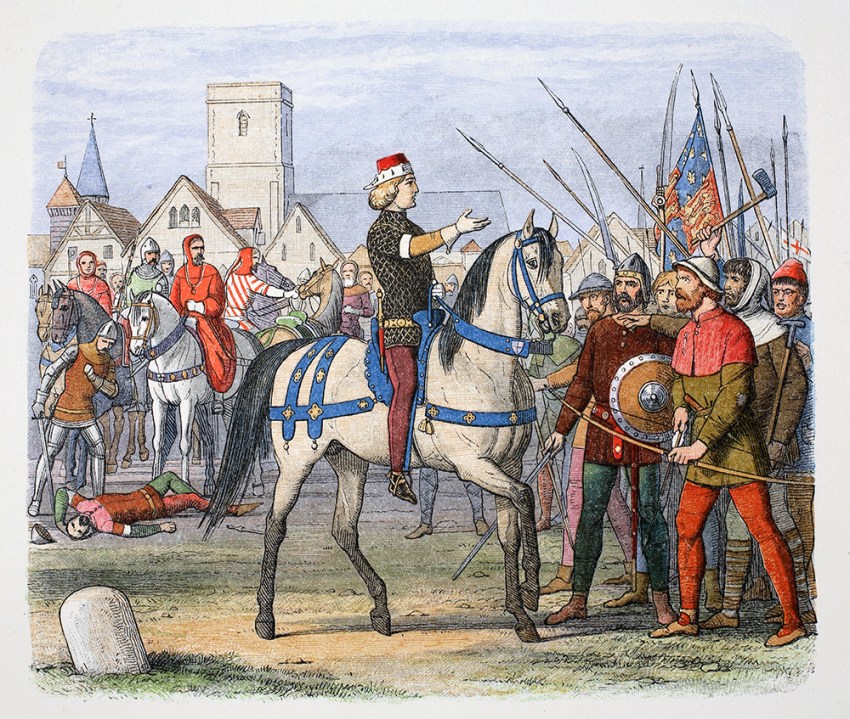
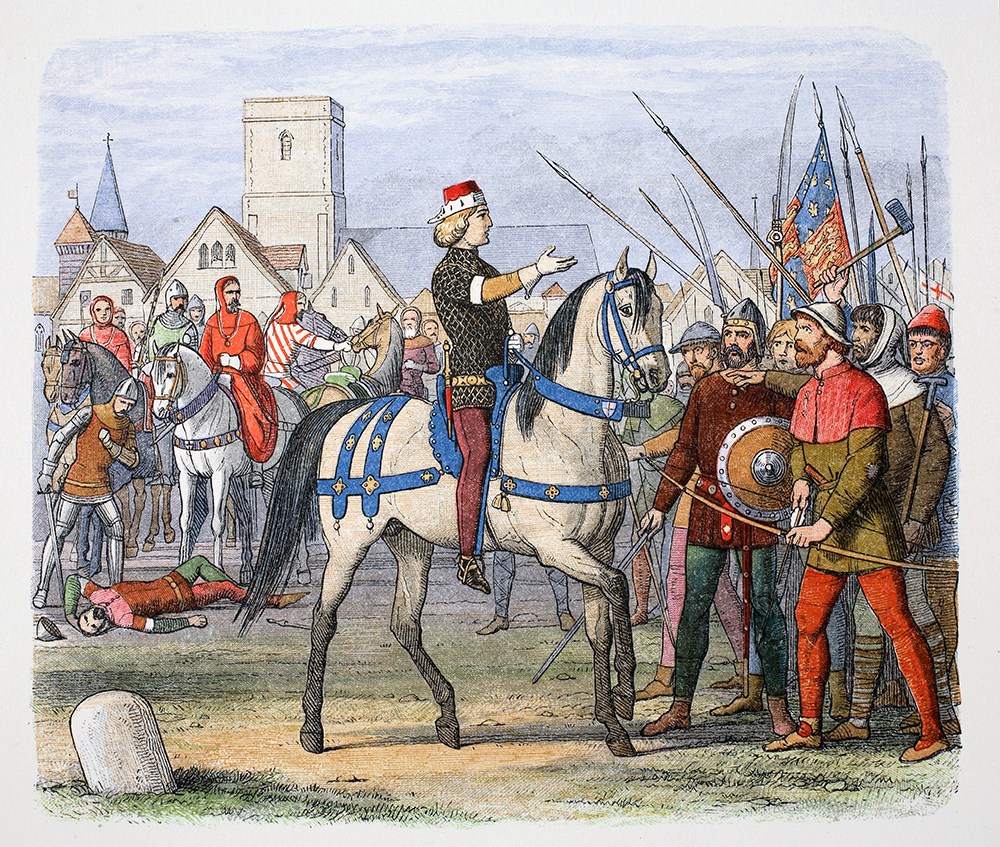
We can never know whether a historical novelist really gets it right, but there are clear missteps. One is ascribing anachronistic progressive attitudes – feminism or gay rights – to eras when they would have been unthinkable. Another is ignoring the vast impact of religion not just in everyday life but in the very psyche of historical figures. It’s not a mistake made by A.K. Blakemore in her weighty account of the torrid fortnight of the 1381 poll tax riots, also known (misleadingly) as the Peasants’ Revolt.
The festivities of the church play a significant part in the rioters’ planning, with a culminating march on London at Corpus Christi, traditionally a day off work with exploitable drunkenness. The marchers pass Canterbury pilgrims; the young King Richard II, when he’s not pouting or lounging, occasionally wonders what it means to be God’s anointed. Wat Tyler assumes he’s headed for hell, while his holy associate John Ball is a mix of firebrand preacher, motivational speaker and therapist.

Blakemore has other ways of attuning the reader to a very different worldview. The text is regularly broken up by symbols of the sun and moon, sometimes conjoined, marking the passage of time and emphasising that looking up at celestial bodies was a handy indicator thereof (as well as the tolling of church bells). The text is sprinkled with cries of ‘Benedictee’ and phrases in Latin and French. Blakemore’s joy in language is clear from the ripe vocabulary: ‘flocculent’, ‘rutilant’, ‘puckfoisting’, ‘wrongknobbed’. There is gay love, and a character who is aromantic, but this is not presented as an identity in modern terms.
Doom Painting speaks to the live issues of taxation, inequality, injustice and foreign wars today. Robert Crane, forever marked by his soldiering in France with the Black Prince (one might almost say he has PTSD), takes on the pseudonym Wat Tyler – his father was a tiler and someone asks ‘what’ he’s going to call himself. Characters move like chess pieces around southern England; Tyler, the King, William Walworth, the Lord Mayor of London, and Simon Sudbury, the Archbishop of Canterbury, will fatefully converge. But Blakemore skilfully suggests that many outcomes were possible and keeps the tension high.
Among the many beauties of the novel are the tender, detailed descriptions of the Essex and Kent landscape and its wildlife. You’d almost think Blakemore was there in 1381. But of course we’ll never know if she has got it right.






Comments