Restaurants

Keith McNally’s memoir is strangely unappetizing

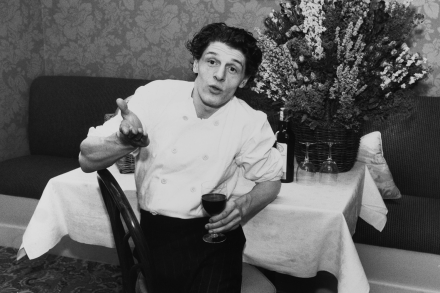
Harvey Weinstein has a memorable walk-on role in Keith McNally’s memoir I Regret Almost Everything. Taking a break from being New York’s most celebrated restaurateur, McNally wrote and directed a film called End of the Night that was screened at Cannes in 1990. Its auteur hoped that Weinstein, who distributed the previous year’s Palme D’Or-winning picture Sex, Lies, and Videotape, would warm to it. He was blunt: “I didn’t like your film and I’m not going to buy it.” As McNally swallows the shot, there’s a chaser. “But I’d still like to come to the after-party.” McNally admires Weinstein’s honesty, if little else. So I’m going to be straight, too. I didn’t enjoy I Regret Almost Everything. This is a shame, because the ingredients are promising.
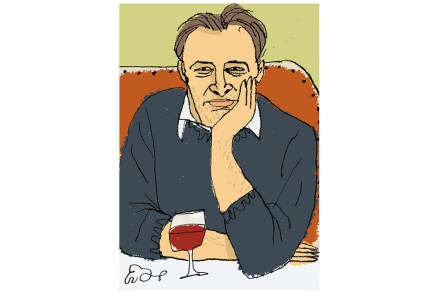
McNally
Palm

The rise of millionaires, valet parking and facelifts in Palm Beach

The two favored topics of conversation in Palm Beach are money and the place itself, so the latest survey by Henley & Partners, a specialist service which advises wealthy clients where to live, is doubly welcome. It shows that Palm Beach County is among the top five fastest-growing “wealth hubs” in the world, outpacing even Dubai and Silicon Valley. This latest report shows that Palm Beach County cities (that is, Palm Beach, the island off the mainland, and West Palm Beach, on the mainland, separated only by three drawbridges) experienced a 112 percent increase in millionaire residents between 2014 and 2024.

My Marco Pierre White obsession

From our UK edition

Pierre White, Marco. Chef. Michelin stars: five (all handed back). Wives: three (all handed back). Restaurants owned: number unclear. Hours in a cell: 14. Party: Reform. Brands promoted: Knorr stockpots, Lidl, P&O Cruises. Protégé: Gordon Ramsay. YouTube views: hundreds of millions. Current residence: the countryside, somewhere near Bath, far far away from anyone who tries to talk to him. The obituaries will all call Marco Pierre White a ‘rock star’, and they will be correct. In the 1980s, he was all shaggy verve and sweat and ash. He ‘changed the game’ – as they all say – not so much through his cooking, but through his good looks.

Long live the long lunch!

From our UK edition

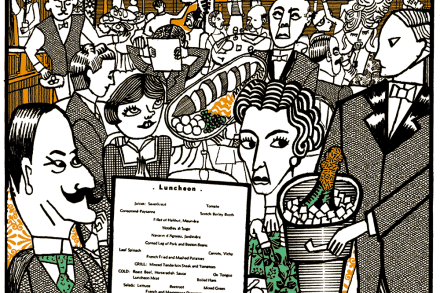
I keep on my bedside table, where others might place religious texts, Keith Waterhouse’s seminal The Theory and Practice of Lunch. Waterhouse, that magnificent chronicler of Fleet Street’s liquid lunches and disappearing afternoons, understood what modern efficiency cultists cannot: that civilisation is measured not by what we produce but by how elegantly we pause. His gospel preaches that a proper lunch requires ‘two-and-a-half hours of quality time at a quality establishment’, a commandment I try to observe with monastic devotion at least twice a week. The book’s spine is cracked at the chapter entitled ‘The Lunch Bore’.

Northern Europe doesn’t get salads: Claro reviewed

From our UK edition

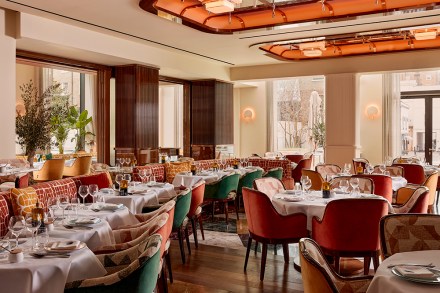
Claro is at 12 Waterloo Place, St James’s, and, when I tried to find out what it used to be – it has the energy of a bank – I found an advert from the Crown Estate offering the lease for a ‘retail or wellness opportunity’. 12 Waterloo Place was pictured in pen and ink, with a woman holding a yoga mat idling past, and a woman in cycling shorts hanging back. I wonder why the Crown Estate is pushing wellness, which I think is being rich, bored and female while not dying. (I have never heard a woman with a good book talk about wellness.) The price is upon application. I looked further: 12 Waterloo Place is 20th-century Baroque pastiche, it was a bank, and it wants to be a wellness opportunity. It should talk to the ducks in St James’s Park. They live inside a wellness opportunity.

Trump shock, cousin marriage & would you steal from a restaurant?

From our UK edition

39 min listen

This week: Trump’s tariffs – madness or mastermind?‘Shock tactics’ is the headline of our cover article this week, as deputy editor Freddy Gray reflects on a week that has seen the US President upend the global economic order, with back and forth announcements on reciprocal and retaliatory tariffs. At the time of writing, a baseline 10% on imports stands – with higher tariffs remaining for China, Mexico and Canada. The initial announcement last week had led to the biggest global market decline since the start of the pandemic, and left countries scrambling to react, whether through negotiation or retaliation.

Smart even for Chelsea: Josephine Bouchon reviewed

From our UK edition

Josephine is a Lyonnaise bistro on the Fulham Road from Claude Bosi. It is named for Bosi’s grandmother and is that rare, magical thing: a perfect restaurant. Bosi runs Bibendum (two Michelin stars, and in Michelin House) and Brooklands at the top of the appalling Peninsula hotel (two Michelin stars). He opens a second Josephine this month in Marylebone, which needs it since the Chiltern Firehouse, always a restaurant that felt like Icarus with a kitchen, burnt down to rubble. I haven’t eaten in Brooklands – I wish the Peninsula were an island, so that it could float to Victoria and then away, being an oligarchic monstrosity. But my instinct is: this is the good stuff.

Would you steal from a restaurant?

From our UK edition

‘You wouldn’t steal a car…’ began the early noughties anti-piracy video. ‘You wouldn’t steal a television… You wouldn’t steal a handbag.’ No, but it seems from reports from restaurants, you might slip some silverware into a handbag if you’re out for dinner. In February, Gordon Ramsay revealed that nearly 500 cat figurines had been stolen in one week from his latest restaurant, Lucky Cat. The maneki-neko cat models – said to bring good luck – cost £4.50 each, which makes that a loss of more than £2,000 for the restaurant in just seven days. What is it about dining out that means we think pocketing property is acceptable?

A creche for nepo babies: the River Cafe Cafe reviewed

From our UK edition

The River Cafe has grown a thrifty annexe, and this passes for democratisation. All restaurants are tribal: if dukes have Wiltons, ancient Blairites have the River Cafe. It is a Richard Rogers remake of Duckhams oil storage, a warehouse of sinister London brick, and a Ruth Rogers restaurant. Opening in 1987, it heralded the gentrification of Hammersmith, which has stalled now that Hammersmith Bridge is closed to traffic and sits dully on the Thames, a bridge of decline. The River Cafe appears, thinly disguised, in a J.K. Rowling Cormoran Strike novel where a literary agent murders her client because he writes Swiftian pastiche, and it is a good place to watch the Boat Race. It is intensely disorientating until sunset.

A great-day-out cafe that’s good value: Kenwood House reviewed

From our UK edition

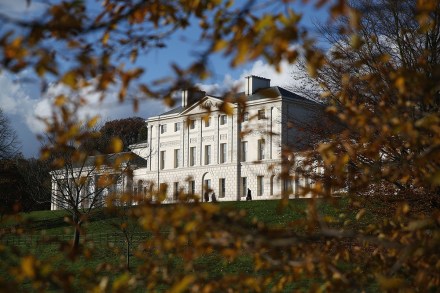
The immaculate bourgeois socialists of north London – that is not code for Jews – like to eat and drink in the former servants’ quarters of Kenwood House, because this is a mad country.  Kenwood is beautiful. It is Hampstead’s best house, standing at the top of the heath, near the head waters of the River Fleet, the river of the journalists. Further down the hill the immaculate bourgeois socialists gambol in the swimming ponds, which is apparently a fashionable thing to do. I prefer the lido, but I am not afraid of working-class teenagers. Hampstead Heath is an excitable woodland.

The restaurant where time (and prices) have stood still

From our UK edition

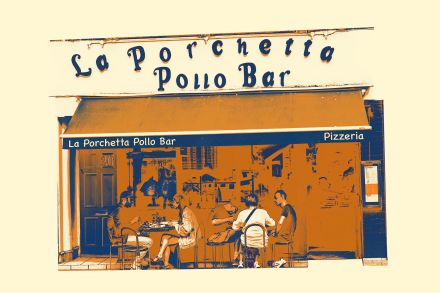
Walking into this crowded and clattering restaurant for the first time in more than 30 years, two things strike me almost immediately: 1) it seems to be largely unchanged and 2) the prices have scarcely risen. I can’t claim to have tried every wine list in Soho, but I can tell you with certainty that this is the first time in a very long time that I have seen a glass of wine for under £5 in the West End. But, incredibly, here it starts at £4.50 – with cocktails from £8.The restaurant is Pollo, as it’s still popularly known, or La Porchetta Pollo Bar as the sign outside calls it. It crams 100 covers on to two floors at the eastern end of Old Compton Street, just behind the Cambridge Theatre, in Soho.

The tiramisu is one of the loveliest things I’ve eaten anywhere: La Môme London reviewed

From our UK edition

La Môme is the new ‘Mediterranean’ restaurant at the Berkeley, Knightsbridge’s monumental grand hotel. It has changed, as all London’s grand hotels have changed: it is Little Dubai in the cold and the chintz is on the bonfire. Fairy lights hang from the awning of the entrance, as if in an eternal Christmas. I barely recognise it, though I ate an impersonation of a mandarin in its overwrought Instagram-friendly bakery two years ago, and it was inferior to a real mandarin. I cling to that. Designers must keep busy: this means grand hotels are always getting renovated – it’s life of a kind. The lobby feels gold, though that may only be an impression.

Have I been blacklisted by the binmen?

From our UK edition

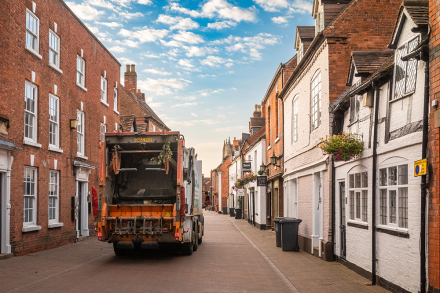
Monday, and Camden council have yet again failed to empty my food waste bin. They never miss my rubbish or dry recycling – it’s only ever the smelly stuff. I give my neighbour’s brown bin a little kick. Emptied! This feels personal. I call the council. ‘Look, this is a nightmare,’ I say. ‘This is the second week in a row. Are we on a blacklist?’ Pause. ‘Our operatives are too busy to keep lists,’ says the lady. Hang on – you mean if they weren’t so busy, they would?

The great Valentine’s Day con

From our UK edition

When a press release for solar-powered sex toys popped into my inbox on 3 January, it dawned on me it could only mean one thing: we were already in the build-up to Valentine’s Day. A few days later, it was followed by the new aphrodisiac version of the Knorr stock cube, Knorrplay, and a set of champagne glasses adorned with red hearts. A couple of years ago I found myself overnight in Newcastle, with a male colleague. We were working hard on a harrowing story and decided a nice meal out would cheer us up. Not a chance in hell: neither of us had realised that the dreaded Valentine’s Day was upon us. Every single restaurant, from low-rent kebab joints right up to Michelin-starred gaffs, was full to the rafters with courting couples.

How to get a table at Audley Public House

From our UK edition

The Audley Public House is on the corner of North Audley Street and Mount Street in Mayfair, opposite the Purdey gun shop where you can buy a gun and a cashmere cape, because the world has changed. The Audley is a vast pale-pink Victorian castle, and it meets Mayfair in grandeur and prettiness. If the Audley looks like it could puncture you with an ornamental pinnacle, it also seems frosted with sugar – but that is money. This is the tourist Mayfair of the affluent American imagination: the pharmacies and grocers have gone, replaced by fashion (Balmain, Simone Rocha) and the spirit of Paddington Bear. Woody Allen shot Match Point in the Audley, and that is the most normal thing about it now.

The best way to approach sake 

From our UK edition

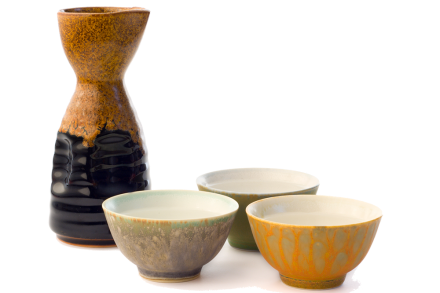
We were discussing civilisation, as one does, and its relationship with cuisine. Pasta in Italy, paella in Spain, the roast beef of Old England; wurst in Germany, burgers in the States –though with those latter examples we are moving away from the concept. What about Japan, a complex society which is full of paradoxes? For three-quarters of a century, the Meiji Restoration was the most successful revolution since the Glorious Revolution itself. It was part of a process which opened Japan to western influences and vice versa. Rather as in the UK, ancient forms were preserved, which helped to ensure social stability during a period of rapid change. Japan often bewilders westerners.

Can you still afford to eat out?

From our UK edition

Many of us will remember, misty-eyed, how things changed around the turn of the century. How Britain ceased to be a nation brutalised by rationing and rissoles and instead blossomed into a utopia of celebrity chefs, endless food TV and a population seemingly willing and able to eat out most nights of the week. We no longer regarded ourselves as poor cousins to European nations with ‘cuisines’ – hell, Michelin stars glittered from every orifice. We had the uncalibrated zealotry of converts. In the years following the pandemic, UK hospitality came blinking back into the light, adopted a collective fixed grin and the can-do attitude of small businesspeople, and did some amazing things while trying to get back to that prelapsarian state of glory.

Is a soul the only thing unavailable in Harrods?

From our UK edition

The Harrods bookshop, which I browse for masochistic reasons, is mesmerising: an homage to the lure of ownership. The first book I find is called, simply, 150 Houses. Is that enough? Then I find Luxury Trains, the Porsche Book, the Lamborghini Book and the Jaguar Book. Then I find a book designed for a lifelong self-guided tour of the world of James Bond, who is a fictional British civil servant. Then I find books called Dior, Balmain, Prada and Gucci. I didn’t know they did words. I want to tell you that the Harrods bookshop is entirely advertorial for the life I can’t afford, but that would be unfair. Because I also find a copy of Mansfield Park in the same colours as a Minion: custard yellow and bright blue.

I’m becoming too old to hold a Les Paul

From our UK edition

My beloved 1967 Gibson Les Paul Goldtop guitar is now locked away until December at the earliest. For the past eight years, I have had the terrifying privilege of dragging my axe (as we guitarists call our instruments) on stage to perform in a series of Christmas gigs (as we musicians call such performances) with the celebrated prog rock band Jethro Tull. Ian Anderson, who leads the band, has for years generously staged a series of pre-Christmas concerts to raise funds for English cathedrals. Our 42 cathedrals are some of the greatest expressions of creativity, imagination and hope (more on that later) which our nation has ever produced. They are also mostly bloody freezing, although this year the magnificent, but sadly underrated, Bristol cathedral approached cosy conditions.

In defence of British food

From our UK edition

Recently in Spectator Life Rob Crossan laid bare ‘the unpalatable truth about British food’ – namely that it is, er, in some establishments he’s been to, done badly. Leaving aside the fact he’s looking for his fish and chips in the wrong place (outside the M25 it wouldn’t be such a struggle), encountering a few dodgy versions of British fare is not a good reason to sit idly by and allow our culinary heritage to disappear. British food can compete with the world's best – if we allow it to. In many ways we have had to develop a thick skin when it comes to the loss of treasured bastions of food and drink.