Reportage

The power of disinformation is that it’s so readily believed

From our UK edition

On 27 November 1960 African and Indian diplomats visiting the UN in New York opened their mail to find a leaflet from the Ku Klux Clan: A foul stench spreads out from the East River and hangs over New York like a pall — the greasy sweat of the Black Races and the Yellow Races of Asia which have invaded the United Nations. It is enough to make every White Protestant American vomit. It ended with a threat: the delegates better stay close to the UN buildings and the ‘brothels of Harlem, and not defile the hotels and restaurants of the White City’. FBI officers investigating the correspondence noted a couple of oddities. First, some of the language was off: it called for delegates to be ‘tanned and feathered’ rather than ‘tarred and feathered’.


The Big Tech firms are dividing the world between them

From our UK edition

To look upon a freshly painted wall is to behold a smooth surface; to look at it through a magnifier is to see a rough and irregular landscape — but turn the magnification up sufficiently and see it become regular again, a geometric matrix of atoms held in molecular bonds. Keep magnifying and you enter the unimaginably messy realm of the subatomic, a weird place of eldritch geometries and smeared-out, probabilistic motion. The world is smooth and rough, orderly and messy, all at once, depending on how closely you look.

Splashing the cash at VIP nightclubs is now the favourite recreation of the rich

From our UK edition

The world described in this book is weird enough anyway, but reading about it during lockdown is positively surreal. It’s about VIP nightclubs, mainly in New York, but also in Miami, Cannes, St Tropez or wherever rich people congregate. Ashley Mears is a professor of sociology, as she likes to remind us with references to Bourdieu, Durkheim, Veblen, etc, but mainly she is a very good reporter. The reason she was allowed into the VIP clubs is that she used to be a model and can still pass as one, though actually too old for admission (at 31) by most club standards. But it amused some of the promoters to have a professor who looked like a model taking an interest in their work. Some definitions first.

Our recent stockpiling is nothing to what ‘preppers’ lay in store

From our UK edition

This book could not have been published at a better time — nor, in a way, at a worse time. Better, because we are now living with the threat of disaster looming over us and society is being radically transformed; worse, because the apocalyptic scenarios Mark O’Connell writes about include such quaint, marginal topics as catastrophic climate change, nuclear devastation and the concern of ‘preppers’. These are the men who build bunkers in the countryside and fill them with enough tins of protein sludge to keep them going through whatever unspecified calamity brings about the end of the rule of law. There’s not a great deal here about a global pandemic. That said, there doesn’t have to be.

The trade in cadavers is rife with scandal

From our UK edition

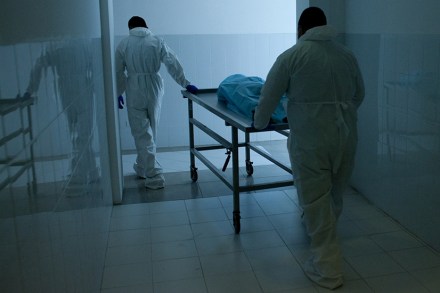
John Troyer, the director of the Centre for Death and Society at the University of Bath, has moves. You can find his interpretative dances punctuating a number of his lectures, which go by such arresting titles as ‘150 Years of the Human Corpse in American History in Under 15 Minutes with Jaunty Background Music’ and ‘Abusing the Corpse Even More: Understanding Necrophilia Laws in the USA — Now with more Necro! And more Philia!’ (Wisconsin and Ohio are, according to Troyer’s eccentric looking and always fascinating website, ‘two states that just keep giving and giving when it comes to American necrophilia cases’.) Troyer’s budding stand-up career has taken a couple of recent knocks.

A dark journey into a fanatical underworld

From our UK edition

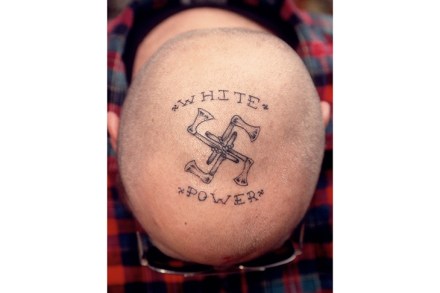
Two years ago, the counter-extremist analyst Julia Ebner decided she needed to delve deeper into the extremists trying to disrupt and destabilise our democracies. So the Austrian researcher invented five identities and joined a dozen secretive digital worlds of white nationalists, radical misogynists and jihadi women to explore their networks, their strategies and their recruitment techniques. This sobering book tells the tale of her journeys into a swampy underworld filled with fanatics and fantasists. Many of the people she came across seem like the saddest of losers. She joins a white nationalist dating site — motto ‘Love your race and procreate’ — where people admit they received ‘negative’ feedback on mainstream forums.

Tales from behind the veil: Moroccan women talk about lies and sex

From our UK edition

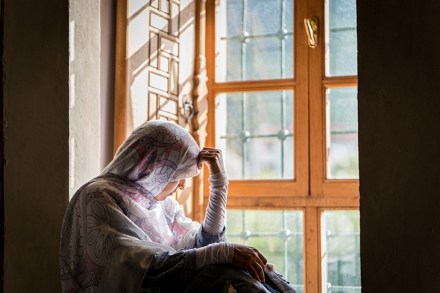
The Moroccan-born Leïla Slimani has made her name writing novels of propulsive intensity. Lullaby, the story of a nanny who kills the two children in her care, was the first to be published in English (it was also the most read book in France in 2016). Adèle, about a sex addict who takes little pleasure from increasingly violent and self-destructive sexual encounters, came next. It was while on a book tour of Morocco discussing Adèle that Slimani hit on the idea for Sex and Lies. Many young women approached her at readings, wanting to tell her about their own sexual experiences, and it is these stories — that ‘shook me, upset me, that angered and sometimes disgusted me’ — that she has collected in this slim volume.

‘The most powerful and disturbing book that I have ever read’

From our UK edition

I had assumed, after 40 years of researching and writing about war in the 20th century, that I was prepared for just about any horror. But Christina Lamb’s research, into the mass rape of women and young girls in more recent wars and ethnic cleansing shook me to the core. This is the most powerful and disturbing book that I have ever read, and it raises important questions. Lamb takes us from one zone of racial and religious aggression to another. The attackers have different motives and each persecuted minority is culturally unique, yet the pain and suffering of their victims are terrifyingly similar.

The horror of Honduras

The Spanish journalist Alberto Arce worked for Associated Press in Honduras in 2012 and 2013. After a year, he says: ‘My wife and daughter left me. It was the right choice.’ Arce stayed on in the capital, Tegucigalpa, ‘fighting against addictions, sadness and depression’. He believes he ‘won’ that fight, ‘but only because each morning I counted down the days until I could leave’. So: Honduras, says Arce, is bad. How bad? He tells us that ‘Tegucigalpa is the most dangerous capital city in the world without a declared war.’ And that ‘in 2012 and 2013, more people were murdered in Honduras than in Iraq, even though the population in Honduras is three times smaller’. Also that in 2012, there were 7,100 murders.