Remote work

Why cities have lost their appeal

Over the past half century, media and academic sources repeatedly suggested that increasingly dense cities would dominate the future. Places such as London, San Francisco and Chicago would dominate an economy. Today, this assessment seems grossly dated. Even in the pages of the urbanista New York Times there are widespread fears of an “urban doom loop.” But this, too, is a stretch. Great core cities will not go the way of post-imperial Rome, but their role is being recast as the urban frontier shifts increasingly to the periphery. What we are seeing mirrors H.G. Wells’s vision. He predicted that most economic life, and most families, would shift to the suburbs and exurbs.


cities

Adopting the Great Loop mindset

When I asked Malinda and Keith Martin when a good time for an interview would be, Malinda wrote back, “We are having drinks on the back deck, so now would be fine.” I was having drinks on my front porch, and I knew already the conversation would be more than fine. The Martins are from Huntsville, Alabama, and started down the Tennessee River in their 1987 forty-three-foot Hatteras motor yacht — the Sea Cottage — last December on their quest to become “Loopers.” In late May, when we spoke, they were anchored in North Carolina. A person earns the title of “Looper” when he completes the Great Loop, which America’s Great Loop Cruisers’ Association (AGLCA) explains is “a circumnavigation of the eastern US and part of Canada.

Loop

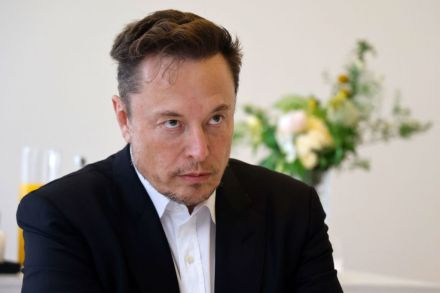
Is Elon Musk’s war on remote work moral?

Remote work isn’t just killing productivity, according to Elon Musk: it's morally wrong. In an interview with CNBC on Tuesday, Musk accused at-home workers of hypocrisy for expecting those in service and manufacturing industries to go into work. The “laptop class” needs to get off its “moral high horse” with its “work-from-home bullshit,” Musk said.  "You’re going to work from home and you're going to make everyone else who made your car come work in the factory? You're going to make the people who make your food that gets delivered that they can't work from home? The people that fix your house — they can't work from home? But, you can? Does that seem morally right?" Musk asked. “That’s messed up.

elon musk remote work biometric data

The deep sleep state

America may be falling behind in manufacturing everything from household goods to textiles and semiconductors, but there is one sector of innovation where these United States will never be surpassed: defrauding the federal government. Sure, Beijing’s Machiavellian overlords may steal some missile or naval tech here or there — more often than not here and there — but they couldn’t come up with deploying fake concrete in public works projects or, say, building the Middle East’s largest women’s studies department in the name of defeating terrorism. We Americans cannot be topped in our capacity to fleece the taxpayer. I witnessed one such act on summer vacation and marveled at its creativity and simplicity.

federal

The post-Covid mental health crisis

Recent mass shootings have reminded us of just how much gun violence has surged since Covid. The record of 45,222 Americans dying from gun-related injuries in the first year of the pandemic could well be topped in 2022, with more than 12,000 fatally shot since the end of April. Many rightly condemn progressive district attorneys in cities for failing to condemn the increased bloodshed. Yet the uptick in violence has been uniform across the nation, plaguing rural counties as much as urban ones, which is why most psychological experts put the blame squarely on the emotional residue of lengthy Covid lockdowns.

moran

Heading west to escape liberal tyranny

As our nation navigates a “return to normalcy” in a post-Covid world, one return most workers won’t be making is to the office. And as an estimated 40.7 million American professionals plan to be working fully remotely within the next five years, expect the great political divide to widen as liberals and conservatives move farther apart, both ideologically and physically. With working from home becoming the norm, “home” for many people is changing. “Anywhere from 14 to 23 million Americans are planning to move as a result of remote work,” an Upwork.com study taken at the height of the pandemic found. “[N]ear-term migration rates may be three to four times what they normally are.” Where are workers moving to? Away from cities, for starters. A majority (52.

Why a post-Covid world might not be so bad

No one need ask why the strict public health regime to manage Covid — masks, mandates, quarantines, and required inoculations — has begun to collapse. Between angry truckers, unfavorable polling for continued lockdowns, the perception of a Wuhan coverup, changing reports of vaccine effectiveness, and declining hospitalizations, even President Biden and blue state governors realize they have but two options: pretend to be leading a return to normalcy or face an unpredictable grassroots rebellion. The interesting question for Americans is not why the sudden prospect of a return to normalcy but what “returning to normalcy” really means.

The death of the phone call

Scientifically, the jury is still out on whether women are better multitaskers than men. A 2013 study suggested that women do, in fact, outperform men, while a 2019 German study found no demonstrable differences between the sexes. In my entirely unscientific opinion, I think the stereotype is real. Women are engaged in all kinds of things at the same time. At any given moment, I’m engrossed in my work while also contemplating the contents of my freezer, making a mental note to order more diapers, and simultaneously clipping my daughter’s toenails. A New York Times piece on why women do the household worrying described a woman’s mental load as a “combination of anxiety and planning that is part of parenting.

zoom

The importance of formality

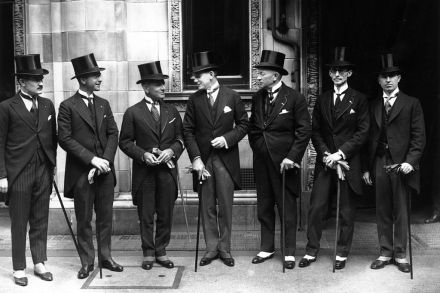
Over the past six decades Homo sapiens occidens has grown progressively more informal in matters of clothes, language, speech, manners and social behavior to the point where, having lost any form whatever, it has devolved into Homo slobus, and democracy into slobocracy. This departure from formality has occurred across every class of society and every occupational and social category — politics, corporate business and finance largely excepted — including what remains of high society, private schools and clubs, and the churches. The lockdowns that followed from the pandemic contributed immeasurably to an already precipitous momentum.

formality