Religion

How LSD helped me find God

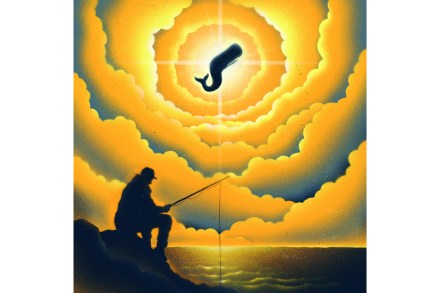
The first time I took LSD was alone on Christmas Day in a snowed-in Montana cabin. I watched my skin crawl and the walls melt. It was the first time since childhood I didn’t hate my own body, and a nice break from the depressing bioethics I was studying in school. I took deep breaths and stretched. As the effects took hold, I watched illustrations fly out from a gorgeous, tattered copy of Mark Twain’s biography of Joan of Arc. Four hours later, after smoking an entire pack of cigarettes, I was convinced I was descending to hell. I watched fake flames lick the yellow wallpaper. It was miserable and listening to Nick Cave didn’t help. At dinner with friends later that night, the elk roast resembled human meat and the bread rolls made to commemorate St.

lsd
passion

Christ stopped at Oberammergau

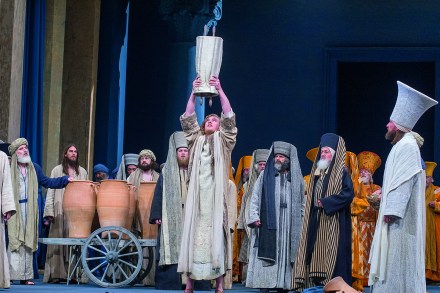
Getting there was penitential. The coach from my home in Bad Ischl, Austria, to Salzburg stopped a hundred times, to let on women in dirndls carrying shopping baskets. The train to Munich was subject to delays, messing up subsequent connections. The S-Bahn linking Ostbahnhof with a place called Pasing suffered a derailment, so I had to struggle backwards to the Hauptbahnhof, only to discover my alternative train to Murnau was canceled, then reinstated on a distant platform, resulting in mass confusion. (The Germans are bewildered very easily when things stop going to plan.) At Murnau there was a long wait for the two-carriage shunter service to Unterammergau, outside Oberammergau, where it was by now pitch dark and pouring with rain.

Is losing God making America miserable?

The number of Americans who believe in God has reached an all-time low, according to a Gallup survey that’s been tracking our nation’s “values and beliefs” since 1944. For a God fearin’ woman such as myself, it’s a disheartening statistic. But we are told never to abandon hope, and recent events — the Supreme Court rulings against abortion and in favor of prayer, a million swing voters switching their registrations to Republican, Keeping Up with the Kardashians finally airing its last season — betoken a more God-centered future. Gallup reports: The vast majority of US adults believe in God, but the 81 percent who do so is down six percentage points from 2017 and is the lowest in Gallup’s trend.

god

An intense slab of religiosity: Nick Cave’s Seven Psalms reviewed

From our UK edition

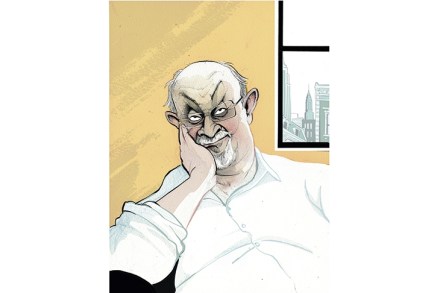
 Grade: B There has always been a seriousness and intelligence about Nick Cave quite at odds with that which usually attends to the rancid, tottering, old tart that is rock music, so there should be no surprise that he’s left it completely behind. This is a collection of seven spoken word prayers to that entity with which the Australian has had a long and not always straightforward relationship, God. They are accompanied by minimalist synth and piano compositions – kind of three-note fugues – from collaborator Warren Ellis and none of them clocks in at more than two minutes.

How not to live a life

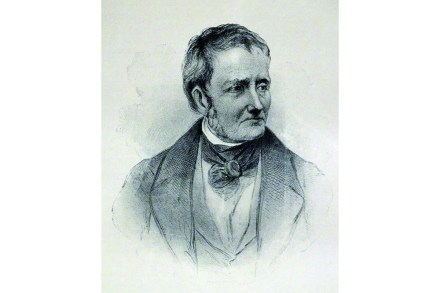
When Thomas de Quincey wrote Confessions of an English Opium-Eater in 1821, he could not possibly have guessed what he would set in motion. Over two hundred years later, the addiction memoir looks different: less subversive, more sentimental, undeniably more commercial. Since the advent of Alcoholics Anonymous in Akron, Ohio, in 1935, the formula of the recovery memoir now yokes the moral to the medical: alcoholism may be a moral disorder, but it is underwritten by a chemical condition marked by incessant craving — in recovery parlance, an “allergy,” a state of “dis-ease.” For Matt Rowland Hill, the two are inextricably combined. Original Sins is the debut memoir from a writer whose two great loves, “Jesus and heroin,” never quite slip out of one another’s grasp.

original sins

Is Russian Orthodoxy dying in Ukraine?

From our UK edition

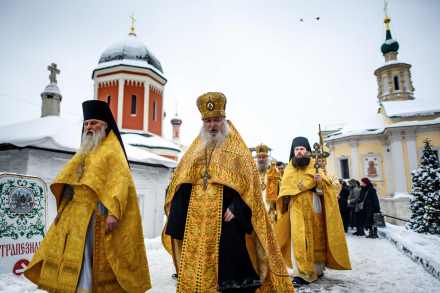
Ivano-Frankivsk has just become the first city in Ukraine to have no Russian Orthodox Church, amid a mass defection of churches away from the Moscow patriarchate and towards the breakaway Orthodox Church of Ukraine.  At the start of the invasion in February, almost two-thirds of Orthodox churches were still formally aligned with the Russian Orthodox Church whose leader – Patriarch Kirill – is a close ally of Putin. Until recently, the Russian Orthodox Church claimed dominion over Ukraine for centuries. The 2014 invasion of Crimea dampened its appeal. In 2019 a new Orthodox Church of Ukraine was recognised by Patriarch Bartholomew – the archbishop of Constantinople and the de facto leader of Orthodoxy.

Why the West still needs the Bible

From our UK edition

If you look to our schools and universities, you will not see a serious engagement with the Bible as part of the study of politics, of philosophy, or even of literature and culture more generally, despite the huge influence of Biblical ideas on the development of British, American and European politics – and so also across the Commonwealth and the world. University courses on political philosophy take a fundamentally ahistorical position of focusing on purely secular philosophers, rather than facing the reality of the Bible’s impact on the actual development of modern politics.

Fall of the godless

No religious season passes without it being insulted by the kind of person who lives in fear that somewhere some believer is not having his faith offended by someone to whom faith itself is offensive. This Eastertide was no exception. On Good Friday, which coincided with the first night of Passover, the New York Times printed an essay by a former yeshiva student proposing that in this year of violence and suffering it would be best to “pass over” God, adding, “Killing gods is an idea I can get behind.” This sort of village-atheist raspberry — which largely disappeared during the twentieth century along with American villages themselves — has enjoyed something of a revival early in the twenty-first century with the appearance of the so-called New Atheists.

atheists
martyrs

Martyrs win the culture wars

The culture war is suddenly going well for conservatives. Ron DeSantis stripped Disney of some of the woke corporation’s privileges in Florida. Elon Musk is taking over Twitter. Roe v. Wade appears doomed. And a backlash against Critical Race Theory in schools and transsexuals in women’s sports looks set to benefit Republicans mightily in November’s midterm elections. These are crucial battles. But they are not the war. The war is between race and sexuality on one side and traditional religion on the other. At any rate, those are the great causes with which the cultural left and right tend to identify. The progress of the war is seen in the retreat of Christianity and the advance of racial and sexual agendas on all fronts.

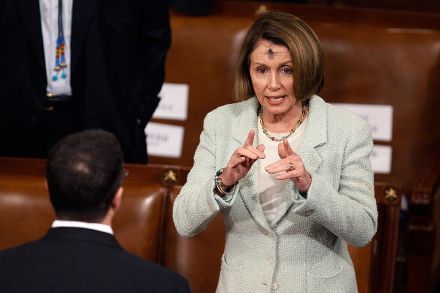
Why does Nancy Pelosi want communion anyway?

San Francisco Archbishop Salvatore Cordileone’s recent announcement that Nancy Pelosi has been barred from receiving communion brought fresh to Cockburn’s mind a memory he has of once having accidentally attended church with the Speaker of the House (and lived to tell about it). Sometimes alcohol can stir in one a devotional feeling, and so it was that Cockburn found himself at Mass one day at Holy Trinity Catholic Church in Georgetown, seated a few rows behind Pelosi. When the time came, Cockburn refrained from receiving communion, but wondered as he watched Pelosi head toward the altar whether anyone should tackle her to the ground to prevent the sacrilege.

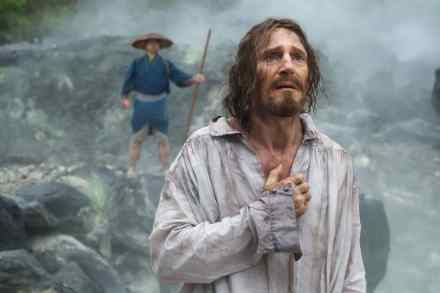
The best films about faith to watch this Easter

From our UK edition

The best religious films aren’t always the obvious ones, featuring either clerics or bible stories (though there are some good movies of both kinds – and an awful lot of terrible ones). Rather, some of the best capture Christianity sideways, expressing the numinous or the fundamentals of faith through a human story or through a portrait of a way of life. This being Holy Week, when we’re right in the middle of The Greatest Story Ever Told (one to watch), it’s a good time to explore how film reflects religion, straight or infused. The Passion of the Christ, Mel Gibson, 2004 https://www.youtube.com/watch?v=4Aif1qEB_JU It’s hard to imagine how even Mel Gibson got away with a film not just not in English, but in Hebrew, Aramaic and Latin.

How Putin weaponised the Russian Orthodox church

From our UK edition

In the week before Orthodox Lent began, some 233 Russian Orthodox priests published a petition calling for peace. The signatories spoke of the ‘fratricidal war in Ukraine’, with a call for an immediate ceasefire, and deplored ‘the trial that our brothers and sisters in Ukraine were undeservedly subjected to’. Anyone who knows how authority is exercised in the Russian Orthodox church, and how closely it has allied itself with Putin’s authoritarian state, will recognise the clerics’ courage. But what effect is it likely to have on the attitude of the highest authorities in the church?

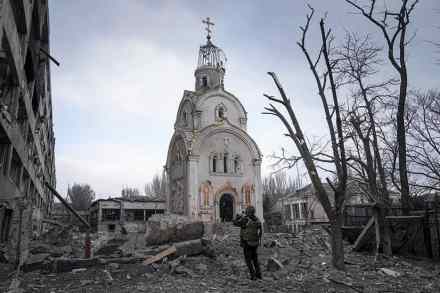
Why the destruction of Ukraine’s churches matters

From our UK edition

One small, deadly incident in the Ukrainian war proved memorable because it involved the ordinary things of life. A mother and two children trying to leave the town of Irpin on foot on 6 March died from Russian shelling. Their suitcases fell beside them and, miserably, a pet dog carrier. They lay on an ordinary road that could be in Surrey, on the steps of a memorial to Soviet dead from the second world war. That spot is opposite a little row of bells under a tiled roof in the grounds of the Ukrainian Orthodox church of St George. A neat hoarding was visible in 2015 on the building next to the modest unfinished church, showing what it would look like when the five domes were roofed and gilded.

Is the Virgin Mary being sidelined by Rome?

From our UK edition

The Catholic church has always venerated Mary (‘Mother of God’) above other saints. But in recent years there has been a slight (a very slight) cooling in the church with regard to the inclusion of Mary in the liturgy of the mass. It’s been an English custom since medieval times to recite a Hail Mary (a verse of the rosary – the traditional Marian prayer) at the end of the ‘Prayers of the Faithful’ – the sequence of introductory prayers in the main body of the service. But just over a decade ago Rome decided to gently discourage this practice. It still continues in many churches (old habits die hard) and in some senses represents a small disjunction in the English church’s relationship with Rome. Okay, not small – tiny. Infinitesimal.

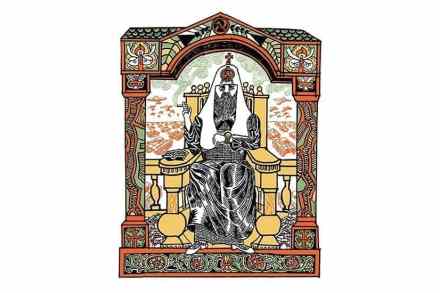
Kirill, the Patriarch in league with Putin

From our UK edition

Until very recently, Patriarch Kirill of Moscow, leader of the Russian Orthodox Church, was most famous for being the owner of a phantom wristwatch. It had the magical property of disappearing from sight, visible to onlookers only as a reflection. Don’t believe me? Google ‘Kirill’ and ‘watch’ and you’ll find a photo of the Patriarch of Moscow and All Rus’ meeting the Russian justice minister. It was taken in 2009, the year Kirill succeeded the late Patriarch Alexy II as spiritual leader of 110 million Russian Orthodox Christians. On his head Kirill is wearing a white koukoulion, the so-called ‘helmet of salvation’, with side flaps like the ears of a giant basset hound. But his cassock is plain black and his wrist is bare.

Dostovesky and Putin’s useful idiots

From our UK edition

When I was 17 I heard the name Dostovesky, and was enthralled. Just the name felt so glamorously intellectual, so deep. I began to read some of his novels, and my hunch was vindicated. A bit later I delved into his ideas, and my admiration became more nuanced. I partly admired his defiance of the rational humanist arrogance of the West, but I was also wary of his reactionary mystical nationalism, his faith in the anti-liberal Russian soul.  It seems that a lot of religiously minded intellectuals struggle to get past stage one. They are so taken with the flinty glamour of this writer that their critical faculties atrophy. They allow their aesthetic admiration to influence their religious politics.

Ash Wednesday and the gift of guilt

Deep in the gloomy last days of winter, Ash Wednesday once again descends upon us. Dutiful Catholics worldwide, soaked with enough sugar and spirits from Mardi Gras to last forty days and forty nights, will drag themselves to church to have their hungover heads smudged with ashes and be reminded that “You are dust, and unto dust you shall return.” Ah, Lent. As a Catholic myself, this time of year always fills me with mixed emotions, sort of like going to the gym: I know it’s good for me, I know I’ll feel better afterward, but the Good Lord knows I’m no saint…let’s get on with it already! Lent is a season that bewilders a lot of non-Catholics. Fasting? Abstaining from meat? Almsgiving? It's 2022, guys.

The left’s Nicene Creed

I live in a blue city in a blue state, meaning I can't so much as walk to the CVS without seeing a certain sign in half a dozen front yards. You know the one: "IN THIS HOUSE, WE BELIEVE: BLACK LIVES MATTER, SCIENCE IS REAL, WAR IS PEACE, MY LIFE FOR AIUR" and whatever the hell else they're on about these days. The sign has become so commonplace, so utterly oblivious to its own irony, that it feels less like a show of defiance than a profession of faith. Think of it as the left's very own Nicene Creed, the statement of belief that Catholics recite every time they go to mass. One imagines a congregation of the pink-haired standing in pews: "I believe in Science, and in xis only son Dr. Fauci, creator of BIPOCs and TERFs...

Downloading God in the App Store

Education at my Jewish private school was chock-full of religious instruction. Precisely half of our lessons were dedicated to Jewish studies. We had Bible classes (Chumash, we called it) every single day. As a child, I wasn’t particularly excited about most of the miracles. Sure, the staff turning into a snake was cool, but it felt like a parlor trick. The sea splitting felt too huge to even contemplate. The one miracle that seemed to get everyone in class thoroughly enamored with God’s power was the concept of manna from Heaven. The idea that you could just dream up what you wanted to eat — and for eight-year-old me that was infinite donuts, pizza and Dunkaroos — and it would just fall from the sky? Well, that was truly miraculous.

manna

What is it like to be worshipped as a god in one’s lifetime?

From our UK edition

In January 1780 the news reached London that Captain Cook had been killed and eaten in Hawaii. The story of his death was met with morbid fascination by the general public, inspiring paintings, poems and even a ballet. This ballet was so violent that one of the dancers accidentally stabbed another during the scene of the attack, yet it was also a fantastic success, touring the theatres of Europe and America. Soon aristocratic women were wearing dresses modelled on the natives who killed Cook, and interest in the explorer’s death continued into the 19th century, until one wit noted that every museum in the world contained a copy of the club that killed him. So, who was it that really deified Cook: the Hawaiians who murdered him or the Europeans who made a martyr of his memory?