Religion

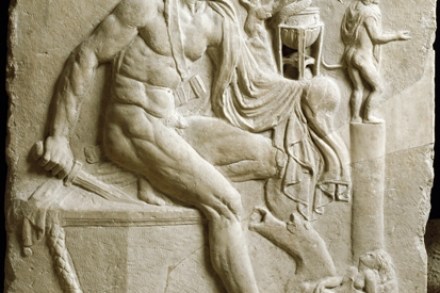
Management consultancy! Sculpture park! Sports stadium! The many faces of the Delphic Oracle

From our UK edition

‘In ancient times ... hundreds of years before the dawn of history, lived a strange race of people ... the Druids. No one knows who they were ... or what they were doing. But their legacy remains ... hewn into the living rock ... of Stonehenge.’ The unforgettable opening of Spinal Tap’s song ‘Stonehenge’ was much in my head as I read this scholarly history of Delphi. We use the word ‘delphic’ to mean riddling, ambiguous, difficult to parse. It applies just as much to the history of Ancient Greece’s most sacred site as it does to the pronouncements of its oracle. No one knows who they were ... or what they were doing.

The Spectator: on popes and poverty since 1828

From our UK edition

A year ago, a relatively unknown Argentine cardinal, Jorge Mario Bergoglio was elected Pope. A few days later he announced he would take the name Francis, after Saint Francis of Assisi, because, he said, he had particular concern for the poor. In the 1880s, Pope Leo XIII also drew the attention of his clergy to St Francis’s teachings on poverty. The Spectator approved, and recommended it to Protestants as well as Catholics, but it took issue with the Pope’s argument that the spectacle of rich people joyfully embracing holy poverty would be enough to encourage the poor not to mind being poor.

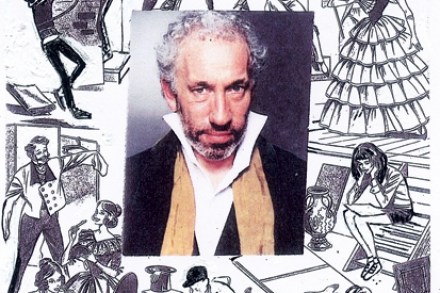
Simon Callow’s notebook: What it’s like to lose at an awards ceremony

From our UK edition

It was one of those weeks. On Monday, I was in four countries: I woke up at crack of dawn in Austria, took my first plane in Germany, my second in Switzerland, and was back in Blighty by lunch. The next day, I travelled up to Scotland to play the sodomitical Duke of Sandringham in the new historical blockbuster Outlander. Then I had a day off, so went from Glasgow to visit chums in Balquhidder, in Stirling, a village of 150 people, which has its own loch, snow-covered mountains, burbling rills, Highland steer, Rob Roy’s grave, and a sublime restaurant. Back to London a couple of days later, then off to Dublin at the weekend for the Irish Times Theatre Awards.

I’m scared to admit to being a Tory in today’s C of E

From our UK edition

[audioplayer src="http://traffic.libsyn.com/spectator/TheViewFrom22_27_February_2014_v4.mp3" title="Ed West discusses political bias in the church" startat=640] Listen [/audioplayer]I am training for ordained ministry at a Church of England theological college. I am a trainee vicar, if you will. I am also a Conservative, which puts me in an extremely small minority and quite a tricky position. At my college, there are approximately 60 ordinands in full-time residential training. Of those 60, there are no more than three or four who would describe themselves as Conservative and the overwhelming majority would call themselves (proudly) socialist. There is also a sizable minority of Marxists.

A prenup undermines a marriage before it has even begun

From our UK edition

A friend of mine, quite a distinguished lawyer, takes the view that marriage ceased to make sense after no-fault divorces came in. What, he says sternly, is the point of a contract when there’s no sanction if you break it? Well, quite. But if no-fault divorce pretty well invalidates marriage after the event, prenups do quite a good job of undermining it beforehand. The point of marriage is that it’s meant to be a lifetime affair – the hint being in the ‘til death do us part’ bit – and the point of prenups is that they make provision for the thing ending before it even gets underway.

The church is better at the welfare business than the state

From our UK edition

Today I have a piece in the Times (£ obviously, you know that) about the power of the Christian Left, following the Anglican bishops’ letter in the Daily Mirror; the Spectator’s Isabel Hardman goes into detail in the Telegraph about how her congregation did a better job of caring for the poor than the state did. That is what’s at the heart of the argument for Christian conservatism. State spending is effective when there is acute, widespread poverty, but once a country rises above a certain income there are diminishing returns, because the causes are less likely to be wider social and environmental forces. This is a good, or at any rate conservative, argument for spending on overseas aid, where the money really can make a huge difference.

The church of self-worship: Sunday morning with the atheists

From our UK edition

I had always assumed that the one thing atheism had going for it was that you could have a lie-in on Sundays. For the past year, however, an atheist church has been meeting in London on Sunday mornings. Founded by two comedians, Sanderson Jones and Pippa Evans, the Sunday Assembly is a symptom of what Theo Hobson identified in this magazine as ‘the new new atheism’, the recognition that the new atheism of Professor Dawkins et al had, in rejecting God, gone too far in rejecting all His works. Churches, the founders felt, had much to recommend themselves — a space for inspiration, reflection, and a sense of community in an atomised city — and they found a willing audience.

The inherent strength of religion cannot mask the fragility of Christian belief in Britain

From our UK edition

Terry Eagleton, the Marxist literary critic, has been something of a hero of mine since the publication of his Reason, Faith and Revolution, a thoroughgoing demolition of the Richard Dawkins critique of religion – on the sound basis that Prof Dawkins didn’t know what he was talking about – and his latest, Culture and the Death of God, promises to be pretty good too.

Forgive me, Father

From our UK edition

For non-Catholics, the most luridly fascinating aspect of Catholicism is confession. Telling your inmost sins — and we know what they are — to a male cleric, eh? In a darkened booth. How medieval is that? Well, the fantasies that people who never go to confession nurse about it are about to be shored up by a new book on the subject by the Catholic author John Cornwell. It’s called The Dark Box: A Secret History of Confession. On the cover is a scary-looking picture of a confessional — not somewhere you’d take the children, frankly, but right at home in a Hitchcock movie. John Cornwell is a friend, and moreover an intelligent and thoughtful man, but if ever there were a book that played to its gallery, it’s this one.

Liberals must rally round Maajid Nawaz

From our UK edition

Interesting, isn't it, this rather worrying statement from the Muslim body, MQI UK on the Mohammed cartoon affair. That, you recall, began when a member of a BBC TV audience showed  a cartoon image from a series called Jesus and Mo on his T-shirt depicting, er, Mohammed and Jesus. Nothing remotely offensive but a full-face depiction of Mohammed nonetheless. The image was duly tweeted by a participant on the programme,  Maajid Nawaz, former Islamist, one of the founders of the Quilliam Foundation and now a LibDem candidate for Kilburn, just to show why it was he wasn't offended by it and to stimulate debate about what is and isn't acceptable to Muslims.

The one man who makes me hope for peace in Syria

From our UK edition

As Syria’s second peace conference looms, and we prepare ourselves for a lot of hot air drifting over from Geneva, I’ve been making a list of those players in the civil war who actually want peace and those who don’t fancy it one bit. The anti-peace side is easy. There’s Bashar al-Assad, of course. Hillary saw to that during the first conference. Perhaps she’s right that he shouldn’t be part of any transitional government, but if he loses all power, Assad and his Alawite clan are toast. So what use is peace to him?

Why should Nigel Farage have to fight the ghost of Enoch Powell?

From our UK edition

One of the genuine seasonal pleasures to be enjoyed as 2013 slipped around the U-bend was Enoch Powell making his familiar comeback as the Evil Ghost of Christmases Past. Enoch was disinterred by the producers of the hitherto un-noticed Murnaghan Show — presumably in order to frighten the viewers and put a spanner in the wheel of the programme’s principal guest interviewee, the Ukip leader Nigel Farage. Dermot Murnaghan tripped up Mr Farage by the devilishly clever tactic of reading him some anodyne quotes from Powell’s exciting and controversial ‘Rivers of Blood’ speech and asking Farage if he agreed with them. But only later did he reveal that they were the words of the sulphurous Antichrist Powell! Brilliant.

Auberon Waugh’s Christmas Sermon

From our UK edition

Writing in the 23 December 1966 edition of The Spectator, Auberon Waugh considers the role of Christianity, in all its forms, in an English Christmas. It's not hard to see why most grown-ups detest Christmas nowadays. It is expensive and tawdry, a time for self-deception and false sentiment. It is a children's feast, which is why we all pretend to be children and show gratitude for unwelcome presents and rot our fragile insides with poisonous green crystallised fruit. To crown all the meretricious jollity and make-believe, an enormous number of grown-up Englishmen go to church. This has become as much part of Christmas as the plum pudding, and I think it is time it stopped. Christmas as we know it has nothing whatever to do with religion.

Thanks for trying, Charlie Boy

From our UK edition

I’d just like to take this opportunity to say a big thank you to our heir to the throne, Prince Charles, for, as he put it, spending ‘twenty years’ trying to ‘build bridges between Islam and Christianity and (to) dispel ignorance and misunderstanding.’ Sadly, he has concluded that this noble endeavour was in vain and that Christians are being persecuted right, left and centre (or indeed wherever they are unfortunate enough to live in Muslim countries). Still, how kind of him to have tried. The thought of Prince Charles dispelling ignorance on any topic, let alone this one, is a captivating one.

‘If they kill us all, what would be the reaction of Christians in the West?’

From our UK edition

The Silence of Our Friends, my Amazon Singles ebook about the persecution of Christians in the Middle East, is published today. I know I’ve written several posts on this subject recently, so I promise to stop, so long as everyone buys the book. Otherwise I won’t. Ever. It’s a subject that has become ever more urgent this year with violence against Christians in Syria, where Islamists have been engaged in ‘religious cleansing’, and in Egypt, which saw the worst anti-Christian violence in centuries.

You have to admire the chutzpah of the Saudis in protesting religious intolerance

From our UK edition

Further to yesterday’s post on Britain’s apathy about Christian persecution, the main question people asked in response was: what can Britain do, without military means? Taking aside that our military power helped to bring about persecution in Iraq and almost certainly would have done in Syria had this government got its way, there are lots of ways you can peacefully influence a country’s politics, including financial and moral pressure. That is what Saudi Arabia does, after all. The Organisation Islamic Co-operation (OIC), for example, a bloc of 57 Muslim countries dominated by the Saudis, has just released the latest edition of its annual ‘Islamophobia report’.

Britain’s refusal to defend Christians in the Middle East is shameful

From our UK edition

I have an ebook published next Thursday, called The Silence of Our Friends, on the persecution of Christians in the Middle East and the apathy of the West about this tragic and historic event. (A link will appear at the top of this page next week – in the meantime please spread the word.) I say apathy, but lots of people are concerned, and in the past year and a half such books as Christianophobia, Persecuted and The Global War on Christians have tackled worldwide persecution; there has also been increasing awareness following violence in Syria and Egypt over the summer, and last month Baroness Warsi became the first minister to raise the subject.

The segregation of women and the appeasement of bigotry at Britain’s universities (part two)

From our UK edition

On the Today programme this morning Justin Webb covered the decision by Universities UK to allow fundamentalist speakers to segregate women from men at public meetings. With a characteristic disdain for accepted standards of behaviour, Universities UK refused to go on air and answer his questions. Webb had to 'put the other side of the story' himself. He told a Palestinian woman demonstrating outside Universities UK headquarters in central London, [1hr 36mins in] 'What Universities UK say is, if non segregated seating is also provided, it could be all right.' Put like that it can sound just about all right. Men and women who want to sit apart can do so. Meanwhile there will be mixed seating for students who find the notion of sexual apartheid as repellent as racial apartheid.

Bob Dylan falls foul of Europe’s neo-blasphemy laws

From our UK edition

The French authorities are investigating Bob Dylan after some Croats were offended by something he said in an interview with Rolling Stone last year. The singer had said: ‘If you got a slave master or [Ku Klux] Klan in your blood, blacks can sense that. That stuff lingers to this day. Just like Jews can sense Nazi blood and the Serbs can sense Croatian blood.’ Dylan is the latest victim of Europe's neo-blasphemy laws, in which offending someone’s group identity is treated in the same way that offending God once was. When Christianity stops being sacred, everything becomes sacred; did GK Chesterton say that? Well it’s the sort of thing he might have said.