Religion

In Iraq, ancient Christianity lies in ruins. But who cares?

From our UK edition

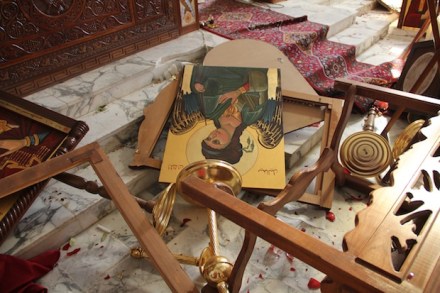
The Mar Behnam monastery outside Mosul, seized by ISIS just over a week ago, bears an inscription in the Turkic language of the Mongols who invaded Iraq in the 13th century. It asks for ‘the peace of Mar [Saint] Behnam to come down and rest on the Khan, his elders and his wives’. Why should Mongols revere Behnam, a convert to Christianity who was martyred by the region’s Zoroastrian ruler in the fourth century? The answer is that the Church of East to which Behnam converted had been the world’s greatest Christian Church. Its missionaries were firmly established in China by the seventh century. It was independent of both Rome and Byzantium, teaching that Christ’s human and divine natures were separate — a doctrine known as Nestorianism.

Celebrating diversity means imposing misogyny

From our UK edition

People talk about their commitment to equality and diversity so readily they must assume there is no conflict between the two. The phrase falls off the tongue as if it were an all-in-one package, and people can 'celebrate diversity' and support equal rights without a smidgeon of self-doubt. Until, that is, they have to make a principled choice. Then, whether they admit it or not, they find that they can believe in equality or they can believe in diversity, but they cannot believe in both. If this sounds like the start of a patient exploration of a delicate philosophical distinction, don't be deceived. There is nothing difficult to understand, and my patience with the double standards of multi-culturalism snapped long ago.

Flight MH17: the unctuous Bishop James Jones shows off on ‘Thought for the Day’

From our UK edition

Perhaps it’s my imagination, but every time the Rt Rev James Jones, former Bishop of Liverpool, pops up on Thought for the Day I hear an undertone of disappointed ambition. The same goes for Lord Harries, ex-Bishop of Oxford and, like Jones, once spoken of as a future Archbishop of Canterbury. It’s as if they’re saying: look how much poetry and gravitas I can pack into three minutes!

Gilbert and George have lost their bottom over the burka

From our UK edition

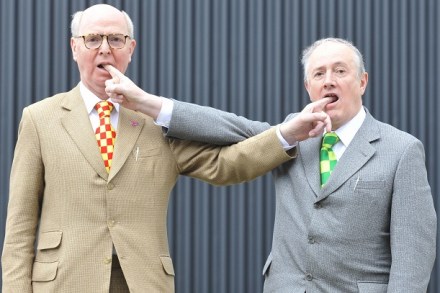
Let’s brood, shall we, on the following report in the Evening Standard about an exciting new departure by the winsome duo, Gilbert and George, on the back of their new exhibition, called ‘Scapegoating Pictures’ for London which opens tomorrow at the Bermondsey White Cube Gallery: ‘The artists Gilbert and George feature women in burkas in their new exhibition reflecting the changing face of the East End, their home for decades.  The veiled figures feature in giant photomontages demonstrating the artists’ long-standing hostility to all religions which they believe “terrorise” people.

Never mind women bishops — why is the C of E now pretending the Devil doesn’t exist?

From our UK edition

Once again, a feeble desire to be democratic and appeal to potential church-goers has led the C of E into muddy waters. No, I'm not talking about women bishops, but the Church of England's much more significant — and damaging – decision, rubber stamped last Sunday, to remove the Devil from the liturgy of Baptism. Instead of being asked to reject ‘the devil and all rebellion against God’, parents at a Christening will now blandly be asked to ‘turn away from sin’. The change of language means the liturgy is now so removed from the original Book of Common Prayer as to be unrecognisable, but members of the Synod were told that a pilot scheme of the new version in selected churches had ‘proved extremely popular’.

George Carey’s thoughtless contribution to the ‘assisted dying’ debate

From our UK edition

Well, I think nobody really assumed that George Carey was the brightest button on the bench of bishops but the old bumbler has still managed to put a rocket into the debate on assisted suicide. By dint of a former Archbishop of Canterbury changing horses on the issue, it has wrecked the notion that there’s some sort of consensus on the Anglican side about this contentious question. Whenever anyone tries to give a Christian account of the matter they’ll be met with the riposte, ah, but that’s not what the Archbishop says. But what gets me is the notion that it has come as a revelation to poor old George that there are potent arguments from compassion on the assisted dying side.

The problem with the NHS? The soft bigotry of low expectations.

From our UK edition

In many ways I've endured enjoyed a very fortunate life. Not least because, perhaps unusually, I've had almost no dealings with the National Health Service. I mean, apart from a couple of vaccinations before trips to heathen foreign parts I've hardly seen a doctor since I left school. This surprises me as much as it may surprise you. So I'm never quite sure what passes for 'good' service on the NHS. What is normal in an organisation of its size, diversity and complexity? And how, in any case, do we measure 'success'? I have a sneaking suspicion that we often do so by rebadging failure as normal. As I type this, you see, my mother is confined to her bed, unable to walk on account of, quite literally, crippling pain in her back and leg.

There ain’t no God — and that’s the glorious truth

From our UK edition

According to my colleague Melanie McDonagh (Spectator 21st June), religion makes you happy and churchgoing is good for you. Crikey, you could have fooled me. For sure, an ancient church or cathedral is a peaceful and moving place to visit. Religious music can also be very affecting — I love Haydn’s many masses and adore Rossini’s Petite Messe Solennelle — as can be its art. But, as the man said when looking at some vast triptych of the Crucifixion, ‘Great story, shame it ain’t true.’ I was confirmed into the Church of England when I was seventeen. I had agonised about this for ages and was a good three or four years older than my fellow confirmands.

Rod Liddle is right about the faux Left

From our UK edition

‘I deserted my children for my own personal happiness: it is as simple as that, regardless if I sometimes reassure myself with caveats, with a rationale which I have constructed for myself out of cardboard or tinplate over the years.’ So writes Rod Liddle in his brutally honest memoir-cum-polemic Selfish Whining Monkeys, which got a huge boost last Friday thanks to Yasmin Alibhai-Brown’s rational and entirely sane attack on him on Channel 4 (see above). I admit to being a fan of Rod.

Spectator letters: VAT and sugar, Boris Johnson and cricket, whisky and bagpipes

From our UK edition

Sugar added tax Sir: Julia Pickles (Letters, 14 June) suggests a sugar tax to combat the obesity epidemic and discourage food manufacturers from adding sugar to everything from bread to baked beans. A more realistic alternative might be to simply adjust the VAT rules: currently, VAT is levied on essentials such as loo paper, toothpaste and washing powder, presumably because they’re considered luxuries. Items such as breakfast cereals, however, are VAT-exempt, even though many are more than 30 per cent sugar and should really be in the confectionery aisles. Levying VAT on products with, say, more than 20 per cent added sugar and removing it from others could form a revenue-neutral policy for better health.

The bloody battle for the name Isis

From our UK edition

‘This’ll make you laugh,’ said my husband, looking up from the Daily Telegraph. For once he was right. It was a letter from the Pagan Federation complaining that the acronym Isis ‘is likely to form an inadvertent association in the minds of hearers between Sunni jihadists and followers of the goddess Isis’. These ‘may be caught up in unintended fallout’. They are not the only ones. Apart from the army of bloodthirsty Islamists, Isis is a centre for scientific research at Harwell, near Oxford; a group of schools teaching English; an ‘end to end’ professional photographic service in Clerkenwell; a private equity investor; and a seven-seater from Toyota.

Podcast: Is religion the new politics, and Osborne on the up, Miliband on the down

From our UK edition

Are we seeing a global revival of religion, which is having a radical impact on politics? On this week’s View from 22 podcast, Damian Thompson debates Cristina Odone on this week’s Spectator cover feature. Is the UK and Europe unable to understand many of the current conflicts because of ardent secularism? Has our current government been too secularist; obsessed with Brangelina instead of Boko Haram? And would politics be simpler if there were no religious element at all? Isabel Hardman and Fraser Nelson discuss two political figures whose fortunes are shifting in different directions — George Osborne and Ed Miliband. Are we beginning to see the real George Osborne, who has more substantial ideological views than his detractors believed?

The Left’s blind spot with Islam: opposing bigotry does not mean liking a religion

From our UK edition

I agree with something Owen Jones has written, a confluence of beliefs that will next occur on September 15, 2319. Addressing the subject of Christian persecution, he argues in the Guardian: ‘It is, unsurprisingly, the Middle East where the situation for Christians has dramatically deteriorated in recent years. One of the legacies of the invasion of Iraq has been the purging of a Christian community that has lived there for up to two millennia. It is a crime of historic proportions.

Spectator letters: Islamophobia, breast-feeding and Bach

From our UK edition

Rational fear Sir: An interesting contrast between the articles by Douglas Murray and Innes Bowen on Islamic influence in the UK (‘Save the children’, 14 June), and the one by Matthew Parris. Mr Parris sees no essential difference between faith schools. But Christians do not on the whole advocate holy wars against non-Christians, or demand that adulterous women be stoned to death, or that anyone who insults their religion should be beheaded. True, there was a time when the Church might have done all these things, but that was hundreds of years in the past and we are now more enlightened. Recent events in Syria and Nigeria, and now in Iraq, do not inspire confidence in Islamic moderation. But any criticism is immediately seized on as Islamophobia.

Churchgoing is good for you (even if you don’t believe in God)

From our UK edition

Few people, don’t you find, are as irritating as those who define themselves as Spiritual But Not Religious? There was a riveting  piece in the Sunday Times ‘Style’ magazine last week about them, featuring people who were both fabulously stylish and spiritual. Among the names checked was a shop called Celestine Eleven (‘when you buy a new dress, you’re buying into a beautiful piece of energy’) and a website called Numinous (motto: ‘material girl, mystical world’). So, you can be spiritual and design-conscious, as in Pamela Love’s pentagram ring, £1,500.

‘Britishness’ debate: can you do Magna Carta without also doing God?

From our UK edition

Was anyone terribly surprised by the Social Attitudes Survey published today suggesting that most people thought that, in order to be British, you should be able to speak English? Some 95 per cent thought so; the only curiosity being that in 2006 the figure was as low as 86 per cent. Nor indeed is it terribly odd that, as the authors point out, the threshold for Britishness is getting higher. As the survey from January points out, three in four people think immigration numbers should be reduced; the question of identity has to be seen in that context. One interesting aspect of the survey is the decrease in the numbers of people who think Christianity is an important component of Britishness – fewer than a quarter do so, down from 32 per cent in 1995 – or nearly a third.

Marina Abramović is no fraud – or no more so than any religious leader

From our UK edition

If art is the new religion, we were always going to end up here. With high priests, acolytes and 'energy'. That’s the set up at the Serpentine Gallery at the moment: us as the potential believers queuing around the block ready to be received, and Marina Abramović as the high priestess armed with nothing (literally nothing) but her presence. It could be Rome, Jerusalem or Gold Base. It could be the 20th, 8th or 1st centuries. We’re in a world of belief – and possibly make-believe. I was Abramovićed last week. Rationalist cynic that I am, I thought I wouldn’t be able to take it. But I did. I felt compelled to, really. It seemed churlish not to at least try to engage in it. To not do so would be to cut off my nose to spite my face.

Spectator letters: The trouble with religion, alternatives to HS2, and whisky-drinking dogs

From our UK edition

A history of persecution Sir: Colin Brown (Letters, 7 June) ignores some good reasons for keeping religion out of society. Small groups of believers are fine, but not totalitarian dictatorships. The early Christians were treated as heretics until 313 ad, when Constantine made what became the Roman Catholic Church the official religion of the Roman Empire. The church promptly started persecuting all other religious groups. In the Middle Ages the Church let loose the Inquisition and decimated civilised communities such as the Albigensians. As for his statement that ‘all religions have provided society with ethical and moral rules’, how ethical were the laws and morals that subjugated women and slaves and persecuted anyone who questioned the authority and dogma of the Church?

A brave man in Iraq needs your help

From our UK edition

Canon Andrew White is one of the bravest men you could ever meet. He is the Anglican vicar of St George’s Church in Baghdad and has continued his service in that country throughout its recent horrors. He has lost hundreds of members of his congregation but he has remained an extraordinary, humbling and hope-giving presence throughout recent years. But now, with ISIS having taken over Mosul and surrounding areas in recent hours, he says that things are worse than at any point in the last decade. This, Nineveh, is the heartland of Iraqi Christianity. In this heart-breaking call for help, Canon White writes: ‘Iraq is now in its worst crisis since the 2003 war.

Britain needs ‘Church schools’ and ‘faith schools’

From our UK edition

Following Freddy Gray’s piece yesterday about the pundits’ efforts to exploit the ‘Trojan Horse’ affair in order discredit ‘faith’ schools, I thought you might be interested in the statement below, from the Catholic Education Service, which pretty well sums up the argument. One person the CES may have in its sights when it talks about the charge of indoctrination is the former Education Secretary, David Blunkett, who observed yesterday that: there was a ‘muddle’ in the heart of government when it comes to religious schooling. ‘Our society does need an open, liberal — small ‘l’ — curriculum that embraces all faiths and no faiths, and teaches children to think for themselves ...