Religion

If atheists do have values, what are they?

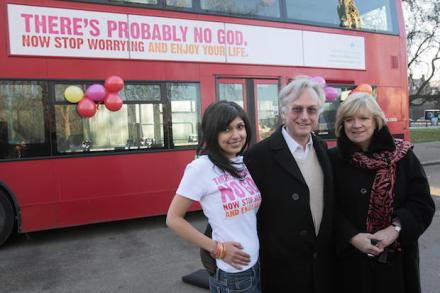
There’s an interesting article in the Guardian by Julian Baggini. Now that nearly half of Britons say that they have no religion, he observes, some believers are saying that atheism is also a sort of faith. Though an atheist, he is not of the Dick Dawkins school, and so does not respond with Dickish bluntness. He is not one of those ‘zealous’ atheists who sees religion ‘as an offence to human rationality.’ People like that do seem to have a sort of crusading faith, he says. Excessive trust in the power of reason can be dangerous, he adds. He admits that the ‘meaning and value’ that atheists find in life
Even religious polemics can’t inject any life into the Brexit debate

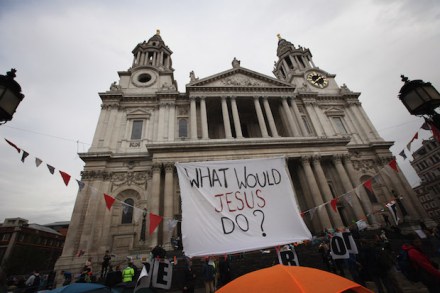
Churches are generally ideal venues for public debates. But there’s a slight chance that a speech about the perils of EU membership will be interrupted by a homeless person doing a pee in the corner. At a debate on Christian responses to the EU at St James the Less church in Pimlico last night, Giles Fraser left off quoting his hero Tony Benn on the evil of unaccountable power in order to do his muscular Christian duty and help eject the man, who spluttered invective as he departed. Did I imagine it or did he shout ‘Fexit Brexit’? A bit earlier, his opponent Ben Ryan had set out an optimistic

As a midwife, I’m horrified by my union leader’s support for unlimited abortion

The British Pregnancy Advisory Service (BPAS), the UK’s largest abortion provider, and a group of other organisations recently launched a campaign for the repeal of all legal limitations on abortion in the UK. As a midwife, I was shocked to discover that one of those signatories was the Royal College of Midwives (RCM). If what the BPAS campaign is calling for were ever implemented – the total removal of abortion from criminal law – it would mean that there would be no restriction on abortion whatsoever. This would put the UK in a small international club that includes China and Vietnam – where abortion is available, for any reason, up to

The death of the funeral

Funerals ain’t what they used to be. Today’s emphasis is more on celebrating a life past than honouring the future of a soul. While I am not averse to a celebratory element, the funeral is morphing into a spiritually weightless bless-fest. This was brought home to me last week at the funeral of Enid, a lady I knew only through our mutual attendance at bingo in the community centre. I was uncomfortable from the moment we gathered outside the church, where my sombre suit set me apart from the Technicolor crowd of family and friends. The atmosphere was more akin to a wedding, even a hen do, than a funeral,

Let’s renew the EU

From the time of the French revolution, the Catholic Church has always encouraged relationships between nations that draw them together rather than divide them. It is for this reason that the Church has always been broadly supportive of the European Union, although with reservations. There will be many Catholics on both sides of the coming referendum. Many of us have concerns about recent developments in the EU, such as the official removal of the reference to the continent’s Christian history from the European Constitution a few years ago. The more general push towards secularisation troubles us, too. Recent popes have questioned the tendency to regard the goal of the EU

Britain's Christian culture has risen above the recent religious brawl

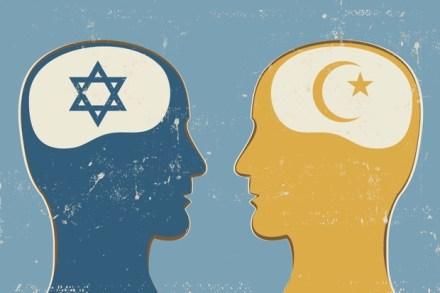
Our political culture contains some tension between Jews and Muslims. And some secular anti-Semitism, particularly on the left, and some Islamophobia. But, at the risk of getting Pollyannaish, let us see the positive. This country’s main religious culture, Christianity, is not involved in any of this nastiness. It does not contain any substantial prejudice against Muslims or Jews. It is not significantly invoked by our (rather mild) nativist movement, Ukip. Yes, Farage sometimes says that he stands for Christian values, but this is just a harmless and desperate bit of rhetoric. The louder message is that the Queen asked that lovely Muslim baker to her party. Let us be quietly proud that our

The BBC should commission a Christian version of Woman's Hour

In his new book God is No Thing: Coherent Christianity, Rupert Shortt notes that religion is in some ways taken more seriously now than a decade or two ago. But huge habits of ignorance and condescension remain: ‘When secular humanists attack Christianity, they often fail to realise that it is the gospels which provide unseen elements in their own outlook.’ He rightly draws attention to the ‘tension between the enormous cultural footprint of Christianity on the one hand, and its concealment in a secular multicultural society such as Britain on the other.’ And he tentatively criticises the subtle marginalisation of Christianity from public discourse. This is a difficult thing to

Is it 'Islamophobic' to draw attention to Sadiq Khan’s links with extremists?

Zac Goldsmith came in for a fair amount of criticism yesterday after writing a piece in the Mail on Sunday that, among other things, pointed out that Sadiq Khan criticised Labour’s decision to suspend Ken Livingstone in 2006 when he compared a Jewish Evening Standard journalist to a Nazi concentration camp guard. Reviewing the papers on Marr, Owen Jones called it ‘another example’ of a ‘poisonous’ and ‘disgraceful’ campaign that had tried to brand Khan as an extremist simply because he’s a Muslim. He called it ‘an attempt to tap into anti-Muslim prejudice’ and urged Conservatives to tackle Islamophobia as vigorously as his own party is tackling anti-Semitism. But is

It will take more than Labour's ‘inquiry’ to deal with the left’s anti-Semitism problem

Anyone concerned about anti-Semitism in the Labour Party should welcome the appointment of Shami Chakrabarti, the former head of Liberty, to lead an internal inquiry into the matter, but it’s a little late in the day to be addressing this issue. And will the inquiry’s terms of reference allow her to investigate the leader of the party? The Jewish Chronicle drew attention to Jeremy Corbyn’s links to a rogues gallery of “Holocaust deniers, terrorists and some outright anti-Semites” back in August of last year. Among other dubious acts, Corbyn donated money to an organisation run by Paul Eisen, a self-confessed Holocaust denier who boasts of links to the Labour leader

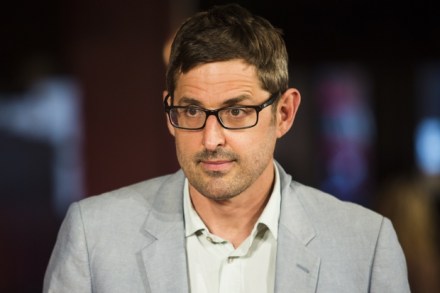
Louis Theroux has brought honest humanism to our screens

Louis Theroux’s latest documentary on alcoholism confirms the fact that he has become an interesting broadcaster. He has grown up. This was already clear from his last couple of films from America, on a secure mental hospital, and on transgender children. This might sound excessive, but he has become capable of expressing a more nuanced humanity than the average television journalist. In his callow youth he was fun to watch, but overdid the sneering ironic act. He kept a straight face in order to allow idiots to expose themselves. Such an approach is tainted by a sort of self-righteousness: let’s look down on these ridiculous human specimens. Then he began

Labour's halfwits have revealed their anti-Semitic side

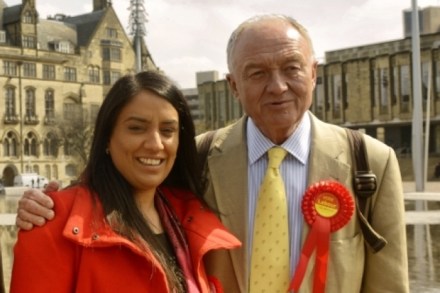
My guess is that the people who voted for Naz Shah at the last election think she did not go anywhere near far enough in her comments about transporting Jews. Ms Shah is, somehow, still the MP for Bradford West, a seat she yanked from under the feet of someone we had all assumed had the votes of anti-Semites in the constituency sewn up. This is problem number one, for Labour. The loathing of Israel, and concomitant anti-Semitism, among its core Muslim vote is implacable. But problem number two is that Labour’s white middle-class metro liberal halfwits, of which Jeremy Corbyn is undoubtedly a member, are also disposed towards anti-Semitism. They

Mao devours his foes

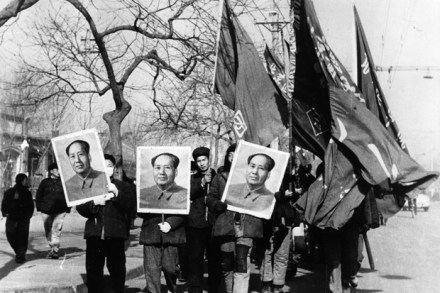
Frank Dikötter, professor of humanities at the University of Hong Kong and winner of the Samuel Johnson prize in 2011, is the author of many studies on China, most notably two on Mao’s dark rule. This new book completes the trilogy. The first volume, The Tragedy of Liberation, made plain, more exhaustively than previous accounts, that from the beginning of his time as Chairman, Mao was paranoid and murderous, and that Zhou Enlai and Deng Xiaoping egged him on. The second volume, the prize-winning Mao’s Great Famine, examined, in characteristic detail, the Chairman’s responsibility for the 1959–1961 famine, which killed 30 to 50 million Chinese. Now we are shown that

Will the human rights industry ever admit that it has Christian roots?

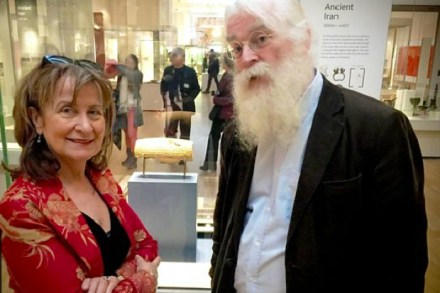
Helena Kennedy’s two-part radio programme on human rights was very predictable. She did a lot of hand-wringing. She spoke some passionate rhetoric about our common humanity. She quoted Hannah Arendt. She consulted a lot of non-Western thinkers, a lot of fellow human rights lawyers, and a token critic of the concept of human rights. The first part put much emphasis on the ancient global roots of the concept. Look how it is anticipated in this ancient Iranian or Mesopotamian or Buddhist document. I think this is misleading. Though many ancient cultures had impulses in this direction, they were frail. It was the Christian West that gradually heaved such aspirations into politics.

A genocide is underway in Iraq and Syria. Why won't the government recognise this?

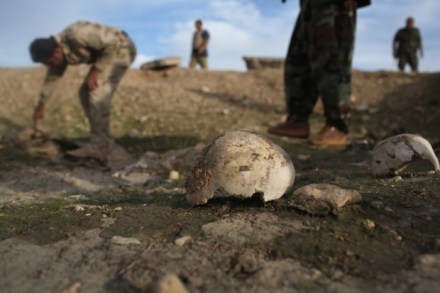
Later today the House of Commons will vote upon a motion expressing belief that a genocide is underway against Christians, Yazidis and other ethnic and religious minorities in Iraq and Syria. The motion, proposed by Fiona Bruce MP, is supported by a large number of MPs from all parties. The Government is expected to oppose, as they did when a similar measure was debated in the Lords. At the time of writing, party enforcers are rumoured to be whipping MPs on the payroll to abstain from the vote. This is an old parliamentary tactic intended to undermine the legitimacy and clout of the measure under consideration by reducing the number of

Justin Welby could teach David Cameron a thing or two about PR

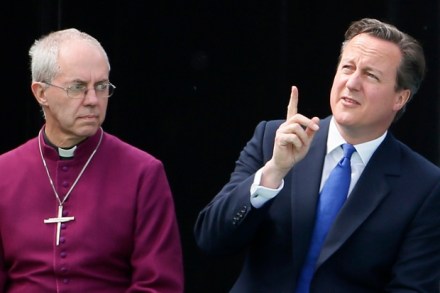
I don’t think there is a Royal College of Public Relations, but if there were, it should teach a course based on a comparison between two stories last week. One concerned the Prime Minister and the other the Archbishop of Canterbury. Both arose from the paternity of the principals and, in both cases, the principals had not done anything wrong. Yet there the similarities end. David Cameron, and those working for him, spent the best part of a week fending off and then changing a story they found embarrassing. Justin Welby, and his much smaller staff, confirmed the truth of a potentially much more painful story in one go, bravely

Can Christianity be translated into a few core rules?

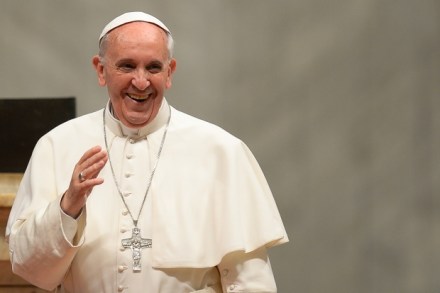
The message of Pope Francis, in his exhortation Amoris Laetitia (The Joy of Love), seems to be this: there must be rules. Only tough rules can express the absoluteness of the gospel. Without these rules it will be diluted, its saving force depleted. But the Church must apply these rules with Christlike tenderness and mercy, rather than with legalistic rigour. It must be tolerant of innovators on the edge, testing the boundaries. But it must uphold the core rules, even if they seem harsh. For this harshness corresponds to the absoluteness of the ideals of Christianity. We may all struggle to live up to these ideals, but we need absolute

Martyrdom: a new comic strip for Turkish kids

Thrilling news arrives from Turkey, where it is being reported that a government body has issued comic books to the nation’s children telling them how bloody marvellous it is to become an Islamic martyr. https://twitter.com/DiyanetCocuk/status/714400106829758464 ‘I really want to be a martyr, daddy,’ one child asks its idiotic parent. Well you can be, daddy replies, if you want it enough. The book goes on to say: ‘May God bless our martyrs, may their graves be full with holy light, (as well as detonated body parts).’ Well ok, it didn’t say the bit in brackets – that was my helpful addition. The book was got up by the Diyanet, the Turkish

'You even stop thinking of your own family': meet the Isis fighters addicted to amphetamine

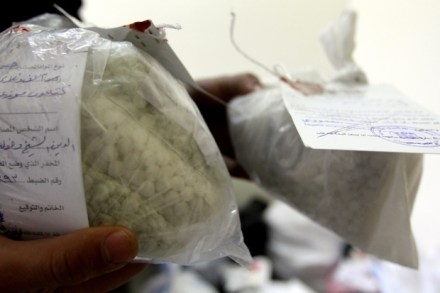
‘We would fight them, slaughter them,’ Aadheen told me. ‘The moment we take a pill we would stop thinking about anything.’ The pill he’s referring to is Captagon, an amphetamine that’s said to fuel some of the brutality associated with Isis. In November last year, Turkish authorities seized 11 million Captagon pills on the Syrian border. In the same month, a Saudi prince was arrested after two tonnes of Captagon pills were found in cases being loaded onto a private jet. Aadheen is a former Isis member; he’s now a drug addict in hiding. We met late at night in a safe house arranged by his dealer, close to the Syrian border. Aadheen sat silently in the

Can Islam move away from theocracy?

Terrorism is a distraction. It’s a distraction from the big question of our day, about Islam and violence. Only a tiny minority of Muslims affirm that sort of violence. A far larger proportion of Muslims condone another, vaguer sort of violence. It is this that we must confront. I mean the violence of theocracy. Theocracy is the belief that one religion should be absolutely culturally dominant. Of course it thinks that the state should enforce this; if the state fails to do so it loses legitimacy. This theocratic worldview is the underlying cause of Muslim terrorism. To judge from its founding texts, and its history, Islam is a religion that

Secularism does little to protect us from Islamic extremism

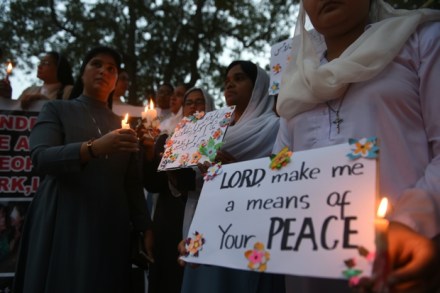
You might expect that the murder of Christians would excite particular horror in countries of Christian heritage. Yet almost the opposite seems to be true. Even amid the current slew of Islamist barbarities, the killing of 72 people, 29 of them children, on Easter Day in Lahore, stands out. So does the assault in Yemen in which nuns were murdered and a priest was kidnapped and then, apparently, crucified on Good Friday. But the coverage tends to downplay such stories — there has been much less about Lahore than Brussels, though more than twice as many died — or at least their religious element. The BBC correspondent in Lahore, Shazheb