Rose Asani

The geopolitics behind Joe Robinson’s dramatic escape from Turkey

From our UK edition

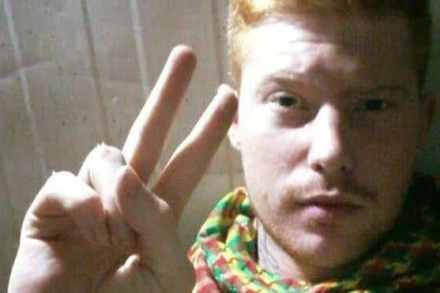
Whenever someone mentions the words ‘escape’ and ‘Turkey’ in the same sentence, I immediate think of the classic film, Midnight Express. While the details of how a former British solider jailed in Turkey for fighting against ISIS managed to flee the country are scant, this definitely has the beginnings of a Hollywood plot. To sum it up so far: In 2015, Joe Robinson from Accrington, Lancashire, travelled to Syria where he spent time with armed Kurdish groups, including the YPG. He says he was working as a medic, though he also admits to fighting Isis. He returned to the UK, but in 2017 made the fatal mistake of holidaying in Turkey. While there, he was arrested, convicted of being a member of a terrorist organisation and sentenced to seven-and-a-half-years in jail.
Why Erdogan is relishing making life difficult for Saudi’s crown prince

From our UK edition

Jamal Khashoggi’s murder has been dissected by the world’s press, perhaps none more so than in Turkey, where the journalist met his grisly fate. Fresh information is still being leaked about his final moments inside the Saudi Arabian consulate in Istanbul. In a recording of his murder, Khashoggi can be heard putting up a fight. He orders his killers to release him and warns they’ll be brought to account. But will they? Or are there bigger fish to fry? And what is Erdogan hoping to achieve by making life uncomfortable for Saudi's Crown Prince Mohammed Bin Salman. Khashoggi has been described by some as a Saudi dissident. Turkish media say he saw himself instead as a ‘proud patriot’ who was homesick as a result of his self-imposed exile.

Erdogan’s victory means Turkey’s future is far from certain

From our UK edition

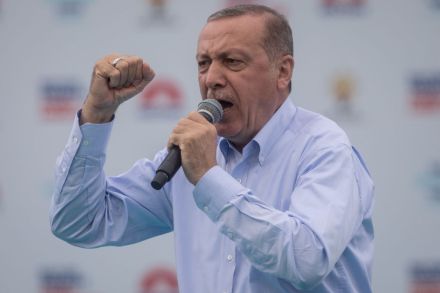
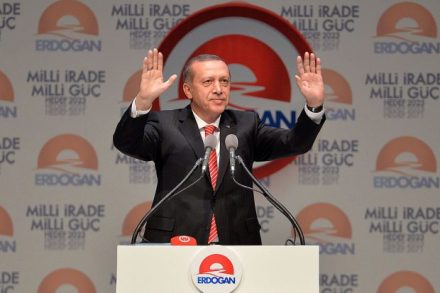
Many people I know woke up yesterday morning with a knot in their stomachs. ‘Another five years,’ I heard one person mutter. They were referring of course to the victory secured by President Erdogan in Turkey. He won nearly 53 per cent of the votes in an election that many had hoped would see him defeated, especially as his regular ‘Ace’ card, the economy, has been rather rocky these past few years. The result showed his main rival wasn’t even close: Muharrem Ince garnered a little shy of 31 per cent in the poll. The 64-year-old president thanked the country for putting their faith in him once again. He told crowds from his HQ in the capital Ankara that ‘the winner of this election is each and every individual’ in Turkey.

Turkey’s religious authorities tighten their grip

From our UK edition

Turkey’s top religious body has issued a new fatwa, saying that ‘every pious Muslim must only use their right hand to eat and drink’ – because, apparently, only demons are left-handed. While it may seem like that line has been lifted directly from a medieval text, when southpaws were routinely accused of consorting with the devil, it hasn’t. The Turkish Directorate of Religious Affairs, known as the Diyanet, has qualified its new ruling based on some traditional teachings including, it says, because ‘the Prophet Muhammed did not regard eating with the left hand as pleasant’. It also says the Prophet warned ‘demons eat and drink with their left hand’.

Russia damaged Turkey’s economy in the name of diplomacy. Is the US about to do the same?

From our UK edition

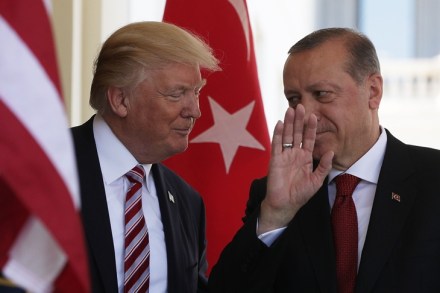
Istanbul President Erdogan has spent much of this year slinging muck at Europe's heads of state, and he has damaged a number of already precarious relationships. Now it looks as if he is about to come up against the force of US diplomacy and Turkey may find itself in trouble. Turkey and the US have been Nato allies since 1952. During that time, Turkey has played up its strategic position for military bases close to the Middle East. In turn, the US has downplayed a number of disputes between the two countries, particularly in recent years as the conflict in Syria has raged on. Even as they seemed to be at each other's throats over the difficult issue of US support for Kurdish fighters in Syria, top officials worked hard not to cause too much upset.

Will Turkey dare to vote ‘No’ in Erdogan’s referendum?

From our UK edition

Istanbul The Istanbul skyline is famous for being punctuated by mosques. Great domes of worship, with minarets reaching towards the heavens. The most famous is the mesmerising Blue Mosque. Built under the reign of Sultan Ahmet I, it was used as a symbol to reassert Ottoman power. Most people gasp in awe at its ornate ceiling, but I’ve always been fascinated by another feature; its minarets. There are six in total and in Turkey that’s unique, or at least it was. A few miles up the milky blue waters of the Bosphorus, another now stands to equal it. On the hills of Camlica on the Asian side, President Erdogan has been building his own symbol, a new mosque. It will be the largest in the country and like the Blue Mosque, it has six minarets.

Geert Wilders didn’t win – but he has reshaped Dutch politics

From our UK edition

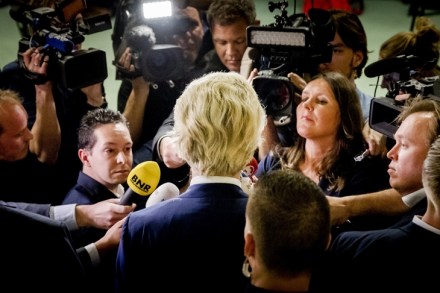
Rotterdam If the 2017 Dutch election was seen as a bellwether for populism in Europe, the verdict is still out. Mark Rutte's liberal VVD may have come out on top, but it was a limping victory. One which saw the party lose around a quarter of its seats and radically shift its position over immigration.  Just a year ago Rutte stood firm that immigrants were welcome in his country. But as the winds seemed to favour the anti-immigration stance of far-right parties, his rhetoric changed. 'Act normal or go away,' he said recently. It was in response to growing concerns that immigrants arriving in the Netherlands were not yet integrating.

How Erdogan used the Dutch as political pawns

From our UK edition

Rotterdam What started as a minor disagreement between Turkey and the Netherlands has now expanded into an unprecedented diplomatic spat. Turkish attempts to hold rallies in Germany, Austria, Switzerland and the Netherlands have been blocked - and President Erdogan is now using this to his advantage. In April, Erdogan will hold a referendum on changes to constitutional powers in Turkey. This has been his goal for a long time. Even the slight possibility of losing terrifies him. In Turkey the electorate has effectively been told they are ‘terrorists’ if they vote against the motion. Yet despite that, polls showed until recently that the vote was still split.

Foreign journalists consider abandoning Turkey after Reina nightclub attack

From our UK edition

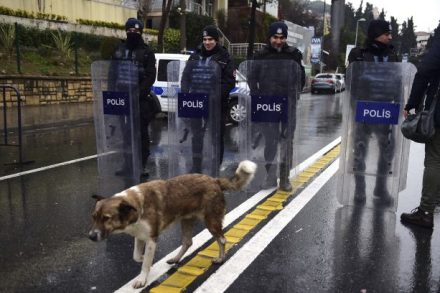
It's a sobering start to 2017 for many in Istanbul. Dozens dead and many more wounded after a man in a Santa suit opened fire on revellers at the Reina nightclub. For a city so used to attacks this one seems to have struck a deeper chord, perhaps because it was at the heart of a residential area called Ortakoy, rather than a big tourist mecca. With its narrow winding streets and wooden houses, Ortakoy is normally a pleasant place to sip Turkish coffee and watch ships float by on the aqua blue waters of the Bosphorous. It's home to an abundance of cafes and trinket shops, but just one street back from the strait you get a feel for real life in Istanbul. Fruit and veg shops spill out onto the pavement at the foot of Ortakoy's steep hills. Vendors shout to their friends across the road.

Ambassador Karlov’s killing leaves Turkey’s relations with Russia hanging in the balance once again

From our UK edition

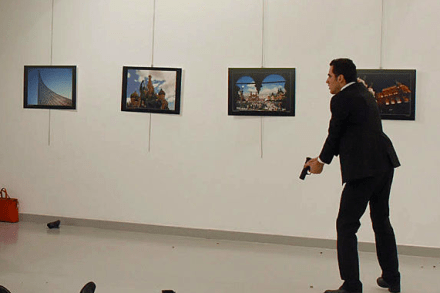
They say a picture is worth a thousands words. The one of an off-duty police officer standing triumphantly over the body of Russia’s ambassador to Turkey in Ankara, says so much more. On what was due to be an ordinary evening in the Turkish capital, Andrei Karlov attended a photo exhibition to make a few remarks at the opening of a collection entitled 'Russia as seen by Turks'. They turned out to be his last. As he addressed the small crowd, nothing seemed out of the ordinary. The 62 year-old was, as you’d expect of a man of his status, flanked by men in suits. Little did anyone expect that one of the suits would open fire and kill him. Captured on camera, the gun fire can be heard before ambassador Karlov falls to the ground.

President Erdogan’s media mouthpiece aims to woo the west

From our UK edition

‘Until the lion learns how to write, every story will glorify the hunter,’ bellowed Turkey’s President Erdogan as he officially launched the country’s first and only global English language public broadcaster this week. Thousands gathered for the booze-free spectacular to welcome TRT World onto their screens. But elsewhere in Turkey, the media has been punished. In 2016 more than a hundred media outlets have been closed. Thousands of journalists have been left unemployed and many have been jailed, all for simply being a potential thorn in the side of Erdogan. So when I heard the President saying TRT World was needed to tell Turkey’s story, because other channels are ‘partial’, I almost choked.

After years of desperation, at last there is a glimmer of hope in Syria

From our UK edition

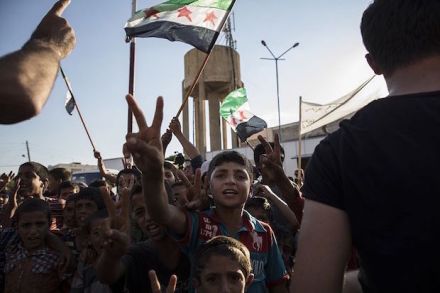
Sat on the dusty ground with the heat of the sun beating down on her, Nur looked exhausted. Arms wrapped around her knees, head bowed. I wondered if she had the energy to even get up again. Next to her was a suitcase and a couple of plastic bags, her whole life packed away. Three young children huddled behind her, their hands clutching at the back of their mothers clothes. Tiny, frail young lives who have witnessed conflict and terrors unimaginable. The eldest, a girl, looked up at me as I approached. Big eyes set in a hollow face stared out and through me without a flicker of emotion.  It was a scene I had witnessed a thousand times before while covering the migrant marches across Europe.

Is Turkey turning its back on the US?

From our UK edition

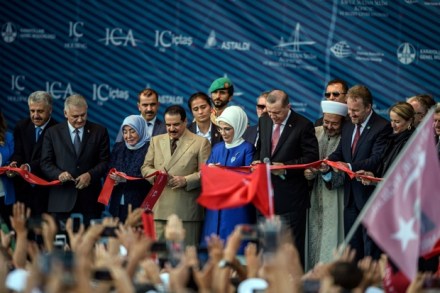
On a cool day in Istanbul the Yavuz Sultan Selim Bridge was opened to much fanfare. Hundreds, if not thousands, came to watch Turkey’s President Erdogan unveil a masterpiece in design and engineering. Named after the conquering Ottoman Sultan who expanded the Empire into the Middle East, it has been billed as a ‘bridge to the future’ for the city and the country. But while this third bridge over the Bosphorus may connect the European and Asian Continents once more, the same can’t be said for Turkey with many of its own communities nor its allies. In an off-the-cuff rambling speech the President used the opportunity to reiterate his core message. 'We are on a mission and we will keep going,' he said.

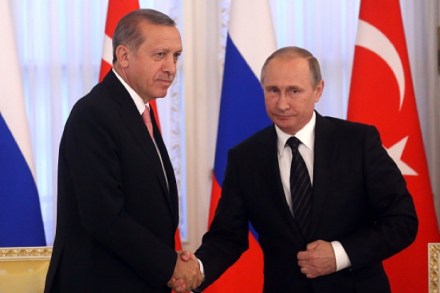
Is Putin and Erdogan’s bromance back on?

From our UK edition

At a luncheon to mark a thawing of relations between Turkey and Russia this week, the diners were given a particular treat. I'm not talking about Beluga caviar, though it may have been on the menu, but rather the special crockery bearing the image of each country's presidents set out at each placing. The idea of having Putin and Erdogan beaming at me from ceremonial plates doesn't appeal hugely, but it seems to have set some of my Turkish colleagues off in raptures. For them the 'bromance' is back on. I'm not so sure. The plates were commissioned to mark a meeting between the two men in June 2015.

How President Erdogan hopes to erase Ataturk’s Turkey

From our UK edition

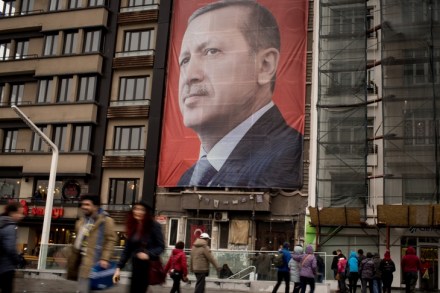
'One day my mortal body will turn to dust, but the Turkish Republic will stand forever,' said Mustafa Kemal Ataturk, the founder of the modern nation. As such he is rewarded a special place in Turkish history as the ‘father of the Turks’. Indeed this is what Ataturk, the surname he was given by the people, means. And it’s impossible to be in Turkey without seeing his image wherever you go. His face adorns the currency, both paper and coinage, it’s engraved on plaques, printed on flags, statues celebrating the man are too numerous to count, there is even a shop in Istanbul which has one item on its inventory, gold laminated Ataturk masks. The man is an icon to Turks. He is Turkey and Turkey is him. But for how much longer?

Will the US cave into Erdogan’s extradition demand?

From our UK edition

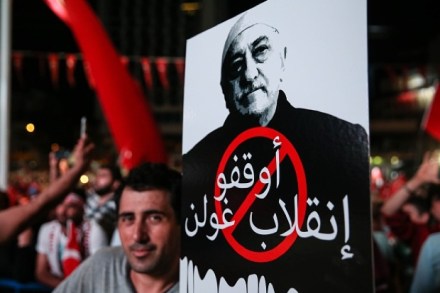
The three-month school summer recess began in Turkey just over four weeks ago. But for some teachers they may never see the inside of a school here again. As part of President Erdogan’s post-failed coup cleansing, 21,000 teachers have had their licenses revoked. I’ll say that again, 21,000 teachers have had their licenses revoked. Why? It’s simple, they’ve been accused of having links to a movement which Turkey has proscribed a terrorist organisation. In reality this is McCarthyism playing out in the 21st century. The group they’ve been associated with is an Islamic and social movement led by a cleric called Fethullah Gulen. It funds private schools and universities in more than 180 countries. Until a week ago, that included Turkey. No more.

President Erdogan’s postmodern coup

From our UK edition

'Big theatre,' the man who runs the shop downstairs said to me as I tried to buy a tin of tuna. Normally our exchanges are limited to a simple polite 'hello, how are you, see you soon'. But this time he wouldn’t let me leave. He had something to say and I was his audience. He waved his arms about as the words flowed. He speaks no English, but through the Turkish I have learned and his hand signals I knew what he was trying to tell me. As if his words weren’t enough, he then began showing me the videos. I have seen some things in my time, but this was unfathomable. Unarmed soldiers, barely turned out of school, having their heads smashed in by the hordes who rallied to the Turkish president’s call.

Letter from Istanbul: how Turkey’s coup failed

From our UK edition

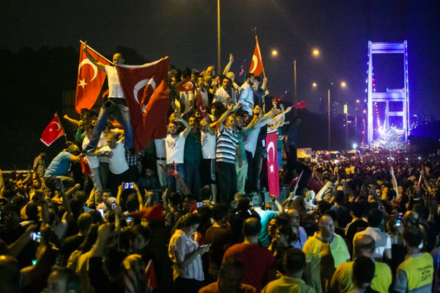
‘A COUP! THERE’S A MILITARY COUP!’ That’s the first I heard last night about events in Istanbul. Since then, things unfolded at lighting speed. A curfew was put in operation, but many rallied against it and took to the streets – in defiance of the coup, it seems, rather than in support of it. I’m in Istanbul, but was been watching what’s happening via foreign media because that’s the best source right now. Outside, gunfire rang through the air. Some reports say 60 have been killed, with several hundred more seriously inured. President Erdogan had been holidaying in Marmaris, a southern coastal resort, when the tanks started to roll in to Istanbul.

Why the latest attack in Istanbul feels so much closer to home

From our UK edition

'Too close to home,' is how most of my friends and colleagues in Istanbul described the attack at the city's main airport. I feel the same. I fly in or out of Ataturk International airport a few times every month for work. I know its entrances and exits, the security barriers and shops, like the back of my hand. So when I saw the videos which emerged of the blast soon after, it's like seeing the street I live on being blown up.  But I've been trying to work out why this attack feels more personal. Why it seems to have touched a nerve for me and so many other expats. After all, the bombs which killed 15 in the Sultanahmet tourist area and on the main drag, Istiklal, earlier this year are physically far closer to my home.  Both caused fear but were soon shrugged off.

Istanbul’s European side is seeing its freedom eroded away

From our UK edition

It was meant to be a relatively quiet event. A few fans gathering to take part in a global listening party in support of the new album by Radiohead, A Moon Shaped Pool. Instead what happened last Friday - and what followed over the weekend - has drawn attention to the changing nature of Istanbul. For centuries this Turkish city has been a melting pot of cultures. Two continents living side by side, separated only by the Bosphorus strait. It’s not unusual for Istanbulian’s to have breakfast on the European side, lunch on the Asian side, only to pop back to Europe for a night cap. And to the untrained eye this city is as cosmopolitan and free as any European capital.