Refugees

Why are we abandoning the Middle East’s Christians to Isis?

From our UK edition

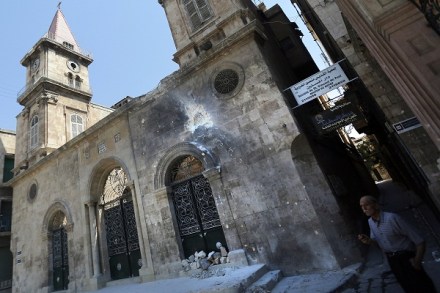
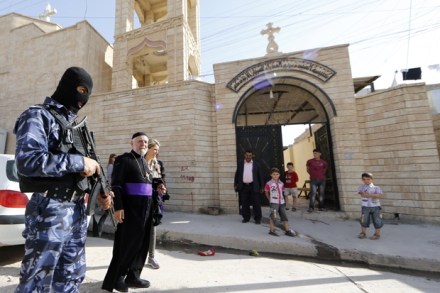
She took the call herself the night the Islamic State came into Mosul. ‘Convert or leave or you’ll be killed,’ she was told. The callers, identifying themselves as Isis members, knew the household was Christian because her husband worked as a priest in the city. They fled that night. Like many of their Christian neighbours they sought refuge in the monastery of St Matthew. But Isis took that over, tore down the Cross, smashed all Cross-decorated windows, used it for their own prayers and flew their black flag on top of the church. Across what was Nineveh, Iraq’s Christians spent this year fleeing from village to village, hoping to find safety somewhere. This woman’s husband and son continued their ministry among the scattered congregations of Iraq.
Podcast: Refugees, Ed Miliband and the Thames

From our UK edition

Britain’s appalling record on refugees is a moral failure, and a national disgrace, says Justin Marozzi in this week’s issue of the Spectator. We are now witnessing a global crisis on a scale not seen for 20 years, and our only response is throw money at international development, while letting in far too few refugees. But as Douglas Murray argues, economic migrants to the UK have poisoned public tolerance for genuine asylum seekers. It’s time for a frank debate about immigration, he says. Justin and Douglas join Fraser Nelson on this week’s podcast, to discuss the moral arguments for and against letting in refugees.

To make asylum work, we’ll have to talk frankly

From our UK edition

[audioplayer src="http://traffic.libsyn.com/spectator/TheViewFrom22_6_Nov_2014_v4.mp3" title="Justin Marozzi, Douglas Murray and Fraser Nelson discuss immigration" startat=53] Listen [/audioplayer]It is the easiest thing in the world to say who should come to Britain and why. But if there are people who should be coming here, then surely there are others who should not? It is through our unwillingness to address the second part of this question that our problems arise. All polls show a majority of the British public want immigration reduced. But our politicians do not know what to do about it. One answer is to be honest. The Canadian and Australian ‘points-based systems’ we often hear about these days is just cover-speak for ‘who we want to let in’.

The shameful truth: Britain lets in far too few refugees

From our UK edition

Pictures from Calais have returned to our television screens, showing desperate men and women trying to break into lorries bound for Britain. A Sudanese man died jumping from a bridge onto a lorry heading for Dover. Another perished after falling from the axles of a bus. The mayor of Calais has blamed Britain for being an ‘El Dorado’ offering aspirational benefits to migrants — but as she’d know, the Africans arriving in her morgues would never have qualified for welfare. They risked death due to a sense of desperation, and hope, that we can scarcely imagine. The same is true in the Mediterranean, where 2,500 have died after embarking on unseaworthy boats heading for Europe. Corpses of Syrians, Egyptians and others now regularly wash up on Italian shores.

Winter is coming – the other terror stalking Iraqi Kurds

From our UK edition

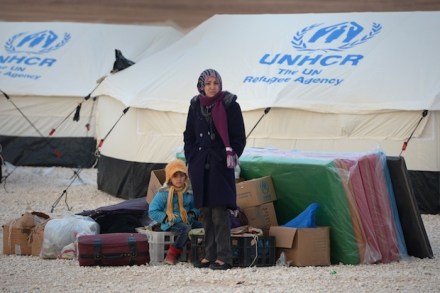
The heroic Kurdish resistance in Kobane rightly commands headlines. A larger disaster, however, looms in Iraqi Kurdistan where - absent urgent action by the UN and Iraq - thousands of vulnerable people who fled from the Islamic State (Isis) could die in weeks from cold-related illnesses. It was comfortably warm in the Kurdish capital of Erbil last week, but in December temperatures will drop to below zero in the cities and much lower in the mountains. The warmth made the makeshift camp I visited in the Christian enclave of Ankawa look almost bearable. It occupies a public park and houses 50 families, mainly Christians from Mosul, in increasingly threadbare tents. Soon, torrential rain can be expected to turn the hard ground here into a muddy lake, soaking everything and reducing hygiene.

How Hitler’s dreams came true in 1946

From our UK edition

I should begin this review, in the spirit of full disclosure, by admitting that I know the author very slightly. Something close to 14 years ago, we were on the same press freebie: a slap-up lunch in Paris courtesy of — was it? — LBC radio. Who knows? The ignominious occasion of our acquaintance isn’t the reason I mention it: rather that, somewhere on the Eurostar under the Channel, he and I fell into a conversation about the European Union. As I trotted out the usual boilerplate grumbles about sovereignty and bureaucratic opacity and the iniquities of the Common Fisheries Policy, he exclaimed so passionately in its favour that the conversation stayed with me. After all these years I of course paraphrase, but what he said was: ‘Yes, yes, but it is such a beautiful idea.

Portrait of the week | 28 August 2014

From our UK edition

Home Theresa May, the Home Secretary, said that Britons who went to Syria or Iraq to fight could be stripped of their citizenship, if they had dual nationality or were naturalised. Her words came during a search for the identity of the British man in a video of the beheading of the American journalist James Foley. David Cameron had returned to London from his holiday in Cornwall to confer with security officials, but decided against recalling Parliament. In revenge the Daily Mail carried photographs of him in a wetsuit, which gave him a phocine look. Lord Dannatt, the former Chief of the General Staff, suggested Britain should deal with President Bashar al-Assad of Syria, but Philip Hammond, the Foreign Secretary, said: ‘That would poison what we are trying to achieve.

The Spectator on Britain’s treatment of refugees

From our UK edition

The British government has said it will allow in some of Syria’s most vulnerable refugees. The Home Office hasn’t specified how many will be admitted but says it will probably be in the hundreds. The Syrian civil war has created 2.4 million refugees and 6.5 million internally displaced people, and looking through the archive, you get the sense that some of The Spectator’s former writers might have thought Britain could have offered more this time. The government’s attitude towards Jewish refugees in 1944 was ‘niggardly, bureaucratic, evasive and insincere’, according to the diplomat Harold Nicolson. We’ve historically been ‘proud to succour the oppressed and to defend the weak.

Govt deal means UK will accept Syrian refugees

From our UK edition

As expected, the government has changed its stance on Syrian refugees this evening ahead of what had looked to be a difficult vote in the House of Commons tomorrow. Nick Clegg has just announced that the UK will now offer refuge to vulnerable Syrians such as women and girls who have experienced or are at risk of sexual violence, the elderly, survivors of torture and disabled people. This will only likely equate to a few hundred, but there will be no quota for the number of refugees the UK takes. Clegg said this evening: 'The Coalition Government wants to play our part in helping to alleviate the immense suffering in Syria. The £600m we have provided makes us the second largest bilateral donor of humanitarian aid in the world.

A mass grave and a refugee camp for Syrians – Iraqi Kurdistan teaches that military intervention can work

From our UK edition

Two experiences stand out from my recent visit to the Kurdistan Region in Iraq: meeting refugees fleeing Syria at the Domiz refugee camp; and seeing a weeping son uncovering the body of his father, Mohammed Serspi, murdered by Saddam Hussein's regime in the 1980s. The first, a biblical tide of innocent humans cast out by a vicious dictator in 2013. The second is a single example from a multitude of evil which continues to wreak its effect decades on. The factor uniting these two experiences is Iraqi Kurdistan itself, whose very existence as a prosperous, free, secular place, and whose tragic history, shows just why dictators must be challenged. Whilst visiting the Domiz refugee camp, I shared David Cameron's pride in Britain's commitment to overseas aid.

What to do about Syria? Easter edition

From our UK edition

This morning’s Times reports (£) of the arrest of a former US serviceman, Eric Harroun, suspected of assisting Jabat al-Nusra, a jihadist insurgent group in Syria. He has been charged with conspiring to use destructive devices outside the United States. That the alleged offences were made against the Assad regime is immaterial. The West looks at Syria through very dark glass. Basic cultural preconceptions about conflict demand a struggle of Good versus Bad. War is rarely so simple; but Syria is even more complicated: various shades of bad fight each other and whatever good may exist. If you haven’t read Mary Wakefield’s piece about the murder of Christians by some anti-Assad groups, then I urge to do so – particularly as it is Holy Week.