Is the countryside racist?
From our UK edition
Crossing the floor Danny Kruger defected from the Tories to Reform, the first sitting MP to do so. Which parties have gained, and lost, the most MPs from defections since 1979?

From our UK edition
Crossing the floor Danny Kruger defected from the Tories to Reform, the first sitting MP to do so. Which parties have gained, and lost, the most MPs from defections since 1979?

From our UK edition
‘The Conservative party is over.’ Until recently, such talk could be dismissed in Westminster as typical Nigel Farage hyperbole. But the decision of Danny Kruger to defect to Reform UK this week has left some Tories wondering if their party’s condition is fatal. Kruger – MP for East Wiltshire since 2019 – wrote speeches for David Cameron, corralled troops for Boris Johnson and ran Robert Jenrick’s leadership campaign last year. Until this week, he was seen as one of the Tory party’s most prominent thinkers. He is the biggest defection to Reform yet. When we meet in his new party’s headquarters, Kruger is reflecting on the brutal business of politics. Outside, Union Jacks flutter at half-mast for the funeral of the Duchess of Kent.

From our UK edition
The shale illusion Sir: Your leading article rightly makes the case for extracting as much of our North Sea resources as we can (‘All at sea’, 6 September). However the enthusiasm for developing shale gas is misplaced. As energy minister, I commissioned work to establish how much of the onshore gas in-place could be recovered. The truth is just a small proportion – maybe 10 per cent. An energy policy based on shale would put our energy security at risk. Economically, at a time when global gas prices are expected to fall, UK shale would simply not be competitive and projects would fail. It is no accident that none of the large energy companies thought it was worth seriously exploring shale.
From our UK edition
When Labour MPs met to hear from their leader on Monday, there was one group who felt particularly aggrieved. In the government’s reshuffle following the resignation of Angela Rayner, the party’s powerful north-west caucus had suffered a ‘machine gunning like nothing else’, in the words of a senior party official. Some 40 per cent of the reshuffle casualties are from this region. The changes risked, in the words of one aide, ‘reopening the whole Keir and Andy psychodrama’. Within hours, Andy Burnham, the mayor of Greater Manchester, had duly attacked Keir Starmer’s new ‘London-centric’ line-up. Lucy Powell, a close Burnham ally, who was sacked as leader of the Commons, announced that she was running to replace Rayner as Labour’s deputy leader.


From our UK edition
The days between my leaving the Tories and joining Reform were an odd uneven time. It was the hardest decision I have ever made – I’d been a Conservative party member for 30 years, after all. Before the announcement, only three people knew what I was planning to do. In Westminster almost everything leaks so we kept the information tight. Once I had made up my mind, Nigel Farage and I held several clandestine meetings in a secluded room in a Mayfair members’ club to decide how to break the news. I initially rather fancied defecting on the eve of the Conservative party conference, for maximum impact. But in the end we decided to drop the story in the Daily Mail on Thursday night.

From our UK edition
Home The government shuddered when Angela Rayner resigned as housing secretary, deputy prime minister and deputy leader of the Labour party after being found to have breached the ministerial code by Sir Laurie Magnus, the independent adviser on ministerial standards. He said she had followed advice from a legal firm when not paying enough stamp duty on her new flat in Hove, but ignored a recommendation to seek expert tax advice. Sir Keir Starmer, the Prime Minister, called her ‘the living embodiment of social mobility’. He then threw himself into a great big cabinet shuffle, in which Yvette Cooper became Foreign Secretary and was replaced as Home Secretary by Shabana Mahmood, who was replaced as Justice Secretary by David Lammy who also became Deputy Prime Minister.
From our UK edition
It’s a very serious and rancorous time in Britain. Social strife is simmering. The asylum system is at breaking point. The lines on the economics graphs are all going in unsettling directions – the ones you’d prefer to see going down are going up, and vice versa. And inevitably the Overton window is shifting. Though perhaps not in the way any of us expected. Reform is currently odds-on to form the next government. Nigel Farage’s party meets for its conference in Birmingham this week at 35 per cent in the polls. But that’s not because it’s bracingly right-wing. Or not just. It’s because Reform is camp.


From our UK edition
Tens of thousands of people turned out on the streets last week to protest against mass immigration. The protestors were promptly labelled ‘racist’ by their own government, ‘far-right’ by the New York Times and as having links to ‘neo-Nazis’ by the Guardian. The protests in question happened in cities across Australia, including Sydney – but frankly those sentences could have been written about similar protests in Britain and in almost any western country. Coincidentally, the past weekend also saw the ten-year anniversary of the German chancellor Angela Merkel opening the doors of Europe, saying ‘We can manage’ and allowing Europe to become the home of anyone in the world who wanted to move in.

From our UK edition
Waning interest Sir: Michael Simmons correctly points out that the Treasury’s large-scale issuance of inflation-linked debt is adding heavily to the government’s interest bill at a time of relatively high inflation (‘Borrowed time’, 30 August). What he may not know is how complacent the Treasury has been about this matter. On the day Vladimir Putin invaded Ukraine in February 2022, I was interviewed for the role of chairman of the Debt Management Office. I suggested that a post-Covid inflation surge had started and that additionally oil prices might increase significantly because of the invasion leading to a need for higher interest rates.
From our UK edition
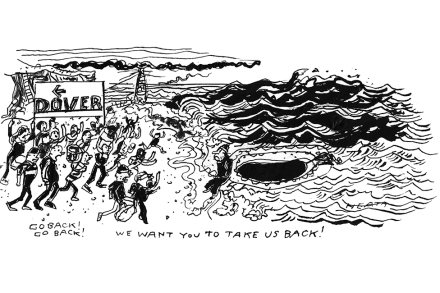
In 1979, XTC sang: ‘We’re only making plans for Nigel/ We only want what’s best for him.’ The song is from the perspective of two overbearing parents, confident that their son is ‘happy in his world’ and that his future ‘is as good as sealed’. Nigel Farage is making plans for his own future but it’s doubtful it’s as good as sealed. This week, he announced Reform UK’s proposal for mass deportations, ‘Operation Restoring Justice’. Some 600,000 illegal migrants will be removed, he promised, should his party win the next election. Britain will leave the European Convention on Human Rights (ECHR) so we can return people to countries such as Afghanistan and Eritrea, currently deemed too dangerous.

From our UK edition
Home Nigel Farage, launching Reform’s policies on illegal migrants, said: ‘The only way we’ll stop the boats is by detaining and deporting absolutely anyone who comes via that route.’ A Taliban official in Kabul responded: ‘We are ready and willing to receive and embrace whoever he [Mr Farage] sends us.’ The government sought to appeal against a High Court ruling which temporarily forbade the housing of asylum seekers in the Bell Hotel in Epping, Essex. Protests against asylum hotels and counter-protests continued in several places. The government said it would introduce a panel of adjudicators instead of judges to hear migrants’ appeals in the hope of speeding up the asylum process.
From our UK edition
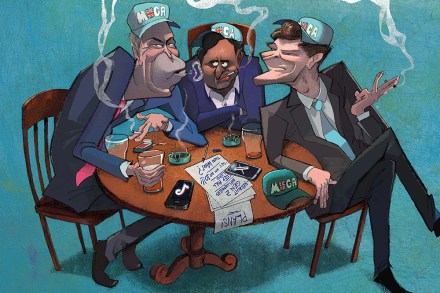
Nigel Farage is adept at riding the currents of British politics. When he named Reform after the Canadian party in 2020, it was a statement of intent. Like Preston Manning in the 1990s, he aimed to displace this country’s main centre-right party and refashion it in his image. But where Manning fell short, handing over the reins to Stephen Harper, Farage aims to go one better by becoming prime minister himself. A keen angler, Farage has spent his few moments of downtime this summer fishing. On one such trip, he took an assembled group of journalists to the English Channel to highlight the small boat crossings.
From our UK edition
On the campaign trail in the Midlands ahead of May’s local elections, a journalist asked Nigel Farage: ‘Do you have a woman problem?’ The twice-married, twice-separated father of four laughed and said: ‘God, yes. I’ve had 40 years of it.’ His response was characteristic of Reform UK’s leader – a determination not to take things too seriously and a tacit acknowledgement that every political cause he has espoused has been more popular with men than women. ‘Around me there’s always been a perception of a laddish culture,’ he says. ‘Ukip was the rugby club on tour.’ In last year’s general election, 58 per cent of Reformvoters were men. Since May, when Reform seized 700 seats and ten councils, that has begun to change.

Ann Coulter, an American author, lawyer and conservative media pundit, joined Freddy Gray on the Americano podcast last Friday to discuss why she backs the UK's Reform party, why she supports Trump in his second term, what's really going on with the Epstein files and more. Here are some highlights from their conversation. Why don’t politicians follow through on illegal immigration promises? Ann Coulter: Americans have been voting not to give illegals benefits, to deport them, to make sure they can't vote, for now almost half a century, and the politicians will never give it to us. That was what was so striking about Boris Johnson and Donald Trump. Oh my gosh, they really seemed to mean it.

From our UK edition
A close associate of Nigel Farage received phone calls from three civil servants in the past week, asking how they might help Reform UK prepare for government. Officially, mandarins won’t begin talks with the opposition until six months before a general election, which might be nearly four years away. And Reform currently has just four MPs. But behind the scenes, the source reveals: ‘I’m personally getting middle-ranking civil servants in various departments asking if they can help – people who actually understand how to get things done. They don’t want to lose their jobs, but they want to tell us what’s going on.’ MPs may have departed Westminster for recess, but that also marks the firing of a starting gun on a highly consequential political summer.

From our UK edition
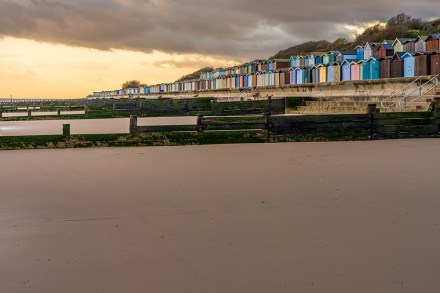
For the recent heatwave, it was my mission to escape our little Wiltshire cottage, where it hit 35°C. It has one of those very poor structural designs unique to Britain that, like plastic conservatories or the Tube, is useless in hot weather. First, we went to stay with friends in Frinton-on-Sea with our English bulldog, who was born in nearby Clacton and is shamelessly happy to be back among his people. Some years ago I lived in Colonial Williamsburg, Virginia, a living museum of America’s pre-revolutionary settler history. Frinton doesn’t go quite that far – there are no ersatz yeomen milking doleful cows – but to visit is to enter a time warp back to the mid-1930s. It’s the sort of place where Hercule Poirot might solve a crime while en vacances.
From our UK edition
Meet Nick. He is 30 years old, has a good job and lives in London. He keeps himself to himself. He isn’t political. At least he never used to be. And yet the struggle of Nick has become the struggle of our age. For Nick, the social contract has broken down. Nick embodies a generation for whom achieving the same life quality as their parents is a distant dream After he has paid his taxes, student loan and the rent for his Zone 4 shoebox, Nick’s take-home pay is meagre. He knows where his money goes: on the benefits, social housing and remittances of one Karim, 25, an aspiring grime artist; and on Simon and Linda, 70, a retired couple spending the fruits of their final-salary pensions and property portfolio on cruises.

From our UK edition
Reform’s success in last week’s local elections has been attributed to many causes. Labour’s abolition of the winter fuel payment for pensioners. The hollowing out of the Conservative party’s campaigning base. Nigel Farage’s mastery of social media. But if you want an emblem of why voters turned their back on the political establishment let me give you Goat Man. In one ward in Runcorn, the seat Labour lost to Reform by just six votes, residents found that no one would listen when a neighbour filled his derelict house with goats and burned the animals’ manure in his garden. Despite repeated appeals to authority, no action was taken.


From our UK edition
On Monday night, a hundred Reform staff and donors met at a Marylebone pub to toast the local election results. A jubilant Nigel Farage addressed his troops, who ran up a five-figure bill. They had good reason to celebrate. With 30 per cent of the vote, Reform crushed Labour (20 per cent) and the Tories (15 per cent). They won 677 wards, ten councils and a fifth MP in the Runcorn by-election. Certain results were particularly satisfying: in Ed Miliband’s Doncaster North, Reform won more seats than any other party. Three speeches defined Reform’s campaign. First, there was the Birmingham rally at the end of March. Farage arrived on a JCB digger, presenting himself as a ‘Mr Fixit’ for the woes of ‘Broken Britain’.

From our UK edition
Home In a day that upset the apple cart of party politics, Reform won the Runcorn and Helsby by-election by six votes, with 38.72 per cent of the vote, compared with Labour’s 52.9 per cent last year. Of 1,641 wards in England up for election, Reform won 677. The Tories lost 676, winning only 317. The Lib Dems gained 163, winning 370 in all. Labour lost 186, winning 99. Reform won control of ten of the 23 councils in contention. The Liberal Democrats won three councils. The Tories lost all their 16 councils. Dame Andrea Jenkyns, a former Tory minister, was elected Reform mayor of Greater Lincolnshire; Luke Campbell, the former boxer, became Reform mayor of Hull and East Yorkshire.