Rare earths

China today is following Victorian Britain’s industrial pattern

On a damp Derbyshire day in 1771, Richard Arkwright watched the world’s first water-powered mill begin to turn, setting in motion a force that would remake the world. The tailor’s son from Preston had become one of Britain’s first industrialists, his spinning frames driven by water and his workers by hunger. Within those mill walls, as Edmond Smith argues in Ruthless, the modern economy took its first breath. Yet the real invention was not mechanical but social. Arkwright had helped pioneer the system that would propel Britain into the lead in the first Industrial Revolution – web of investors, miners, shippers and merchants, bound by credit, trust and the push for profit. In Smith’s phrase, it was ‘networked capital’, the invisible machine behind the visible one.

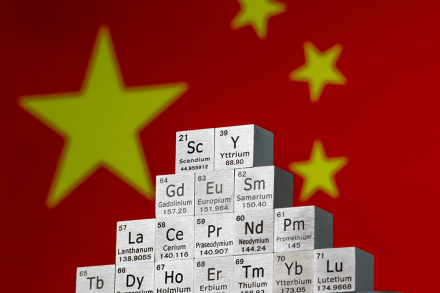
China is holding the West to ransom over rare earths

China’s naked weaponization of rare earths brings to mind Mao Zedong’s "four pests" campaign, the old tyrant’s fanatical effort to exterminate all flies, mosquitoes, rats and sparrows, which turned into a spectacular piece of self-harm. Sparrows were always an odd choice of enemy, but Mao and his communist advisors reckoned each one ate four pounds of grain a year and a million dead sparrows would free up food for 60,000 people. The campaign, launched in 1958, saw the extermination of a billion sparrows, driving them to the brink of extinction. But the sparrows also ate insects, notably locusts, whose population exploded, and the ravenous locusts wreaked far more damage to crops than the sparrows ever did, hastening China’s descent into the deadliest famine in human history.

ian williams china rare earths

China is holding the West to ransom over rare earths

China’s naked weaponisation of rare earths brings to mind Mao Zedong’s ‘four pests’ campaign, the old tyrant’s fanatical effort to exterminate all flies, mosquitoes, rats and sparrows, which turned into a spectacular piece of self-harm. Sparrows were always an odd choice of enemy, but Mao and his communist advisers reckoned each one ate four pounds of grain a year and a million dead sparrows would free up food for 60,000 people. The campaign, launched in 1958, saw the extermination of a billion sparrows, driving them to the brink of extinction. But the sparrows also ate insects, notably locusts, whose population exploded, and the ravenous locusts wreaked far more damage to crops than the sparrows ever did, hastening China’s descent into the deadliest famine in human history.

A rare earths deal is China’s gift to Trump

From our US edition

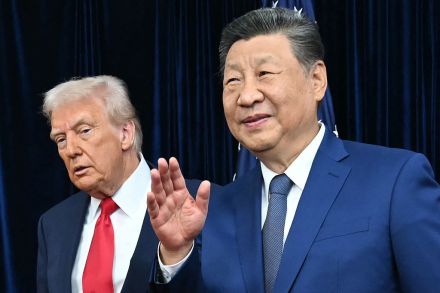
Donald Trump went nuclear. Before his meeting with Chinese leader Xi Jinping at an air base in South Korea, he ordered the Pentagon to test atomic weapons on an “equal basis” with China and Russia. Was Xi impressed? Probably not. While Russia expressed indignation, China did not permit itself to be distracted by Trump’s nuclear shenanigans. Instead, Beijing aimed to obtain economic concessions from a prideful Trump, which it did. From the outset, Xi sought to bring Trump down a peg, declaring that “both sides should consider the bigger picture and focus on the long-term benefits of cooperation, rather than falling into a vicious cycle of mutual retaliation.” Trump seems to have absorbed the lesson.