Racism

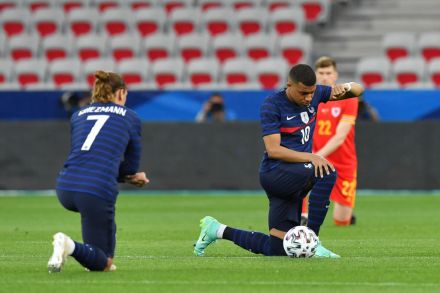
France is divided on ‘taking the knee’

From our UK edition

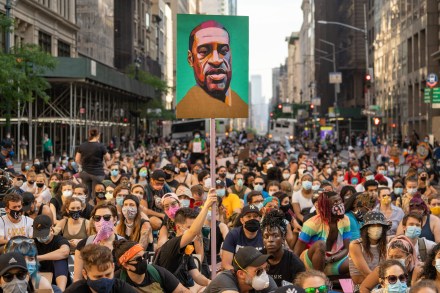
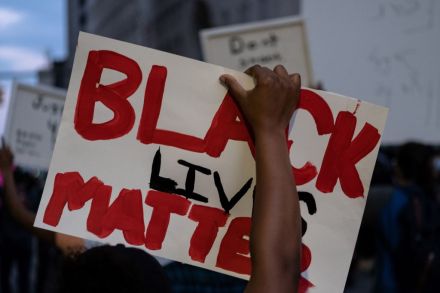
Until this month 'taking a knee' has not been a French phenomenon. When the Black Lives Matter movement spilled out of America twelve months ago and spread across the world, France was one of the few Western nations where it failed to make any headway. In a bold television address at the time, Emmanuel Macron declared that there would be no statues toppled in France. Meanwhile, the leader of the far-left France Insoumise, Jean-Luc Mélenchon, rubbished the idea of 'white privilege'. The French looked on in bemusement as Britain seemed to lose the collective plot, hauling down statues, denigrating Churchill and then, when the rugby and football seasons started, dropping to their knees.

Does Google really understand racism?

From our UK edition

Opponents of the new racial extremism typically object that it vilifies white people in much the same way that classical racism does black people or other minorities. While this ideology does retail racist theories about white people (collective racial privilege, heritable racial guilt), when progressives want to get really racist, they invariably turn to another target: Jews.  Kamau Bobb was, until a few days ago, Google’s head of diversity strategy. The Washington Free Beacon uncovered a blog Bobb penned in 2007 in response to Israeli actions against Hamas in Gaza. It wasn’t your standard progressive plea for Israel to stop making such a fuss and let those nice Islamists drive it into the sea.

The soul of Flannery O’Connor

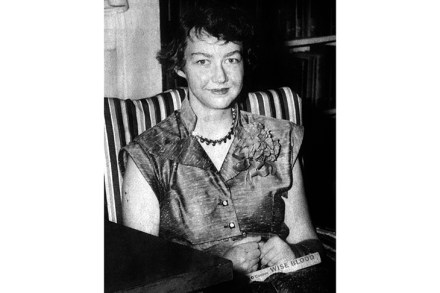
Since the racial riots last summer, Flannery O’Connor has been scrutinized by literary critics and activists for reasons wholly unrelated to her literary artistry and her formidable oeuvre, whose size, though not large, is remarkable for a writer who died at the age of 39 after having been diagnosed in her mid-20s with lupus. The abruptly renewed interest in Miss O’Connor could be said almost to amount to an O’Connor revival were it not focused on a single question: ‘Was Flannery O’Connor a racist, or was she not?’ Attempts to answer it have involved an evaluation of her character based on her novels, stories and voluminous correspondence, and led in one instance to the critical conclusion that she was ‘not a saint’.

O'Connor

British universities aren’t institutionally racist

From our UK edition

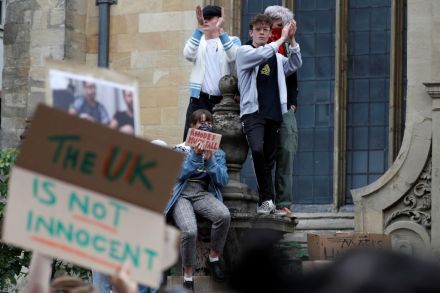
There is a spectre haunting British universities: the spectre of institutional racism. 'There is a lot of evidence that points towards universities perpetuating systemic racism, being institutionally racist,' the University of East Anglia’s vice-chancellor, David Richardson, told an upcoming BBC Three documentary 'Is Uni Racist?'. Viewers are likely to be left in no doubt that the answer to that question is 'Yes'. Two people I know appeared in it, and it was moving to hear them share their experiences. Yet the reality is that for most black students there has never been a better time to study at a university in Britain. Of course, that doesn't mean there aren't still problems.

Xenophobic twaddle: Bush Theatre’s 2036 reviewed

From our UK edition

The Bush Theatre’s new strand, 2036, opens with a monologue, Pawn, which takes its name from the most downtrodden piece on the chessboard. The speaker, Jordan, is an amiable dimwit of mixed Trinidadian and South African heritage whose mother explains his background to him like a condescending anthropologist: ‘Trinidad and South Africa are countries with cultures too rich for most people to understand.’ Jordan describes his life in London which consists exclusively of battling oppression. He buys fried chicken from Yusef, a Turkish food-seller, and he learns a greeting in Turkish that Yusef recognises. So Yusef starts to slip him extra portions as a perk. A white teenager hears of this practice and orders Yusef to suspend the freebies to Jordan.

The C of E has fallen for anti-Christian theories of race

From our UK edition

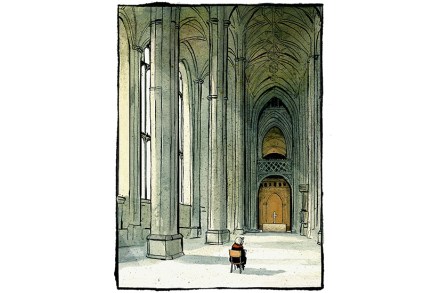
In its new report, From Lament to Action, the Church of England has decided to focus on race. Now, there is no question that racism exists within all cultures, but the Judaeo-Christian tradition has always been opposed to it. Christianity emphasises the common origin of all humans, made in God’s image, and contemporary science corroborates this moral and spiritual insight. The Church is right to set its face against racism. Predictably, however, the C of E report urges an audit of monuments and an examination of the Church’s complicity in the slave trade. Why doesn’t it celebrate the long tradition of those Christians who devoted their lives to abolition?

America, Britain and two very different realities on race

From our UK edition

‘If people in Wales had access to as much media coverage of decisions that affected Wales as they do of US domestic news we’d have a better election campaign.’ This statement, tweeted by Welsh government minister Lee Waters shortly after 10 p.m. on Tuesday evening, just as the verdict in the George Floyd murder trial was about to be announced, sparked outrage. ‘Rancid,’ ‘horrific’ and ‘ignorant’ were just some of the comments directed at Welsh Labour’s deputy minister for transport. Fellow Senedd members rushed to join in the condemnation. A Plaid Cymru spokesperson declared, ‘Lee Waters’ tweet was highly inappropriate, ill-judged and thoughtless.

Olympics’ organisers could regret banning ‘taking the knee’

From our UK edition

Knee-taking and fist-raising protests have been banned at the upcoming Tokyo Olympics, with the International Olympic Committee warning athletes who flout the rules that they will be punished. The IOC clearly hopes this will mean the delayed and accursed Olympics – already set to be loaded with a slew of joy-killing Covid restrictions – can take place without the additional burden of political controversy. That’s the theory, but could it all backfire? At first glance it looks as if the IOC has been clever. Rather than issue a top-down declaration, they canvassed 3,500 athletes asking whether the current Rule 50, which bars all political demonstrations on the podium (not specifically the knee or the fist), should be retained.

The Church of England’s new religion

From our UK edition

This article first appeared in the 20 March edition of The Spectator.The Church of England report that was leaked to Douglas Murray has now been published. You can read the full report here. With a heavy heart I must return once more to the subject of the Church of England. I recognise that is not a subject for everybody, and occasionally someone implies that it should not be a subject for me. But I am concerned about the fate of the national church because as the new religion heaves ever clearer into view, I realise that I prefer the old religion to the new one. I would rather attempts to influence the country’s morals were preached from a pulpit than through group stampede on Twitter.

Why do theatres think audiences want Covid-related drama?

Hats off to the Orange Tree Theatre in Richmond. They’ve discovered a new form of racism. Some people say we have enough ethnic division already but in south-west London they’re gagging for more apparently. A new play, Prodigal, examines the prejudice endured by a Ugandan chap whose mother moved to London when he was a child and whose younger siblings are British. Family tensions depressed him. ‘You all made me feel ugly,’ he moans. The shifty whinger has returned home after his mother’s death in order to cheat his family out of an insurance pay-off. It’s remarkable to see a drama that reinforces a damaging stereotype but the author, Kalungi Ssebandeke, is content to put a bungling African crook on stage.

Two of a kind: Monica Jones proved Philip Larkin’s equal for racism and misogyny

From our UK edition

By the time Philip Larkin died in 1985, he’d long since achieved national treasure status: his poems were critically admired as well as widely read; his reticence (‘the Hermit of Hull’) was a matter of affectionate respect; and his cantankerous published remarks about ‘difficulties with girls’, children, left-wing politics, and ‘abroad’ were generally embraced as proof of valiant individualism — or possibly a grouchy kind of joke.

The case against reparations for slavery

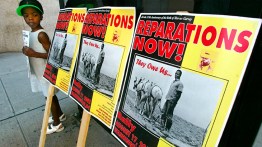
Last week, a bill cleared the US House Judiciary Committee that would establish a 13-person commission to consider federal reparations for slavery. Although similar legislation has been introduced in every Congress since 1989, this is the closest such a bill has ever advanced towards a full vote in the House. The President’s support for this pet far-left project is unsurprising. A reparations commission featured in Joe Biden’s campaign platform. Advocating the establishment of this commission is a hop, skip and a jump from advocating reparations, full stop. The UK’s proliferating parliamentary inquiries often function to kick sensitive subjects into the long grass. But an American panel convened to address such a hot topic would create expectations.

What does it really mean to feel English?

From our UK edition

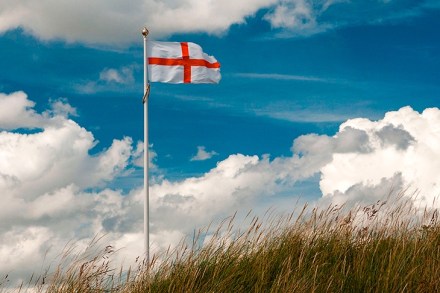
Referring to the precarious future of the Union of England and Scotland, the authors of Englishness: The Political Force Transforming Britain conclude their book with the observation that ‘it is hard to imagine that any break-up would not be the source of regret and recrimination’. I imagine our present prime minister, even though he has a pandemic to handle, thinks of this with increasing force. There would be few faster routes from office for him than to awake one morning to find he had presided over the end of the Union. We are weeks away from elections in Scotland that seem certain to bring another SNP victory, and calls from its Maoist leadership for another referendum.

Anti-Semitism and the far left

From our UK edition

The comic David Baddiel has written a book which explains that much of the far left hates Jews. There are exceptions. They are OK with dead Jews (the Holocaust gets a sad face emoji if it isn’t ‘exploited’ by living Jews, in which case it gets an angry face emoji), and penitent Jews (the ones who hate Israel in any form). They will deny it and call me an anti-Semite and a Nazi writing for a Nazi magazine with my Nazi fingers because they don’t understand Nazism, anti-Semitism or themselves. They are not really progressives; they are religious maniacs — and that is sometimes funny. These penitent Jews should include Baddiel, who is not a Zionist.

The tragic demise of the National Trust

From our UK edition

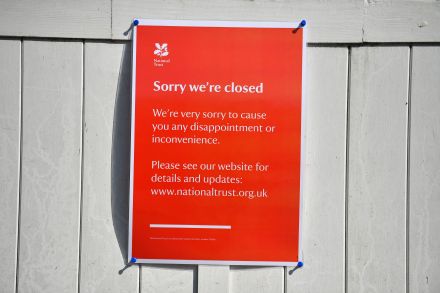
And so the National Trust’s crazed attack on its own properties goes blazing on. Their latest self-hating wheeze is to get children to write poems attacking Britain’s history. One hundred primary school pupils have been taken around the Trust’s country houses before they compose poems about the former owners’ connections with the British Empire. It’s all part of the Trust’s 'Colonial Countryside' project, which since 2018 has been highlighting ties between the Trust’s houses and imperialism. And so, at lovely Charlecote Park, Warwickshire, one child wrote this about the jewelled dress sword and scabbard looted from Lucknow during the Indian mutiny of 1857: 'Stolen by the English; a freedom sword, a stolen freedom sword.

When ‘white privilege’ doesn’t count

From our UK edition

First off the blocks criticising Dr Tony Sewell’s report of the Commission on Race and Ethnic Disparities was Professor Kalwant Bhopal from the University of Birmingham. Writing in the Guardian and focusing on her specialism of education (she is director of the Centre for Research in Race and Education), she took exception to the statistics that showed the majority of ethnic minority groups 'perform better than White British pupils'. If this were true, of course, it would put to bed the whole idea of institutional racism in education and 'white privilege', for it wouldn’t be a racism worth its salt if whites systematically came bottom or near-bottom.

Faux fury against the race report is unsurprising

From our UK edition

Back in the 1960s, my brother Asim and I were smitten by the magical Manchester United trio of Law, Best and Charlton. We became London Reds and travelled on the MU Supporters’ Club coach to Old Trafford to watch our team — and we always went to see them play London clubs. But we stopped going in the 1970s; we feared for our physical safety. Marauding bands of skinheads outside the grounds were on the lookout for a spot of Paki-bashing. Instead, during the 1970s, we went on Anti-Nazi League marches and routinely confronted members of the National Front, a fascist party that was briefly the UK's fourth-largest party in terms of vote share.

The race report critics are guilty of gaslighting

From our UK edition

The Sewell Report on race and ethnic disparities is courageous, thoughtful and measured. Its relative optimism has triggered a torrent of bile from those personally or professionally wedded to the idea that Britain is a systemically racist society. They accuse the report of disregarding what is fashionably called ‘lived experience’ — in other words, anecdotal evidence and subjective impression. Its use of carefully considered objective data, the critics allege, devalues the lived experience of ethnic minorities. Lived experience has validity, but — by definition — only for those who have lived it. It proves nothing beyond itself, and certainly nothing systemic.

In defence of Flannery O’Connor

From our UK edition

I have a thought for the students of Loyola University in Baltimore, Maryland: this Easter, why not resurrect Flannery O’Connor? Why not show that you appreciate America’s greatest Catholic writer even if the poor, frightened duds in charge of you do not? Last summer, the university’s president, the Revd Brian F. Linnane SJ, removed O’Connor’s name from its halls of residence. The New Yorker had published a pompous piece about racism in O’Connor’s private correspondence, the George Floyd protests had begun and so… best not make the students uncomfortable, said Father Linnane. The cosmic joke of this has stayed with me ever since.

Britain really is a successful multi-racial democracy

From our UK edition

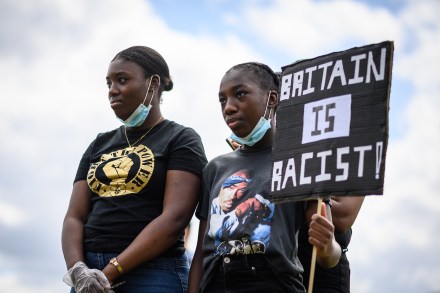
A new report by the UK government’s Commission on Race and Ethnic Disparities has been published today. At over 250 pages, it is a meaty document that makes a total of 24 recommendations, based on four broad themes: ‘building trust’, ‘promoting fairness’, ‘creating agency’, and achieving inclusivity’. But one of its more eye-catching conclusions – which will inevitably cause a stir in the ‘anti-racism’ circles which have rallied behind the Black Lives Matter movement – is that the report says Britain is a successful multi-racial democracy.